


Manufacturing project management diagram ppt samples




Try Before you Buy Download Free Sample Product
 Impress Your
 Audience
 100%
100% Editable
 Save Hours
 of Time


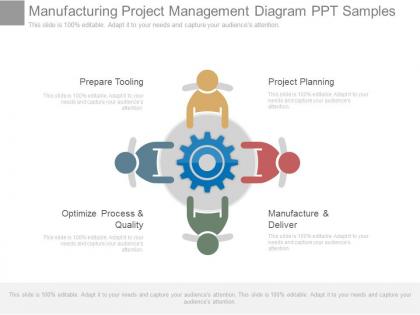
While planning a manufacturing project management PowerPoint presentation demonstrate a moderator needs everything right. Considering this here we have thought of a pre manufactured PPT template illustration. To help you out further we have shared few tips to utilize this PPT display. Well you can apply our presentation template to lay accentuation on essential things of manufacturing project management stages. Other than this, with help of our manufacturing project management PowerPoint test document you can likewise share time examination results or explanations behind potential deferral in finishing a venture. Going further, a compelling visual correspondence about significance of venture administration in associations as for time effect can likewise be made. Most importantly, our specimen of PPT introduction underpins experts to show nitty gritty strategy of playing out a period affect investigation. In any case, that is not all as our select layout subjects like spending report, developments accomplished, chance administration report, extend wellbeing card, extend issues report and so on essentially makes this an extraordinary forward looking pictorial show.Our Manufacturing Project Management Diagram Ppt Samples contain an element of foresight. You will display good anticipation.
People who downloaded this PowerPoint presentation also viewed the following :
Manufacturing project management diagram ppt samples with all 7 slides:
Break free from the doldrums with our Manufacturing Project Management Diagram Ppt Samples. They encourage exciting activity.
FAQs for Manufacturing project management
So there's four main phases you'll hit: initiation where you figure out scope and if it's even doable, planning for timelines and resources, execution when you're actually setting up production, then closure with final testing and handover. Planning is seriously where everything falls apart if you screw it up. Get your resources sorted and spot those bottlenecks early - trust me on this one. During execution you're basically just watching quality metrics like a hawk and tweaking stuff constantly. Oh and don't let your boss rush the planning phase even if they're breathing down your neck. You'll thank yourself later.
Start by mapping out your current process - you'll be shocked at how much unnecessary stuff is hiding in there. Cut the fat: pointless meetings, redundant approvals, all that waiting around between phases. Kanban boards are your friend for tracking everything visually so problems pop up right away. Do retrospectives regularly and actually DO something with what you find (this is where most teams fail). Honestly, I've seen projects cut their timeline in half just by removing bottlenecks. Standardize whatever's working, then keep tweaking it. Think of your PM process like a product you're constantly improving.
Dude, manufacturing projects are a nightmare if you don't plan for chaos. Supply chains break down, equipment dies at the worst moment, regulations shift randomly - honestly, it's like Murphy's Law on steroids. Start by writing down your 5 biggest risks and what you'll actually DO about them. Build extra time into everything because stuff WILL go wrong. Keep backup suppliers on speed dial. The smart money's on having solid contingency plans ready to go. Most projects I've watched crash and burn? They skipped this part entirely.
Ok so here's what I'd do - chop everything into smaller chunks with extra time padding because manufacturing ALWAYS throws curveballs. Weekly cost tracking is way better than monthly since prices jump around like crazy. Visual dashboards help tons so everyone knows where things stand without hunting through spreadsheets. Your procurement and production people are goldmines for catching delays early, so stay tight with them. Oh and don't sit on bad news - tell stakeholders right away instead of waiting for some formal meeting. Trust me, learned that one the expensive way!
So for manufacturing PM, I'd start with Monday.com or Smartsheet - they're solid for basic tracking. Microsoft Project works too if you don't mind the learning curve. But here's the thing - you really want manufacturing-specific stuff like MasterControl or Arena PLM. SAP's great if your company has deep pockets and the complexity to justify it. These handle compliance and supply chain stuff that regular project tools just... don't. Oh, and whatever you pick, make sure it plays nice with your current ERP system. Trust me on that one - integration nightmares are the worst.
Okay so first thing - figure out who actually matters for your project. Production folks, suppliers, quality people, the big bosses. Then talk to each group differently, you know? Engineers want all the nitty-gritty details, but executives just care about timeline and money stuff. I'd set up weekly check-ins with your main team and maybe monthly meetings for the higher-ups. Honestly, in manufacturing you can't communicate too much because when one thing breaks, everything else falls apart fast. Those visual project boards are clutch - people eat that stuff up. Start with your top 5 stakeholders and how they like getting updates.
Ugh, where do I start? Supply chain issues will mess you up constantly - parts arrive late or not at all. Equipment breaks down at the absolute worst moments, I swear it's like clockwork. Cross-functional teams are a nightmare to coordinate, everyone's got their own priorities. Then you've got scope creep happening left and right, plus timelines that make zero sense when production suddenly changes direction. Oh, and don't get me started on regulatory stuff - safety standards alone will make your head spin. Build in buffer time wherever you can. Set up solid communication early and have backup plans for your biggest risks ready to go.
Dude, QC is like having a safety net for your project. Catches problems before they snowball into expensive disasters later. Last year I totally learned this lesson - we skipped early checks and paid for it big time with rework costs. Build those checkpoints right into your timeline from the start, don't just tack them on later. Short inspections beat long headaches, trust me. Plus you'll have actual data to show stakeholders instead of just crossing your fingers. It's way cheaper to fix stuff early than downstream when everything's already built.
For manufacturing projects, you'll want to watch on-time delivery, quality stuff (defect rates, rework costs), and budget variance first. Resource utilization matters too - trust me, things get chaotic when people or equipment sit idle. Safety incidents are non-negotiable even if everything else looks good. Honestly though, it really depends on what you're building. Start with those basics and add more as you figure out what actually matters for your project. Oh, and definitely set up some kind of dashboard so you can catch issues early instead of scrambling later.
Dude, supply chain stuff will literally make or break your manufacturing project. Get your materials on time? You're golden - hit deadlines, stay on budget, good quality. But one supplier screws up and everything falls apart fast. I've seen projects where inventory issues delayed production for weeks, costs went crazy, and they had to cut corners on quality just to ship something. Build good relationships with your suppliers though - that's huge. Also map out who your critical suppliers are and figure out backup options before things go sideways. Trust me, you don't want to be scrambling for alternatives when you're already behind schedule.
Start with capacity planning - figure out what equipment, people, and materials you've got versus your project deadlines. Cross-training your workers is honestly a lifesaver when things get crazy. I can't stress this enough. Resource leveling helps smooth out those insane busy periods too. Rank your projects by how important they are strategically, then give your best people to those first. Oh, and get some kind of real-time tracking system so you can catch problems early and shuffle resources around fast. Build yourself a dashboard where you can see everything - it'll save you tons of headaches down the road.
Yeah totally doable! Break your manufacturing projects into those 2-4 week sprints instead of the usual long planning cycles. Daily standups are clutch - honestly way more helpful than in software since production fires happen all the time. Get your production, quality, and engineering people working together as one team. Visual boards help you spot bottlenecks fast. Each production run becomes something you can tweak and improve on the fly. Oh and test small changes on the floor first - don't go crazy with huge overhauls. It's basically treating manufacturing like you're iterating on a product, which makes sense when you think about it.
Dude, manufacturing is like a house of cards - touch one thing and everything else can fall apart. Your schedules, quality checks, safety stuff, all of it. So you really need some kind of system for handling changes, even if it's basic right now. Production teams absolutely hate getting blindsided by random updates (honestly, can you blame them?). Without decent change control, you're looking at blown budgets and pissed off managers. My advice? Write down whatever process you're using now, even the messy informal bits. You'll probably spot problems right away once it's all on paper.
Dude, environmental regs will totally mess with your timeline if you're not careful. Build in extra time upfront because permits take forever. We got burned on my last project - had to completely redo our ventilation halfway through when we realized it wouldn't pass emissions. Such a nightmare. Get your environmental people involved right from the start, not later when you're scrambling. Check all the requirements first - local, state, federal, the whole mess. Trust me, redesigning for compliance after the fact costs way more than just doing it right initially. Worth the headache of planning ahead.
Look, manufacturing PM without good tech is like trying to build a car with a screwdriver - technically possible but why torture yourself? ERP systems handle your resource tracking, IoT sensors watch equipment in real-time, and project management software keeps teams synced up. Digital twins are pretty cool for testing stuff before you actually build it. AI's great for spotting bottlenecks early and fixing schedules. Don't get caught up in every new gadget though. Pick what actually works for your situation - I've seen too many companies blow money on fancy tools they never use.
-
Innovative and Colorful designs.
-
Enough space for editing and adding your own content.