


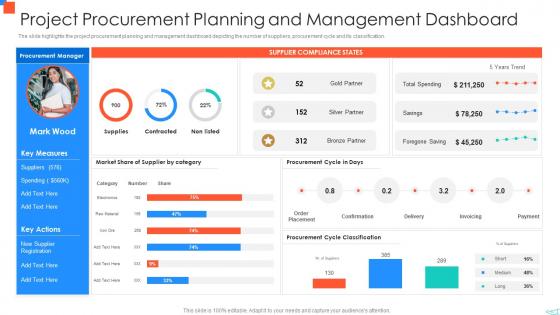
Project Procurement Planning And Management Dashboard




Try Before you Buy Download Free Sample Product
 Impress Your
 Audience
 100%
100% Editable
 Save Hours
 of Time


The slide highlights the project procurement planning and management dashboard depicting the number of suppliers, procurement cycle and its classification.
People who downloaded this PowerPoint presentation also viewed the following :
Project Procurement Planning And Management Dashboard with all 7 slides:
Use our Project Procurement Planning And Management Dashboard to effectively help you save your valuable time. They are readymade to fit into any presentation structure.





FAQs for Project Procurement Planning
So there's four main steps: planning, sourcing, evaluation, and contract management. First you define what you actually need and figure out your strategy. Then you find vendors and get their proposals. Evaluation's probably the most critical part - that's where you compare bids and negotiate. Contract management comes last, where you monitor how they're doing and deal with problems. Honestly, most people want to skip straight to picking vendors because it feels more exciting, but don't. Spending extra time upfront getting your requirements right will save you so much headache later.
Start by figuring out what you actually need - timeline, budget, how complex this thing is. Do you have the right people in-house or need outside experts? I've watched so many teams just go with whoever's cheapest and then regret it later. Fixed-price works if your scope is locked down, but time-and-materials gives you wiggle room when requirements change (and they always do). Check out potential vendors' past work too. Honestly? Write out 2-3 different scenarios, crunch the numbers, then decide. Don't rush this part.
Dude, solid supplier relationships are honestly everything in project procurement. They'll make or break your timelines, budget, and quality. Good communication means faster fixes when stuff goes sideways. Suppliers you've built trust with? They're gonna be way more flexible when deadlines get crazy - which happens literally every time. I've seen suppliers bend over backwards for PMs they actually like working with. Don't treat them like just another vendor. Set up regular calls, be upfront about what you need and your constraints right from the start. Think partnership, not transaction.
Track cost variance and schedule adherence first - those are your bread and butter metrics. Quality scores from suppliers matter too, and honestly most people sleep on this one even though it'll bite you later. Don't forget supplier responsiveness and how well they stick to contracts. Set baseline targets for each, then do monthly reviews with your team. Catching problems early beats scrambling to fix them later. Oh, and schedule adherence basically just means are they delivering on time - sounds fancier than it is.
Honestly, going digital with procurement is a total game-changer. Automated workflows handle the boring stuff while you get real-time tracking of where money's actually going. No more Excel hell! AI tools can spot weird spending patterns too, which is pretty cool. The best part? Everything lives in one dashboard so people can see updates instantly instead of bugging you constantly. I'd start with whatever you buy most often - that's where you'll notice the difference right away. Plus having all your vendor info centralized makes life so much easier.
Honestly, the biggest headaches you'll deal with are vendors flaking out, costs spiraling, crappy quality, and everything running late. Scope creep will absolutely destroy you if you're not careful. Do your homework on vendors before signing anything - I can't stress this enough. Build in penalty clauses and set up clear metrics with regular check-ins. Always have backup suppliers ready to go. Weekly calls are a must, and escalate problems fast before they snowball. Don't just disappear after the contract's signed - that's where most people mess up.
Honestly, local regs will mess with your head on international projects. Each country throws different legal hoops at you - tax rules, labor laws, import restrictions, the whole nine yards. Brazil's particularly annoying with their local sourcing requirements (seriously, what a headache). Currency controls pop up where you least expect them. Contract enforcement works totally different too, plus random certification processes that don't exist at home. Get local lawyers involved right away - I can't stress this enough. And pad your timeline because navigating this stuff always takes longer than you think.
Look, stakeholders are the people who'll actually live with whatever you buy, so get them involved early. Their input helps you nail down real requirements instead of guessing. Finance sees budget red flags, IT spots technical issues, end users know what actually works day-to-day. Without them, you risk picking something that looks great on paper but nobody wants to touch - honestly such a waste of time and money. Map out who you need before drafting your RFP. Getting buy-in upfront beats dealing with complaints later when it's too late to change course.
Honestly, good negotiation skills can save you a ton of money - like 15-20% if you know what you're doing. Before talking to any vendors, research what others are paying and figure out your non-negotiables vs. the stuff that'd be nice but isn't make-or-break. Don't just focus on price though. Payment terms, delivery dates, quality guarantees - all that matters too. The sweet spot is finding deals where both sides win something, which sounds cheesy but actually works. Oh, and always come prepared with the right questions. Most people wing it and leave money on the table.
Honestly, just stick to the basics: be fair, keep things transparent, and don't let personal stuff mess with your decisions. Run a competitive process - none of that shady backdoor nonsense we've all heard horror stories about. Document everything you do and keep vendor info confidential. Watch out for gifts or fancy dinners that might cloud your judgment (I mean, who doesn't love a good steak dinner, but you know what I mean). If any relationships could influence your choice, be upfront about it. Simple test: would you be okay if this whole process ended up on the front page tomorrow?
Honestly, green procurement is huge right now. Companies are picking suppliers with eco certifications and sustainable materials even when they're pricier upfront. It's not just for good PR anymore - there's real business reasons behind it. Lifecycle costs matter, plus you've got regulatory stuff to worry about. Most RFPs I see now have mandatory sustainability requirements built right in. My advice? Just straight up ask suppliers about their environmental practices during evaluations. The ones worth working with will have solid answers ready. Trust me, this trend isn't going anywhere.
Ugh, scope changes are the worst - they basically blow up your whole procurement plan. You'll have to figure out what you actually need now, which means different vendors, new contract terms, maybe a totally different budget. Sometimes it's just ordering more stuff, but I've seen projects where suddenly you need completely different expertise or suppliers. My advice? Update your procurement plan the second scope changes hit. Seriously, don't put it off because that delay will mess with your timeline and budget down the road. It's annoying but you gotta stay on top of it.
Honestly, don't treat compliance like something you'll figure out later - build it right into your process from the start. Make sure your team actually gets the procurement policies instead of just knowing they exist somewhere in a random shared folder. Templates with compliance stuff already baked in are a lifesaver. Clear checklists and approval workflows that match what your org actually requires will save you so much headache. Oh, and set up those automated deadline reminders because people forget everything. Regular training when policies change keeps everyone on the same page. The whole point is making it feel natural, not like you're drowning in red tape.
Dude, don't rush picking vendors just to save a few bucks - that always backfires. Get super clear on what you actually need first, otherwise you'll end up with scope creep nightmare. I swear, half the horror stories I hear start with "we went with the cheapest bid." Communication is huge too - check in regularly instead of just hoping they deliver. Oh, and definitely set up performance metrics from the start so you're not scrambling later. Basically spend way more time on the planning phase than you think you need. Trust me on this one.
Look, stakeholders don't want novels - they want the basics. What are you buying, when's it arriving, and will it screw up the timeline? I'd make simple dashboards showing budget vs actual spend and delivery dates. Weekly calls beat long email chains every time. Skip the procurement speak too, nobody cares about your vendor evaluation matrix or whatever. They're basically thinking: are we gonna go over budget or miss our deadline? Oh and if something's delayed, tell them what that actually means for the project. Quick updates keep everyone happy without the drama.
-
Innovative and Colorful designs.
-
Innovative and attractive designs.