Medical Sales Representative Strategy Playbook Powerpoint Presentation Slides
Try Before you Buy Download Free Sample Product
Audience
Editable
of Time
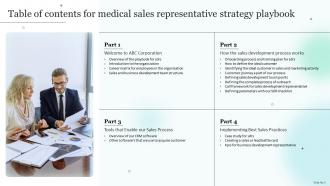
A playbook serves as a blueprint for your organization as it helps the organization by efficiently guiding them and optimizing the process. Here is a professionally designed Medical Sales Representative Strategy Playbook that helps you with new SDRs onboarding process. The following playbook is helpful for organizations and Sales Managers intending to help their sales development representative come on board and learn about the organizations sales process. This playbook is divided into four major parts these parts serve as a step by step guide for the organization as they guide your organization by mapping out a blueprint for the organization. The first part includes the introduction, which provides an overview of the SDR playbook. The second part displays the entire process of sales, which highlights the onboarding process, ideal customer profile identification process, client journey, etc. The third part of the playbook displays the essential tools that enable the sales process these tools are assessed on various metrics. In the end, the best practices for sales are shown along with a case study. Download our 100 percent editable and customizable template.

People who downloaded this PowerPoint presentation also viewed the following :
Content of this Powerpoint Presentation
Slide 1: This slide introduces Medical Sales Representative Strategy Playbook. State Your Company Name and begin.
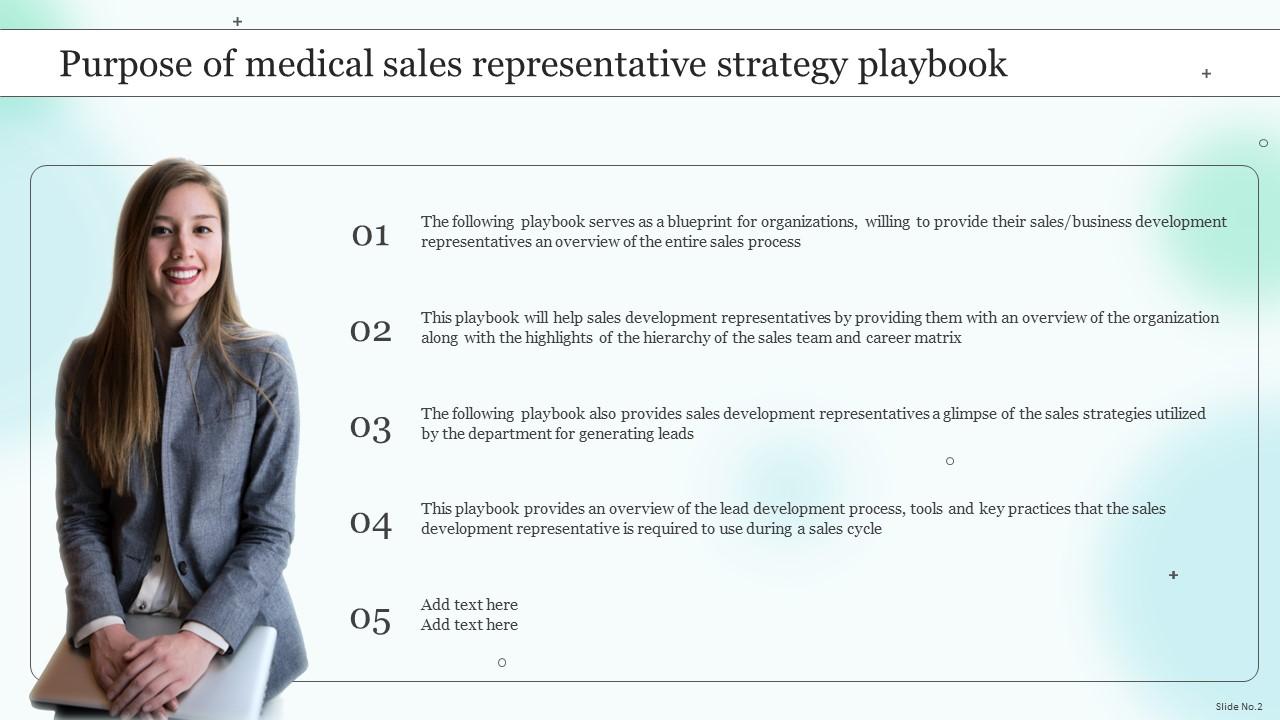
Slide 2: This slide shows Purpose of medical sales representative strategy playbook.
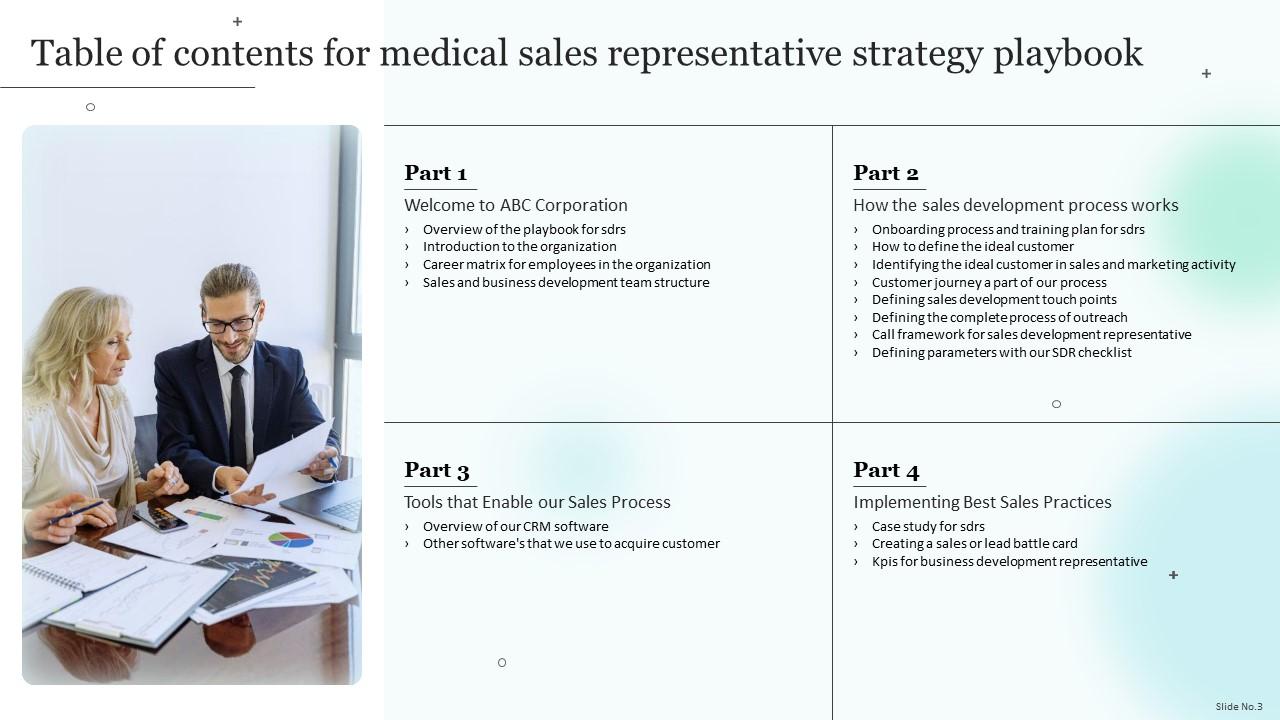
Slide 3: This slide presents Table of Content for the presentation.
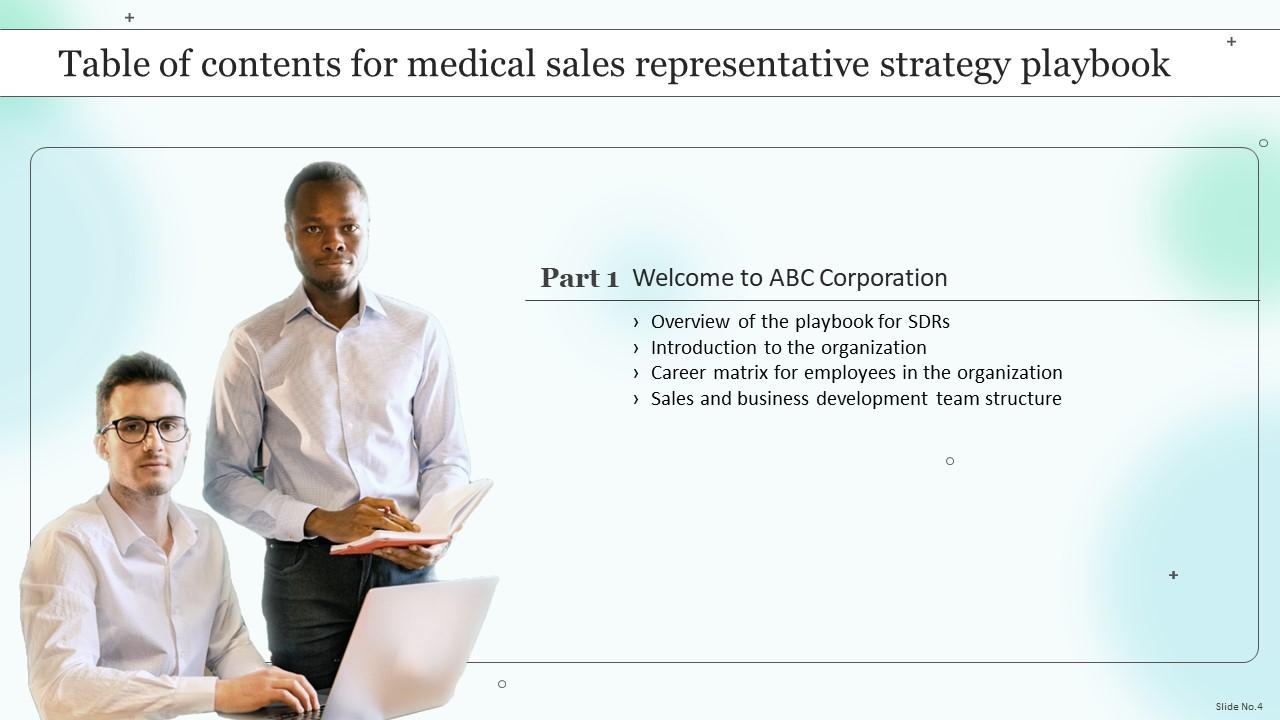
Slide 4: This slide highlights title for topics that are to be covered next in the template.
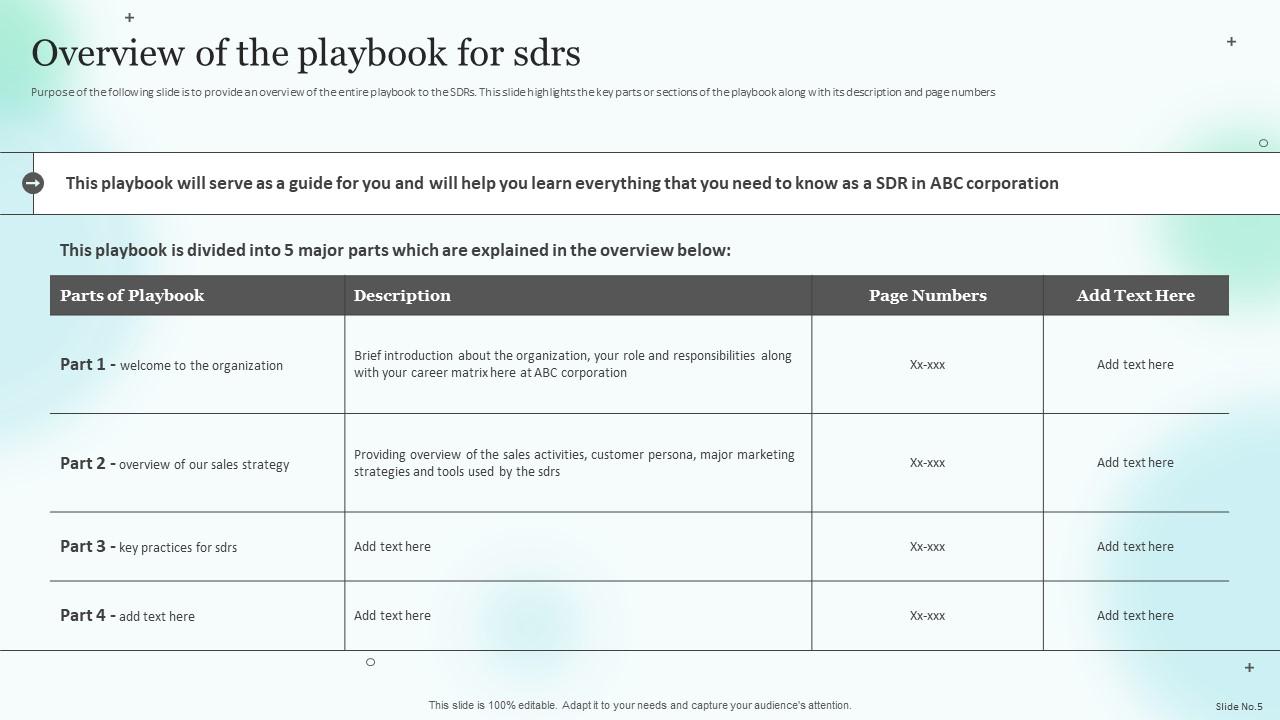
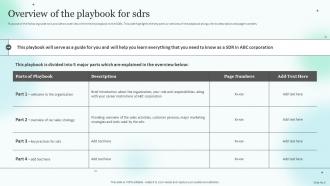
Slide 5: This slide displays overview of the entire playbook to the SDRs.
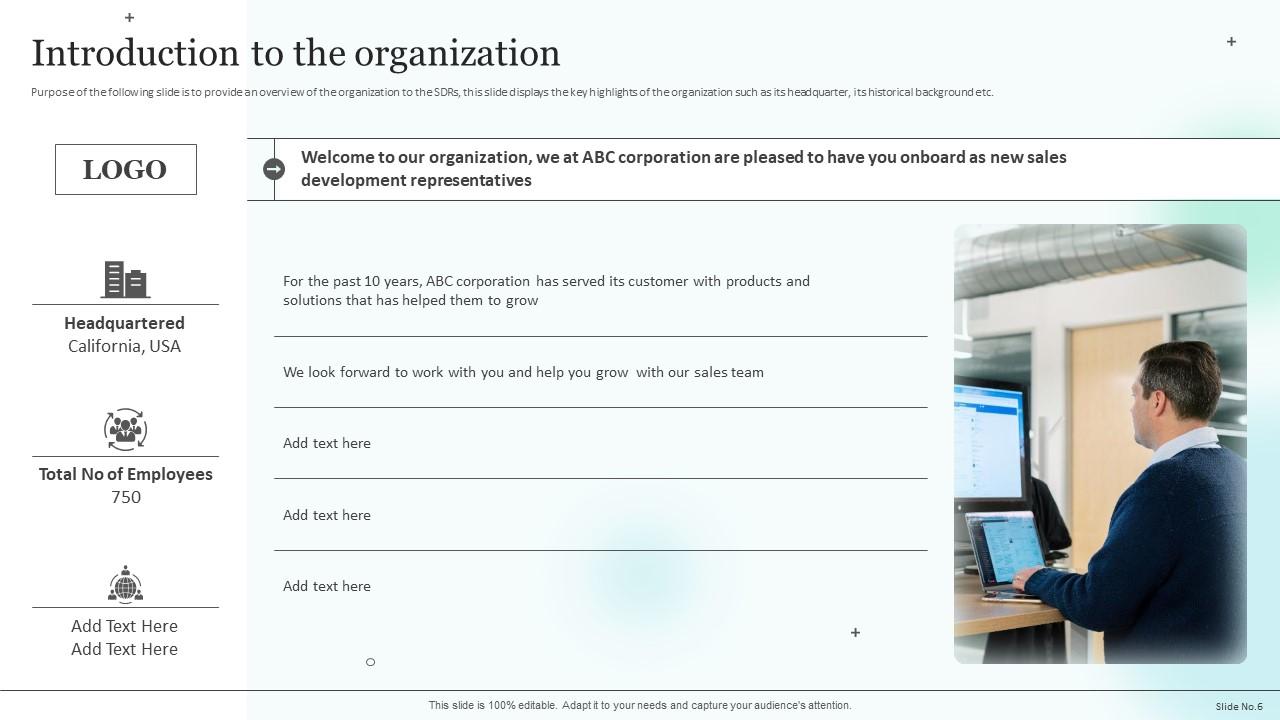
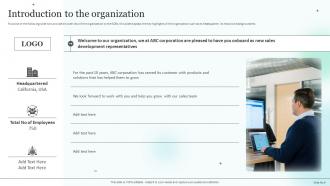
Slide 6: This slide represents key highlights of the organization such as its headquarter, its historical background etc.
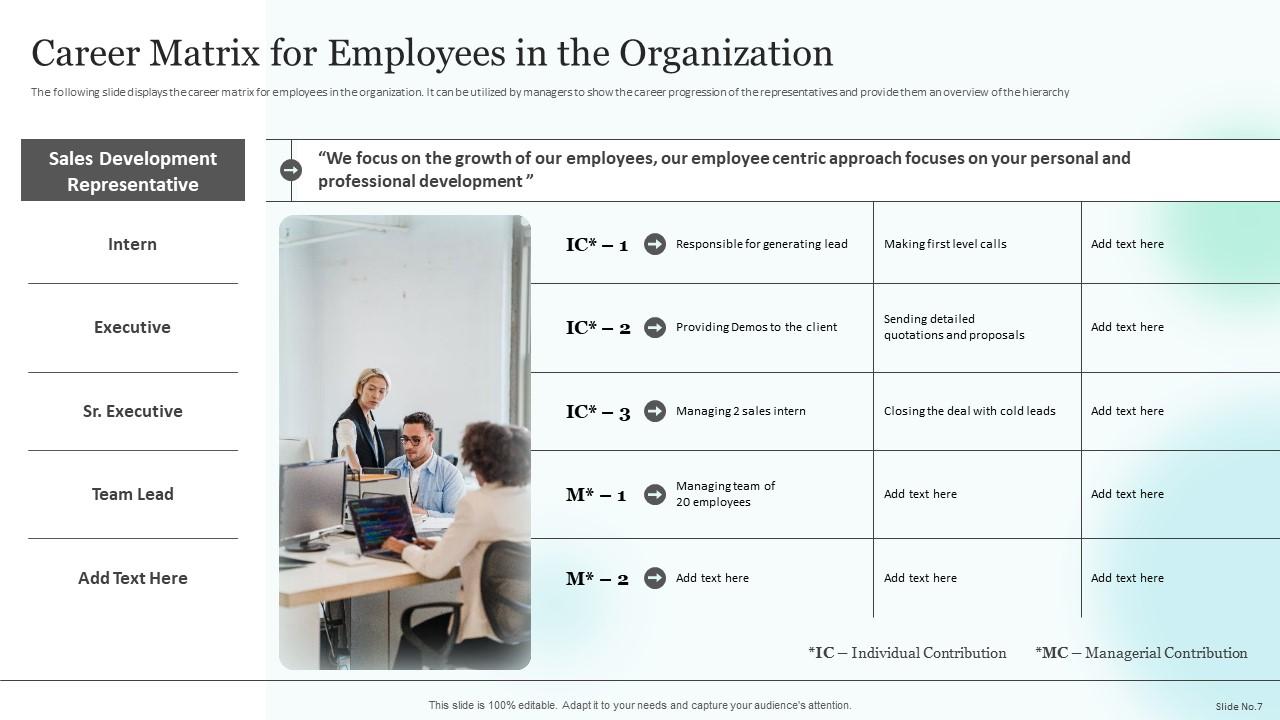
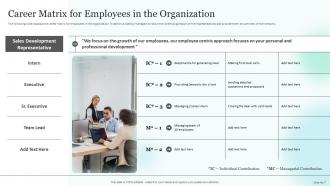
Slide 7: This slide showcases Career Matrix for Employees in the Organization.
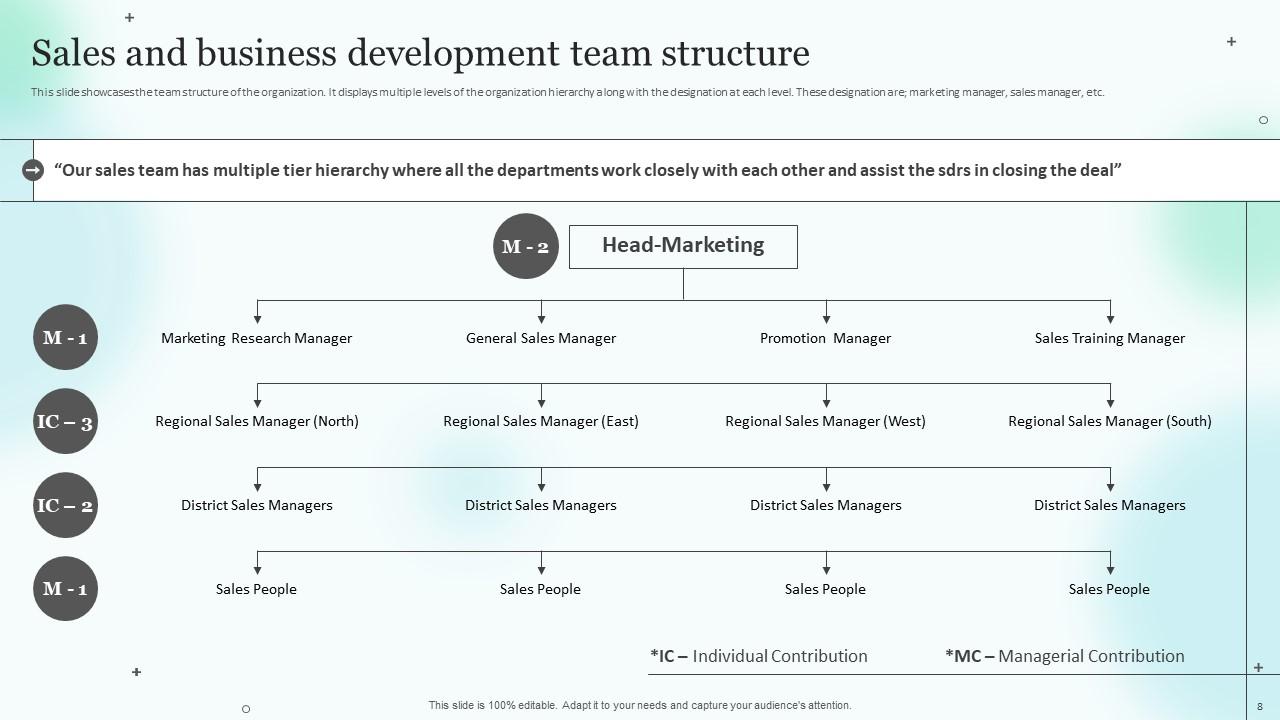
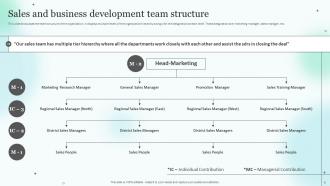
Slide 8: This slide shows Sales and Business Development Team Structure.
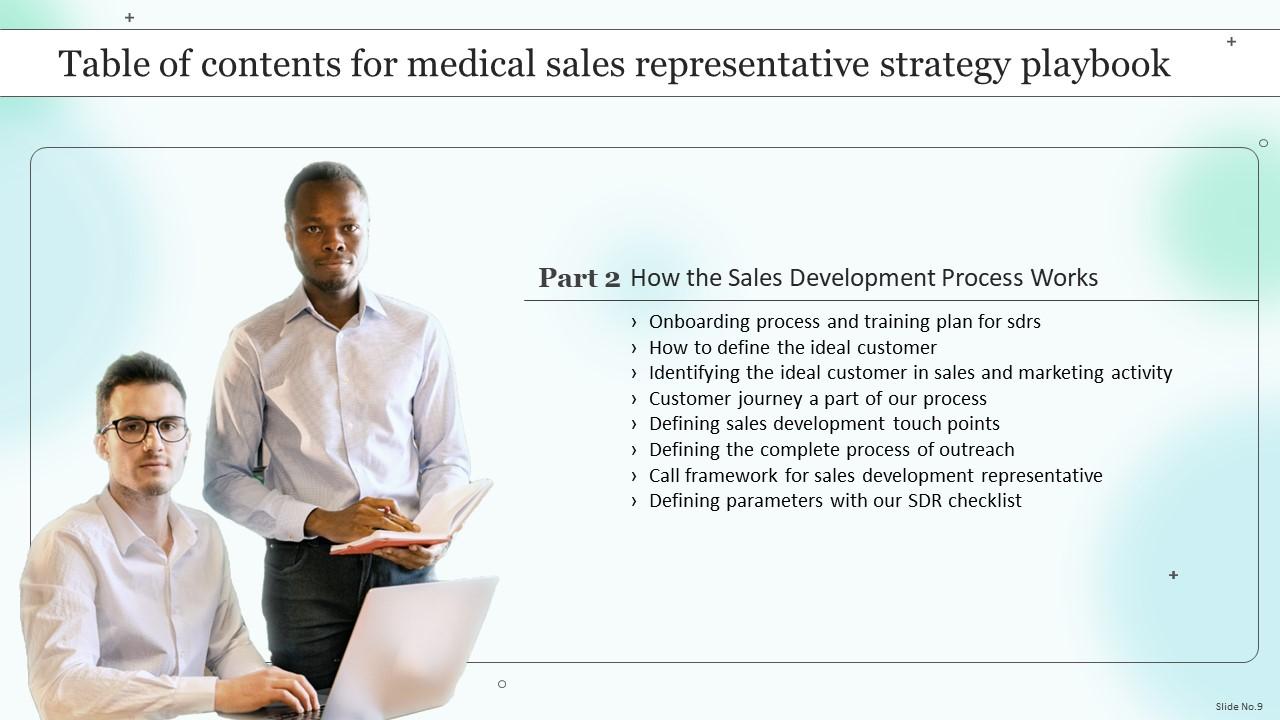
Slide 9: This slide highlights title for topics that are to be covered next in the template.
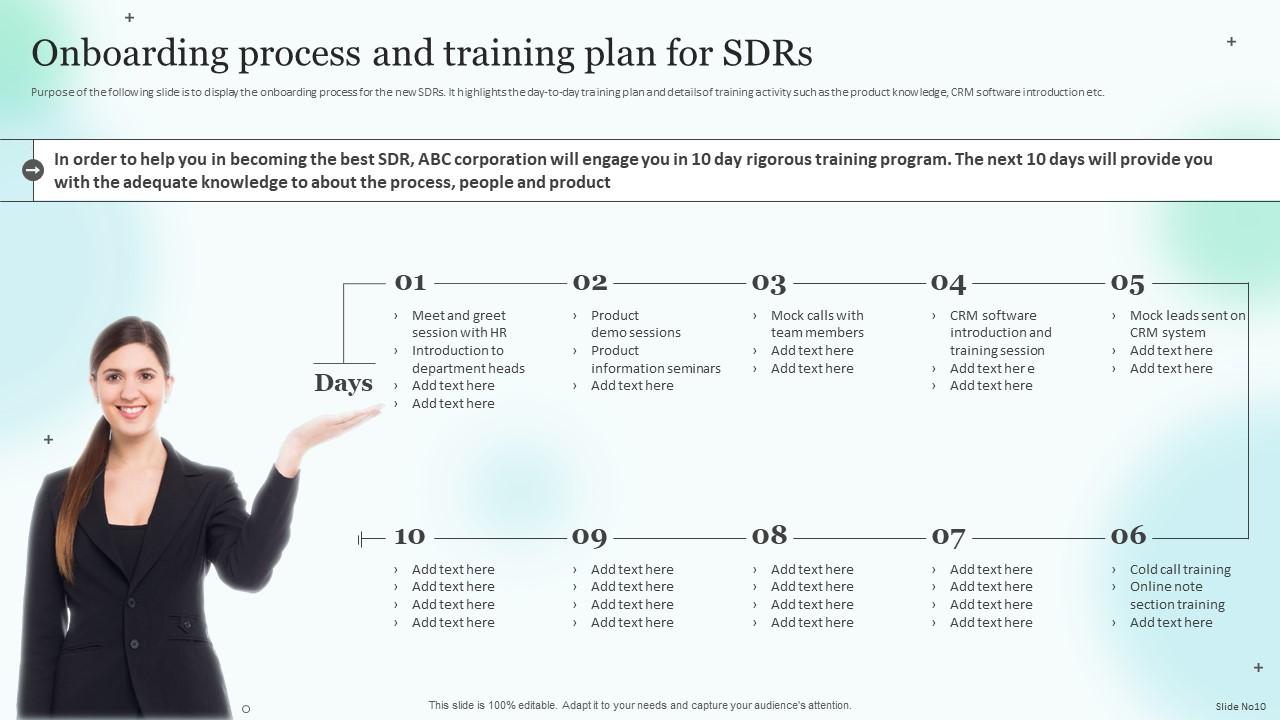
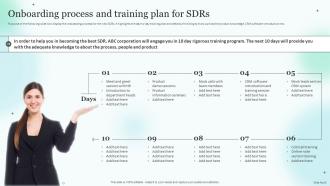
Slide 10: This slide presents Onboarding Process and Training Plan for SDRs.
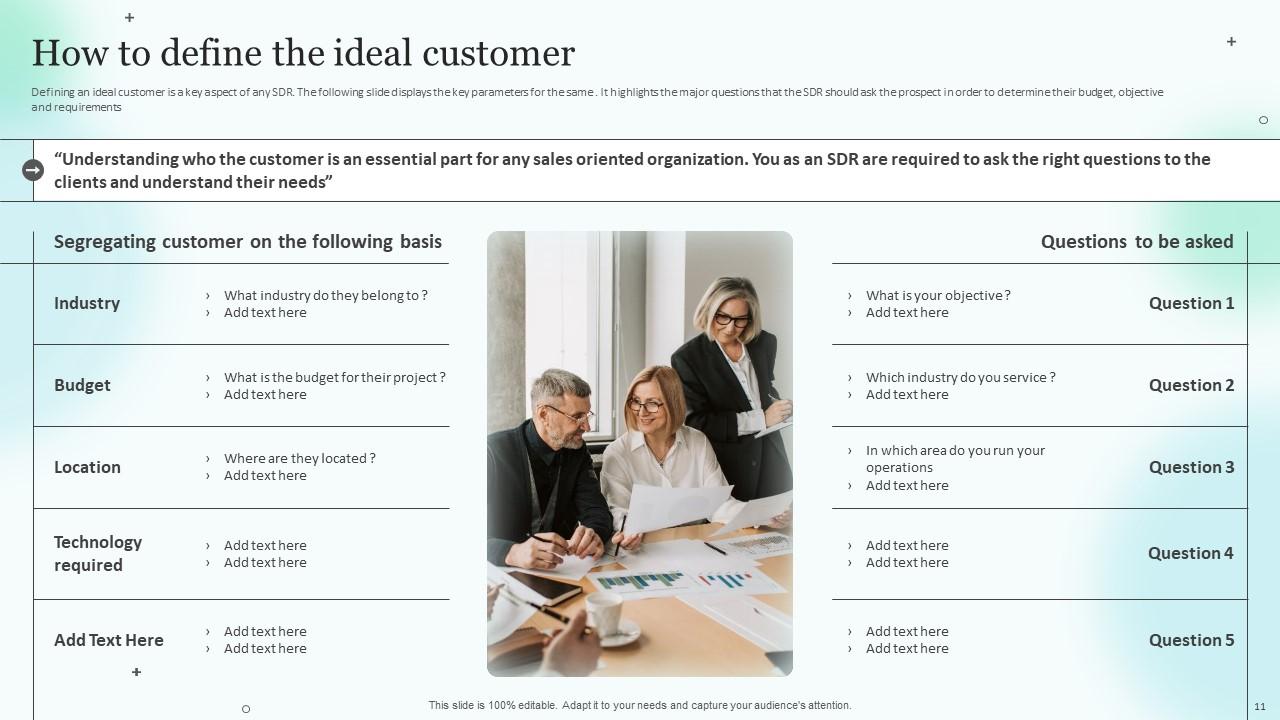
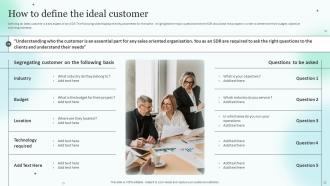
Slide 11: This slide displays major questions that the SDR should ask the prospect in order to determine their budget, objective and requirements.
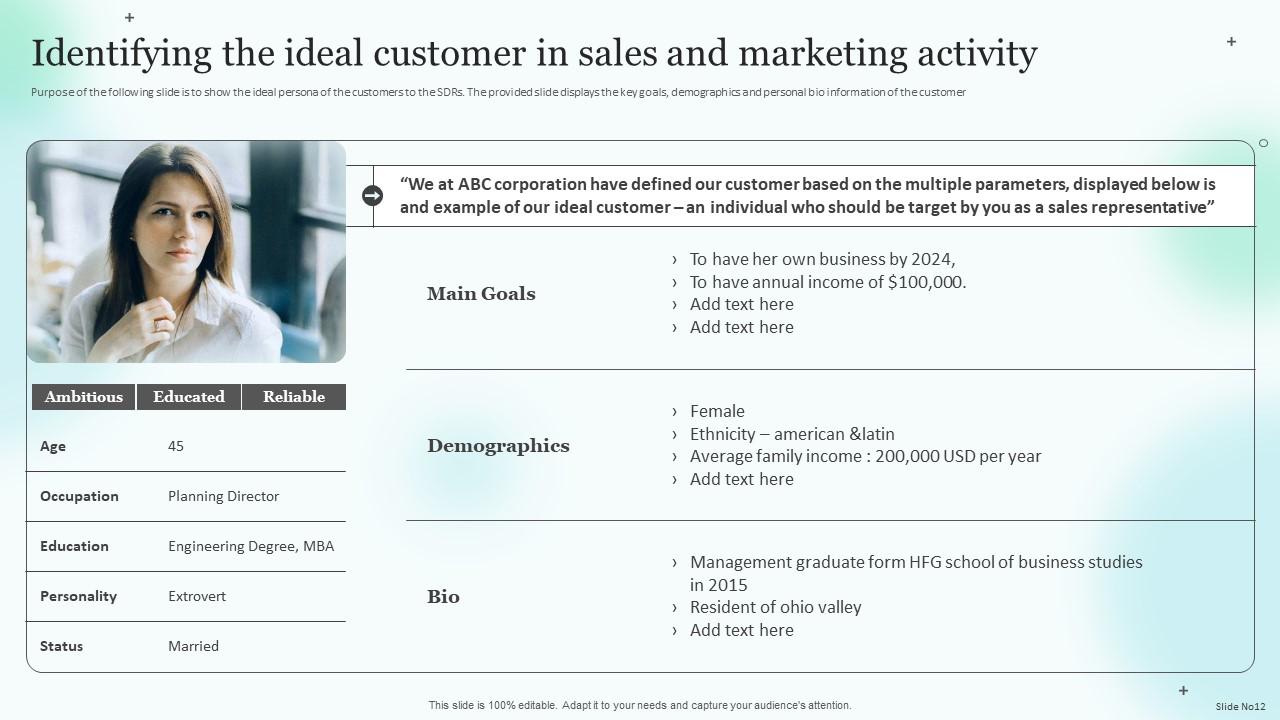
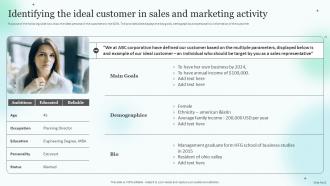
Slide 12: This slide represents Identifying the Ideal Customer in Sales and Marketing Activity.
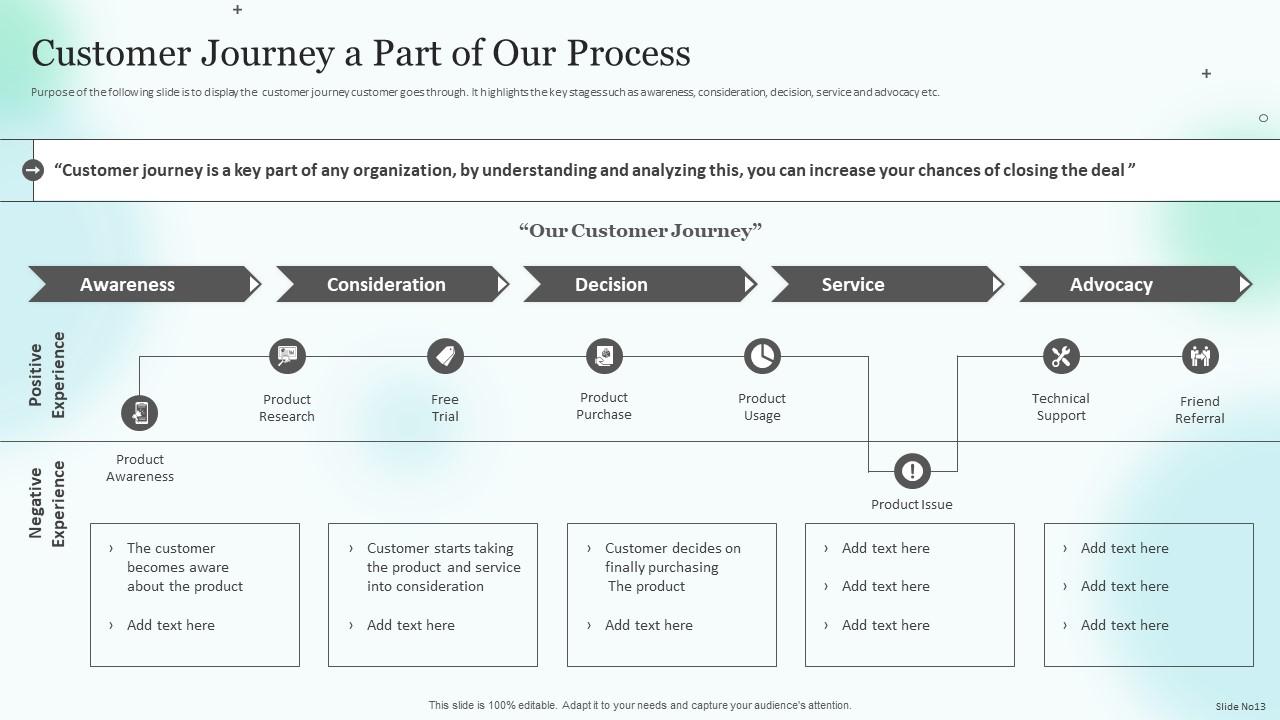
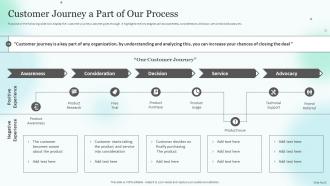
Slide 13: This slide showcases Customer Journey a Part of Our Process.
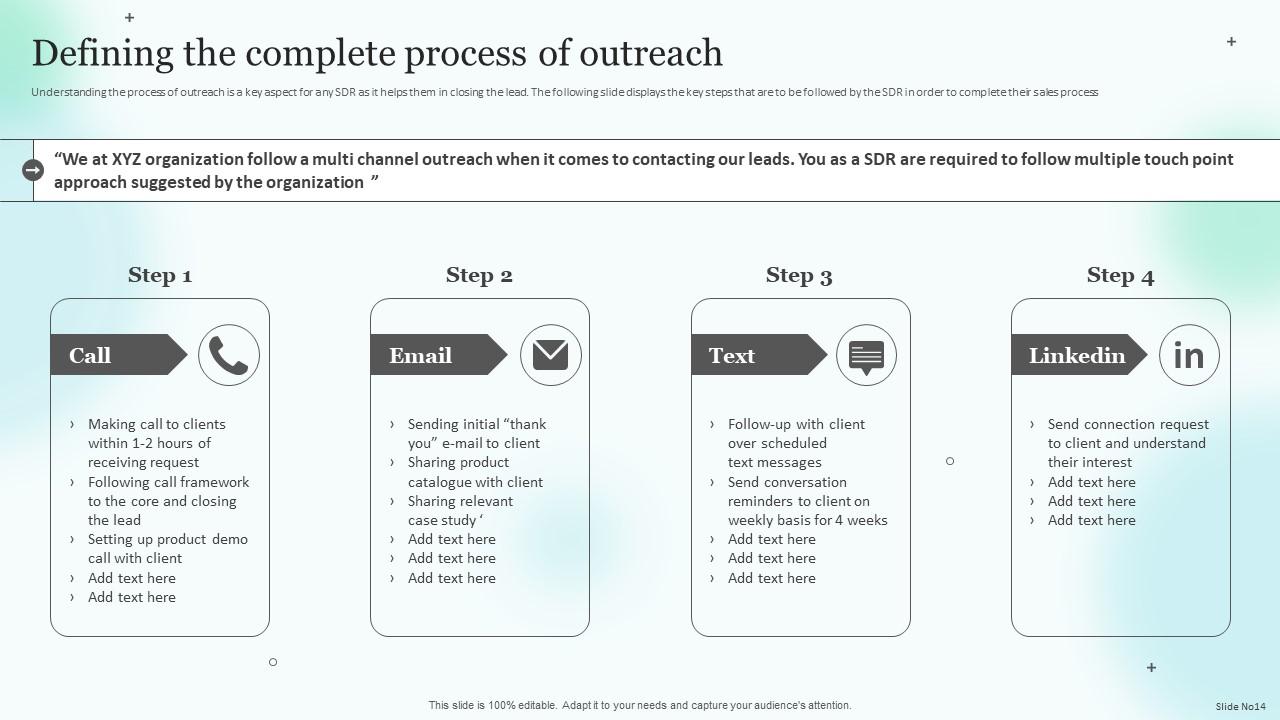
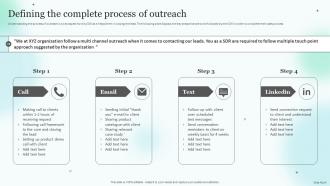
Slide 14: This slide shows Defining the Complete Process of Outreach.
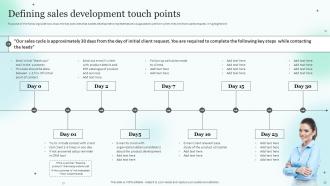
Slide 15: This slide presents key activities that a sales development representative is supposed to perform when they receive a sales request.
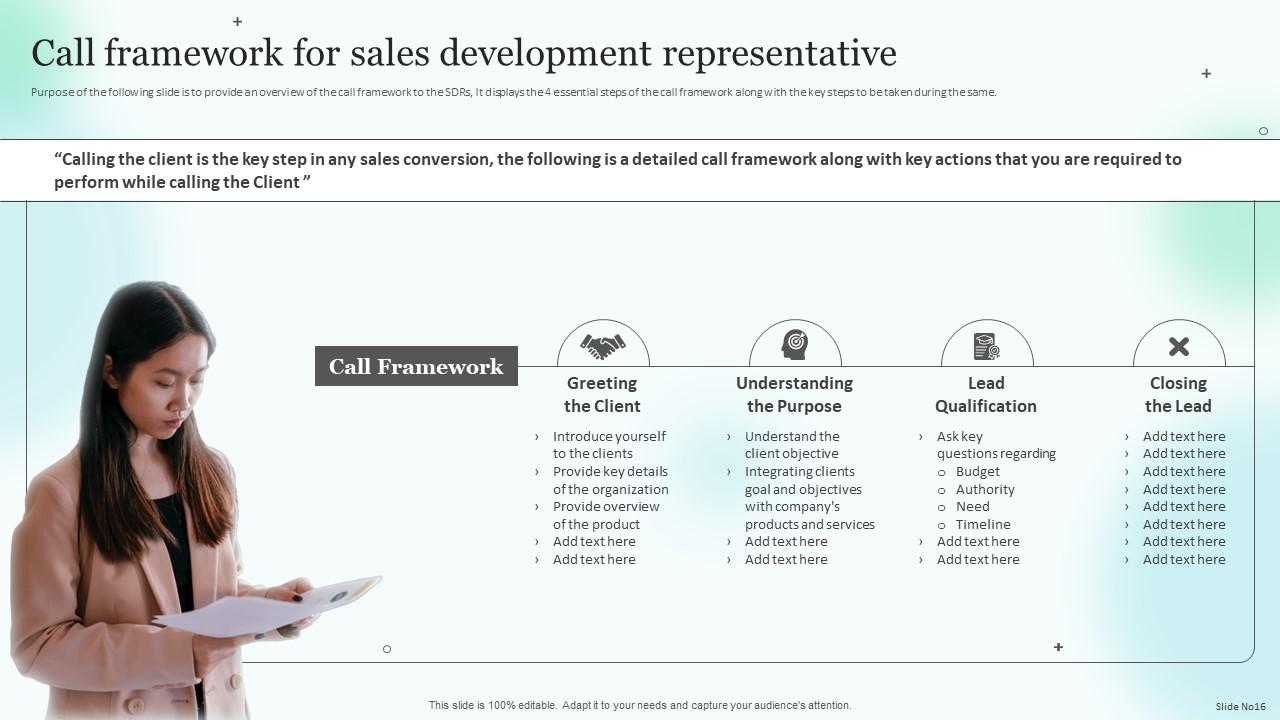
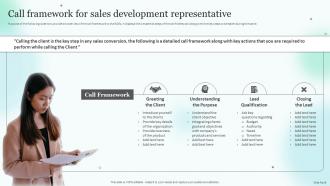
Slide 16: This slide displays Call Framework for Sales Development Representative.
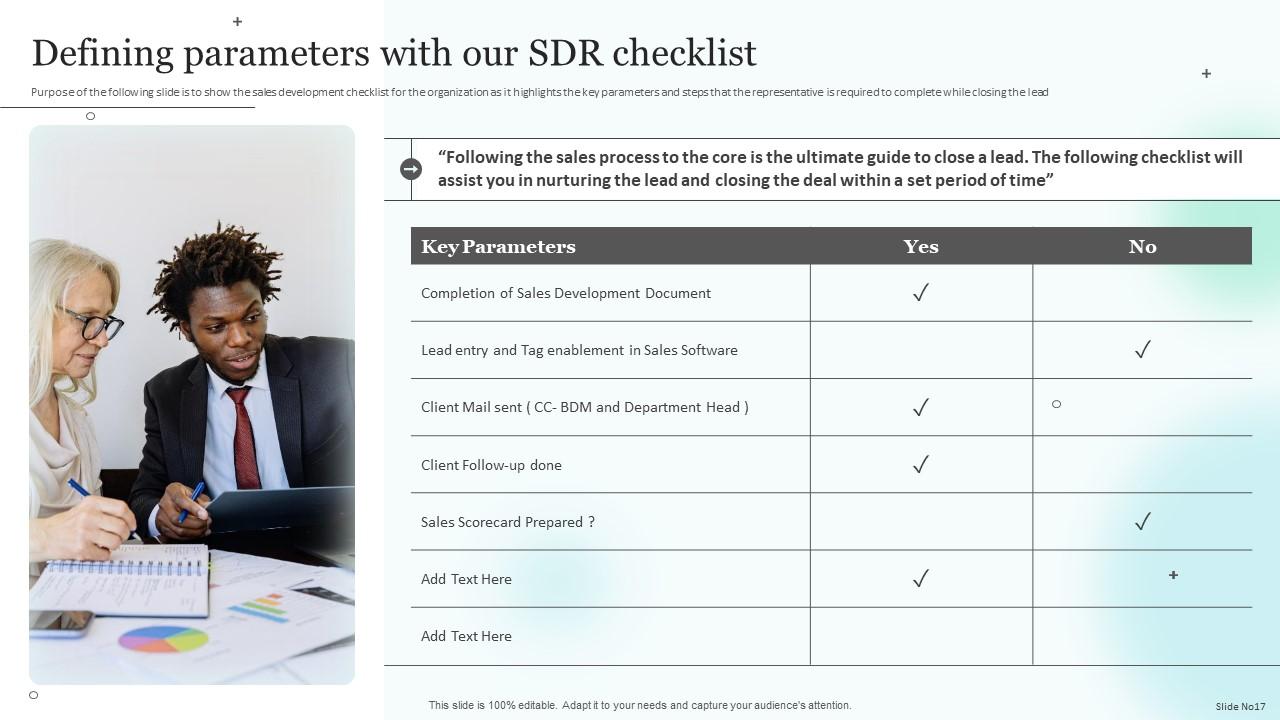
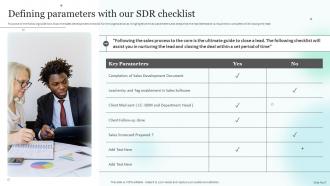
Slide 17: This slide represents Defining Parameters with Our SDR Checklist.
Slide 18: This slide highlights title for topics that are to be covered next in the template.
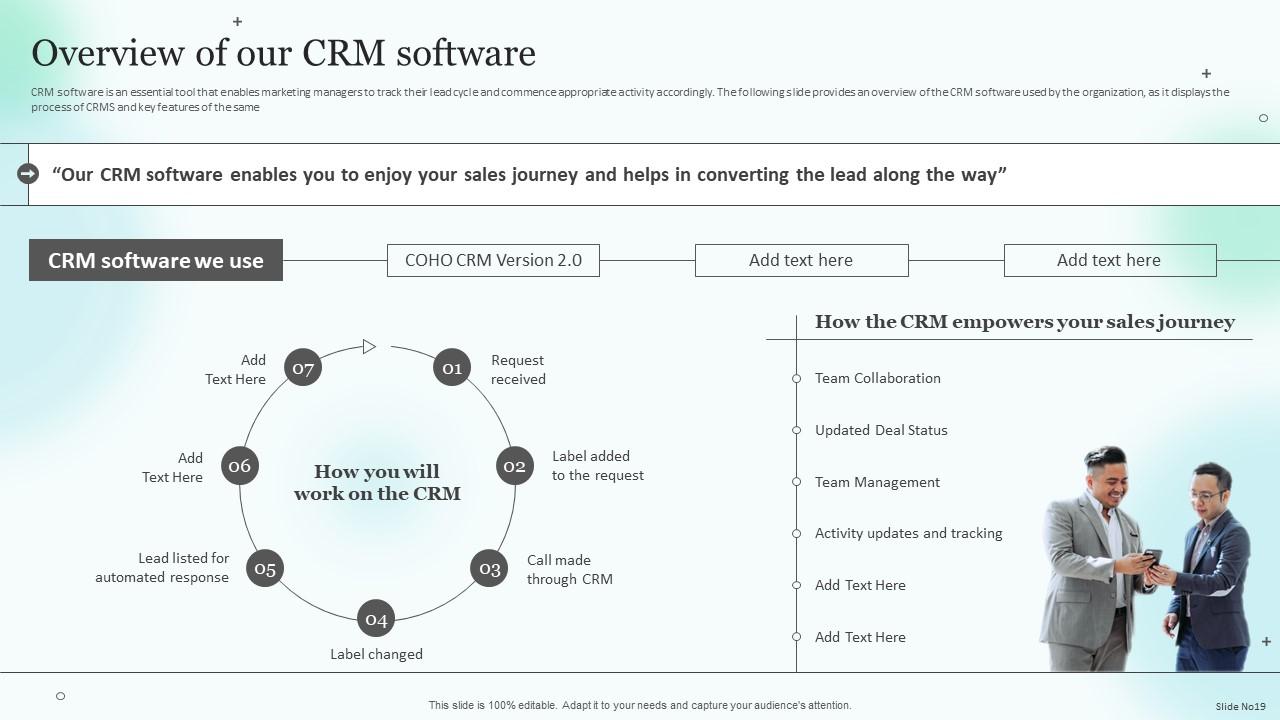
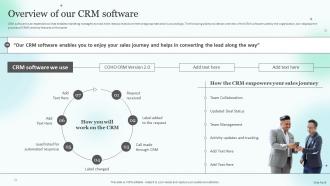
Slide 19: This slide showcases Overview of Our CRM Software that enables marketing managers to track their lead cycle.
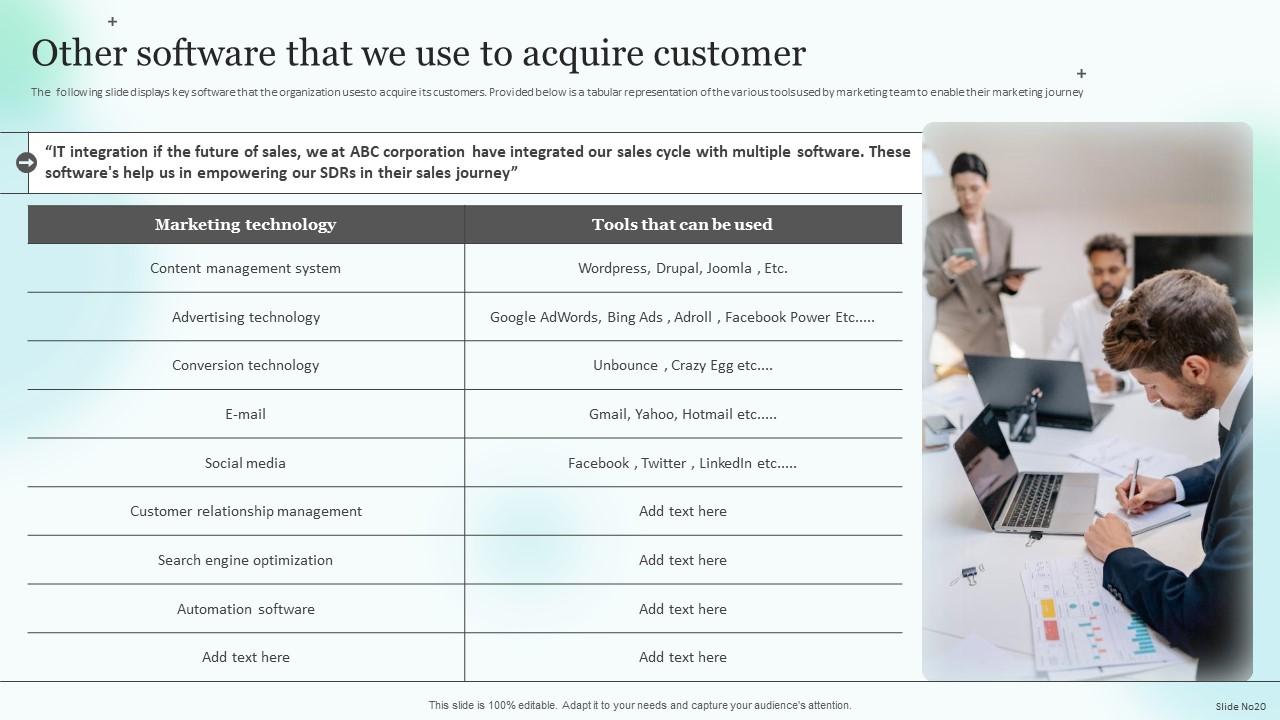
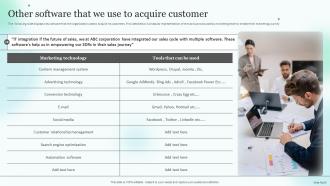
Slide 20: This slide shows Other Software that we use to Acquire Customer.
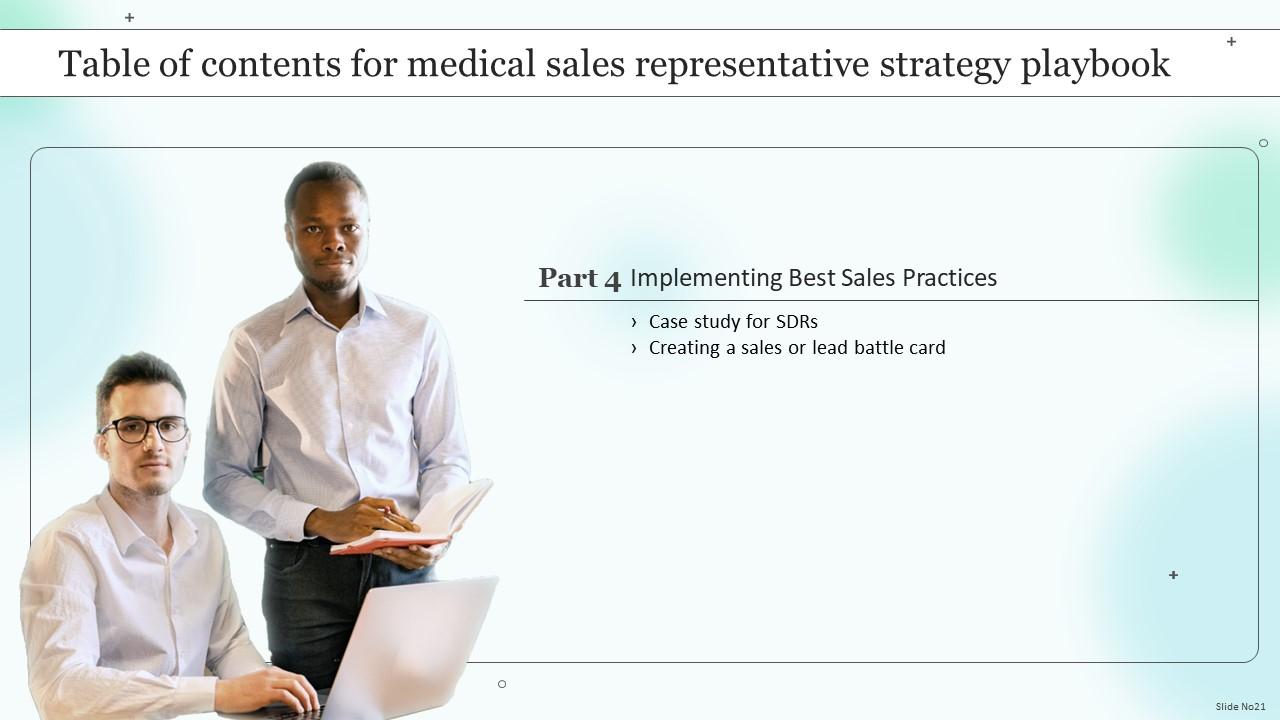
Slide 21: This slide highlights title for topics that are to be covered next in the template.
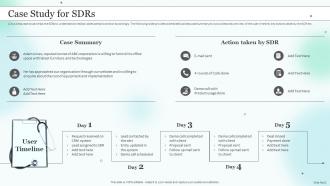
Slide 22: This slide presents case study that helps the SDRs to understand a realistic sales scenario.
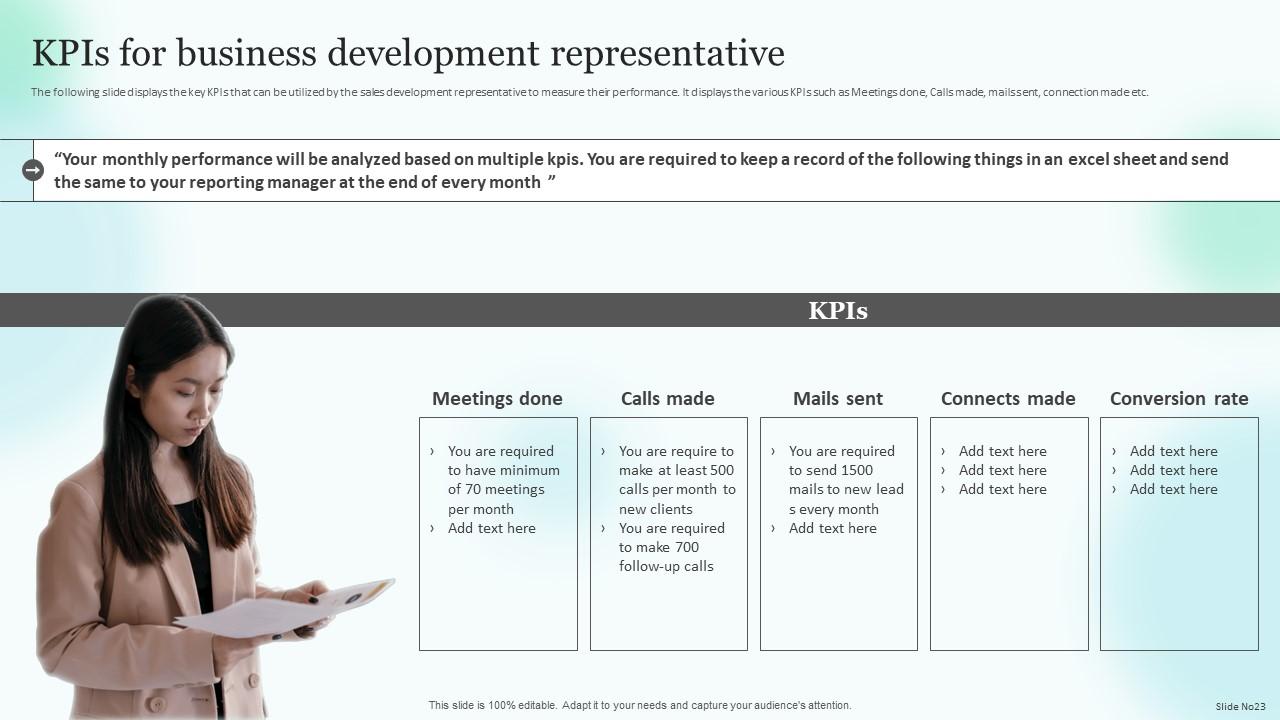
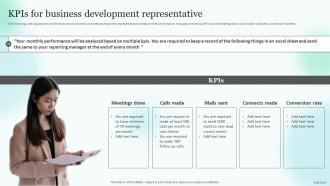
Slide 23: This slide displays KPIs for Business Development Representative.
Slide 24: This slide highlights title for topics that are to be covered next in the template.
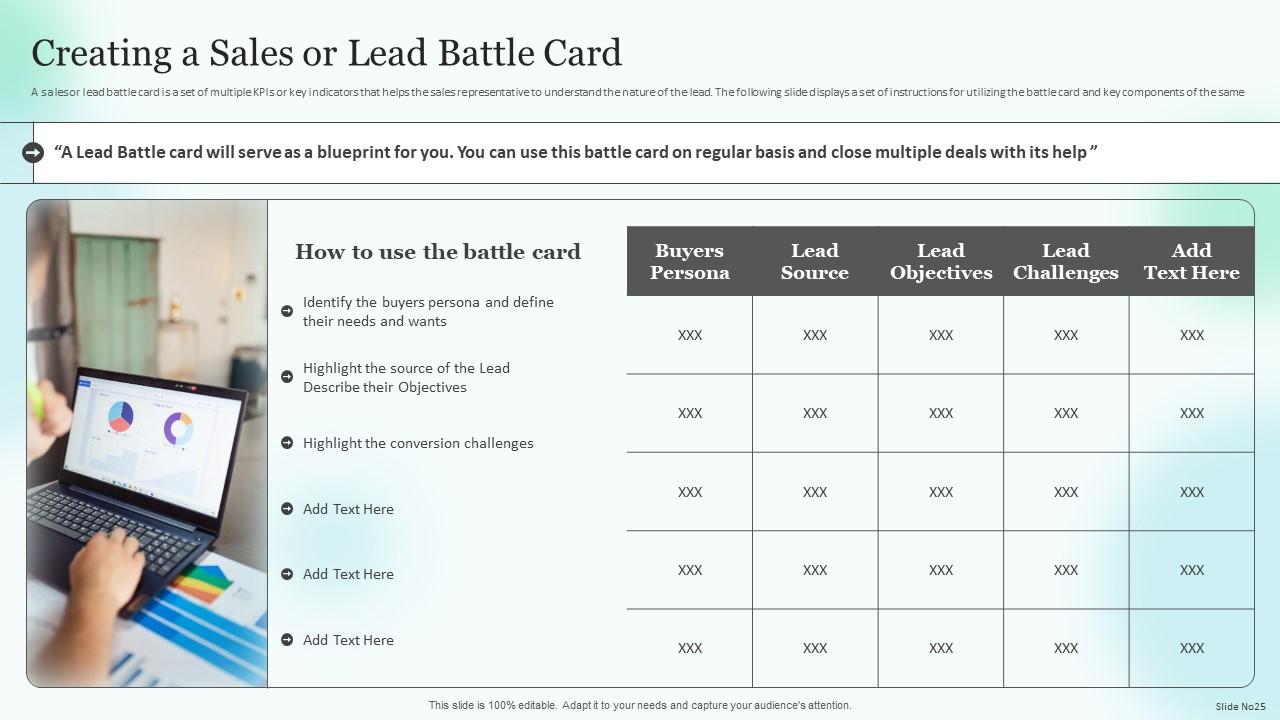
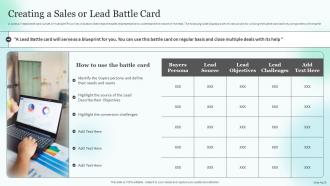
Slide 25: This slide showcases Creating a Sales or Lead Battle Card.
Slide 26: This slide displays Icons for medical sales representative strategy playbook.
Slide 27: This slide is titled as Additional Slides for moving forward.
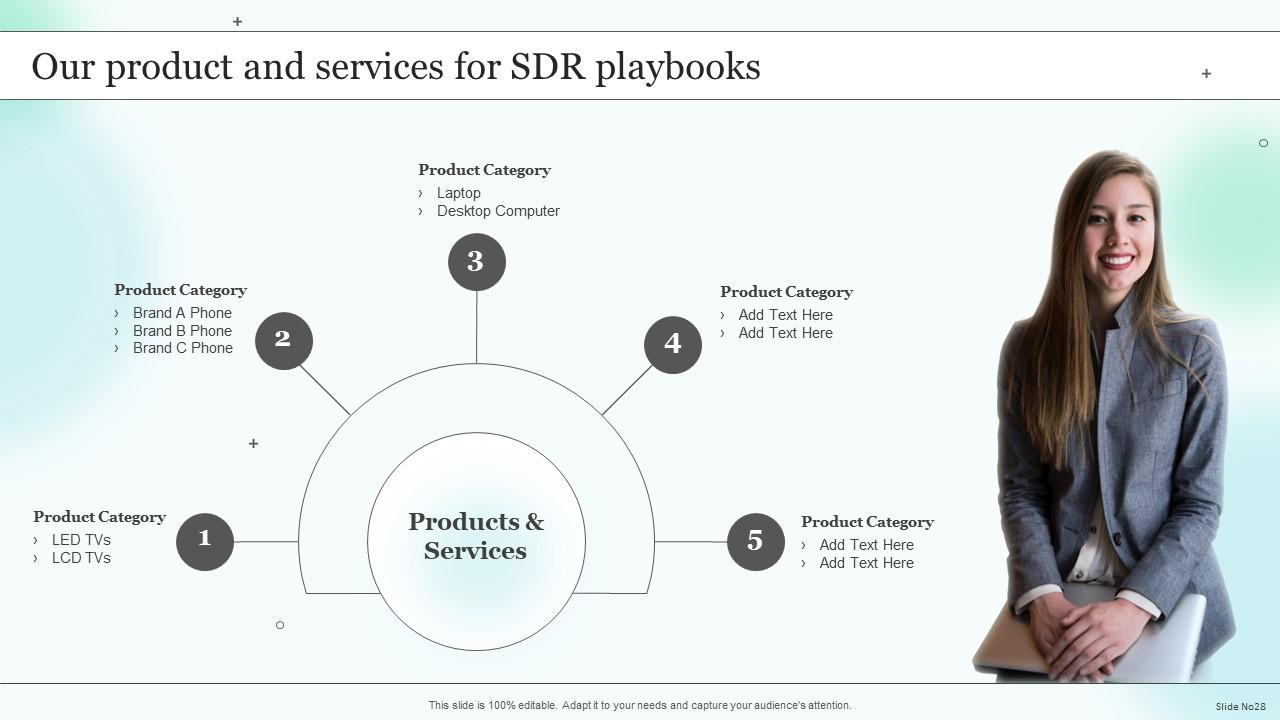
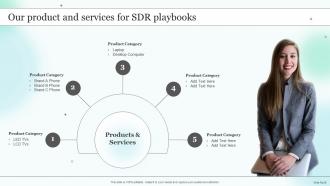
Slide 28: This slide shows Our product and services for SDR playbooks.
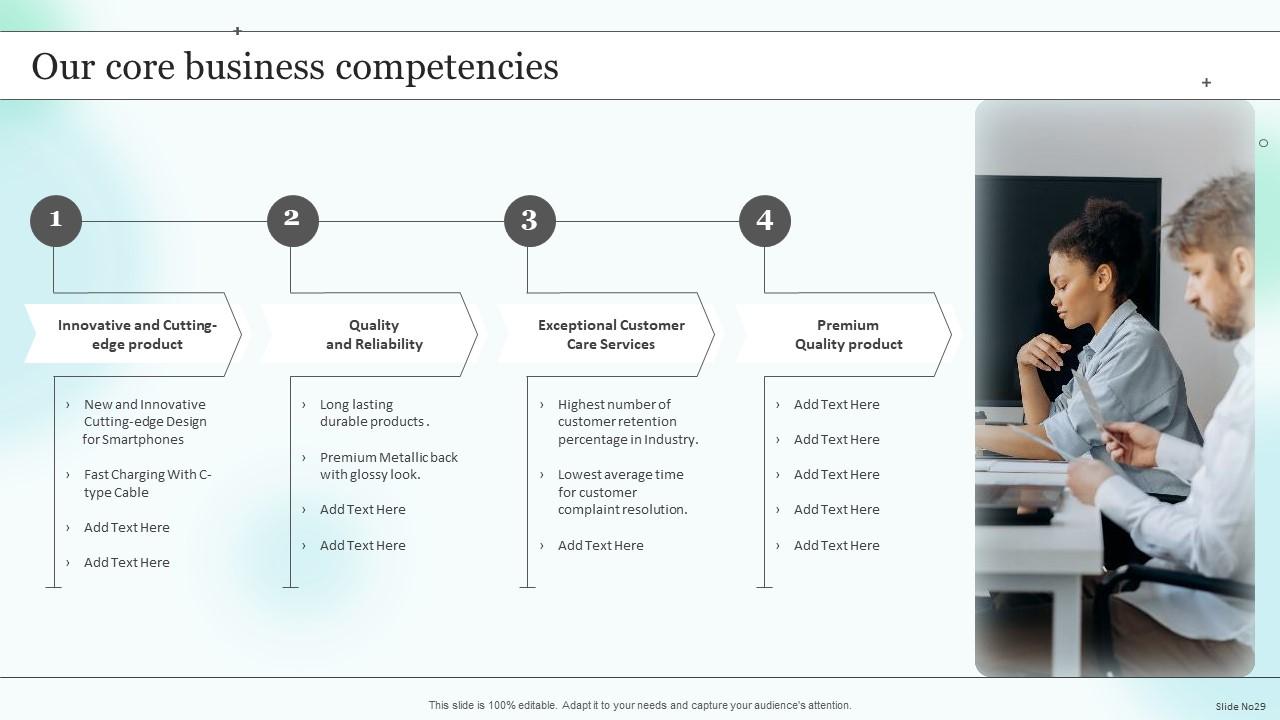
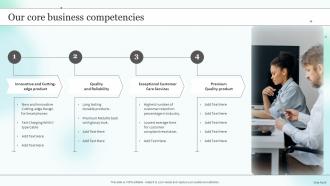
Slide 29: This slide presents Our core business competencies.
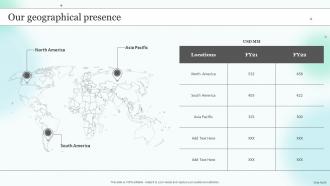
Slide 30: This slide showcases Our geographical presence.
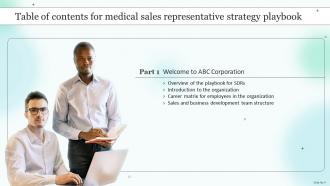
Slide 31: This slide is titled as Welcome to ABC Corporation.
Slide 32: This is About Us slide to show company specifications etc.
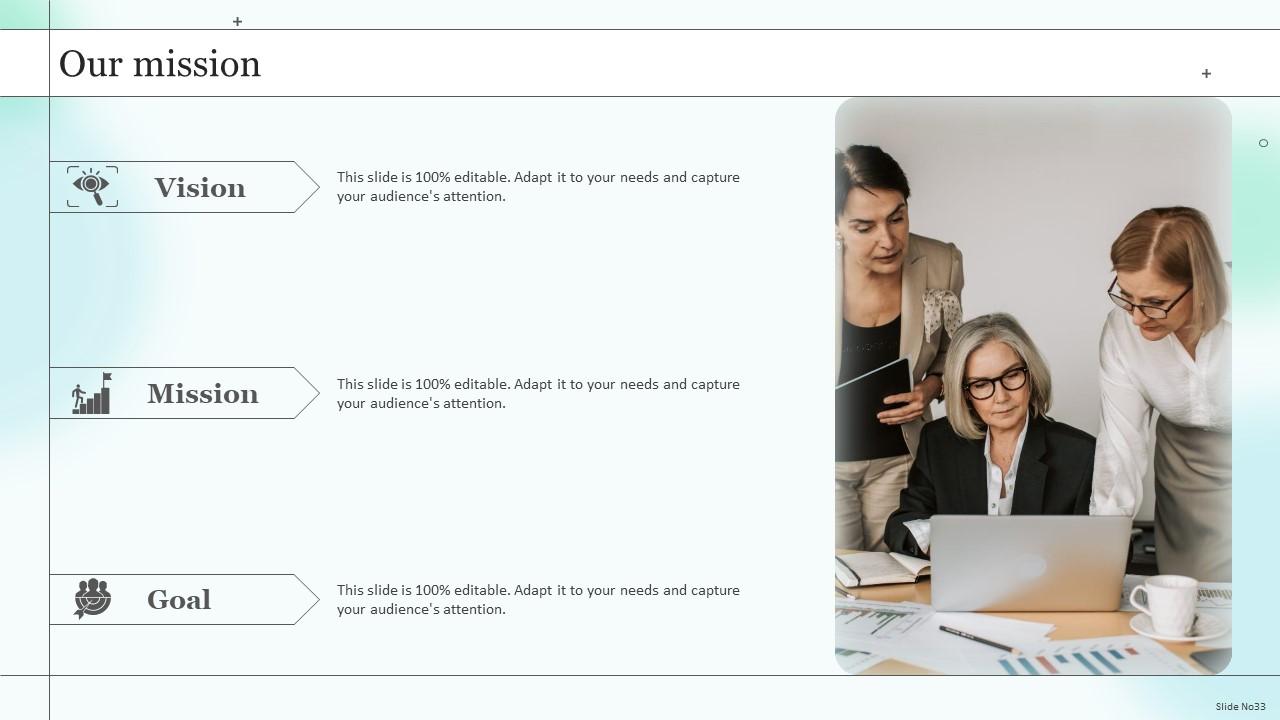
Slide 33: This is Our Mission slide with related imagery and text.
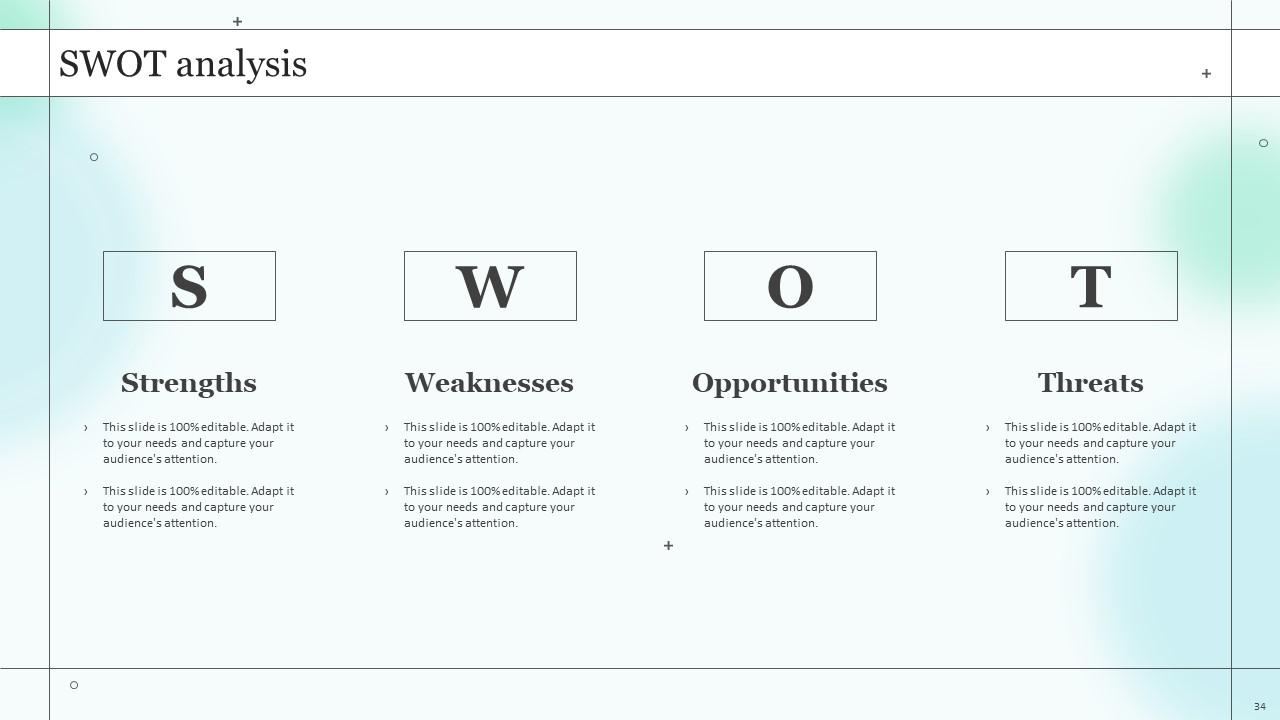
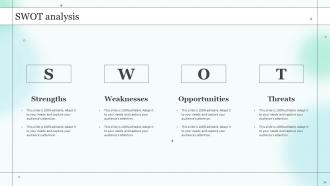
Slide 34: This slide shows SWOT describing- Strength, Weakness, Opportunity, and Threat.
Slide 35: This is Our Team slide with names and designation.
Slide 36: This slide provides 30 60 90 Days Plan with text boxes.
Slide 37: This is a Timeline slide. Show data related to time intervals here.
Slide 38: This is a Thank You slide with address, contact numbers and email address.
Medical Sales Representative Strategy Playbook Powerpoint Presentation Slides with all 43 slides:
Use our Medical Sales Representative Strategy Playbook Powerpoint Presentation Slides to effectively help you save your valuable time. They are readymade to fit into any presentation structure.
FAQs for Medical Sales Representative Strategy Playbook
Honestly, it's all about building real relationships first - doctors can spot fake enthusiasm instantly. You've got to know your clinical stuff inside and out because these people will test you. Focus on their actual problems: cutting costs, better patient outcomes, workflow headaches. Don't just pitch features; show them real numbers and results. Also, learn their buying cycles - there's nothing worse than perfect timing ruined by bad budget timing. Map out who actually makes decisions (hint: it's not always who you think). Oh, and being pushy? Yeah, that'll backfire fast in healthcare.
Look, knowing the healthcare world inside and out is huge for sales. You can actually talk their language instead of throwing random pitches at the wall. Hospitals vs private practices? Completely different beasts - different budgets, different people making decisions, different headaches keeping them awake. I learned this the hard way after wasting months on the wrong contacts. Once you figure out who controls the money and what's stressing them out, everything clicks. Oh and definitely research what's been shaking up their industry lately before you call. Trust me on that one.
Dude, you'll want to dig into whatever analytics tools your company has - most reps barely scratch the surface of what's available. The data shows you which docs are actually prescribing, who might be ready to switch from competitors, and what messages work for different specialties. Track prescription patterns and market share stuff. Honestly, the predictive analytics for ROI potential is pretty sick these days. I know it sounds nerdy, but it beats that old spray-and-pray method by miles. Personalize your pitch based on what the numbers tell you. Game changer for sure.
You've gotta match their priorities, basically. Doctors want to see the clinical data and patient outcomes first - hit them with your efficacy studies right off the bat. Hospital admins though? They're laser-focused on money, so lead with cost savings and ROI numbers. Pharmacists care about the nitty-gritty - drug interactions, dosing, formulary stuff. It's honestly like switching languages mid-conversation. Do your homework on who you're presenting to beforehand. Figure out what keeps them up at night, then open your pitch by addressing exactly that problem. Works way better than using the same generic presentation for everyone.
LinkedIn's your best bet honestly - most doctors and hospital admins are on there constantly. You can check out their recent posts and tailor your message instead of sounding like a robot. Medical conferences are solid too since healthcare people love buying from folks they've actually shaken hands with. Cold calls? Pretty much dead at this point. But here's the thing - referrals from current clients absolutely crush everything else. Just ask who they think you should talk to next. I probably should've mentioned that first since it works so damn well.
Dude, stop trying to push products right away. Ask about their actual problems first - what patient outcomes are they struggling with? Listen way more than you talk. Show up regularly even when you're not selling anything, and actually do what you say you'll do. Those reps who go overboard with fancy dinners just seem desperate honestly. Bring stuff they can actually use - clinical data, what other docs are seeing, real solutions to problems they mentioned. Know your product inside out. They need to believe you care about their patients, not just hitting your numbers.
Build compliance right into your sales process instead of slapping it on later. Your legal team might feel like the fun police, but honestly they'll save your ass. Document everything - I mean EVERYTHING - especially product claims and any convos with healthcare folks. Get your materials pre-approved so you're not sitting around waiting for reviews all the time. Train your team constantly because these regulations shift like crazy. Here's the thing though - when you're rock solid on compliance, you can actually move way faster than competitors who are always paranoid about messing up. It's kind of counterintuitive but it works.
Honestly, forget the flashy features - your customers care about results. Figure out what's actually driving them crazy first. Maybe it's workflow bottlenecks or budget pressure, who knows. Then hit them with real numbers showing how you fix that exact problem. Patient case studies are gold (just follow HIPAA obviously). Cost savings data beats pretty marketing materials every time. One thing that works really well? Bring an actual user to your demo. They'll trust another clinician way more than they'll trust you. Oh, and always leave them with concrete ROI numbers they can take to their boss.
Okay so here's the thing - doctors get bombarded with data constantly, so storytelling actually cuts through all that noise. You'll be way more memorable if you share real patient case studies instead of just rattling off product specs like every other rep. People naturally remember stories better than statistics anyway (always have). Plus it builds trust when you're talking about actual outcomes, not just features. Honestly, collecting 2-3 solid patient stories that show your product working in the real world is probably the smartest thing you can do. Then just work them into your presentations naturally.
Look, CRM systems are honestly a game changer for medical sales. They track every single touchpoint with doctors, procurement teams, whoever - so you're not scrambling to remember what Dr. Smith said three months ago. You'll see buying patterns, last order dates, which products they actually care about. Way better than just winging it based on your notes (though I still trust my gut sometimes). Medical sales cycles take forever, so those automated follow-ups save your butt. First step? Figure out what contact chaos you've got now, then find something that plays nice with your current setup.
For medical sales you really need both leading and lagging metrics - the sales cycles are brutal so you can't just wait for closed deals. Lead-to-opportunity rates matter big time, plus opportunity-to-close rates. Average deal size and pipeline velocity too. Customer lifetime value is huge since these relationships stick once you're in. Obviously quota attainment by rep. I'd also watch customer satisfaction scores closely and referral rates - healthcare people talk to each other constantly. Weekly dashboard is your friend here so you catch trends before they bite you at quarter-end. Trust me on that one.
Dude, your reps need constant training because healthcare changes so damn fast. Products evolve, regulations shift, clinical data updates - it's endless. Nothing tanks a sale faster than a rep who can't answer a doctor's technical question. I've seen it happen and it's painful to watch. Confident reps who actually know their stuff? They close more deals and build way better relationships with providers. Don't just do training once during onboarding either - make it ongoing. Your team's knowledge literally becomes what sets you apart from competitors who phone it in.
Honestly, the two big things are going digital-first and getting way better at personalization with data. Healthcare buyers want virtual demos now and expect AI insights - the old in-person pitch meetings are pretty much dead. You've gotta prove actual ROI and patient outcomes instead of just rattling off features. Remote selling is here to stay, which actually isn't terrible once you get used to it. Compliance automation is becoming huge since regulations keep getting stricter. LinkedIn social selling works better than I expected for building relationships too. I'd start by looking at your current digital setup and figuring out what feels ancient compared to buyer expectations.
Dude, cultural stuff is huge in global medical sales - like, it'll totally sink you if you get it wrong. Japan? You're looking at months of relationship building before they'll even hear your pitch. Meanwhile Germans want you to hit them with hard data from day one. Gift-giving works great in some places but can actually offend people in others (trust me on that one lol). Some cultures need group buy-in for decisions, others just need the right authority figure on board. Honestly, your best move is finding local reps who actually know this stuff inside and out. They'll save you from so many awkward mistakes.
Honestly, just listen to them first before jumping into your pitch. Don't take the pushback personally - half the time they're testing if you actually know your stuff. Ask questions to figure out what's really bugging them about it. That "feel, felt, found" thing actually works pretty well: "I get why you'd think that, Dr. Smith felt the same way, but here's what happened when he gave it a shot." Always come armed with solid studies and real patient data. Sometimes I'll even share a quick case study if it's relevant. Then ask what specific info would help them feel better about trying it. Works way better than getting defensive.
-
Thanks for all your great templates they have saved me lots of time and accelerate my presentations. Great product, keep them up!
-
Like always a great experience with you guys. Always there on the drop of hat to help.