


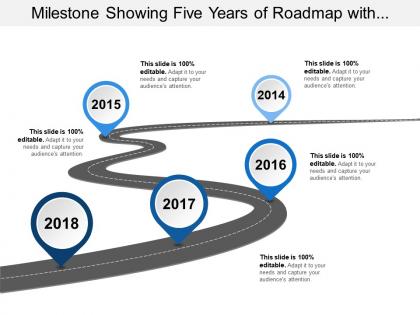
Milestone showing five years of roadmap with curved road




Try Before you Buy Download Free Sample Product
 Impress Your
 Audience
 100%
100% Editable
 Save Hours
 of Time


Spice it up with our Milestone Showing Five Years Of Roadmap With Curved Road. Your talk will excite the palates of your audience.
People who downloaded this PowerPoint presentation also viewed the following :
Milestone showing five years of roadmap with curved road with all 5 slides:
Discredit attempts at creating harmful competition with our Milestone Showing Five Years Of Roadmap With Curved Road. It helps handle any infighting.
FAQs for Milestone showing five years of roadmap
Start with timeline and milestones right up front. Dependencies and blockers need their own section too - stakeholders will grill you on risks no matter what, so beat them to it. Show your resource allocation clearly, plus any assumptions you're making. Oh, and definitely add a "what's NOT included" part because people love expanding scope once you're halfway through. Keep everything visual - walls of text kill these presentations. Nobody wants to squint at paragraphs. End with concrete next steps so there's no confusion about who does what after you leave the room.
So basically, roadmaps are way less painful when you ditch the wall-of-text approach. Color coding is your best friend - use it for priorities or different workstreams. Progress bars show what's actually done (shocking concept, right?). Swimlanes help separate who's doing what so people aren't confused about ownership. I always throw in some icons for major milestones because honestly, visual cues just work better than bullet points. Nothing fancy needed - even just adding colors to your current roadmap will make those stakeholder meetings so much smoother. Trust me on this one.
Honestly, the worst thing you can do is set everything in stone - stuff always changes anyway. Don't jam-pack your timeline with every single feature request either. I've seen so many teams do this and it's a disaster every time. Talk to your actual users first, plus sales and support people. They know what's really broken. Also skip the nitty-gritty details early on - just focus on the big picture outcomes. Oh and work backwards from quarterly goals instead of trying to plan everything forward. Way easier that way. Your roadmap needs to bend or it'll just break later.
So basically, you gotta build your roadmap around what actually matters in your space. Tech companies live and die by sprints and releases. Manufacturing? All about production cycles and supply chain stuff. Healthcare is brutal - regulatory approvals will destroy your timeline if you're not careful (seriously, I've watched projects get crushed by this). Service businesses should map everything to customer touchpoints and seasonal peaks. Here's what works: figure out your industry's weird constraints first, then work backwards. Don't just grab some generic template - that's how you end up with a roadmap that sounds good but doesn't actually fit your reality.
Honestly, you can't build a decent roadmap without tons of feedback. Talk to customers, sales people, your support team, engineers - basically everyone who touches the product. I learned this the hard way when I spent weeks on a roadmap that was completely off base because I didn't ask around first. Different people see different problems, and you need those perspectives to figure out what's actually worth building. Set up regular check-ins so you're not just guessing at what matters. Trust me, flying blind on priorities never works out well.
Monthly check-ins are honestly your best bet, especially if things move fast at your company. Quarterly feels too slow these days - priorities shift, budgets change, new fires pop up constantly. I'd treat your roadmap like it's actually alive, you know? Some teams do quick weekly pulse checks for any big blockers, then deeper planning every quarter. Oh and definitely loop in the right people when you review it. You don't want to be updating stuff in a vacuum only to find out sales promised something totally different to a client. Block out time for monthly reviews now before you forget.
Productboard, Roadmunk, and Aha! are solid if you need heavy-duty stakeholder features. But honestly? Sometimes simple wins. Miro's my go-to - super intuitive and great for collaboration. Figma works too if you want something that actually looks decent. Notion's cool for custom templates, though I always get lost building those lol. Your team already on Microsoft or Google? Their basic tools work fine. Pick whatever people will actually open and use. Best roadmap tool is the one that doesn't collect digital dust.
Honestly, ditch the rigid long-term stuff and go for shorter cycles instead. Break everything into 2-4 week sprints with stuff you can actually track. Do retrospectives with your team regularly - trust me, it'll save you so many headaches later. Update stakeholders frequently rather than shocking them quarterly (learned that one the hard way). You'll want to keep your big picture vision but stay flexible when customers or the market throw curveballs. Maybe test it out on one project first? Two-week sprints are a good starting point.
Start by mapping each roadmap item directly to business goals - revenue numbers, customer metrics, expansion plans, whatever matters most. Stakeholder check-ins are annoying but you gotta do them regularly since priorities shift constantly. Data should back up why certain features get priority over others. Be upfront about trade-offs (people appreciate honesty here). Keep asking yourself "does this actually move the business forward?" I'd review quarterly minimum because honestly? Business goals change way faster than most teams update their roadmaps. The transparency thing really makes a difference when you're defending your choices later.
Honestly, roadmap templates are clutch for getting everyone on the same page. Marketing folks won't get lost when engineering starts talking about backend stuff, and your boss can actually follow what's happening. I always color-code different work streams - makes it way easier to scan quickly. Break everything down into chunks that make sense to non-tech people too. Add little explanations for the jargony features (trust me on this one). It stops those awkward meetings where everyone's like "so... what exactly are we building again?" Super basic but it works.
Focus on metrics that actually matter for business impact - user adoption, revenue, customer satisfaction, and how fast you're shipping key features. Don't get sucked into vanity metrics like "we completed 90% of planned features" because honestly, who cares if they're not moving the needle? Track both leading stuff (engagement, retention) and lagging indicators. Pick maybe 3-5 max that connect to your real goals. Start measuring from the beginning so you can pivot when things aren't working. Way too many product teams realize too late they've been tracking the wrong things.
Honestly, roadmaps are lifesavers for avoiding those panic moments when you suddenly realize you need way more people than you have. You can see exactly what resources you'll need and when, which makes budgeting so much easier. I learned this the hard way on my last project - total mess. Plot out your big milestones first, then work backwards to figure out team capacity for each phase. It's great for spotting resource conflicts early too. Plus leadership loves it because you can actually show them how your budget connects to real deliverables instead of just throwing numbers at them.
Color coding is a game changer - use it to separate themes or priorities. Icons work really well for marking milestones and dependencies too. I've been using progress bars everywhere lately, they're honestly perfect for showing completion at a glance. Timeline views are solid, whether you go horizontal or just use a basic calendar layout. Group related stuff with boxes or sections so it feels organized. The whole point is making it scannable. Your stakeholders need to get the main idea in like 30 seconds or they'll zone out.
Look, market trends are basically your roadmap's north star - they show you what people actually want and when. Keep tabs on what competitors are doing, how customer behavior's shifting, and new tech that's popping up. Otherwise you're just building features nobody asked for (been there, it sucks). Use trends to figure out which features get priority, what needs to be killed off, and where to dump your budget. Oh, and set up regular check-ins to review this stuff - can't tell you how many roadmaps I've seen gather dust because teams never updated them.
Honestly, the biggest thing is setting up those weekly check-ins with everyone involved. Don't assume people are aligned just because nobody's complaining - I've watched so many projects crash because of that. Get a visual dashboard going so status updates are right there in real time. When stuff changes (which it always does), explain why you're making the call, not just what's happening. Oh and document everything in one shared spot - saves you from those "wait, what did we decide last week?" moments. Overcommunicate rather than under, especially when there's delays.
-
Presentation Design is very nice, good work with the content as well.
-
I discovered this website through a google search, the services matched my needs perfectly and the pricing was very reasonable. I was thrilled with the product and the customer service. I will definitely use their slides again for my presentations and recommend them to other colleagues.