

Monthly Organizational Review Powerpoint Presentation Slides




Try Before you Buy Download Free Sample Product
 Impress Your
 Audience
 100%
100% Editable
 Save Hours
 of Time


Showcase the core competencies and accomplished projects of your business with the aid of our content ready Monthly Organizational Review PowerPoint Presentation Slides. You can explain how to create a monthly performance report of your organization by using this knowledgeable financial planning & analysis PPT theme. By using this easy-to-edit monthly organizational assessment presentation template, you can highlight the steps that help to track the work performance & productivity of your company. Use business performance review PowerPoint graphics and portray the key developments and milestones that you have accomplished in a month. With the help of corporate analysis PPT visuals, you can design a strategy to stabilize your financial value in the marketplace. Take the assistance of this professionally designed organizational performance assessment PowerPoint layout and elaborate on the ways to assess the business-related activities or tasks. Hence, download our ready-to-use business analysis process PPT complete deck and maintain the monthly revenue report of your company.
People who downloaded this PowerPoint presentation also viewed the following :
Content of this Powerpoint Presentation
Slide 1: This slide introduces Monthly Organizational Review. State your company name and begin.
Slide 2: This is Agenda slide. State your agendas.
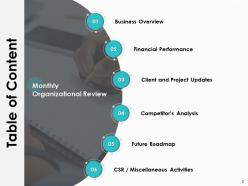
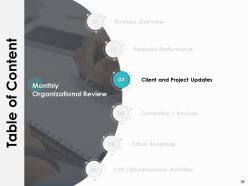
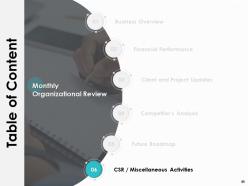
Slide 3: This slide displays Table of Content of the presentation.
Slide 4: This is another slide displaying Table of Content.
Slide 5: This slide displays Highlights. You can highlight the steps to track work performance of your company.
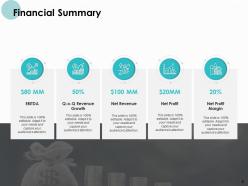
Slide 6: This is Financial Summary slide. Present revenue growth,net revenue,net profit, net profit margin etc.
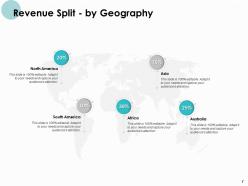
Slide 7: This slide showcases Revenue Split - by Geography.
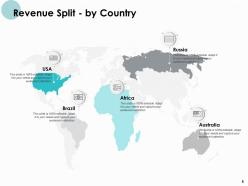
Slide 8: This slide displays Revenue Split - by Country.
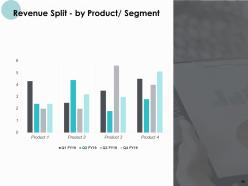
Slide 9: This slide displays Revenue Split - by Product/ Segment.
Slide 10: This slide also shows Revenue Split – by Product/ Segment
Slide 11: This slide presents Key Developments/ Milestones Achieved.
Slide 12: This slide displays Monthly Organizational Review.
Slide 13: This slide displays P&L - KPIs with graphs showcasing Revenue, Operating Profit, CAGR, Net Increase In Cash.
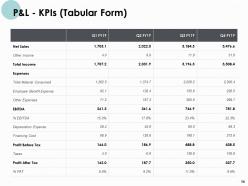
Slide 14: This slide displays P&L - KPIs in Tabular Form.
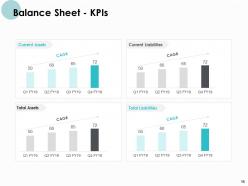
Slide 15: This slide displays Balance Sheet - KPIs with Current Assets, CAGR, Total Assets, CAGR and Current Liabilities.
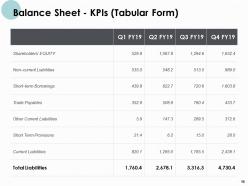
Slide 16: This slide displays Balance Sheet - KPIs in Tabular Form. 16
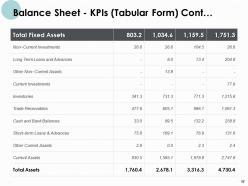
Slide 17: This slide is continued with Balance Sheet - KPIs in Tabular Form.
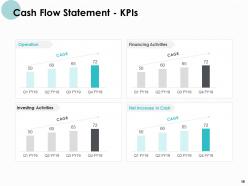
Slide 18: This slide depicts Cash Flow Statement of KPIs describing- Operation, Investing Activities, Financing Activities and Net Increase in Cash.
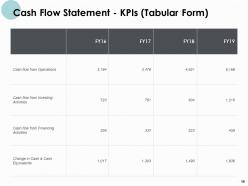
Slide 19: This slide describes Cash Flow Statement - KPIs in Tabular Form.
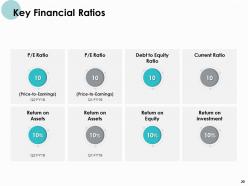
Slide 20: This slide depicts Key Financial Ratios.
Slide 21: This slide showcases Funding Updates - Debt.
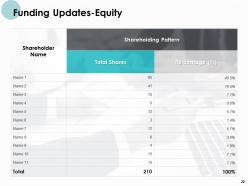
Slide 22: This slide showcases Funding Updates-Equity.
Slide 23: This is Table of Content of the presentation describing Monthly Organizational Review.
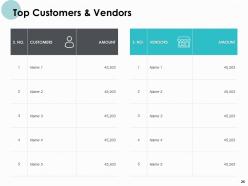
Slide 24: This slide describes Top Customers & Vendors.
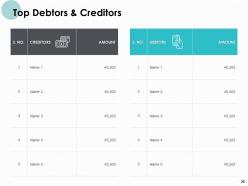
Slide 25: This slide describes Top Debtors & Creditors.
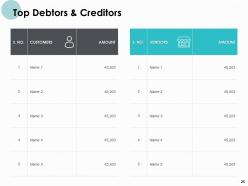
Slide 26: This slide also describes Top Debtors & Creditors.
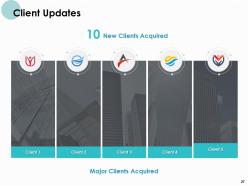
Slide 27: This slide showcases Client Updates with New Clients Acquired and Major Clients Acquired.
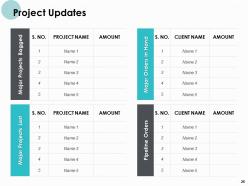
Slide 28: This slide showcases Project Updates.
Slide 29: This slide displays Table of Content of the presentation showcaing Monthly Organizational Review.
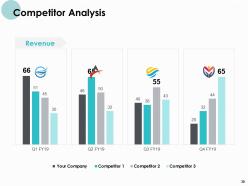
Slide 30: This is Competitor Analysis slide to showcase the comparison of revenues between the competitors.
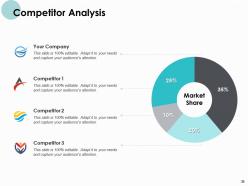
Slide 31: This is Competitor Analysis slide showcasing the comparison of market share.
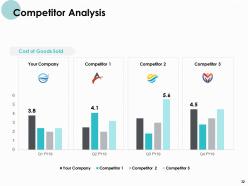
Slide 32: This is Competitor Analysis slide showcasing the comparison of goods sold.
Slide 33: This is another Competitor Analysis slide showcasing net profit margin comparison.
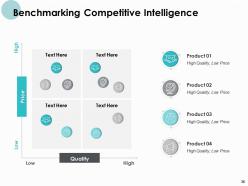
Slide 34: This slide describes Benchmarking Competitive Intelligence.
Slide 35: This is Table of Content of the presentation slide.
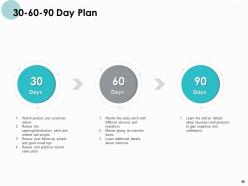
Slide 36: This is 30-60-90 Day Plan slide.
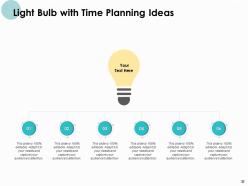
Slide 37: This Light Bulb with Time Planning Ideas slide to state your ideas, information etc.
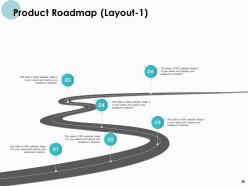
Slide 38: This is Product Roadmap slide.
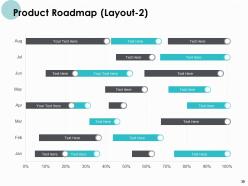
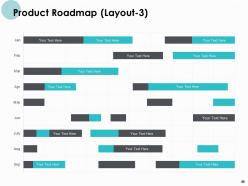
Slide 39: This is Product Roadmap slide.
Slide 40: This is another Product Roadmap slide with icons.
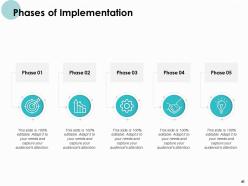
Slide 41: This slide showcases Phases of Implementation.
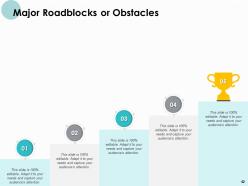
Slide 42: This slide displays Major Roadblocks or Obstacles.
Slide 43: This slide also displays Major Roadblocks or Obstacles.
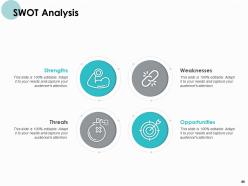
Slide 44: This slide displays SWOT Analysis. Showcase Weaknesses,Opportunities,Threats and Strengths of the company.
Slide 45: This is Table of Content of the presentation.
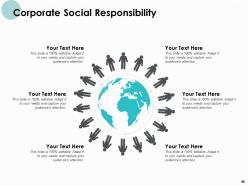
Slide 46: This slide showcases Corporate Social Responsibility.
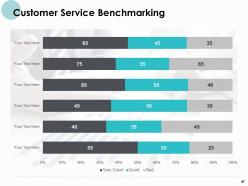
Slide 47: This slide describes Customer Service Benchmarking.
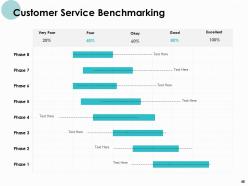
Slide 48: This slide also displays Customer Service Benchmarking.
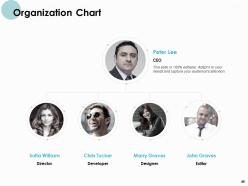
Slide 49: This slide displays Organization Chart.
Slide 50: This slide displays Goals and Success Metrics.
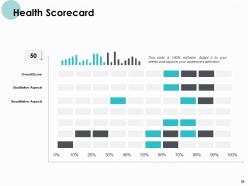
Slide 51: This slide displays Health Scorecard. Showcase overall score with qualitative and quantitative aspects.
Slide 52: This slide is titled as Additional Slides for moving forward.
Slide 53: This is Monthly Organizational Review Icons Slide.
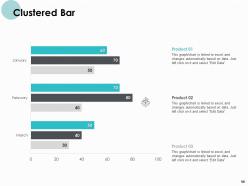
Slide 54: This slide displays Clustered Bar chart to showcase products comparison.
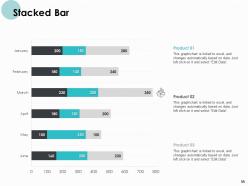
Slide 55: This slide displays Stacked Bar chart to showcase products comparison.
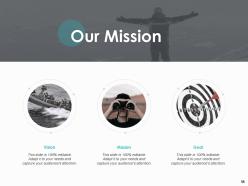
Slide 56: This is Our Mission slide. Showcase your Vision, mission and goal.
Slide 57: This is Our Team slide with names and designation.
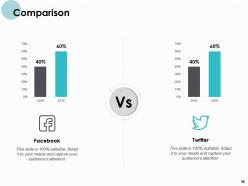
Slide 58: This slide showcases Comparison between twitter and facebook.
Slide 59: This is Quotes slide. You can showcase your important quotes.
Slide 60: This is Timeline slide.
Slide 61: This is also Timeline slide.
Slide 62: This slide is titled as Post It Notes. You can post your important notes.
Slide 63: This is Puzzle slide with icons.
Slide 64: This is Venn slide.
Slide 65: This is Lego slide with text boxes.
Slide 66: This is Thank You slide with address, Email address and contact number.
Monthly Organizational Review Powerpoint Presentation Slides with all 66 slides:
Use our Monthly Organizational Review Powerpoint Presentation Slides to effectively help you save your valuable time. They are readymade to fit into any presentation structure.













FAQs for Monthly Organizational Review
Look at five main things: your financials (revenue, profits, costs), how smoothly operations actually run daily, employee happiness and turnover, customer satisfaction, and whether you're meeting your big goals. Honestly, don't chase vanity metrics - they're pretty useless. The magic happens when you see connections between these areas. Like maybe unhappy employees are causing customer complaints? Grab baseline data first, then figure out what actually matters for your industry. Some metrics will be way more important than others depending on what you do.
So basically you're mapping out how info actually moves around your company vs how it's supposed to work. Super eye-opening stuff - you'll catch teams doing the same work twice because nobody's talking, or important updates just dying in some department silo. The whole thing involves interviewing people and tracking workflows. People are surprisingly honest about the mess-ups when you ask them directly, which is refreshing. You'll find spots where teams should obviously be collaborating but just... aren't. Then use what you learn to set up better communication rules and regular check-ins between departments.
Honestly, you can't do a proper org review without getting employee feedback first. They're the ones actually doing the work, so they spot problems leadership completely misses. Plus people are way more willing to go along with changes when they felt heard in the process, you know? I'd definitely start with surveys and maybe some focus groups - just make sure you're asking good questions and not just going through the motions. The difference between what's supposed to happen and what actually happens? That gap is huge, and employees see it every day.
Honestly, leadership engagement can totally make or break the whole thing. If they're not bought in, people will just see it as another meaningless corporate exercise - and we both know how those go. You really need leaders participating from the start, being transparent about the process. When employees see that, they'll actually give you real feedback instead of just saying what they think you want to hear. The thing is, leaders are also the ones who can actually act on whatever comes out of the review. So yeah, get them championing it early and don't let them disappear halfway through.
So for frameworks, McKinsey's 7S model is probably your best bet - covers strategy, structure, systems, all that good stuff. SWOT analysis works great for strengths/weaknesses too. Burke-Litwin is solid if you're dealing with change management, and PESTLE helps when external factors matter (like new regulations). Here's the thing though - I've watched teams obsess over finding the "perfect" framework when honestly, mixing 1-2 simple ones works way better. The 7S model plus some stakeholder interviews usually covers your bases on both the technical and people side. Don't overthink it, just pick what fits your scope and run with it.
Honestly, tech makes this whole thing way less painful. Survey tools are clutch for getting feedback from everyone without chasing people down. Analytics software spots trends you'd totally miss otherwise. I swear by document management systems - no more digging through email chains for that one file. Project management apps keep you on track with deadlines. Video calls work great for interviewing remote people too. Oh, and don't try to implement everything at once - pick like two tools that'll fix your biggest headaches first. You'll thank yourself later.
So benchmarks are basically your reality check when you're doing org reviews. They show you what "good performance" actually looks like instead of just winging it. You can compare your financials, operations, even company culture stuff against similar companies dealing with the same market headaches you are. Pretty much saves you from setting completely unrealistic expectations. Just don't get lazy with it - make sure you're comparing against companies that are actually similar to yours, not just anyone in your general industry. Otherwise you'll end up with weird data that doesn't help anyone.
Honestly, the worst part is dealing with people who just hate change - even when the current system sucks. Money's always tight too, so good luck getting budget for implementation. Leaders mess up constantly by not explaining WHY we're doing this, which makes everyone panic. Then you've got different departments wanting totally different things at the same time. Oh, and sometimes the changes don't even fit with how your company actually works (learned that one the hard way). Start small though - get some easy wins first so people stop being so skeptical, then go after the big messy problems.
Honestly, you can't figure out where you're going if you don't know where you are right now. An org review shows you the real deal - what's working, what's broken, all of it. Your current setup might not even be able to handle growth, which would suck to discover later. I always think it's wild how many companies skip this step. You'll probably find some surprises too, both good and bad. Do it before any big planning sessions. Makes everything way more grounded and actually doable instead of just wishful thinking.
Look, you gotta measure both the hard numbers and the touchy-feely stuff to see if anything actually changed. Start with engagement scores, turnover rates, and productivity - basic stuff. Customer satisfaction too if that matters for your situation. Time-to-decision and project completion rates are honestly where you'll see the real impact though. But don't skip the softer metrics like pulse surveys and just talking to people informally. Here's the thing - set your baseline before you change anything or you're basically flying blind. I'd do monthly check-ins for three months, then quarterly after that.
Honestly, quarterly works for most places. Startups moving fast? Maybe monthly. Big established companies can probably stretch it to twice a year. Just don't be that team that cancels because everyone's swamped - I've seen that death spiral too many times. Cover your usual stuff: how people are performing, whether your processes actually work, if you're still heading in the right direction. Oh, and book the next review before you wrap up the current one. Trust me on this - otherwise it'll keep getting pushed back and suddenly it's been eight months. Keep chatting informally between the big reviews too.
Hit them with your main findings right away - nobody wants to wade through methodology first. Group everything by themes instead of timeline order. When you make recommendations, attach real dollar amounts because executives love that stuff. Charts beat text walls every single time, trust me on this. Different people care about different things though - HR worries aren't the same as what stresses out your CFO. Build in time for questions since people need to actually discuss this to buy in. Oh, and send them a short summary beforehand so they're not going in blind.
Honestly, the magic happens when you make everything visible. Set clear metrics first, then share your review findings with everyone - not just the higher-ups (though they'll probably want to keep it quiet). Once people know their work is being tracked and discussed openly, they step up. Document what's working and what isn't, then hold regular check-ins about progress. Gaps become harder to ignore when there's nowhere to hide. The whole transparency thing might feel uncomfortable at first, but it's what actually drives people to own their stuff instead of passing the buck.
You absolutely need different voices on your review team - like, people from various departments, levels, backgrounds. Otherwise you'll miss huge blind spots that a bunch of similar people would never catch. I've watched reviews completely bomb because they only got input from one type of employee. Your team will lose trust fast if certain groups feel ignored in the process. Get perspectives from everywhere - junior staff, different demographics, all of it. Oh, and bringing in outside facilitators isn't a bad idea either, especially for the touchy subjects where internal politics might get messy.
Honestly, you've gotta bring in outside facilitators who don't have skin in the game - that's your only shot at real neutrality. Get input from everyone, not just the C-suite folks. Anonymous surveys work best since people actually tell the truth when they're not worried about getting fired lol. Set up your evaluation criteria beforehand and stick to hard data instead of hunches. Oh, and document the whole process transparently so everyone knows you're not just making stuff up as you go. I've watched too many of these turn into total BS confirmation exercises!
-
Content of slide is easy to understand and edit.
-
Content of slide is easy to understand and edit.
-
Out of the box and creative design.