


Mortgage analysis powerpoint presentation slides





Try Before you Buy Download Free Sample Product
 Impress Your
 Audience
 100%
100% Editable
 Save Hours
 of Time


Our Mortgage Analysis Powerpoint Presentation Slides are topically designed to provide an attractive backdrop to any subject. Use them to look like a presentation pro.
People who downloaded this PowerPoint presentation also viewed the following :
Content of this Powerpoint Presentation
Slide 1: This is the cover slide of Mortgage Analysis PowerPoint Presentation.
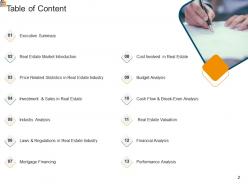
Slide 2: This is the Table of Contents slide that lists out all the essential elements covered in the deck.
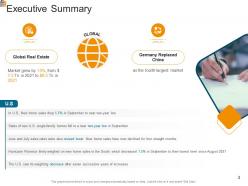
Slide 3: This slide presents the Executive Summary.
Slide 4: This slide presents Real Estate Market Introduction.
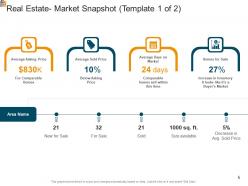
Slide 5: This slide presents Real Estate- Market Snapshot (Template 1 of 2)
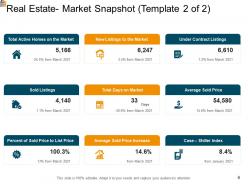
Slide 6: This slide presents Real Estate- Market Snapshot (Template 2 of 2)
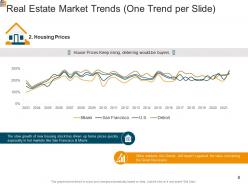
Slide 7: This slide presents Real Estate Market Trends (One Trend per Slide)
Slide 8: This slide presents Real Estate Market Trends (One Trend per Slide)
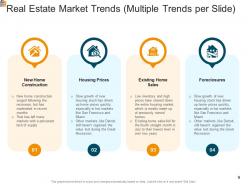
Slide 9: This slide presents Real Estate Market Trends (Multiple Trends per Slide)
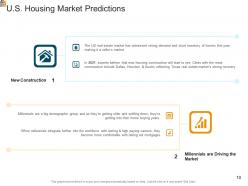
Slide 10: This slide presents U.S. Housing Market Predictions
Slide 11: This slide presents Real Estate Growth Drivers
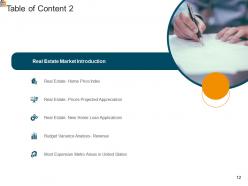
Slide 12: This slide presents Real Estate Market Introduction
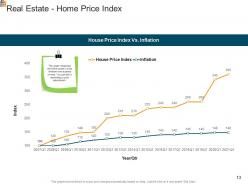
Slide 13: This slide presents Real Estate - Home Price Index
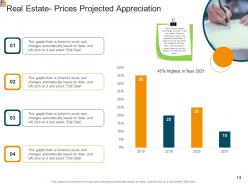
Slide 14: This slide presents Real Estate- Prices Projected Appreciation
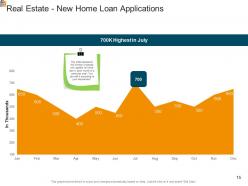
Slide 15: This slide presents Real Estate - New Home Loan Applications
Slide 16: This slide presents Real Estate - Average Price
Slide 17: This slide presents Most Expensive Metro Areas in United States.
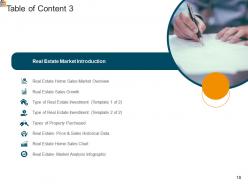
Slide 18: This slide presents Real Estate Market Introduction
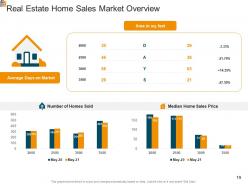
Slide 19: This slide Real Estate Home Sales Market Overview.
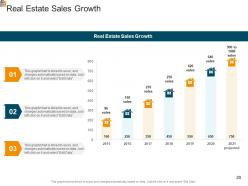
Slide 20: This slide presents Real Estate Sales Growth.
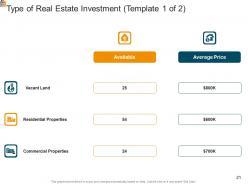
Slide 21: This slide presents Type of Real Estate Investment (Template 1 of 2)
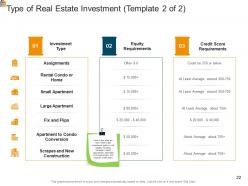
Slide 22: This slide presents Type of Real Estate Investment (Template 2 of 2)
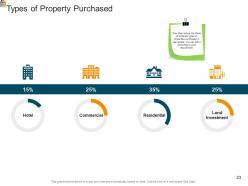
Slide 23: This slide shows the share of different types of properties purchased in real estate. You can edit it according to your requirement.
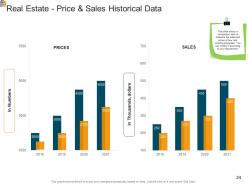
Slide 24: This slide shows a comparison data to measure the sales and prices of new and existing properties. You can modify it according to your requirement.
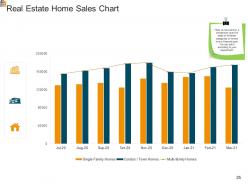
Slide 25: This slide presents Real Estate Home Sales Chart.
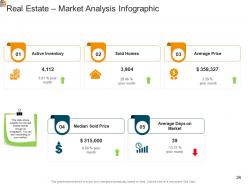
Slide 26: This slide shows insights into the real estate market though an infographic. You can edit it according to your market.
Slide 27: This slide talks about Industry Analysis.
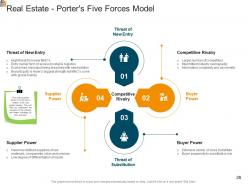
Slide 28: This slide presents porter’s five forces in relation to the real estate industry. This will help you understand the structure of the industry and shape a strategy for your business.
Slide 29: This slide presents Laws & Regulations in Real Estate Industry.
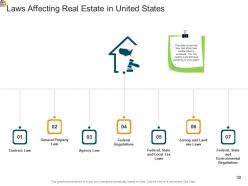
Slide 30: This slide covers the laws that affect real estate industry worldwide. You can modify it and add laws pertaining to your region.
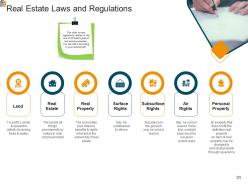
Slide 31: This slide covers regulations related to the use of different types of real estate properties. You can edit it according to your requirement.
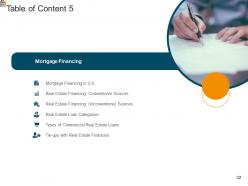
Slide 32: This slide presents Mortgage Financing.
Slide 33: This slide talks about Mortgage Financing in U.S.
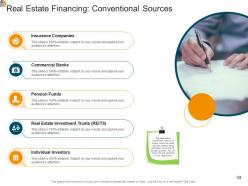
Slide 34: This slide shows conventional sources of funding where the lender uses the property being purchased as security for the loan provided. You can choose the one according to your requirement.
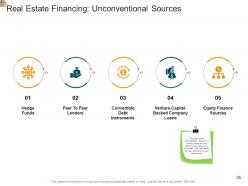
Slide 35: This slide shows unconventional sources of funding where the loan offered is not secured by the lender. You can choose the one according to your requirement.
Slide 36: This slide presents Different types of real estate loans have been categorised here. Choose the ones that suit your business requirement.
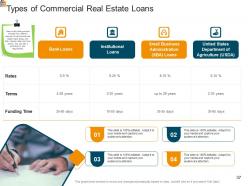
Slide 37: This slide we have included four different sources of commercial real estate loans along with their interest rates and time period. You can edit it according to your requirement.
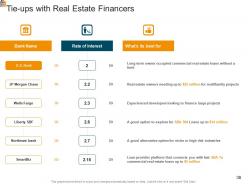
Slide 38: This slide presents Tie-ups with Real Estate Financers.
Slide 39: This slide presents Cost Involved in Real Estate
Slide 40: This slide shows two different lending types. First type has higher interest rate but no additional costs. Second type has lower interest rate but includes additional costs as well. Thus, borrowing cost for both is different. You can choose the one that matches your requirement.
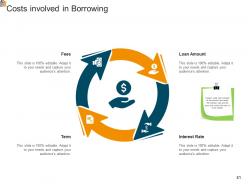
Slide 41: This slide presents Costs involved in Borrowing
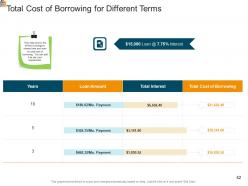
Slide 42: This slide shows the effect of change in interest rate and term on total cost of borrowing. You can edit it as per your requirement.
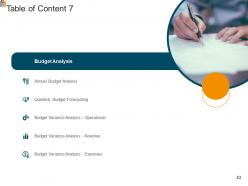
Slide 43: This slide presents Budget Analysis
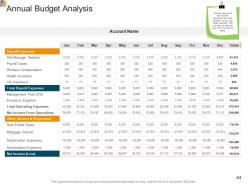
Slide 44: This slide can be used to list down payroll, operational and other expenses of your real estate business. This will help you estimate how much you need to spend.
Slide 45: The slide shows the projected expenses that will be incurred by your real estate business for different sites . This will help you plan your spending for the future.
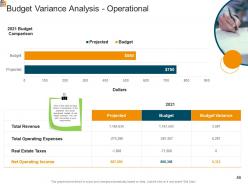
Slide 46: This slide shows a comparison of the projected and actual operational budget of real estate business. You can edit it according to your requirement.
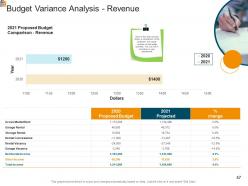
Slide 47: This slide shows a comparison of the projected and actual revenue of real estate business. You can edit it according to your requirement.
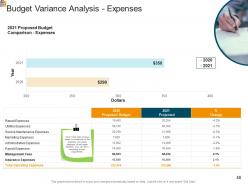
Slide 48: This slide shows a comparison of the projected and actual expenses of real estate business. You can edit it according to your requirement.
Slide 49: This slide presents Cash Flow & Break-Even Analysis.
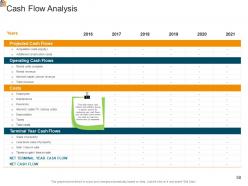
Slide 50: This slide shows cash inflows and outflows during a specific period. By analysing your cash flows you can easily know where you need to maximize income and cut expenses.
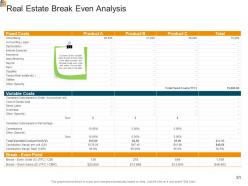
Slide 51: This slide presents Real Estate Break Even Analysis.
Slide 52: This slide presents Cash Flow & Break-Even Analysis.
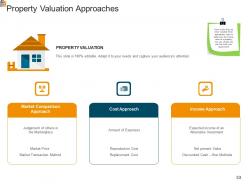
Slide 53: This slide shows three approaches used to determine the market value of a property. You can choose the one that suits your requirement.
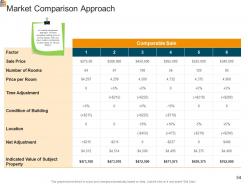
Slide 54: This slide showcases market comparison approach.
Slide 55: This slide showcases Cost approach.
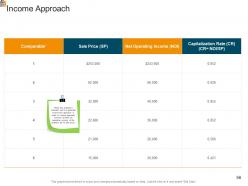
Slide 56: This slide showcases Income approach.
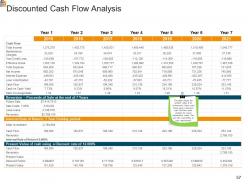
Slide 57: The slide incorporates a table that shows the present value of an investment’s future cash flows using a discount rate.
Slide 58: This slide presents Financial Analysis.
Slide 59: This slide evaluates various financial entities like income, expenses and cash flows happening monthly as well as annually.
Slide 60: This slide shows distribution of income, expenses, and the mortgage interest through pie charts and bar graphs.
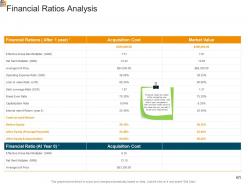
Slide 61: This slide provides Financial ratios analysis.
Slide 62: This slide presents Performance Analysis.
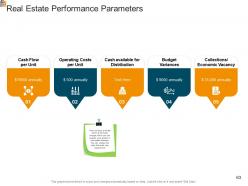
Slide 63: This slide presents real estate performance parameters.
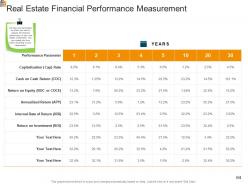
Slide 64: This slide presents Real Estate Financial Performance Measurement.
Slide 65: This is also an Icon Slide. Use/ add as per need.
Slide 66: This slide is titled Additional Slides to move forward. Change/ alter content as per need.
Slide 67: This is an About us slide. State company/team specifications etc. here.
Slide 68: This is an About Me slide. State company/team specifications etc. here.
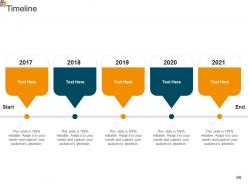
Slide 69: This is a Timeline slide that can be used to present series of events.
Slide 70: This is a Roadmap slide that can be used to present chronological sequence of events.
Slide 71: This is a 30 60 90 Days Plan slide to create robust plans.
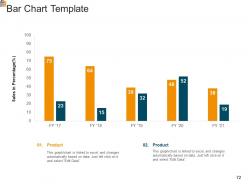
Slide 72: This is a Bar Chart Template that can be used to compare two different products.
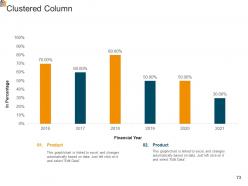
Slide 73: This is a Clustered Column chart slide that can be used to compare different products.
Slide 74: This is a Thank You slide for acknowledgment. You can share your contact details here.
Mortgage analysis powerpoint presentation slides with all 74 slides:
Use our Mortgage Analysis Powerpoint Presentation Slides to effectively help you save your valuable time. They are readymade to fit into any presentation structure.





















FAQs for Mortgage analysis
Honestly, it comes down to three things: how much risk you can handle, how long you're staying, and where rates are going. Fixed-rate mortgages start higher but won't change - perfect if you're planting roots or rates keep climbing. ARMs begin lower but can jump up later (though they could drop too, but yeah right). Planning to move in 3-5 years? An ARM might actually save you cash. Or if rates are crazy high right now, which... they kind of have been. Just crunch the numbers on both and go with whatever won't keep you up at night stressing about payments.
Basically, your credit score is everything when it comes to getting a good mortgage rate. Above 740? You're golden and get the best deals. Below 620 gets messy fast - we're talking hundreds extra each month. Honestly, even a 20-point bump can save you thousands over the whole loan, which is nuts when you think about it. Lenders just want to see you've paid stuff on time before they'll trust you with a massive loan. Definitely pull your credit report first to catch any weird errors, and try paying down balances if you can swing it.
So basically conventional loans come from regular banks and lenders - no government involved. Government ones like FHA, VA, USDA have federal backing which is kinda nice for security. With government loans you can put way less down and they're more chill about credit scores. Downside? Extra fees and mortgage insurance that add up. Conventional loans want better credit and bigger down payments, but honestly they usually cost less over time if you can swing it. VA loans are insane though - literally zero down if you're military. My cousin got one and I was so jealous lol. Just run the numbers on both for your situation and see what works.
Your loan-to-value ratio is basically how lenders figure out if you're worth the risk. Higher LTV means less down payment, which makes them nervous - so they'll hit you with higher rates or make you pay PMI. Keep it under 80% and you'll get way better terms. Some lenders straight up won't approve anything above certain thresholds, which honestly makes sense from their perspective. Save up for a bigger down payment if possible. Yeah it sucks waiting longer, but you'll thank yourself later when you're not bleeding money on interest.
So your debt-to-income ratio is basically what makes or breaks your mortgage application. Lenders take all your monthly debt payments and divide by your gross income. Most want it under 43%, though some programs go higher if your credit's solid. I learned this the hard way when I was looking - they check this thing first. High ratio means you're either getting denied or you'll need to pay down some debt before they'll even consider you. Definitely worth calculating before you start touring houses and getting your hopes up.
Honestly, it's wild how differently rate hikes affect people. Already own with a fixed mortgage? You're golden - your rate's locked while everyone else suffers. But buying right now? Your money doesn't stretch nearly as far since higher rates mean way bigger monthly payments. Variable rate people are getting destroyed though - their payments jump immediately. I'd probably wait it out if I were house hunting, or maybe look at cheaper places. The timing just sucks for buyers.
Yeah, you'll definitely save on monthly payments and interest over time - that part's a no-brainer. Plus you can pull cash out if needed. But don't forget about closing costs, appraisals, all that stuff. We're talking like $2-5K easy. Here's what gets tricky though - if you reset to another 30 years, you might actually pay more in the long run even with a better rate. Kinda defeats the purpose, right? Do this: take your closing costs and divide by how much you'd save each month. That's your break-even timeline.
Hey! So mortgage insurance is honestly kind of a pain - it'll tack on like 0.3% to 1.5% of your loan amount each year. Put down less than 20%? You're probably getting hit with PMI, which is basically just protecting the lender, not you. On a $300K loan that's easily $200+ extra monthly. The good news though - once you reach 20% equity you can ditch it, so definitely keep tabs on your home's value and how much you've paid down. My cousin just got rid of hers last year and it was like getting a raise!
Definitely work on your credit score first - start like 6 months before you want to buy. Save up for the biggest down payment you can manage, even 5% extra makes a huge difference on your rate. Shop around with different lenders because honestly, the rate differences are crazy (I've seen half a percent difference for the exact same person). Get pre-approved before you start looking at houses so you're not wasting time on stuff you can't afford. Oh and check out first-time buyer programs in your state - tons of them have grants or cheaper loans that people don't even know about.
Watch out for origination fees, appraisal costs, title insurance, and attorney fees - that stuff adds up fast, like $3K-$5K easily. PMI hits you if you put down less than 20%. Some lenders still do prepayment penalties which is honestly just annoying. Document prep fees are basically BS charges they make up. My cousin got hit with random "processing" and underwriting fees too. Ask for everything broken down upfront and don't feel bad about negotiating. Shop around - half this stuff is totally negotiable even though they act like it isn't.
Dude, get pre-approved before you start house hunting - trust me on this. Sellers take you seriously when you've got that letter because they know you're not wasting their time. Without it, you're basically window shopping while other buyers are making real moves. In crazy competitive markets? You need every advantage. Plus honestly, it keeps you from getting your heart broken over places way outside your budget. I learned that the hard way lol. Once you find something you love, you can jump on it fast instead of scrambling to figure out financing later.
Look, 15-year mortgages = higher monthly payments but you'll save a ton on interest. 30-year loans flip that - lower payments each month, but you're paying way more interest in the long run. The shorter term builds equity faster too, which is nice. I mean, it's basically whether you want more breathing room in your monthly budget or if you can handle tighter cash flow to save money overall. Honestly? Run the actual numbers with your income and see what feels realistic. Don't stretch yourself too thin just to save on interest - I've seen people do that and regret it.
Honestly, mortgage rates are tied to the whole economy. Fed raises rates? Yours go up too. Bond yields matter most since mortgages compete with other investments for money. Job numbers and GDP growth signal if the economy's strong or weak, which affects rates. Even random geopolitical drama can mess with your rate - kinda crazy how some conflict across the globe impacts your house payment. It's all about risk and where the economy's headed. If you're buying or refinancing, watch Fed meeting dates and big economic announcements. That's when rates jump around the most.
Look, brokers can be great - they'll hunt around different lenders for you and sometimes dig up better rates than you'd find solo. Plus they handle tons of paperwork which is honestly a lifesaver. But you're paying 1-2% in fees, and some just steer you toward whatever makes them the most money. Banks are cheaper since there's no broker fee, and you control everything. Downside is you're stuck with just their rates and doing all the research yourself. My take? Hit up both - get broker quotes AND check your favorite banks directly. Then crunch the numbers.
First, shop around and get multiple offers - banks really don't want to lose your business to competitors. Your credit score and down payment are your biggest weapons here. Focus on negotiating the interest rate and closing costs instead of sweating the small stuff. Honestly, threatening to walk away works way better than most people realize. A mortgage broker might be worth it too since they'll do the haggling for you (though they cost extra). Once you settle on terms, make sure everything's documented properly. Oh, and your debt-to-income ratio matters just as much as your credit score when it comes to what they'll actually offer you.
-
Great product with effective design. Helped a lot in our corporate presentations. Easy to edit and stunning visuals.
-
Unique research projects to present in meeting.
-
Great product with effective design. Helped a lot in our corporate presentations. Easy to edit and stunning visuals.
-
Very unique and reliable designs.