


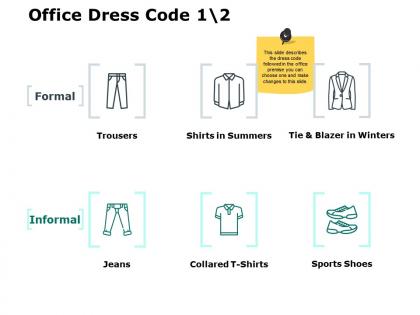
Office dress code formal ppt powerpoint presentation file graphics




Try Before you Buy Download Free Sample Product
 Impress Your
 Audience
 100%
100% Editable
 Save Hours
 of Time


Our Office Dress Code Formal Ppt Powerpoint Presentation File Graphics create an excellent foundation. You will arrive at firm conclusions.
People who downloaded this PowerPoint presentation also viewed the following :
Office dress code formal ppt powerpoint presentation file graphics with all 5 slides:
Our Office Dress Code Formal Ppt Powerpoint Presentation File Graphics adapt to all formalities. They are able to follow any convention.

FAQs for Office dress code formal ppt powerpoint
Key factors include company culture alignment, industry standards, employee comfort and safety, seasonal variations, and budget considerations for staff wardrobes. These elements work together by enhancing professional image, ensuring workplace appropriateness, and maintaining team cohesion, with many organizations finding that well-defined policies ultimately deliver improved employee confidence and consistent brand representation.
A flexible dress code enhances employee morale by increasing comfort, self-expression, and job satisfaction, while reducing stress and fostering inclusivity. This approach streamlines daily decision-making and enables better work-life integration, with many organizations finding that comfortable employees demonstrate higher engagement, creativity, and productivity, ultimately delivering improved retention and competitive talent attraction.
Potential downsides include reduced employee morale, increased costs for workers, stifled creativity and self-expression, potential discrimination issues, and decreased comfort affecting productivity. While dress codes aim to maintain professionalism, overly rigid policies can create financial burdens for employees and may conflict with diverse cultural backgrounds, ultimately impacting workplace satisfaction and retention.
A company's culture significantly shapes dress code policies by reflecting organizational values, hierarchy structures, and client interaction requirements. Traditional corporate environments typically maintain formal attire standards, while innovative tech companies often embrace casual dress to foster creativity and collaboration, with many organizations finding that aligned dress codes enhance employee satisfaction and reinforce brand identity.
Presentation attire and dress codes significantly influence client perceptions, trust-building, and professional credibility during business interactions. Strategic dress choices enhance confidence, demonstrate attention to detail, and communicate organizational values, with many client-facing professionals finding that appropriate attire streamlines relationship development, minimizes initial barriers, and ultimately delivers stronger business partnerships and competitive advantage.
Businesses can navigate dress code balance by establishing clear professional standards while allowing flexibility in colors, patterns, and accessories that reflect individual style. Many organizations implement tiered approaches, with stricter requirements for client-facing roles and relaxed guidelines for internal teams, ultimately enhancing employee satisfaction while maintaining brand credibility and workplace appropriateness.
Common misconceptions about office dress codes include believing they stifle creativity, that casual dress always boosts productivity, that one policy fits all industries, and that modern workplaces don't need guidelines. While these policies present both flexibility and structure challenges, many organizations find that well-crafted dress codes actually enhance professional confidence, client trust, and workplace consistency, ultimately delivering clearer expectations and improved business relationships.
Remote work transforms dress code perceptions by normalizing casual attire, reducing emphasis on formal business wear, and shifting focus from appearance to performance outcomes. Many organizations find that flexible dress policies enhance employee comfort and productivity, while video-only visibility creates hybrid standards where professional tops matter more than complete formal outfits, ultimately delivering greater work-life balance.
Cultural differences significantly impact dress code expectations in multinational companies through varying standards of formality, religious requirements, climate considerations, and professional norms across regions. Companies increasingly adopt flexible, culturally-sensitive policies that balance brand consistency with local customs, enabling better employee engagement and cultural integration while maintaining professional standards across diverse markets.
Effective communication methods include employee handbooks, onboarding sessions, visual guides with acceptable examples, regular email reminders, and manager-led discussions during team meetings. These approaches streamline policy understanding by providing clear guidelines, addressing questions proactively, and ensuring consistent interpretation across departments, with many organizations finding that combining multiple channels ultimately delivers better compliance and reduces workplace confusion.
Companies can adapt dress codes by implementing inclusive policies that respect religious attire, cultural expressions, gender identity, and personal circumstances while maintaining professional standards. Through flexible guidelines that focus on appropriateness rather than rigid rules, organizations enable employees to express their authentic selves, ultimately enhancing workplace satisfaction, retention, and creating more welcoming environments for diverse talent.
Legal considerations for dress codes include discrimination prevention, religious accommodation requirements, safety compliance standards, gender-neutral policies, and disability accessibility provisions. These guidelines help organizations balance professional appearance expectations with employee rights protection, ensuring policies don't inadvertently violate equal opportunity laws while maintaining workplace standards that support business objectives and inclusive environments.
Creative industries can approach dress codes by prioritizing self-expression, comfort, and brand alignment over formal corporate standards, often embracing casual wear, unique accessories, and personal style choices. While traditional sectors focus on uniformity and conservatism, creative companies like advertising agencies, design studios, and tech startups find that flexible dress policies enhance employee satisfaction, attract top talent, and foster innovative thinking, ultimately delivering stronger creative outputs.
A brand-aligned dress code enhances professional image, reinforces company values, creates customer trust, builds team cohesion, and strengthens brand recognition. Through consistent visual representation, organizations streamline their marketing efforts while employees become brand ambassadors, ultimately delivering enhanced customer experiences and competitive differentiation in increasingly crowded markets.
Generational differences significantly influence office attire perspectives, with Baby Boomers typically favoring traditional business formal wear, Gen X embracing business casual flexibility, and Millennials and Gen Z prioritizing comfort and personal expression. These varying expectations create workplace tension, with many organizations finding that flexible dress policies accommodating different generational preferences ultimately enhance employee satisfaction and retention while maintaining professional standards.
No Reviews