


Diapositivas de presentación de Powerpoint del modelo operativo





Try Before you Buy Download Free Sample Product
 Impress Your
 Audience
 100%
100% Editable
 Save Hours
 of Time


Acceda a nuestra plataforma de PowerPoint modelo operativo de 20 diapositivas que ha sido diseñada para el profesional que trabaja en las empresas corporativas. En el sector empresarial, un modelo operativo es una muestra visual de cómo una empresa presta atención a sus clientes internos y externos. La plataforma de presentación viene con 10 diseños de modelos operativos entre los que puede elegir el que desee que cumpla con los requisitos de su negocio. Puede crear un PPT innovador utilizando estos diseños, ya que están diseñados para cumplir con el propósito de las empresas. Un modelo operativo ayuda a definir cómo está operando la empresa ahora y cómo buscan administrar las operaciones comerciales en el futuro. Cada organización líder tiene una política para lograr los objetivos comerciales y usted puede describir su estrategia de operaciones utilizando nuestra plataforma de presentación. Los diseños de PowerPoint han sido elaborados por nuestro equipo de diseñadores creativos y experimentados que conocen el tema y los diseños que funcionan en la comunidad empresarial. Descárgalos y utilízalos para compartir la información de la forma más profesional. Nuestras diapositivas de presentación de Powerpoint del modelo operativo le brindan el descanso. Aproveche la oportunidad con la que ha estado soñando.
People who downloaded this PowerPoint presentation also viewed the following :
Contenido de esta presentación de Powerpoint
Diapositiva 1 : Esta diapositiva presenta el modelo operativo. Indique el nombre de su empresa y comience.
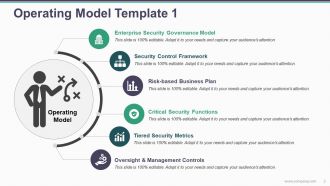
Diapositiva 2 : Esta diapositiva muestra la Plantilla 1 del modelo operativo con estos de los siguientes modelos y marco: Modelo operativo, Plan de negocios basado en riesgos, Controles de supervisión y administración, Marco de control de seguridad, Funciones de seguridad críticas, Métricas de seguridad por niveles, Modelo de gobierno de seguridad empresarial.
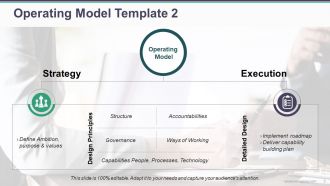
Diapositiva 3 : Esta diapositiva presenta la Plantilla de modelo operativo 2 con estos de los siguientes parámetros: Principios de diseño, Implementar hoja de ruta, Entregar plan de desarrollo de capacidades, Diseño detallado, Estructura, Responsabilidades, Gobernanza, Formas de trabajo, Personas de capacidades, Modelo operativo, Estrategia de ejecución.
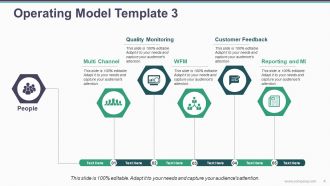
Diapositiva 4 : Esta diapositiva presenta la Plantilla 3 del modelo operativo con estas cinco etapas: Monitoreo de calidad, Comentarios del cliente, Multicanal, WFM, Informes y MI.
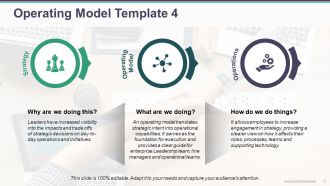
Diapositiva 5 : Esta diapositiva muestra la Plantilla de modelo operativo 4.
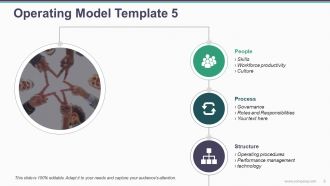
Diapositiva 6 : Esta diapositiva presenta la Plantilla del modelo operativo 5 Personas, Habilidades, Productividad de la fuerza laboral, Cultura, Proceso, Gobierno, Roles y responsabilidades, Estructura, Procedimientos operativos, Gestión del desempeño, Tecnología.
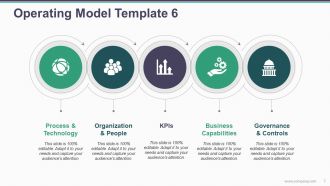
Diapositiva 7 : Esta diapositiva muestra la Plantilla 6 del modelo operativo con estos de los siguientes factores: Proceso y tecnología, Organización y personas, Capacidades comerciales, Gobernanza y controles, KPI.
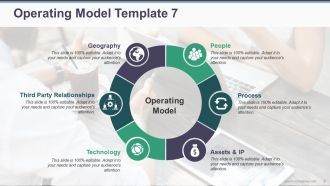
Diapositiva 8 : Esta diapositiva presenta la Plantilla 7 del modelo operativo con estos de los siguientes parámetros: Personas, Procesos, Activos e IP, Tecnología, Relaciones con terceros, Geografía, Modelo operativo.
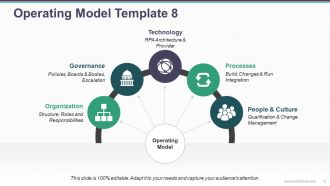
Diapositiva 9 : Esta diapositiva presenta la Plantilla 8 del Modelo Operativo con estos de los siguientes factores: Personas y Cultura, Organización, Procesos, Tecnología, Gobernanza, Modelo Operativo.
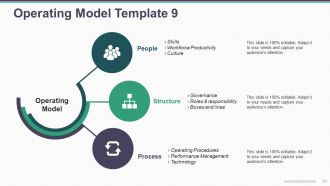
Diapositiva 10 : Esta diapositiva presenta la Plantilla 9 del Modelo Operativo con estos de los siguientes parámetros: Modelo Operativo, Habilidades, Productividad de la Fuerza Laboral, Cultura, Personas, Gobierno, Roles y Responsabilidad, Cuadros y líneas, Estructura, Procedimientos Operativos, Gestión del Desempeño, Tecnología, Proceso .
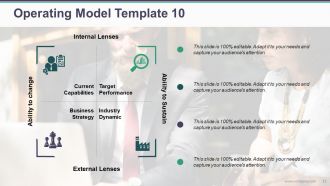
Diapositiva 11 : Esta diapositiva presenta la Plantilla de modelo operativo 10 Rendimiento objetivo, Dinámica de la industria, Estrategia comercial, Capacidades actuales, Lentes internos, Capacidad para cambiar, Capacidad para sostener, Lentes externos.
Diapositiva 12 : Esta diapositiva muestra la diapositiva del icono del modelo operativo.
Diapositiva 13 : esta diapositiva se titula Diapositivas adicionales para avanzar.
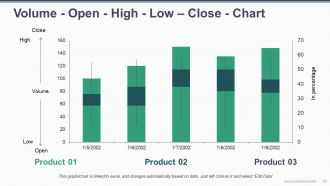
Diapositiva 14 : Esta diapositiva muestra un gráfico de acciones con el volumen como parámetro en términos de máximo y mínimo, apertura y cierre.
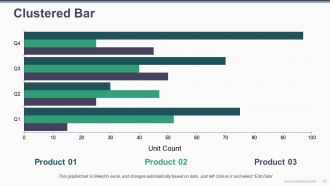
Diapositiva 15 : esta diapositiva muestra la barra agrupada. Puede usarlo para su propio uso.
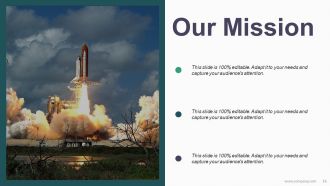
Diapositiva 16 : Esta diapositiva contiene Nuestra misión con cuadros de texto.
Diapositiva 17 : Esta diapositiva ayuda a representar a Nuestro equipo con cuadros de texto
Diapositiva 18 : esta diapositiva muestra una imagen de bombilla o idea.
Diapositiva 19 : Esta es una diapositiva de Target. Indique sus objetivos aquí.
Diapositiva 20 : Esta es una diapositiva de agradecimiento con dirección # número de calle, ciudad, estado, número de contacto, dirección de correo electrónico.
Diapositivas de presentación de Powerpoint del modelo operativo con las 20 diapositivas:
El cambio es creado por nuestras diapositivas de presentación de Powerpoint del modelo operativo. Dan acceso a enfoques mejores y más frescos.
-
Operating Model
-
Operating Model Template 1
-
Operating Model Template 2
-
Operating Model Template 3
-
Operating Model Template 4
-
Operating Model Template 5
-
Operating Model Template 6
-
Operating Model Template 7
-
Operating Model Template 8
-
Operating Model Template 9
-
Operating Model Template 10
-
Operating Model Icon Slide
-
Additional Slides
-
Volume Open High Low Close Chart
-
Clustered Bar
-
Our Mission
-

Our Team
-
Idea or Blub
-
Our Target
-

Thank You
FAQs for Operating Model
You need five things for an operating model that doesn't suck: org structure, processes that people actually follow, tech that supports those processes, skilled people, and governance to tie it all together. Most companies get like 2-3 right and can't figure out why everything's a mess. The magic happens when all five work together instead of being random projects. I'd start by honestly assessing where you stand on each one - probably gonna hurt a little. Then tackle whatever gap is really killing your team's ability to get stuff done.
So you gotta flip this whole thing around - start with your big picture goals, then figure out what needs to change operationally to actually get there. Most companies just slap their strategy on top of whatever they're already doing, which honestly never works well. Take a hard look at your current processes and team setup. Does any of it actually support where you're trying to go? Probably not, right? I'd focus on finding the 2-3 biggest mismatches between what you're doing now and what you need to be doing. Fix those first, even if it means reshuffling how decisions get made or restructuring teams.
Look, your tech stack basically runs the whole show now. It controls how your teams work together and how customers actually get value from you. Honestly, trying to build an operating model without nailing down your technology first is backwards. Your platforms shape everything - workflows, data, even how you structure your org. Remote work tools, automation, cloud setup... these things decide if you're nimble or stuck with clunky processes. Map out what tech you've got right now, then figure out where the gaps are killing your flexibility. That's where I'd start anyway.
Honestly, you've gotta bake flexibility right into how you run things from day one. Modular processes, teams that can wear multiple hats, tech that scales fast. Don't wait for quarterly numbers to tell you you're screwed - watch the early warning signs instead. Most companies figure out they need to change course way too late, which is frustrating to watch. Build frameworks that let you pivot quickly when the market shifts. Oh, and start by looking at your most stubborn processes first - those are usually where you'll get stuck when you need to move fast.
Oh man, biggest mistakes I see? Companies just steal someone else's setup and wonder why it doesn't work - your situation is totally different than theirs. Also don't overcomplicate it! I've watched teams create these gorgeous org charts that everyone ignores because they're too confusing. Make sure people actually know what they're supposed to do and who makes what decisions. Actually talk to the folks who'll use this stuff daily instead of designing it in some conference room. And honestly? Your first try will suck a little, so build in ways to fix it as you go.
So basically you wanna look at three things: your actual performance numbers, how happy people are, and whether you can pivot when shit hits the fan. Track the metrics that actually matter - cycle times, costs, quality stuff. Skip the vanity numbers that just make pretty charts. Check if teams are working well together and customers aren't complaining constantly. Can your model handle it when priorities suddenly change? That's the real question. Oh, and do quarterly reviews where you look at everything together - way easier to spot what's broken that way.
So basically with centralized, everything funnels through one place - like headquarters makes all the calls. Decentralized pushes that power out to different teams or regions so they can just go ahead and decide stuff themselves. Centralized keeps things consistent and you'll have better cost control, but honestly? It's painfully slow when everyone needs approval for tiny decisions. Decentralized teams move way faster and actually respond to what's happening locally. The downside is you might have teams going completely different directions. Really depends what you're dealing with - do you need speed or do you need everyone on the same page?
So basically you map out how departments should actually work together instead of everyone doing their own thing. Like, who does what and when they hand stuff off to the next team. Marketing knows exactly when to bring in sales, IT knows when they're needed - that whole mess gets sorted out. Honestly, most companies are terrible at this part. Start with your biggest problem areas first and document those workflows. Once people see their role in the bigger process, those annoying silos start breaking down naturally. It's like finally having a playbook that people will actually use.
Honestly? Culture trumps everything when it comes to your operating model. People will either buy into your processes or find sneaky ways around them - there's no middle ground. Say you design this amazing cross-functional system but your culture still rewards territorial behavior. Good luck with that. Your team will smile, nod, then go back to doing things the old way. You need your culture pushing the same behaviors your model requires - teamwork, using data to make calls, actually caring about customers. I've seen brilliant frameworks crash and burn because nobody thought about the culture piece first. Always start there.
Ugh, regulatory changes are such a pain but you literally have to redesign how you operate to stay compliant. New rules come down and suddenly you're scrambling to fix processes, change who reports to who, sometimes create whole new roles. It's super disruptive. Honestly though? Smart companies build flexibility in from day one so they can pivot instead of doing a complete overhaul every time. You should probably start mapping out where regulations touch your business now - saves you from that "oh crap" moment later when everything changes again.
So there's a bunch of good options out there. Target Operating Model canvas is probably the most common one people use. McKinsey has their own approach too, and Andrew Campbell's Operating Model Canvas is solid. TOGAF works if you're coming from enterprise architecture, but honestly it can be overkill. Most folks just stick with PowerPoint or run workshops in Miro - keeps it simple. There are fancier tools like LeanIX or BiZZdesign if your company's into that stuff. But here's the thing - which framework you pick doesn't really matter that much. What matters is getting the right people together to actually map out your processes and capabilities.
Look, you gotta bake flexibility into everything from day one. Cross-functional teams are huge - they can actually pivot when shit hits the fan. Give people clear decision-making power so they're not stuck waiting for ten approvals. Your systems need to talk to each other too, which sounds obvious but you'd be surprised how many companies mess this up. Annual planning is dead, honestly. Switch to shorter cycles where you can course-correct fast. I'd start with whatever's your biggest bottleneck and redesign from there. The whole point is making processes that bend instead of break.
Yeah, operating models totally change depending on your industry. Tech companies go for agile, flat structures - lots of quick pivots and iteration. Manufacturing? Way more hierarchical, all about efficiency and not screwing up quality. Healthcare gets bogged down with compliance stuff, but honestly that makes sense when people's lives are on the line. Financial services is weird - they centralize risk management but spread out everything customer-facing. Retail's all over the map depending if you're old-school brick-and-mortar or digital-first. You really need to figure out what pressures your industry faces first. Look at regulatory stuff, what customers expect, competition, how complex operations get. Then check out what's working for the successful players.
Customer feedback is basically your gut check - are your processes actually working or just looking good on paper? I've watched teams obsess over internal efficiency while completely missing obvious customer pain points. Pretty brutal when you think about it. Set up proper feedback loops through surveys, support tickets, customer calls, whatever works. Then map that feedback directly to your operating model. Don't just collect it and forget about it. If customers keep hitting the same friction points, that's your processes screaming they need fixes. Short version: your customers will tell you exactly what's broken if you're actually listening.
Keep it simple and visual - nobody wants to read through paragraphs of technical jargon. I'd start with a one-page diagram showing how everything connects, then add details based on who you're talking to. Your board doesn't need the same info as your managers, you know? Companies always make this way more complicated than it needs to be. Stories and real examples work better than abstract concepts. Oh, and definitely test your explanation on someone outside your team first - if they're confused, everyone else will be too.
No Reviews