


Yearly Operating Plan Powerpoint Presentation Slides





Try Before you Buy Download Free Sample Product
 Impress Your
 Audience
 100%
100% Editable
 Save Hours
 of Time


Planning is the most vital aspect of business development as you need to make some strategy to meet your professional goals. Our 41 slides PPT Deck has been designed with the yearly operation plan that you can use to create an impactful presentation and share it with your business partners, shareholders, investors, clients etc. Operational planning is the process of working on the strategies that helps you work towards the business objectives. It defines complete process i.e. milestones, conditions for success, strategic plan during an operational period etc. Our PowerPoint deck consists of an information which you need for your next presentation. Some of the key slides which are included in this PPT design are executive summary, goals and objectives, vision and mission, milestones, operational highlights, key performance indicators etc. Highlight your business objectives clearly, plan, risk management strategy, process for monitoring progress to achieve success with this Presentation Deck. This complete set of innovative slides has been designed by our designing experts to fulfill your needs. So, check and download it. Have the answers always available with our Yearly Operating Plan Powerpoint Presentation Slides. Be able to clear doubts immediately.
People who downloaded this PowerPoint presentation also viewed the following :
Content of this Powerpoint Presentation
Slide 1: This slide introduces Yearly Operating Plan. State Your Company Name and begin.
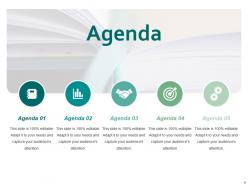
Slide 2: This slide showcases Agenda.
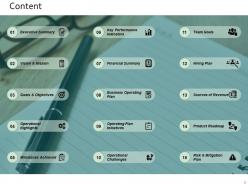
Slide 3: This slide presents Content with these of the following- Executive Summary, Goals & Objectives, Vision & Mission, Operational Highlights, Milestones Achieved, Key Performance Indicators, Financial Summary, Business Operating Plan, Operating Plan Initiatives, Operational Challenges, Team Goals, Hiring Plan, Sources of Revenue, Product Roadmap, Risk & Mitigation Plan.
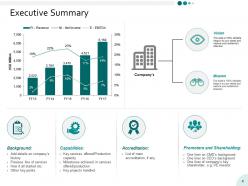
Slide 4: This slide presents Executive Summary Company’s Mission, Vision, Add details on company’s history, Previous line of services, How it all started etc, Other key points, Background, List of main accreditation, if any, Accreditation, One liner on CMD’s background, One liner on CEO’s background, One liner of company’s key shareholder; e.g. PE investor, Promoters and Shareholding, Key services offered/Production capacity, Milestones achieved in services offered/production, Key projects handled, Capabilities.
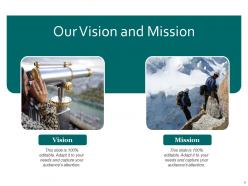
Slide 5: This slide shows Our Vision and Mission. You can add the vision and mission as per your company.
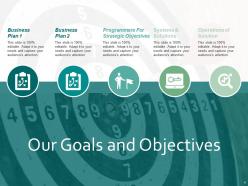
Slide 6: This slide showcases Our Goals and Objectives with these of the following- Business Plan 1, Business Plan 2, Programmers For Strategic Objectives, Systems & Solutions, Operation of Solution.
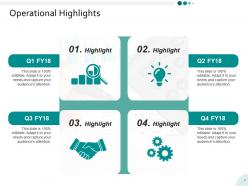
Slide 7: This slide shows Operational Highlights. Add the highlights and use it.
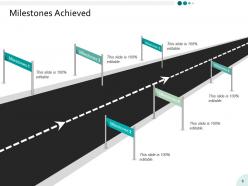
Slide 8: This slide presents Milestones Achieved.
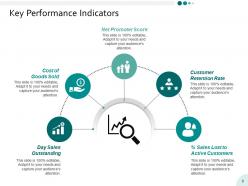
Slide 9: This slide showcases Key Performance Indicators which further presents- Day Sales Outstanding, Cost of Goods Sold, Net Promoter Score, Customer Retention Rate, % Sales Lost to Active Customers.
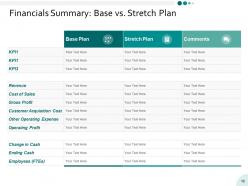
Slide 10: This slide presents Financials Summary: Base vs. Stretch Plan.
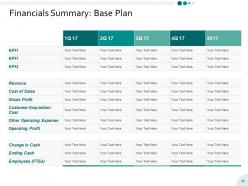
Slide 11: This slide showcases Financials Summary: Base Plan.
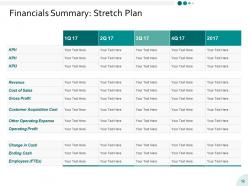
Slide 12: This slide presents Financials Summary: Stretch Plan.
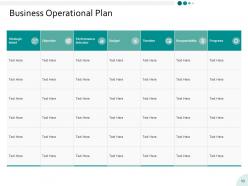
Slide 13: This slide shows Business Operational Plan.
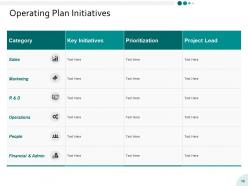
Slide 14: This slide presents Operating Plan Initiatives.
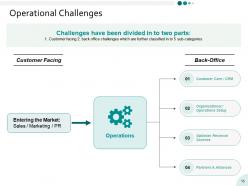
Slide 15: This slide showcases Operational Challenges. These Challenges have been divided in to two parts: Customer Facing, Back-Office, Operations, Customer Care / CRM, Organizational / Operations Setup, Optimize Revenue Sources, Partners & Alliances, Entering the Market, Sales / Marketing / PR.
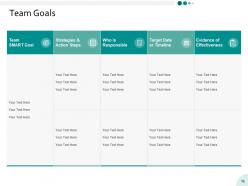
Slide 16: This slide shows Team Goals.
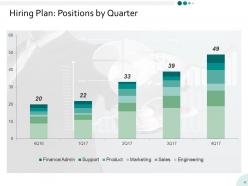
Slide 17: This slide presents Hiring Plan: Positions by Quarter.
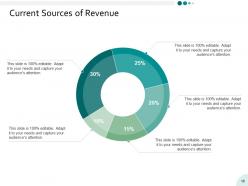
Slide 18: This slide showcases Current Sources of Revenue.
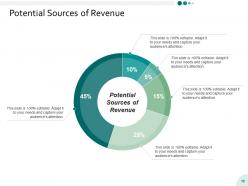
Slide 19: This slide shows Potential Sources of Revenue.
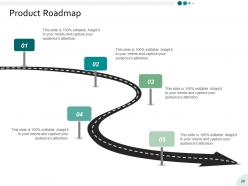
Slide 20: This slide showcases Product Roadmap. You can add the details and data as you want.
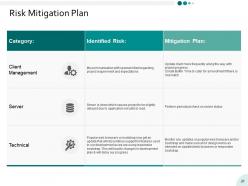
Slide 21: This slide shows Risk Mitigation Plan.
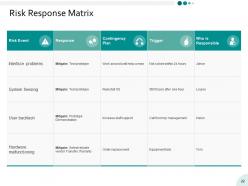
Slide 22: This slide presents Risk Response Matrix. Add the data in the table and use it.
Slide 23: This slide showcases yearly operating plan Icon Slide.
Slide 24: This slide is titled Additional Slides.
Slide 25: This slide helps show- About Our Company. The sub headings include- Creative Design, Customer Care, Expand Company
Slide 26: This slide presents Management Team with name and designation
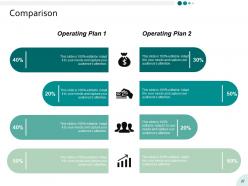
Slide 27: This slide shows Comparison of Positive Factors v/s Negative Factors with thumbs up and thumb down imagery.
Slide 28: This slide is titled as Financials. Show finance related stuff here
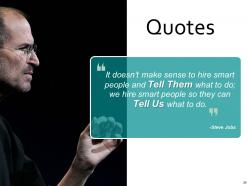
Slide 29: This is a Quotes slide to highlight, or state anything specific.
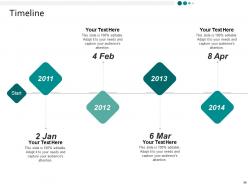
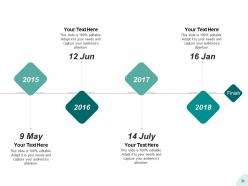
Slide 30: This slide shows Project Events Timeline with icons and text boxes.
Slide 31: This slide presents Finish.
Slide 32: This slide showcases Coffee Break Time.
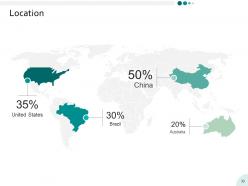
Slide 33: This is a Location slide of World map to show global presence, growth etc.
Slide 34: This slide showcases Magnifying Glass.
Slide 35: This slide presents Puzzle.
Slide 36: This is a Venn diagram image slide to show information, specifications etc.
Slide 37: This slide shows a Mind map for representing entities.
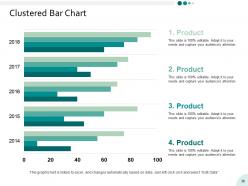
Slide 38: This slide presents Clustered Bar Chart.
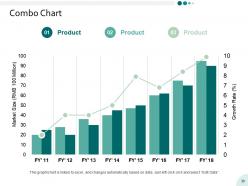
Slide 39: This slide showcases Combo Chart.
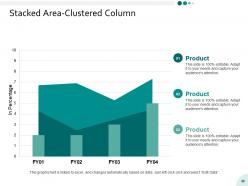
Slide 40: This slide presents Stacked Area-Clustered Column.
Slide 41: This slide shows Thank You.
Yearly Operating Plan Powerpoint Presentation Slides with all 41 slides:
The lord has given you a gift. Let our Yearly Operating Plan Powerpoint Presentation Slides help you share it with others.




FAQs for Yearly Operating Plan
So you'll need four main things: financial projections, strategic goals, resource planning, and ways to measure success. Cover your revenue targets, budgets, and cash flow - that's what the executives actually care about. Map out specific initiatives for each goal and figure out who's doing what with how much money. Honestly, half the battle is just having realistic numbers to start with. Use last year as your starting point. Set up quarterly check-ins with trackable KPIs because "better customer service" means nothing without real data. And yeah, definitely plan for when things go wrong - they always do somehow.
Break your big goals down into stuff you can actually hit in 12 months first. Every project you take on should connect back to those bigger picture things - otherwise you're just spinning your wheels. Honestly, most people try to do way too much and end up accomplishing nothing meaningful. Be picky about what makes the cut this year. Check in every quarter to see how you're doing and pivot if needed. Oh, and make a simple one-pager that shows how everything connects - you'll thank yourself later when people start asking questions.
Track both money stuff and operations - revenue growth, profit margins, budget variance for the financial side. But also look at customer satisfaction, employee engagement, market share, project completion rates. I've honestly seen way too many teams obsess over just the numbers and completely miss red flags happening elsewhere. Pick like 5-7 metrics that actually connect to your main goals instead of drowning in data. Monthly dashboard works best so you can pivot fast. Oh, and don't wait until December to realize something's broken - learned that one the hard way.
So a Yearly Operating Plan is basically how you execute your bigger strategic plan. Your strategic plan covers like 3-5 years of big picture stuff, but the YOP breaks down what you're actually doing THIS year - specific actions, budgets, deadlines, all that. I always think of it like... if strategy is your road trip route, YOP is today's actual driving directions. Business plans are totally different though - those are more for getting investors or launching new stuff. Honestly, just start by grabbing your top priorities from the strategic plan, then get super specific with quarterly goals.
Dude, you absolutely need your whole team involved in this. Don't try to do it solo - I learned that the hard way last year. Get finance to run the numbers, have sales actually commit to realistic targets, and make sure operations can deliver what you're promising. Different departments see stuff you'll miss completely. Plus when everyone helps build the plan, they're way more likely to stick to it during execution. The process takes longer but honestly? It's worth it because you won't have people pushing back later saying "we never agreed to this." Start those planning sessions early and keep the key people in the loop throughout.
Honestly, tech can totally transform your YOP process. Start with your biggest headaches - those manual tasks that eat up time. Project management tools track milestones automatically. Financial software handles budget monitoring so you're not constantly updating spreadsheets (thank god). Cloud platforms let everyone update from anywhere, which is huge for keeping teams synced. The real game-changer? Dashboards that pull actual performance data instead of you guessing if things are on track. Real-time collaboration means no more version control nightmares. I'd skip trying to overhaul everything at once though - pick one pain point and build from there.
Don't set crazy ambitious goals just because they sound good in meetings - your team will hate you when they can't hit them. Also, get input from people who actually do the work instead of having executives decide everything behind closed doors. I swear, half the strategic plans I've seen look amazing but fall apart because nobody asked the operations team if it's even possible. Build in some flexibility too since markets change constantly. Oh, and start planning way earlier than you think - procrastinating until the holidays is a recipe for disaster.
Honestly, quarterly reviews are the bare minimum but I'd go monthly if you can manage it. Markets are crazy unpredictable right now. Do the heavy lifting quarterly - budget stuff, checking if your goals still make sense, all that. Monthly can be way more chill, just peek at your key numbers and catch any weird trends early. Oh, and mid-year deep dives are clutch for course-correcting. Don't change direction every five seconds though - that'll drive everyone nuts. Set those calendar reminders now or you'll totally forget.
Look, you really need to get stakeholders involved early or you're gonna regret it later. They'll catch stuff you missed and actually know if your plan is realistic or just wishful thinking. Finance will shut down unrealistic budgets real quick - trust me on that one. Different teams have insights about what's actually happening in the market that you won't get from sitting in meetings all day. The trick is asking for their input now, not after you've already decided everything. Way easier to adjust things upfront than trying to backtrack later when people push back.
Honestly, don't wait until something goes wrong to think about risks - build it into your planning upfront. When you're doing annual goals and budgets, figure out what could tank each big project first. Supply chain issues, regulations changing, star employees bailing - that kind of stuff. Most people totally skip this part (learned that the hard way). Build backup plans and extra resources right into your operating plan from day one. Each quarter, have someone actually watch your biggest risks and tweak your game plan. Oh, and make it a regular thing in monthly reviews so it doesn't just disappear.
Honestly, the key is hitting people from multiple angles. Do a big company presentation first so leadership can lay out the main goals. After that, have department managers break it down in smaller meetings - way more personal that way. Skip the boring documents though, nobody reads those things. Instead go with dashboards, simple one-pagers, maybe some infographics that actually look decent. The trick is doing regular check-ins throughout the year so it doesn't just disappear after January. Oh, and make sure everyone gets how their specific job connects to the bigger company goals - that's what really makes it stick.
Honestly? You gotta bake in some buffer time right from the start - like 10-15% extra for when stuff inevitably goes sideways. Set quarterly checkpoints where you can actually change direction, not just talk about what happened. Your goals should be specific but not so rigid you can't adjust tactics. Too many teams I've worked with just... stick to plans that made zero sense anymore? It's wild. Treat your YOP like it's alive - schedule those review sessions now and actually USE them when reality smacks you in the face.
Start with your basic P&L stuff - revenue projections, expenses, net income broken down monthly. Cash flow is huge since that's literally what keeps you alive. Balance sheet projections and whatever ratios your boss obsesses over too. I'd definitely run a few scenarios - best case, worst case, realistic. Nobody can predict the future anyway, right? Connect everything back to your actual strategic plans so the numbers make sense together. The whole point is creating something people can reference when making decisions all year. Oh, and keep it digestible - no one wants to wade through spreadsheet hell.
Look, a good YOP basically gets your whole team on the same page about what you're actually trying to accomplish. Break those massive annual goals into quarterly chunks - trust me, less overwhelming that way. People work harder when they can see how their daily stuff connects to the big picture wins. I'd definitely get your team involved in creating the plan rather than just dumping it on them. Creates those natural check-in moments too, so nobody can just coast and hope no one notices. Honestly, half the battle is just making sure everyone knows what success looks like.
Honestly, most people I know just use a combo - like Asana or Monday.com for the day-to-day stuff, then something like Tableau for the fancy executive dashboards. Google Sheets can work too if your YOP isn't super complicated (though it gets messy fast). The real trick is picking whatever your team will actually stick with. I've seen so many beautiful setups that nobody touches after week two. Start simple - maybe try Asana's goals feature first and see how it goes after a few months. You can always upgrade later once you figure out what you actually need.
No Reviews