


Optimizing After Sales Services To Increase Client Engagement Powerpoint Presentation Slides




Try Before you Buy Download Free Sample Product
 Impress Your
 Audience
 100%
100% Editable
 Save Hours
 of Time


After sales service is critical for customer satisfaction and retention as it increases loyalty and brand value. Check out our insightfully designed Optimizing After Sales Services to Increase Client Engagement template. It details the customer support teams struggles, such as rising average response times, growing ticket backlogs, declining customer retention rates, etc. Our Client Support deck also discusses the need for an improvement strategy to provide customers with a better experience. It goes over additional ways to improve customer service. Identifying target audience demands, tracking performance metrics, implementing software for a smooth experience, and much more are all part of it. Finally, our customer satisfaction module considers the benefits of implementing improvement tactics and the costs associated with adopting and implementing these techniques. Download this 100 percentage editable presentation to gain access to our in depth research and expertly designed product.
People who downloaded this PowerPoint presentation also viewed the following :
Content of this Powerpoint Presentation
Slide 1: This slide introduces Optimizing After-Sales Services to Increase Client Engagement. Commence by stating Your Company Name.
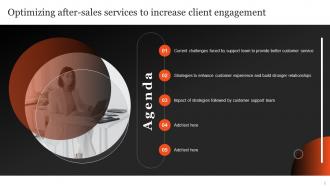
Slide 2: This slide depicts the Agenda of the presentation.
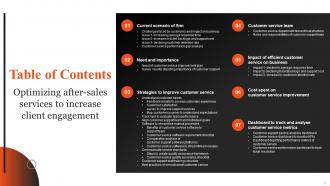
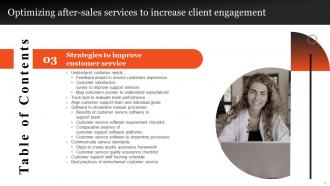
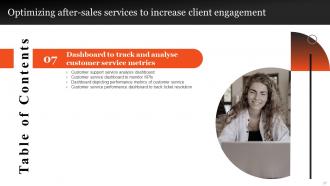
Slide 3: This slide incorporates the Table of Contents.
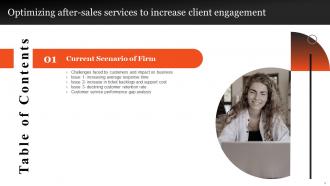
Slide 4: This slide elucidates the Title for the Topics to be covered further.
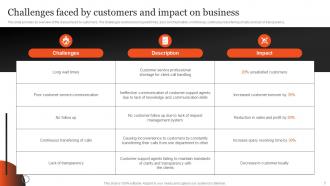
Slide 5: This slide provides an overview of the issues faced by customers.
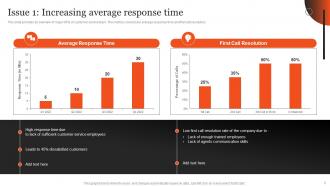
Slide 6: This slide shows an overview of major KPIs of customer service team.
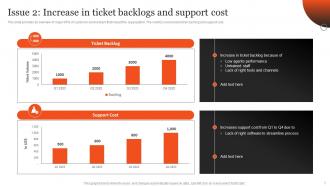
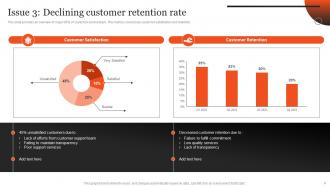
Slide 7: This slide provides an overview of major KPIs of customer service team that impact the organization.
Slide 8: This slide gives a glimpse of major KPIs of customer service team.
Slide 9: This slide showcases the desired goal of customer support department.
Slide 10: This slide includes the Heading for the Contents to be discussed next.
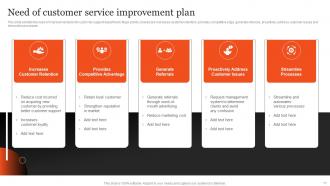
Slide 11: This slide exhibits the need of improvement plan for customer support department.
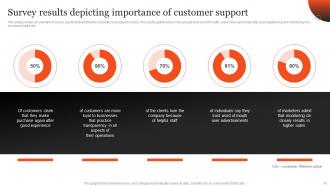
Slide 12: This slide showcases the Survey results depicting importance of customer support.
Slide 13: This slide incorporates the Title for the Ideas to be further discussed.
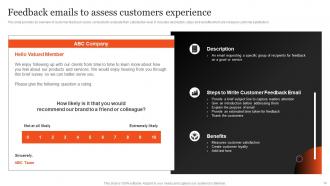
Slide 14: This slide talks about the Feedback emails to assess customers experience.
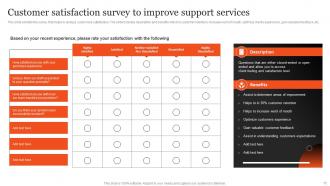
Slide 15: This slide presents the Customer satisfaction survey to improve support services.
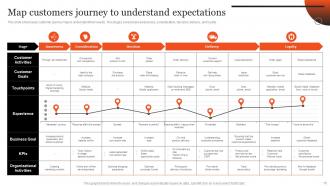
Slide 16: This slide focuses on Map customers journey to understand expectations.
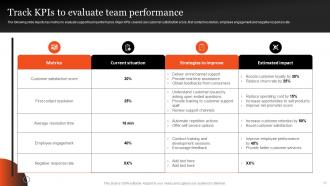
Slide 17: The following slide depicts key metrics to evaluate support team performance.
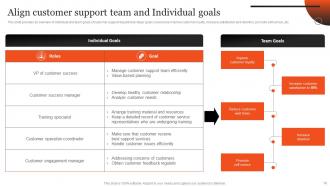
Slide 18: This slide provides an overview of individual and team goals of customer support department.
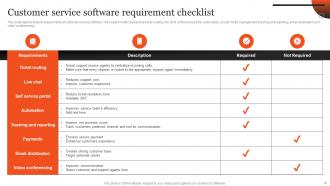
Slide 19: This slide depicts feature requirements of customer service software.
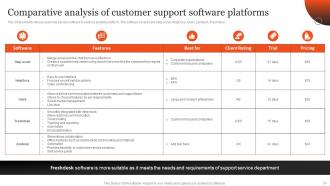
Slide 20: This slide exhibits various customer service software to select a suitable platform.
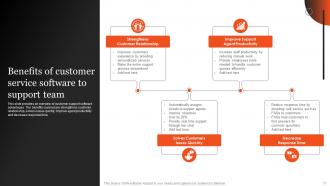
Slide 21: This slide showcases the Benefits of customer service software to support team.
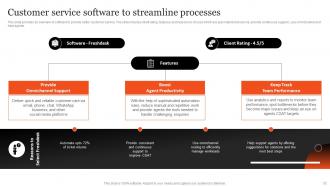
Slide 22: This slide talks about Customer service software to streamline processes.
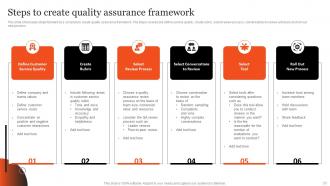
Slide 23: This slide states the Steps to create quality assurance framework.
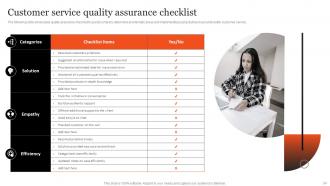
Slide 24: This slide displays the Customer service quality assurance checklist.
Slide 25: This slide depicts a training schedule of support agents.
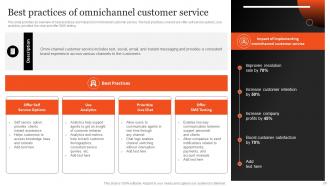
Slide 26: This slide reveals the Best practices of omnichannel customer service.
Slide 27: This slide mentions the Heading for the Ideas to be discussed next.
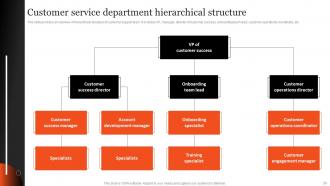
Slide 28: This slide provides an overview of hierarchical structure of customer support team.
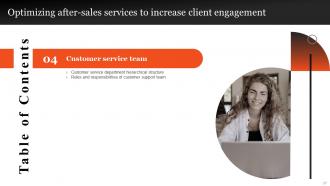
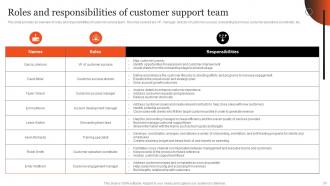
Slide 29: This slide showcases the Roles and responsibilities of customer support team.
Slide 30: This slide includes the Title for the Topics to be covered in the following template.
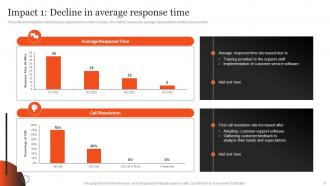
Slide 31: This slide shows the impact of good support service on the company.
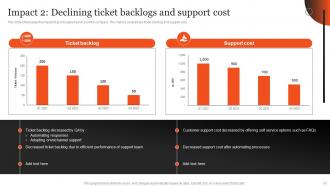
Slide 32: This slide highlights the impact of good support service on the company.
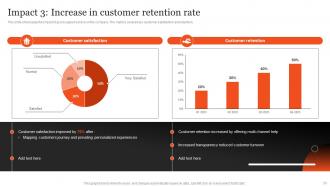
Slide 33: This slide portrays the impact of good support service on the company.
Slide 34: This slide indicates the Heading for the Components to be discussed in the upcoming template.
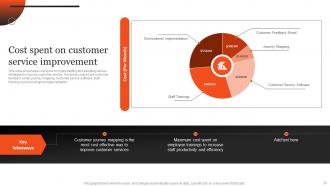
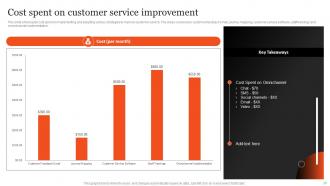
Slide 35: This slide displays the Cost spent on customer service improvement.
Slide 36: This slide showcases cost spent on implementing and adopting various strategies to improve customer service.
Slide 37: This slide incorporates the Title for the Ideas to be covered further.
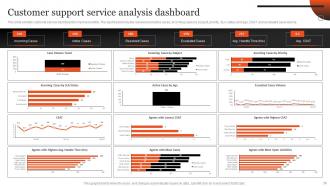
Slide 38: This slide exhibits customer service dashboard to improve visibility.
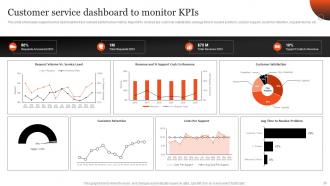
Slide 39: This slide illustrates the Customer service dashboard to monitor KPIs.
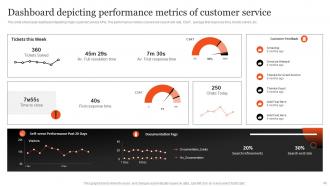
Slide 40: This slide showcases dashboard depicting major customer service KPIs.
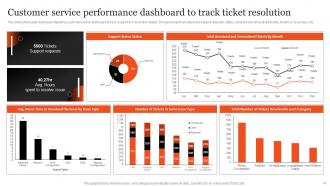
Slide 41: This slide presents dashboard depicting customer service dashboard to track support tick resolution status.
Slide 42: This is the Icons slide containing all the Icons used in the plan.
Slide 43: This slide is used for depicting Additional information.
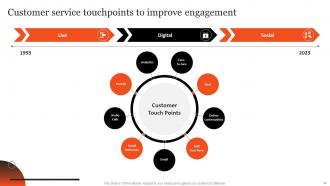
Slide 44: This slide deals with Customer service touchpoints to improve engagement.
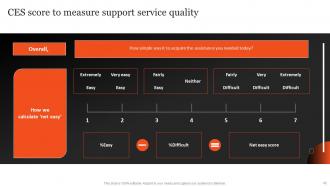
Slide 45: This slide talks about CES score to measure support service quality.
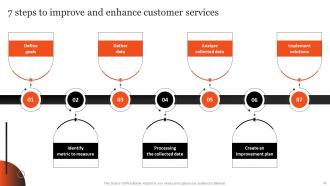
Slide 46: This slide highlights the 7 steps to improve and enhance customer services.
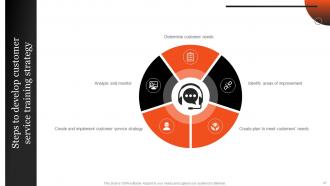
Slide 47: This slide mentions the Steps to develop customer service training strategy.
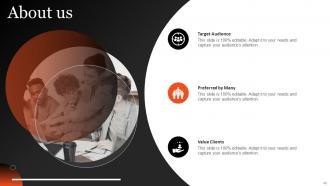
Slide 48: This is the About us slide. State your company-related information here.
Slide 49: This is the Magnifying glass slide.
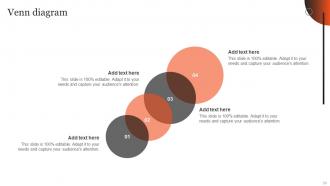
Slide 50: This is the Venn diagram slide.
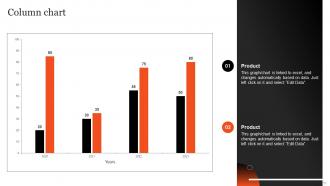
Slide 51: This slide reveals the Column chart.
Slide 52: This slide contains the Post it notes for reminders and deadlines.
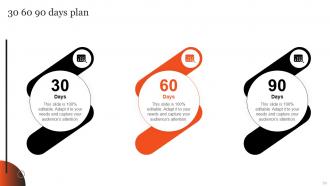
Slide 53: This is the 30 60 90 days plan slide for effective planning.
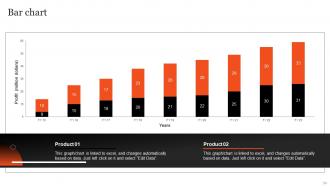
Slide 54: This slide shows the Bar chart.
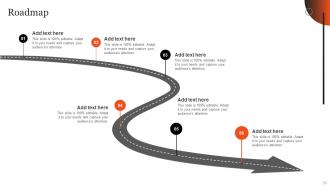
Slide 55: This slide elucidates the organization's Roadmap.
Slide 56: This is the Thank you slide for acknowledgement.
Optimizing After Sales Services To Increase Client Engagement Powerpoint Presentation Slides with all 61 slides:
Use our Optimizing After Sales Services To Increase Client Engagement Powerpoint Presentation Slides to effectively help you save your valuable time. They are readymade to fit into any presentation structure.










FAQs for Optimizing After Sales Services To Increase Client Engagement
Honestly, I'd focus on customer satisfaction scores and first-call resolution - those two tell you everything. Response time matters too because angry customers waiting on hold? Not fun for anyone. Oh, and definitely track retention rates since that's literally your money walking out the door. Repeat contacts are another big one to watch. When people keep calling about the same broken thing, something's not working on your end. I made the mistake once of tracking like 8 metrics right away - total mess. Pick maybe 2-3 to start with and actually pay attention to them instead of drowning in data you won't use.
Honestly, chatbots are pretty clutch for after-sales stuff. Your customers can get instant help with tracking orders, returns, basic fixes - even at like 3am when they're panicking about something. No more sitting on hold forever. The AI can actually spot patterns and catch issues before customers even complain, which is wild. It handles all the repetitive questions so your real support team can focus on the tricky problems that need actual humans. I'd probably start with just a simple bot for your most common FAQs and see how it goes from there.
Honestly, customer feedback is like having a cheat sheet for what's actually broken in your after-sales stuff. People will tell you exactly where you're screwing up - and they're way more honest than any expensive consultant you'd hire. You'll catch patterns your team totally misses, like super slow response times or confusing return policies. I'd say set up a few different ways for customers to complain (because they will anyway). Then actually do something about it - don't just collect feedback and let it sit there. Pick your top 3 complaints this month and fix those first. Works way better than guessing what's wrong.
Map out all your after-sales touchpoints from day one - onboarding, training, support calls, renewals, the whole thing. Don't just slap them on at the end like most companies do (honestly such a waste of money). Get everything into your CRM so you can actually see the full customer story and find spots to help them more. Your sales team should know what happens after they close deals too. I always think of after-sales as relationship building, not just some other department's headache. Makes way more sense that way.
Start with product knowledge - builds confidence fast. Your team needs to know specs, common problems, how to troubleshoot everything. Communication skills are just as crucial though. Angry customers want empathy, not some scripted robot response. I've watched teams completely fall apart when they ignore the people skills side! Problem-solving workshops help too - teaches them to think outside the box when usual fixes don't work. Oh, and don't forget your specific tools and escalation stuff. Honestly, if they don't know the products well, customers will see right through them.
So CRM is basically like having everything about your customers in one spot - service history, past conversations, warranty info, all of it. Your team can actually help people without making them repeat their whole story every time (which honestly makes such a difference). I'd start by figuring out what you're doing most often after sales - maybe warranty reminders or check-in surveys? Then automate those workflows first. You'll catch problems earlier too since you can spot patterns in support tickets. Makes responding way faster and, let's be real, way less annoying for everyone involved.
Don't try fixing everything at once - you'll just burn everyone out and nobody will know what to prioritize. Most companies rush into automation too fast. Like yeah, chatbots save time, but people still want actual humans for complicated stuff. Also, tons of teams skip collecting real feedback and just guess what customers want (spoiler: they're usually wrong). Oh and here's something that drives me crazy - rolling out new processes without training anyone properly. What's the point? Pick one thing, test it, see if it works. Make sure your people actually know how to do whatever you're asking them to do first.
Dude, personalization is a game changer for keeping customers happy after they buy. Like, when someone contacts support and you already know what they ordered and their past issues? They immediately feel heard instead of anonymous. I've literally watched retention go up 25-30% just from decent personalization - it's wild how much difference it makes. People are usually already annoyed when they reach out, so showing you get their situation right away totally changes the vibe. Honestly, just start by pulling their order info before you respond and mention their specific product in your first reply.
Okay so first thing - audit your current response times to see where you're getting stuck. Automated ticket routing helps a ton, just sort by issue type and set up different support tiers. Honestly, most customers actually prefer fixing simple stuff themselves, so beef up your FAQs and maybe add a basic chatbot. Set clear SLAs for different priority levels and actually track how your team's doing against them. Oh, and if you can swing it, extended hours or callback options beat making people sit on hold forever. That's probably the worst part of calling support. Start with your biggest bottlenecks first.
Weekly sync meetings are your best bet - have after-sales share feedback trends while sales/marketing update on campaigns and what they're promising customers. I know, more meetings sound awful but this one's actually worth it. Shared dashboards help too so everyone sees satisfaction scores and resolution times live. Oh and definitely nail down those handoff processes between departments because that's where stuff always gets dropped. Honestly the data sharing thing is what'll make the biggest difference. Start with just one weekly meeting and see how it goes from there.
Honestly, just dump everything into one system first - chasing warranty info across different spreadsheets is a nightmare when customers are calling mad. Keep your terms super simple because let's be real, nobody's reading those novel-length contracts anyway. I'd set up automatic reminders for renewals so you can hit people up before stuff expires. Track what keeps breaking to catch quality problems early and tweak your coverage. The claims process needs to be brain-dead easy - like mobile app easy. Oh and definitely look at what you're spending versus how happy customers actually are. That'll show you where to focus.
Pull your service tickets from the last six months and dig into what keeps breaking. Predictive models are honestly where it's at - they'll save you so much headache down the road. Check your product failure rates and see if certain batches are duds. Seasonal stuff matters too, like warranty claims spiking after holidays (people actually use their stuff then). Set up alerts when your metrics get wonky. Customer complaints are gold for this - they'll tell you what's coming before your data does. Just start with the obvious patterns first.
Dude, after-sales service is honestly where you either win customers for life or lose them forever. It's all about what happens AFTER they buy - like support, repairs, follow-ups, that stuff. Companies that ghost you post-purchase? Total red flag. But the ones who actually have your back when something breaks or you need help? Those are the brands you'll stick with and tell everyone about. I mean, anyone can make a sale, right? The real magic happens when they keep caring about you afterward. Response times matter big time, and actually fixing problems instead of just pretending to listen. Trust me, customers remember that stuff.
Honestly, prevention beats scrambling to fix stuff later. Build better products from the start and set up solid self-service options - FAQs, video tutorials, maybe a decent chatbot. Way cheaper than hiring a massive support team, trust me. Track which services actually keep customers vs the fluff that just looks good on paper. Train your people to nail it on the first try, and funnel basic questions to cheaper channels. Oh, and definitely measure cost-per-resolution alongside satisfaction scores - you'll spot the real problems fast.
Honestly, the biggest game-changers right now are AI predictive maintenance and those super-personalized customer portals. Remote diagnostics have gotten insane - techs can fix problems without even being there. Subscription models are replacing warranties everywhere, which totally shifts how you think about revenue streams. Oh, and self-service is huge now. AR guides and chatbots handle like 70% of basic questions, which is wild when you think about it. I'd start by looking at your current service process and figuring out what's eating up the most time - that's probably where automation makes sense.
-
“There is so much choice. At first, it seems like there isn't but you have to just keep looking, there are endless amounts to explore.”
-
Making a presentation has never been this easy for me. Thank you SlideTeam for offering a splendid template library.