

Order Delivery Process Flow Chart In Manufacturing Industry




Try Before you Buy Download Free Sample Product
 Impress Your
 Audience
 100%
100% Editable
 Save Hours
 of Time


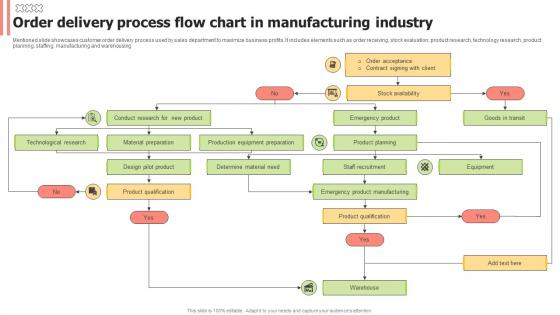
Mentioned slide showcases customer order delivery process used by sales department to maximize business profits. It includes elements such as order receiving, stock evaluation, product research, technology research, product planning, staffing, manufacturing and warehousing
People who downloaded this PowerPoint presentation also viewed the following :
Order Delivery Process Flow Chart In Manufacturing Industry with all 6 slides:
Use our Order Delivery Process Flow Chart In Manufacturing Industry to effectively help you save your valuable time. They are readymade to fit into any presentation structure.





FAQs for Order Delivery Process Flow Chart
So you've got four main stages to worry about: order confirmation, fulfillment, shipping, and delivery. Once the order comes in, confirm payment and check if you actually have the stuff in stock. Then your team picks and packs everything. Shipping is where things get messy though - honestly, most headaches come from crappy logistics partners. Finally it gets to the customer's door. Oh, and definitely set up those automated tracking notifications at each step. Saves you from answering "where's my order" emails all day, which gets old fast.
Honestly, start with communication - customers just want to know where their stuff is, so get those tracking notifications automated. Speed things up by streamlining your warehouse and finding reliable shipping partners. Don't overpromise on delivery times either, that always backfires. The real lifesaver though? Having a backup plan ready because something will definitely go wrong at some point. I'd say audit what you're doing now first. Figure out what customers are actually complaining about most - that's your starting point right there.
Honestly, GPS tracking is a game-changer - customers can see exactly where their stuff is instead of guessing. Set up automated texts and emails so they don't have to keep checking your site obsessively. API connections with shipping companies pull live data straight to your platform. Push notifications work really well too, especially those "driver's almost there" alerts. Oh, and don't go overboard with updates - pick maybe 2-3 features that fix your biggest customer complaints. Nobody wants their phone buzzing every five minutes, but they definitely hate being left wondering if their package fell into a black hole somewhere.
Honestly, good communication is what saves you from delivery disasters. Missing packages, confused customers, angry calls - most of that happens because info didn't get passed along properly. I can't tell you how many times I've seen delays that could've been avoided if someone just updated a status. Set up automatic notifications first, that's huge. Then do regular check-ins with your delivery team. Oh, and when something does go wrong (and it will), communicate fast. Customers hate being left in the dark more than actual delays sometimes. Clear tracking info keeps everyone sane too.
Look, inventory management basically makes or breaks your ability to ship on time. You can't promise customers stuff you don't actually have in stock - learned that the hard way once. Real-time syncing across all your sales channels prevents overselling disasters. Your warehouse crew will thank you too since they won't waste time hunting for random items that supposedly exist somewhere. The whole point is spotting stockouts before they turn into those awkward "oops, delayed" emails. Keep your data tight and you'll actually be able to deliver what you're selling.
So I'd focus on delivery times first - like from when they order to when it actually shows up. Compare that to what you promised them. Order accuracy is massive because screwing up an order means you're doing twice the work, which sucks. Track your on-time rate and cost per delivery too. Customer satisfaction scores matter most though - your internal numbers don't mean anything if customers are pissed. Maybe set up something simple to check these monthly? You'll spot the problems pretty quick and know what's actually broken.
Honestly, the worst problems are usually inventory chaos and last-mile delivery nightmares. When your systems don't talk to each other? Total disaster. Real-time tracking breaks down constantly. Coordinating multiple carriers is like herding cats. Then weather hits, traffic's a mess, and suddenly your capacity is shot. Customer expectations are through the roof too - they want everything yesterday. My advice? Build in extra time when you promise delivery dates. Always have a Plan B ready because something will definitely go wrong. Trust me on this one.
So basically you want to track your current routes for a few weeks first - get that baseline data. Then feed all that info (traffic patterns, where customers are, delivery windows, driver schedules) into route optimization software. The algorithms crunch everything including real-time stuff like weather and road closures. Honestly it's wild how much difference it makes - we're talking serious fuel savings and way more deliveries per day. Short sentences work better here, but the software finds paths you'd never think of yourself. Just make sure whatever tool you pick plays nice with your current delivery system.
Yeah so with third-party delivery you're basically giving up control for convenience. Their drivers show up late or act weird? That's still on your brand even though you can't do anything about it. The fees definitely add up too - they love hitting you with random charges. But honestly most businesses find it worth it since you get access to their whole network without buying trucks or whatever. I'd just keep an eye on how deliveries are going and have a good system ready for when customers complain. Because they will complain.
Honestly, it all depends on what you're shipping. Food and pharma companies are obsessed with temperature control and timing - makes sense since nobody wants rotten milk or sketchy medications. E-commerce is pure speed game, while manufacturing cares more about moving huge quantities cheaply. Healthcare? That's where things get really strict with all the regulatory stuff and tracking requirements. Retail and fashion are pretty middle-of-the-road, except when holiday season hits and everything goes insane. My advice? Figure out what actually matters in your industry first. Don't waste time perfecting speed if your customers care more about cost, but definitely don't skimp on compliance where it's required.
Honestly, I'd start by checking your damage reports to see what's breaking. Three things matter most: right-sized boxes (stuff shouldn't rattle around), decent cushioning for anything fragile, and solid sealing. Bubble wrap's your friend here. I made this mistake early on and dealt with way too many angry customers - not fun. Your unboxing matters too though. Clean labels and including invoices or return info makes you look professional. Oh, and don't go overboard with packaging either. You'll eat into profits if you're wrapping everything like it's made of glass.
Honestly, just start with post-delivery surveys and review monitoring - that's where you'll catch the real issues. Complaints are gold too, even though they suck to deal with. Pattern spotting is huge here... like if everyone's whining about narrow delivery windows or drivers ignoring special requests. I know one company that rebuilt their entire tracking system because customers kept asking for it. Tackle the biggest problems first since they're hitting the most people. But here's the thing - you gotta actually fix stuff and tell customers you did. Otherwise it's just busy work that pisses people off more.
Okay so basically you've got three big things to watch out for. Consumer protection laws are huge - if packages get damaged or go missing, you could be liable depending on your terms and local regulations. GDPR and other privacy stuff is where tons of companies mess up though, so be super careful with customer delivery data. Also don't forget about accessibility requirements for your tracking systems and notifications. Oh, and definitely have your legal team check your delivery terms regularly, especially when you're expanding somewhere new. Different regions have totally different rules and it's easy to miss something important.
So here's the thing - express delivery pulls in customers who don't mind paying extra for speed. They'll usually throw more stuff in their cart to make that shipping cost feel worth it. Standard delivery? That's for your bargain hunters who plan ahead. Honestly, the psychology behind it is wild - it's not just about delivery speed, it changes people's entire shopping behavior. Fast shipping customers tend to buy pricier items too. You should definitely test different options and see what actually makes you more money overall. Sometimes slower shipping wins if you're targeting the right crowd.
Honestly, you've gotta get ahead of this stuff before customers even know there's a problem. Set up those automated alerts the second you spot shipping issues - and don't just say "delayed," give them actual new timeframes. Your customer service team needs real-time tracking access too, so they're not giving people the runaround with generic answers. Oh, and throw in something small like free expedited shipping next time. People eat that up. The whole thing really comes down to talking early and often, plus giving customers some control over the situation. Makes all the difference.
-
The customer care of SlideTeam is very responsive. I was having a payment issue and they fixed it for me in no time.
-
I joined SlideTeam last month and there’s no doubt that I tend to find our bond only strengthening over time. Best place to find world-class themes, templates, and icons.