


Organizational Structure Pwc Company Profile Ppt Model Diagrams CP SS




Try Before you Buy Download Free Sample Product
 Impress Your
 Audience
 100%
100% Editable
 Save Hours
 of Time


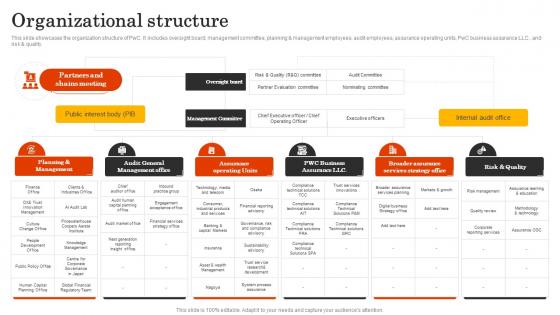
This slide showcases the organization structure of PwC. It includes oversight board, management committee, planning and management employees, audit employees, assurance operating units, PwC business assurance LLC., and risk and quality.
People who downloaded this PowerPoint presentation also viewed the following :
Organizational Structure Pwc Company Profile Ppt Model Diagrams CP SS with all 9 slides:
Use our Organizational Structure Pwc Company Profile Ppt Model Diagrams CP SS to effectively help you save your valuable time. They are readymade to fit into any presentation structure.









FAQs for Organizational Structure Pwc Company Profile Ppt Model
Okay so there's basically four main types. Functional groups people by what they're good at, divisional splits by product or location. Then you've got matrix which is like having two bosses (nightmare honestly), and flat where there's barely any hierarchy. Functional's perfect for specialized stuff but creates those annoying department silos. Divisional gives you flexibility but wastes money duplicating things. Matrix confuses everyone about who actually calls the shots. Flat speeds everything up but your managers will be drowning. Pick based on your size and how fast you need to change direction when things get crazy.
So here's the deal - companies usually go flat when they're growing fast, then get more centralized when money gets tight. Competition makes them push decisions down to whoever's closest to customers. Downturns? That's when you see all the "synergies" and department merging. Digital stuff forces everyone into these cross-functional teams whether they like it or not. Honestly, just watch what your competitors are doing and listen to customers. If they're making moves in days while you're stuck in approval hell for weeks, time to cut some layers. Pretty straightforward pattern once you see it.
Honestly, communication can totally make or break whatever setup you pick. With hierarchical stuff, you need those clear up-and-down channels or info just gets lost. Flat structures? Everyone's gotta be cool with talking directly and often since there's way less formal oversight. Matrix setups are kind of a mess communication-wise unless you're super deliberate about it - like people actually knowing who handles what. I'd say figure out who needs what info first, then pick tools that actually work with your structure. Don't try to force it the other way around, you know?
Honestly, flat structures work because people actually feel heard. Your team gets direct access to leadership instead of going through three different managers just to suggest something. Ideas move way faster too - no waiting weeks for approvals on simple stuff. When employees can see how their work connects to the big picture, they naturally care more about outcomes. Plus they take real ownership since they're not just following orders from above. Innovation happens when people aren't scared to speak up. Maybe try cutting out one management layer first? Even that small change makes a huge difference in how engaged everyone feels.
So matrix structures mean people report to two bosses - their functional manager AND a project manager. Pretty confusing setup, honestly. The upside is resources get shared better between projects, plus decisions happen faster since expertise moves around more easily. People pick up broader skills too. But here's the thing - it can get messy fast. Your team might get totally different priorities from each boss, which is stressful as hell. Communication becomes way more complex. If you're thinking about it, definitely nail down your communication systems first. Otherwise you'll just end up with chaos instead of the collaboration you wanted.
So basically, organizational structure controls who makes decisions and how quickly stuff gets done. Flat structures are way faster - like at startups where everyone's basically equals and you don't need ten approvals for everything. Hierarchical ones? Slower for sure, but they give you more control and oversight. Honestly can be a pain but sometimes you need it, especially at bigger companies. Really depends what you're after though. Need speed and innovation? Go flat. Want consistency and less risk? More hierarchy's probably better. It's kinda like choosing between a sports car and a tank, you know?
Honestly, I'd start with just 2-3 metrics that actually match your biggest headaches right now. Decision-making speed is huge - like, how long does it take teams to make calls and actually do something about them? Then look at whether people are getting info when they need it (communication flow). Employee engagement scores matter too, but everyone tracks those already. What really tells the story though? Cross-functional collaboration and project time-to-market. Those hit different. Also check turnover rates by department - sometimes one area is bleeding talent and you don't realize it. Track quarterly and see if your changes are actually working or if you're just shuffling deck chairs.
Honestly, start with what you're actually trying to achieve - your goals and growth plans. Think about company size, your industry's weird requirements, decision speed, all that stuff. Functional structures are solid for specialized teams. Flat ones? Amazing for speed and innovation, but they get chaotic fast when you grow (learned that the hard way). Matrix gives flexibility but nobody knows who's boss half the time. Here's what I'd do: map out how info flows and who decides what first. Then pick whatever structure actually supports those patterns instead of creating more headaches.
Honestly, culture and structure either click together or they're constantly at war. You'll see this when companies preach collaboration but then pile on 12 approval layers and rigid departments - everyone just gets frustrated. A flat org chart won't spark innovation if people get punished for taking risks, you know? The sweet spot is when they actually match up. Cross-functional teams work great when the culture genuinely rewards sharing knowledge. When there's a mismatch though? People burn out navigating mixed signals instead of focusing on good work. It's like fighting the system daily.
Yeah, remote work is basically forcing companies to flatten out their org charts. When your team's spread across different time zones, that old-school hierarchy just doesn't work anymore. Companies are cutting middle management layers and focusing way more on actual results instead of who's sitting at their desk longest. Cross-functional teams are everywhere now too. Honestly, the whole "butts in seats" thing becomes pretty ridiculous when everyone's working from their couch anyway! They're also creating weird new positions like remote work coordinators - didn't even know that was a thing until recently. Bottom line: think about how decisions actually get made when you can't just walk over to someone's office.
Honestly, flatten your org chart first - cut those middle management layers and let the people actually doing the work make decisions. Cross-functional teams are a game changer here because nobody's waiting around for Karen from legal to approve every tiny thing. Daily standups help tons with communication, plus retrospectives so teams can figure out what's broken. The culture stuff though? That's where it gets messy. People hate change, even when it's good for them. Give your team leads real autonomy and make a big deal out of early wins. Oh, and definitely pilot this with just one or two teams before going company-wide - learned that the hard way.
Your org structure totally impacts who you can hire and keep around. When roles are clear and reporting makes sense, candidates actually know what they're getting into. Messy hierarchies? People run. Retention's where structure really shows up though - everyone wants to see how they can move up and who makes the big calls. Flat companies feel super collaborative but honestly, sometimes there's nowhere to go career-wise. On the flip side, those super rigid structures just crush creativity and drive your best people crazy. You should probably check if your setup's actually working for you or against you.
Honestly, you're mixing two totally different operating systems and people absolutely hate change. Cultural clashes will be brutal since each structure has different values. Duplicate roles create serious political drama - nobody wants to feel redundant, obviously. Communication gets messy fast when you have competing hierarchies and unclear chains of command. Decision-making becomes this weird power struggle over who has authority. Here's what I'd do: map both structures early, spot the major conflicts, then communicate that new org chart like crazy before people start filling in the blanks themselves. Trust me on this one.
Slack or Teams are game-changers for cutting through communication BS - no more waiting three days for someone two departments over to respond. Digital org charts actually help too, since half the time nobody knows who's supposed to handle what anyway. For approvals, ditch the email chains and set up automated routing. Way faster. Video calls let you work with people anywhere, which is pretty cool when you think about it. Here's what I'd do: map out where things get stuck now, then test one tool first. Don't go crazy with a massive rollout right away.
Dude, so many companies are going flat now - like way less middle management BS. Remote work obviously changed everything, but I'm also seeing these cross-functional teams pop up instead of the old department silos. Project-based stuff is huge too. Teams just form for something specific, knock it out, then split up again. Makes sense with all the freelance culture happening. Oh and definitely start writing down your processes better since people aren't always gonna be sitting right there to bug with questions. That network structure instead of the pyramid thing is honestly refreshing - about time companies caught up.
-
The content is very helpful from business point of view.
-
“The presentation template I got from you was a very useful one.My presentation went very well and the comments were positive.Thank you for the support. Kudos to the team!”