


Past present future powerpoint presentation slides




Try Before you Buy Download Free Sample Product
 Impress Your
 Audience
 100%
100% Editable
 Save Hours
 of Time


Grab Past Present Future PowerPoint Presentation Slides and create a business plan to achieve future goals. Compare sales, achievements, growth, goals, and more using past present future PPT presentation slideshow. Incorporate amazing designs of past present future PowerPoint templates to get your client’s attention towards your business performance and showcase your upcoming plan. Present business achievements. Compare results to analyse the business growth. Incorporate past present future PPT presentation slides for showcasing current future state, gap analysis, before and after business comparison, business success ratio, achievements, today tomorrow business plan, etc. This deck comprises of various templates presenting past present future business state. These templates are completely customizable. Edit color, text, icon and font size as per your need. Add your content, assess current situation and plan accordingly for the future. Download past present future PowerPoint presentation templates to draft a professional plan to achieve as much business goals. Counter any defeatist attitude with our Past Present Future Powerpoint Presentation Slides. They help exorcise your fears.
People who downloaded this PowerPoint presentation also viewed the following :
Content of this Powerpoint Presentation
Slide 1: This slide introduces Past Present Future. State Your Company Name and begin.
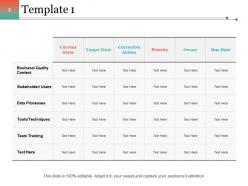
Slide 2: This slide presents Template 1
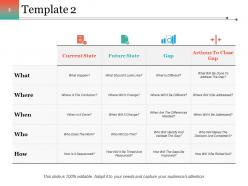
Slide 3: This slide showcases Template 2 which further presents current state and future state.
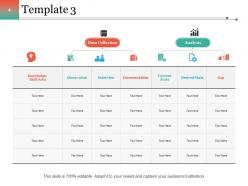
Slide 4: This slide showcases Data Collection and Analysis.
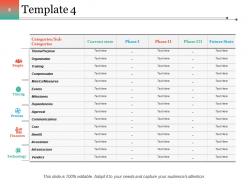
Slide 5: This slide shows Template 4 that further includes- Finances, Timing, Process, Technology, People.
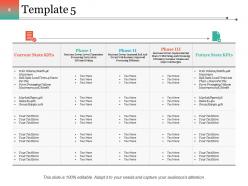
Slide 6: This slide showcases Template 5 with people, Timing , process and finances . You can add the details and make use of it.
Slide 7: This slide presents Past Present Future Icons Slide.
Slide 8: This slide showcases Additional Slides.
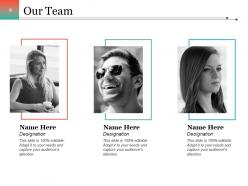
Slide 9: This slide showcases Our Team with Name and Designation to fill.
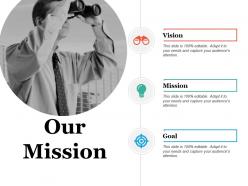
Slide 10: This slide contains Our Mission, Goal and vision with text boxes.
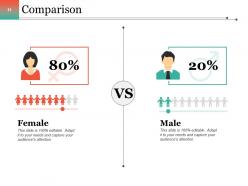
Slide 11: This slide shows Comparison of number of users and Time.
Slide 12: This is an About Us slide. State company or team specifications here.
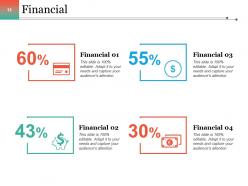
Slide 13: This slide presents Financial scores to display
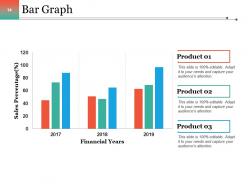
Slide 14: This slide presents a Bar graph in arrow form with text boxes.
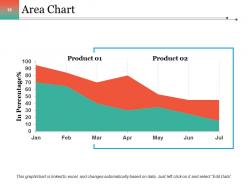
Slide 15: This slide showcases Area Chart with this you can compare the products.
Slide 16: This is a Thank You slide with Address# street number, city, state, Contact Numbers, Email Address.
Past present future powerpoint presentation slides with all 16 slides:
Our Past Present Future Powerpoint Presentation Slides are committed to creating firm connections. They are focused on effective communication.

FAQs for Past present future
So basically there's Newton's version where time is this fixed thing ticking along everywhere the same - makes sense intuitively. Einstein completely wrecked that idea though. With relativity, he showed time actually speeds up and slows down depending on how fast you're going or how much gravity you're dealing with. Wild stuff. There's also this "block universe" thing where past, present, and future are all happening at once (honestly still wraps my brain in knots). I'd start with special relativity if you really want to get into it - way less intimidating than it sounds.
So basically time just forces you to put everything in order, right? Like you automatically think "ok this first, then that" when planning your week. Creates this whole urgency thing too - since time keeps moving, you're constantly weighing trade-offs. Should I take this meeting or finish the project? Our brains are doing timeline math 24/7 honestly. Always estimating how long stuff takes and cramming it into whatever time we have. Pro tip though - definitely build in buffer time because we suck at guessing how long things actually take. I learned that the hard way!
So basically, how a culture sees time shapes everything - work, relationships, you name it. Linear time cultures are all about schedules and "time is money" (hello, Germany and the US). Meanwhile, circular time cultures? They're way more chill about deadlines and focus on relationships instead. Honestly, it's wild how different this gets. Business meetings, family stuff, even schools operate totally differently depending on this. Oh, and if you're ever working with people from other cultures, figure out their time thing first - trust me, it'll save you so much confusion and awkwardness later.
Timeline arrows and numbered sequences are your best friends here. Progress bars work too. I always go with colors that gradually fade or get brighter as time moves forward - way easier for people to follow. Before/after layouts are solid, or those stepped diagrams where you build up each piece. Honestly, slide transitions that reveal stuff bit by bit never get old. Just pick one visual metaphor for time and don't switch it up halfway through. Your audience shouldn't have to play guessing games about what's coming next.
Your phone basically warped time, honestly. Everything feels instant now - GPS updates live, social media makes yesterday feel like right now. But we're also dealing with crazy precise stuff like atomic clocks and satellite systems that actually factor in Einstein's relativity (wild, right?). Meanwhile you can pull up decades-old archives in seconds. The weird part? You're operating on multiple time scales at once - your processor works in nanoseconds while you're scrolling through geological climate data. Just notice how this messes with your daily rhythm and how fast you expect decisions to happen.
Honestly, getting older messes with your head in weird ways. You're juggling memories from your past, whatever's happening right now, and all your future worries at once. Plus your brain literally processes time differently when you're stressed - like how a bad day drags forever but good times zoom by? It's wild. This whole time thing affects how we make decisions and who we prioritize. I've found that when I start spiraling about time passing too fast, mindfulness actually helps. Sounds cheesy but staying present really does calm that anxious feeling about everything slipping away.
Newton kicked things off with absolute time back in the 1600s. Then Einstein came along and basically said "nah" with relativity around 1905-1915. William James was studying how we actually perceive time in the 1890s, which was pretty cool. The 20th century got crazy though - quantum mechanics made time probabilistic, and by the 60s-80s neuroscientists were figuring out how our brains handle sequences. Now there's complex systems theory looking at time patterns in networks. Wild stuff honestly. I'd start with Einstein's papers if you're curious, then just follow whatever catches your interest.
Dude, visual timelines are a game changer. People can actually *see* how events connect instead of juggling dates in their heads. I swear half your audience checks out during verbal explanations anyway. Color coding different phases works great - makes everything pop and stick in people's memories. You'll catch gaps or weird overlaps that bullet points totally miss. Think of it like giving everyone GPS directions instead of that confusing "turn left at the big tree" nonsense. Historical sequences especially benefit from this approach. Your audience instantly gets how things build on each other over time.
Oh man, time zones will make or break your international calls. I've been on way too many awkward 6am meetings because someone screwed up the math - Tokyo's like 13-16 hours ahead depending on daylight saving. Super confusing. Get yourself a decent world clock app and always double-check the timezone when you're setting stuff up. Those scheduling tools that auto-convert times are lifesavers too. Your clients will definitely notice if you keep missing calls or showing up at weird hours.
So basically, Western thinking treats time like a straight highway - you're constantly driving toward goals and hitting deadlines. Eastern philosophy? More like a circle. Think reincarnation cycles in Buddhism, seasons that keep coming back. We're totally obsessed with "making progress" while they focus on being present right now. Honestly, the Eastern approach seems way less stressful. Your brain is probably wired for milestones and racing the clock, but maybe try thinking cyclically next time you're freaking out about time. Like, this moment will pass and come around again. Might help you chill.
Dude, so basically your astronaut twin would age way slower on those crazy fast space trips. Like they come back and you're 20 years older while they've only aged 5 - wild right? NASA's gonna have such a headache dealing with this stuff. Picture coming home to find your kids are older than you now. Career planning becomes impossible when half your crew returns to a completely different world. The faster the ship goes, the worse it gets. Honestly can't imagine how they'll even staff these missions once we start doing real interstellar travel.
Timelines are your best bet - arrows and numbered steps work great too. I always do left-to-right or top-to-bottom flow since that's how we naturally read. Before/after comparisons are solid for showing change. Color gradients are weirdly effective? Like going from blue to orange over time. For cyclical stuff (seasons, life cycles), try circular layouts instead. Sequential panels work well. Honestly, flowcharts can look boring but students actually follow them easily. Start with basic timeline formats first - you can get fancy later once you see what clicks with your kids. The visual flow just needs to match how they process info.
Oh man, there's so many ways to mess with time in stories! Flashbacks and flash-forwards are probably the most obvious ones - *Lost* went crazy with that. Montages work great for skipping ahead quickly. Some writers use seasons changing or characters aging to show time passing. *The Time Traveler's Wife* does this weird non-linear thing that somehow works perfectly (that book is confusing but amazing). You could do simple stuff too like "three years later" or diary entries with dates. Honestly, I'd sketch out your timeline first so you know what you're doing.
Oh man, this is so true! When I'm totally absorbed in something, I'll look up and it's suddenly 3pm. But sitting through a boring meeting? Those 30 minutes feel like forever. Your brain literally processes time differently depending on your mood and how engaged you are. I've found breaking big projects into smaller pieces helps a ton - makes time feel less endless. Also, figure out when you're naturally most focused (I'm weirdly sharp around 10am) and save your hardest work for then. Time perception is such a weird thing but it totally affects how much you actually get done.
The main problem? Time is invisible - you're trying to show something that only exists in our heads. Non-linear flows are where people get lost, like when multiple things happen at once or you need past and future states visible together. Sequential stuff seems simple until you throw in branching paths or undo features. Calendars will seriously mess with your brain sometimes. Pick one time metaphor - timeline, steps, whatever - and commit to it completely. Don't mix them or users get confused. Also, test this stuff early because your idea of logical time flow probably doesn't match anyone else's.
-
Best Representation of topics, really appreciable.
-
Very unique, user-friendly presentation interface.