


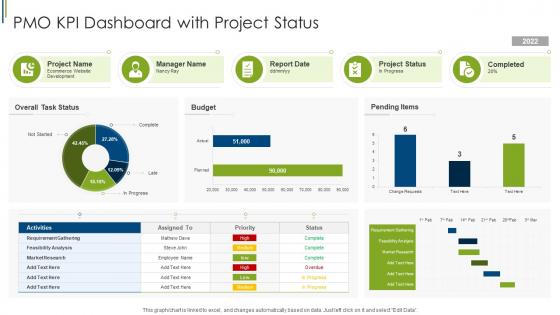
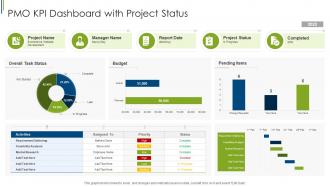
PMO KPI Dashboard Snapshot With Project Status




Try Before you Buy Download Free Sample Product
 Impress Your
 Audience
 100%
100% Editable
 Save Hours
 of Time


Our PMO KPI Dashboard Snapshot With Project Status are topically designed to provide an attractive backdrop to any subject. Use them to look like a presentation pro.
People who downloaded this PowerPoint presentation also viewed the following :
PMO KPI Dashboard Snapshot With Project Status with all 7 slides:
Use our PMO KPI Dashboard Snapshot With Project Status to effectively help you save your valuable time. They are readymade to fit into any presentation structure.





FAQs for PMO KPI Dashboard Snapshot
Honestly, start simple - track project success rates, budget adherence, and stakeholder satisfaction. Resource utilization matters too since you don't want PMs just twiddling their thumbs. I'd also measure how much faster teams deliver compared to before your PMO existed (that's the real proof it's working). Client satisfaction surveys are clutch - they'll tell you if you're actually helping or just creating more red tape. Oh, and process adoption rates show if people are buying into your systems. Don't go crazy though - pick 3-4 metrics max and nail those for a quarter before adding more.
Honestly, map your PMO KPIs straight to what the business actually cares about. If they're chasing revenue growth, track project ROI and time-to-market instead of just delivery stats. Talk to executives regularly - figure out what's really stressing them out (spoiler: probably not your on-time percentages). Measure stuff that shows real business impact like cost savings or customer satisfaction gains. I learned this the hard way, but every KPI should tell a story about how projects drive results, not just prove your teams are busy.
Honestly, stakeholder satisfaction might be your most important KPI - way more than people realize. If stakeholders see you as roadblocks instead of helpers, you're toast regardless of your project success rates. Quick surveys work great for this. I'd do them quarterly and ask about service quality plus perceived value. Also track stuff like how fast you respond to requests and whether people actually show up to your meetings. The cool thing? Happy stakeholders fight for your budget when it matters. We learned this the hard way at my last company - our metrics looked amazing but leadership almost cut us because they thought we were just bureaucratic overhead.
So those qualitative KPIs basically tell you the "why" behind all your data. Perfect delivery rates don't mean much if your team is miserable, you know? I've seen PMOs nail every deadline but everyone dreads working with them. Mix both types by running stakeholder surveys and tracking feedback patterns alongside your usual budget stuff. Honestly, collaboration quality matters just as much as schedule metrics. The combo gives you the real story of what's actually happening. My advice? Pick one qualitative measure and add it to your dashboard this quarter. Don't overcomplicate it.
Honestly, focus on stuff that actually matters to the business - like getting projects done on time and under budget. Skip the fluff metrics like how many reports got filed (who even reads those anyway?). Don't go crazy with your targets either. If you're only hitting 60% on-time delivery now, jumping straight to 95% is just setting everyone up to fail. Bump it to 70-75% first. Your PMs will be way more on board if they help pick the metrics too - makes sense, right? And seriously, stick to maybe 3-5 key things max or you'll drown in data.
Honestly, ditch the spreadsheets - they're such a pain to maintain. Get something like Monday.com or Smartsheet that pulls data automatically from your existing systems. Power BI is great for dashboards if you want to get fancy with it. The real game-changer though? Setting up automated reports so you're not manually updating stuff every week. I'd probably start small - figure out what KPIs your stakeholders actually care about (not just what you think they should care about), then find one tool that connects to whatever project management system you're already using. Real-time tracking makes you look way more on top of things.
Honestly? The worst part is getting stuck between what execs want to see and what actually matters for projects. Those are totally different things most of the time. You'll be pulling your hair out over vanity metrics that look pretty in PowerPoints while the real indicators are messy and hard to explain. PMO touches everything so you want to track it all - but that just creates a ton of noise nobody can sort through. The politics with different stakeholders can get ugly fast. My advice? Pick 3-5 metrics that actually connect to business stuff your company cares about, then figure out how to measure those consistently.
Check your PMO KPIs every quarter, then do a big review once a year. Quarterly lets you spot issues early and pivot fast. The yearly one's where you get strategic - ditch KPIs that aren't pulling their weight, add new ones that match current priorities. Too many PMOs honestly just set these things and never touch them again. Waste of time. Set those quarterly calendar reminders now (trust me, you'll forget otherwise). When the annual review comes around, loop in your stakeholders so everyone's on the same page about what actually matters.
So here's the thing - strong project ROI basically makes your PMO look like heroes. It pumps up all those value delivery metrics and portfolio performance numbers that executives actually care about. Bad ROI though? Yeah, that's when leadership starts questioning why you exist at all. I've seen PMOs get their budgets slashed because they couldn't show decent returns. The money flows to teams that consistently deliver profitable projects - it's just business reality. Track your ROI trends next to other KPIs so you can paint the full picture of what your PMO brings to the table.
So basically you want to set up a scoring system using your KPIs - like strategic fit, ROI, how many resources you'll need, risk levels, that kind of stuff. Way better than the usual chaos where the loudest person wins (you know how that goes). Pick your top 3-5 strategic metrics first, then score each project against those. I'd focus on things like expected business value, time-to-market, resource availability. You're essentially turning gut decisions into actual data, which honestly saves so much drama later. Weight the criteria based on what matters most to your company right now.
So leading KPIs are like your early warning system - stuff like resource utilization and project health scores that you can still do something about. Lagging ones? That's your final report card. Budget variance, delivery dates, customer happiness scores. Honestly, most PMOs obsess over the lagging stuff because it's easier to measure. But here's the thing - leading indicators are where you actually have control. It's like watching the road vs. staring at your speedometer after you've already hit the guardrail. You need both obviously, but spend way more time on the leading ones.
Here's what I'd do - start tracking things like how fast your teams finish tasks and where time gets stuck. Pick maybe 3-4 metrics max though, because honestly nobody wants to feel like they're being watched constantly. Look for weird patterns, like why Team A always runs late while Team B wraps up early. That's where you'll find your answers. Share this stuff in team meetings so people actually get how their work fits the big picture. Oh, and don't overthink it - just pick one metric this week and see where you stand. The patterns will show up pretty quickly once you start paying attention.
Start with utilization rates - they're the easiest to measure and actually tell you if people are working on the right stuff. Project staffing variance is key too, shows how often you're over or under what you planned. Resource contention is another big one (basically how many projects are fighting for the same people). Bench time percentage can be brutal - nobody wants expensive people just sitting around doing nothing. Oh, and skill-matching accuracy matters way more than people think. Putting your senior dev on basic testing? That's just wasteful. Cross-functional allocation rates help too, but honestly I'd focus on utilization first since it gives you the quickest wins.
Your company culture totally makes or breaks PMO metrics. Teams will hide problems if there's a blame culture going on, which makes your risk tracking pointless. When people actually collaborate though? Way better schedule performance and happier stakeholders since they flag issues early. Trust is huge for accurate reporting - I've watched KPIs look perfect while projects were secretly disasters. You really gotta understand your culture first, then build KPIs that fit instead of fighting it. Start by seeing how people handle sharing bad news. That'll tell you everything.
Risk management KPIs are critical for any PMO worth its salt. Track things like how fast teams identify risks and close them out. Also monitor what percentage of high-impact risks actually turn into real problems - that's where you see if your mitigation is working. Honestly, I've seen too many PMOs get blindsided because they weren't watching the right metrics. Risk tolerance levels matter too - are projects staying within bounds? My advice? Pick 3-4 risk KPIs that match your organization's biggest headaches and build from there.
-
Amazing slides! Unique, attractive, and easy to understand.
-
The design is clean-cut, modern, and sleek, keeping the users' needs in mind. The multiple uses make this product worth every penny!