


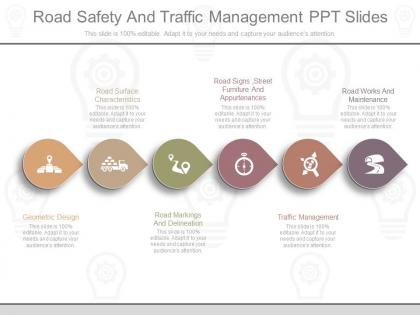
Ppt road safety and traffic management ppt slides




Try Before you Buy Download Free Sample Product
 Impress Your
 Audience
 100%
100% Editable
 Save Hours
 of Time


Groom your team with our Ppt Road Safety And Traffic Management Ppt Slides. Help them acquire the desired ability.
People who downloaded this PowerPoint presentation also viewed the following :
Ppt road safety and traffic management ppt slides with all 7 slides:
Astound folks with your adept handling of our Ppt Road Safety And Traffic Management Ppt Slides. You will be able to pull it out of the hat.





FAQs for Ppt road safety and traffic
So here's the thing - cities actually get hit with 75% of traffic deaths even though people drive slower there. Just way more cars and pedestrians everywhere, you know? But rural roads are actually deadlier per mile driven. Like, almost double the fatality rate because of higher speeds and it takes forever for ambulances to reach you out there. Plus they don't have guardrails and safety stuff. That whole idea about country roads being safer? Total myth when you look at the numbers. Pretty counterintuitive honestly.
Dude, seriously don't text and drive - it makes you 23x more likely to crash, which is insane. Your brain literally can't handle two complex things at once, so your reaction time goes to shit. Phones are obviously the worst, but I've seen people eating entire meals behind the wheel (like, why?). GPS fiddling is bad too. Before you start driving, set your phone to do-not-disturb and punch in your destination. If something's truly urgent, just pull over. I know it's tempting when you're running late, but those few seconds you think you're saving aren't worth potentially killing someone.
Dude, proper bike infrastructure is like a game changer. Curb-protected lanes beat those useless painted lines any day - I swear drivers treat paint like it's invisible. Speed bumps and raised crossings actually force people to slow down instead of hoping they'll be nice. Good crosswalks with clear signals help too, obviously. The whole point is making roads where safe driving happens naturally rather than crossing your fingers that everyone pays attention. When you're picking routes, definitely stick to streets that have this stuff built in. Way less stressful than playing chicken with cars.
Honestly, those campaigns do work for awareness but changing actual behavior? That's way harder. People drive safer right after seeing those intense drunk driving or texting ads. But then they slip back into bad habits once the shock wears off - kinda like how I always forget my gym routine after a month lol. The campaigns that actually stick combine consistent messaging with real enforcement. Don't bother with those one-week awareness things. Push for something that runs long-term in your area instead.
Dude, car safety tech is getting insane lately. Automatic emergency braking will literally slam the brakes if you're not paying attention - saved my coworker last month actually. Lane departure warnings buzz at you when you drift, and adaptive cruise control keeps you at safe distances without thinking about it. The future stuff is wild though: cars that "talk" to each other about road hazards, AI systems watching if you're falling asleep, plus way better collision detection with all these cameras and sensors everywhere. Honestly if you're buying soon, focus on these active features over just the usual airbags and whatnot.
Bad weather is seriously dangerous when driving. Rain and snow kill your traction, plus you can't see nearly as well. Slow way down and give yourself tons of space - I'm talking like double what you normally would. Ice is obviously the worst, but fog freaks me out too because you're basically driving blind. Always throw your headlights on, even during the day. Oh and keep your windshield actually clean (sounds obvious but half the people I know drive around with dirty glass). Honestly? If it's really nasty out, just don't go anywhere unless you absolutely have to.
Speed limits, seatbelt rules, DUI laws - that stuff changes by country but the basics are pretty similar everywhere. We've got federal vehicle standards here plus whatever your state decides to throw on top. Thing is, most crashes happen because people just ignore what's already on the books. Like, we probably don't need tons of new laws, just better enforcement of existing ones. Though I'd love to see them crack down harder on phone use while driving - that's gotten insane lately. Infrastructure funding would help too, and they'll need to figure out self-driving car rules eventually.
Honestly, getting people involved hands-on is where the magic happens. Speed watch programs work great - neighbors actually monitoring traffic themselves. Safety fairs with demos, volunteer crossing guards for schools, that stuff really clicks. My favorite though? Community walks where people point out sketchy intersections they deal with every day. They LOVE complaining about that stuff lol. Oh and locals running social media campaigns beats official messaging every time. Short version: make them part of fixing it instead of just lecturing them. People hate being talked at but they'll jump in if you give them something real to do.
Dude, it's wild how our brains trick us when driving. You've got overconfidence where people think they're way better drivers than they actually are. Then there's this thing called optimism bias - basically "accidents happen to other people, not me." Weirdly, safety features sometimes backfire because drivers feel invincible with airbags and stuff, so they take more risks. Young drivers are especially bad with impulse control and thrill-seeking (I was definitely guilty of this). Stress and being tired make everything worse too. I think the trick is just catching yourself when you start thinking "I can totally make that yellow light."
Yeah, age totally changes how people think about road safety. Teens and people in their 20s usually hate safety rules - they see them as killing their freedom. Parents though? Once they've had that heart-stopping moment with their kids in the car, they're way more careful. Older folks generally support safety stuff but get weird about new technology. My dad still refuses to trust his backup camera, which drives me nuts. Middle-aged drivers are honestly the best at following rules. You really can't use the same approach for everyone - what works for a 17-year-old won't work for someone who's 65.
Honestly, public transit is a game-changer for road safety. Fewer cars on the road = fewer crashes, which makes sense. Bus and train drivers are way better trained than most of us too - they actually know what they're doing. The cool part is how many people you can move at once. Like, one bus replaces maybe 30-40 cars? That's huge. My cousin works in city planning and she's always going on about this stuff. But seriously, if your city's thinking about transit investment, it'll make roads safer for everyone who drives.
Ditch the boring lectures - kids need hands-on practice. Mock crosswalks in the gym work amazing, or even just tape on the playground. Role-playing is huge too (they go crazy pretending to be cars). Walking trips around the school neighborhood give real practice, though you'll obviously need way more adults watching. Police demos are gold since kids think cops are infinitely cooler than us teachers anyway lol. Monthly challenges keep it fresh. Make it repetitive but fun - that's honestly the only way this stuff sticks with them.
Oh man, this stuff is wild when you really think about it. Different places have totally opposite driving cultures - some are super strict about rules while others treat aggressive driving like it's just part of getting around. You've got social hierarchy things too, like whether people actually stop for pedestrians or if motorcycles just zip everywhere because that's normal there. Religion and family stuff influences how much risk people take. My cousin lived in Bangkok for a while and said the traffic there would give you a heart attack, but locals navigate it like it's nothing. Bottom line though - road safety programs need to account for local attitudes or they'll totally flop.
So basically you'd pull together all your crash data, traffic patterns, weather stuff - whatever you can get your hands on. The magic happens when you start spotting weird connections that nobody saw coming. Like maybe this one intersection becomes a total nightmare when it's raining on Tuesday mornings or something random like that. Machine learning can actually predict where the next accidents will probably happen, which is pretty wild. Then you can focus your efforts - maybe tweak some traffic lights, add more cops during sketchy times, fix dangerous spots. Honestly, the hardest part is just getting all that data organized first.
Cross-training is honestly the biggest game changer - when paramedics actually get what firefighters are dealing with, everything clicks better. Get everyone doing joint exercises together before stuff hits the fan. Real-time comms systems help tons too, especially for managing scenes and traffic flow. You'll want standardized procedures when crews arrive, plus clear command chains so nobody's stepping on toes. Oh, and simulation training with all agencies? That's where you catch the problems nobody thinks about. My buddy's department does this monthly and their response times dropped like crazy. Short version: train together, communicate better, establish who's calling the shots.
-
Very well designed and informative templates.
-
Wonderful templates design to use in business meetings.