


Preventive Maintenance Proposal Powerpoint Presentation Slides




Try Before you Buy Download Free Sample Product
 Impress Your
 Audience
 100%
100% Editable
 Save Hours
 of Time


Engineering Maintenance Service Proposal caters to all the Companys needs. Check out Our insightfully crafted Preventive Maintenance Proposal. It provides comprehensive maintenance for all your engineering needs. Our team of certified engineers and technicians is highly skilled and experienced in engineering disciplines. We are committed to providing the highest quality of service, focusing on safety and reliability. Our services include preventive maintenance, emergency repairs, and system upgrades. We also offer training and consulting services to help you maximize the efficiency and effectiveness of your engineering systems. We aim to help you accomplish and maintain the highest performance and reliability standards. Looking forward to serving you and your engineering needs. Get access now.
People who downloaded this PowerPoint presentation also viewed the following :
Content of this Powerpoint Presentation
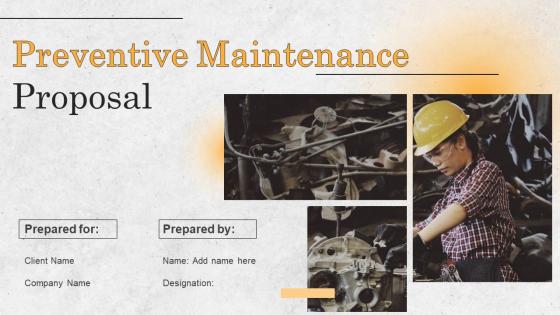
Slide 1: This slide introduces Preventive Maintenance Proposal. State your company name and begin.
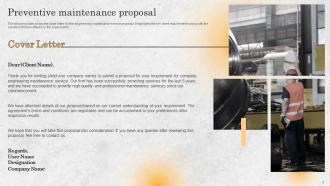
Slide 2: This slide shows Cover Letter for Preventive maintenance proposal.
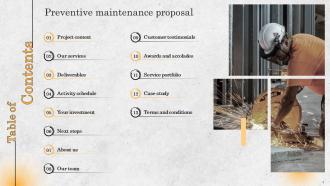
Slide 3: This slide elucidates the Table of Contents.
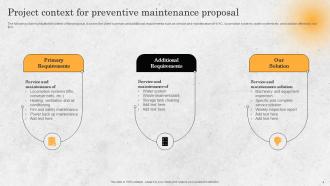
Slide 4: The following slide highlights the context of the proposal, it covers the client’s primary and additional requirements such as service and maintenance of HVAC, locomotion systems, water systems etc.
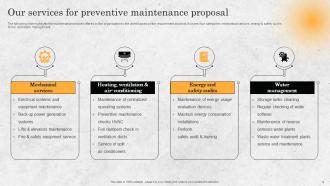
Slide 5: This slide presents the maintenance services offered by the organization to the clients.
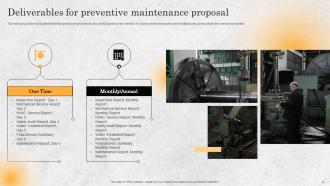
Slide 6: This slide portrays the deliverable to be provided to the client based on the service.
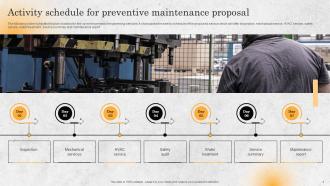
Slide 7: This slide displays the Activity schedule for engineering maintenance service proposal.
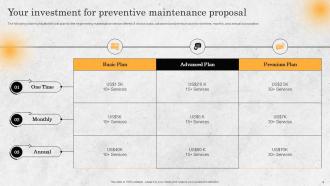
Slide 8: The following slide shows the cost plan for the engineering maintenance service offered.
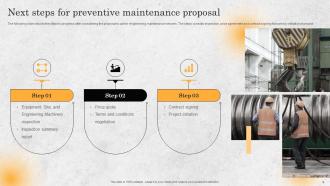
Slide 9: This slide states the steps to progress after considering the proposal to opt for engineering maintenance services.
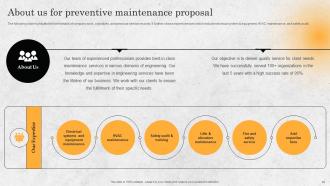
Slide 10: This is the About us showcasing the Company related information.
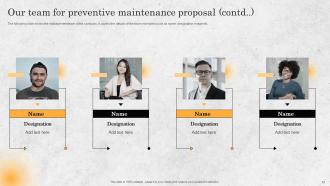
Slide 11: This is Our team slide. State the information related to your team members here.
Slide 12: This sldie continues the Team related information.
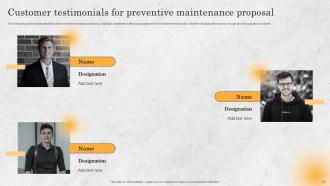
Slide 13: This slide indicates the Customer testimonials for engineering maintenance service proposal.
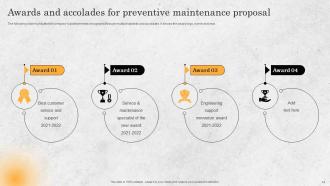
Slide 14: The following slide displays the company’s achievements recognized through multiple awards and accolades.
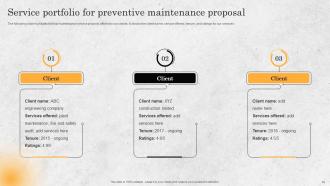
Slide 15: The following slide portrays the top maintenance service projects offered to the clients.
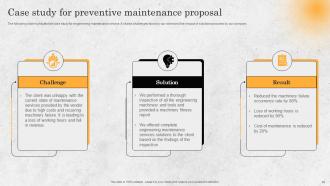
Slide 16: The following slide highlights the case study for engineering maintenance service.
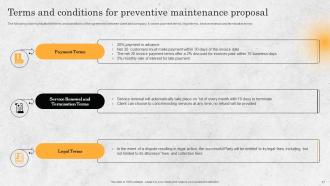
Slide 17: This slide presents the terms and conditions of the agreement between client and company.
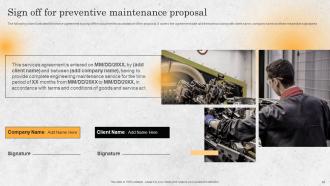
Slide 18: The following slide illustrates the service agreement signing off the document for acceptance of the proposal.
Slide 19: This slide exhibits the Contact details of the organization.
Slide 20: This is the Icons slide containing all the Icons used in the plan.
Slide 21: The purpose of this slide is to elucidate Additional information.
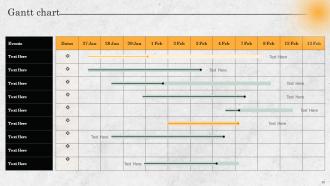
Slide 22: This is the Gantt chart with related imagery.
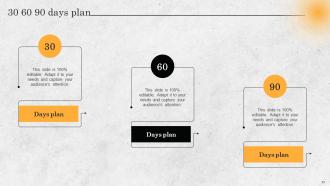
Slide 23: This is the 30 60 90 days plan slide for efficient planning.
Slide 24: This slide incorporates the Company's mission, vision, and values.
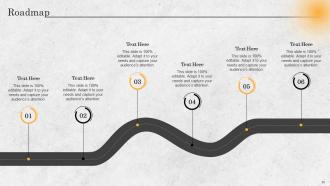
Slide 25: This slide reveals the Roadmap of the organization.
Slide 26: This slide showcases the Company's Timeline.
Preventive Maintenance Proposal Powerpoint Presentation Slides with all 31 slides:
Use our Preventive Maintenance Proposal Powerpoint Presentation Slides to effectively help you save your valuable time. They are readymade to fit into any presentation structure.







FAQs for Preventive Maintenance Proposal
Honestly, you just need four things that actually matter. Get your asset inventory sorted first - what you have, when it needs work, based on what the manufacturer says plus how hard you're running it. Without clear procedures and checklists, people will definitely cut corners (learned that the hard way). Some kind of tracking system helps too - fancy software or just spreadsheets, whatever works to see completion rates. Training your crew properly is huge, and yeah, accountability matters. I'd focus on your most critical stuff first though. Once that's dialed in, expand from there.
Honestly, this is all about getting everyone to actually care, not just dumping it on maintenance. Train people to catch problems early - and here's the thing - you've got to reward them when they speak up. Management can't just ignore schedules then expect others to follow them. Show your team how fixing small stuff prevents those 2am emergency calls nobody wants. Share wins when preventive work saves the day or cuts costs. Don't make reporting issues a paperwork nightmare either. Celebrate the unglamorous stuff too, not just the flashy projects. Track everything and let people see their impact through real numbers.
So basically, IoT sensors let you watch your equipment 24/7 instead of just hoping nothing breaks. Machine learning spots failure patterns way before you would - we're talking weeks ahead sometimes. I'd start small though, maybe digitize your maintenance schedules first, then add sensors to whatever equipment would cost the most if it died. CMMS platforms beat the hell out of spreadsheets for tracking everything. Mobile apps make work orders so much smoother too. Predictive analytics tells you when parts will actually fail instead of guessing. It's honestly night and day compared to the old reactive approach.
Manufacturing plants go crazy with inspections to keep production lines running. Airlines are totally paranoid about redundancy checks - which, fair enough when you're stuck in the sky. Healthcare's all about sterilization protocols since patient safety is everything. Energy companies do tons of predictive monitoring because regulations are brutal and environmental screwups cost millions. Honestly, the best approach is figuring out what disasters your industry fears most, then building maintenance around preventing those specific nightmares instead of just following whatever the equipment manual suggests.
Look, I get why spending money upfront feels weird, but preventive maintenance literally saves you 3-5x what reactive stuff costs. You're talking emergency repairs, downtime, all that expensive chaos. My rule of thumb? Budget around 2-3% of your equipment's value each year for scheduled maintenance. Trust me, it's way better than getting those nightmare calls at 2am when everything's broken. Your gear runs smoother and actually lasts longer too. Honestly, track what you're spending on emergency fixes for like three months first - then you'll see the real difference when you compare costs.
So basically predictive analytics uses real data patterns instead of you just guessing when stuff breaks. You can track vibration, temperature, all that performance data to spot problems coming. Way better than those old rigid schedules, honestly. The accuracy on these systems now is pretty wild - though I guess it depends what you're willing to spend. Do maintenance exactly when needed, not too early or late. You'll save money, avoid surprise breakdowns, equipment lasts longer. I'd start with your most important machines and see what data you can grab from them already.
Focus on uptime, MTBF, and OEE first - those are your bread and butter. The planned vs unplanned maintenance ratio is honestly where you'll see the biggest wins when talking to upper management. Nobody wants to hear about emergency repairs eating the budget. Don't forget maintenance costs per asset and schedule adherence. That last one's huge because it shows whether your team actually follows the preventive schedules you set up (spoiler: they usually don't at first). My advice? Start with maybe 3-4 metrics that hit your worst problems. You can always add more once you've got clean data coming in.
Dude, preventive maintenance is a game-changer for sustainability stuff. Your equipment runs way more efficiently when it's maintained properly - less energy waste, lower emissions, the whole deal. Catching small problems early beats scrambling for emergency repairs or buying new machines constantly. I learned this the hard way when our office AC crapped out in July... anyway, well-maintained equipment lasts forever and uses less power. You'll see the difference in your energy bills pretty quickly. Track usage before and after you start a maintenance schedule. Less downtime means way less waste overall too.
Honestly, the hardest part is getting your boss to actually care about prevention instead of just fixing stuff when it breaks. Budget's always tight upfront too. Your maintenance crew will probably push back - they're so used to putting out fires all day. Scheduling's tricky at first, lots of guessing involved. If your data tracking sucks, you're screwed from the start. Training takes forever and everyone complains they're too busy. My advice? Start super small. Pick maybe two pieces of equipment that would really hurt if they died. Show some quick wins there, then slowly add more. Don't try to flip your whole operation overnight - that never works.
Honestly, forget what the manual says and figure out when you're actually using your equipment the hardest. Schedule maintenance around your slow periods - weekends, off-seasons, whatever works. I can't tell you how many companies I've seen basically shoot themselves in the foot by sticking to some cookie-cutter schedule. Check your old breakdown records for patterns, then leave yourself breathing room before busy times hit. You've gotta stay flexible when business picks up, but don't let maintenance slide forever either. That never ends well. Review what's working every few months and adjust.
Get them working with the actual equipment right away - theory's boring and doesn't stick. Always explain WHY each step matters, not just what to do. I've watched so many people mess up because they skipped something they thought was pointless. Take tons of photos for your training guides (trust me, they'll thank you later). Partner newbies with your best techs for their first few jobs. Oh, and set up regular refresher training - people forget stuff. Create some way for staff to tell you when procedures are confusing or could be better.
Dude, you've gotta get tight with your ops team if you want decent preventive maintenance. They hear when machines start making funky noises way before your scheduled checks catch anything. Operations also knows which equipment gets beat up the most and when you can actually do PM work without screwing up production. I swear, half my best equipment tips come from just shooting the shit with operators during their smoke breaks - sounds random but it's true. Try doing quick weekly meetups with them. You'll spot problems earlier and won't have everyone hating you for shutting down critical stuff at the worst possible times.
Honestly, CMMS software will save your sanity - Fiix, UpKeep, and Maintenance Connection are solid picks. They handle scheduling, work orders, inventory tracking automatically. Smaller setup? Monday.com or Asana work fine if you build the right workflows. Mobile apps are clutch since techs can update stuff on-site instead of drowning in paperwork later (learned that one the hard way). I'd figure out what's driving you crazy first, then demo maybe 2-3 platforms that actually fix those specific headaches. Don't overthink it.
Honestly, you've gotta hit them where it hurts - their wallet. Show the actual ROI numbers: what preventive maintenance costs vs. those brutal emergency repairs. The downtime costs are what really get their attention though - I've watched companies bleed thousands every hour when stuff breaks unexpectedly. Pull examples from your own operations if you can, and maybe throw together some simple dashboards tracking uptime and savings. Make it visual because nobody wants to dig through spreadsheets. The whole trick is turning those abstract maintenance concepts into hard numbers they can't ignore when budget time rolls around.
Dude, this stuff can literally kill people. Healthcare equipment fails during surgery? That's a lawsuit and someone's dead. Manufacturing gets hit just as hard - I watched one factory lose millions because their main conveyor broke down. Could've been avoided with basic upkeep, honestly. The worst part? These failures snowball into bigger disasters. Production stops, safety incidents happen, regulators come knocking with fines. Crisis mode costs way more than just doing regular maintenance schedules. Sounds boring but it's way cheaper than scrambling when everything falls apart at once.
-
The templates you provide are great! They have saved me tons of time and made my presentations come alive. Thank you for this awesome product. Keep up the good work!
-
It makes easy work of my work presentations. I’ve never had to be nervous about my presentations for meetings.