Residential Property Maintenance Proposal Powerpoint Presentation Slides
Try Before you Buy Download Free Sample Product
Audience
Editable
of Time
Check out our Residential Property Maintenance Proposal, a comprehensive plan to provide your clients with various services to maintain their residential properties. It incorporates specific information about the benefits, packages, investment, team, client testimonials, terms and conditions, etc. Our Property Tenant deck begins with an introduction slide, followed by a cover letter and table of contents. It highlights the importance of the proposal for maintaining residential properties. Additionally, our Building Administration deck focuses on the investment required for availing the residential property maintenance proposal. It also portrays a case study of the proposal, showcasing its effectiveness. Further, our Lease Renewal PPT includes the terms and conditions of the proposal and the organizations contact details. Lastly, it exhibits the Gantt chart, company timeline, and roadmap. Overall, the Residential Property Maintenance Proposal is a comprehensive plan designed to provide clients with a range of services to maintain their residential properties effectively.

People who downloaded this PowerPoint presentation also viewed the following :
Content of this Powerpoint Presentation
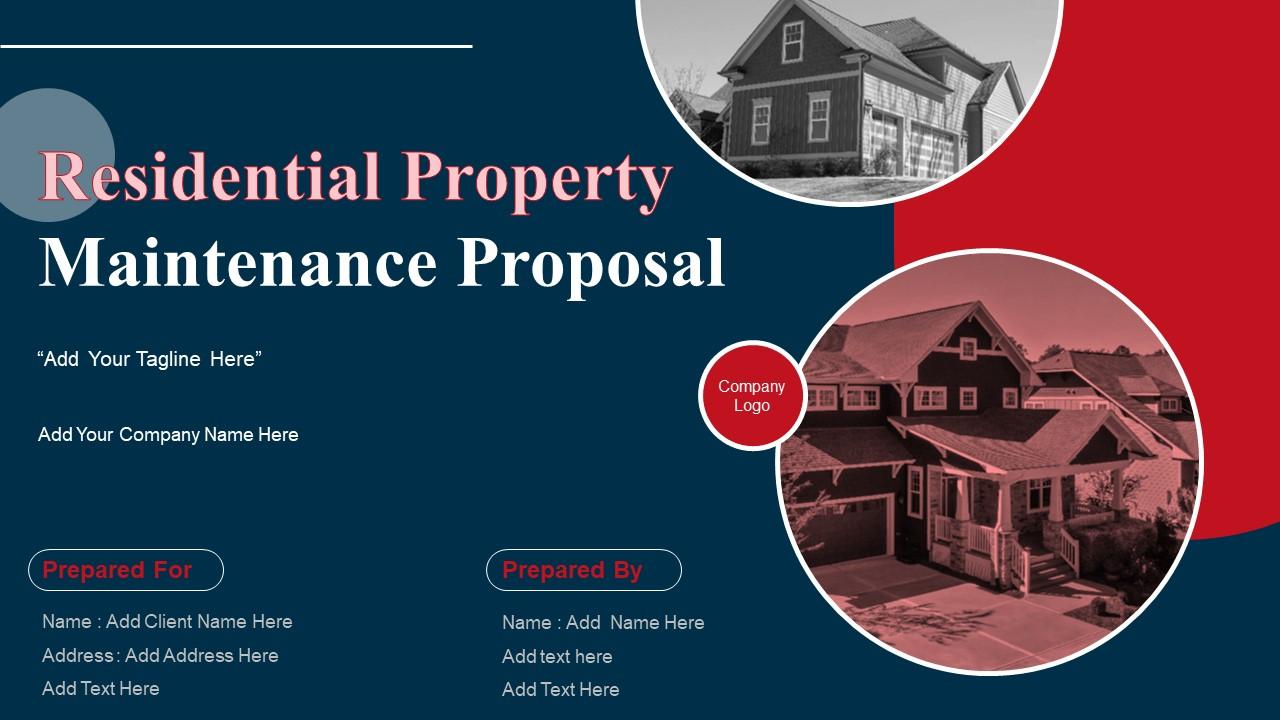
Slide 1: This slide introduces Residential Property Maintenance Proposal.
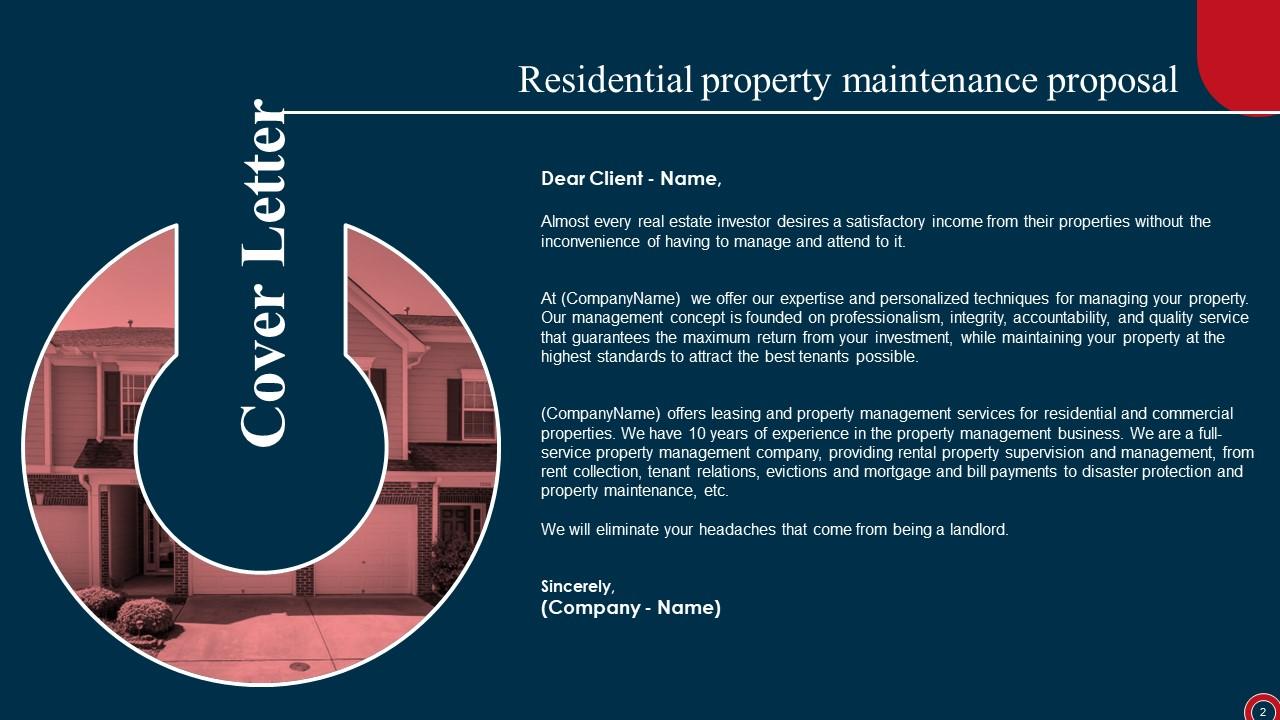
Slide 2: This slide incorporates the Cover Letter.
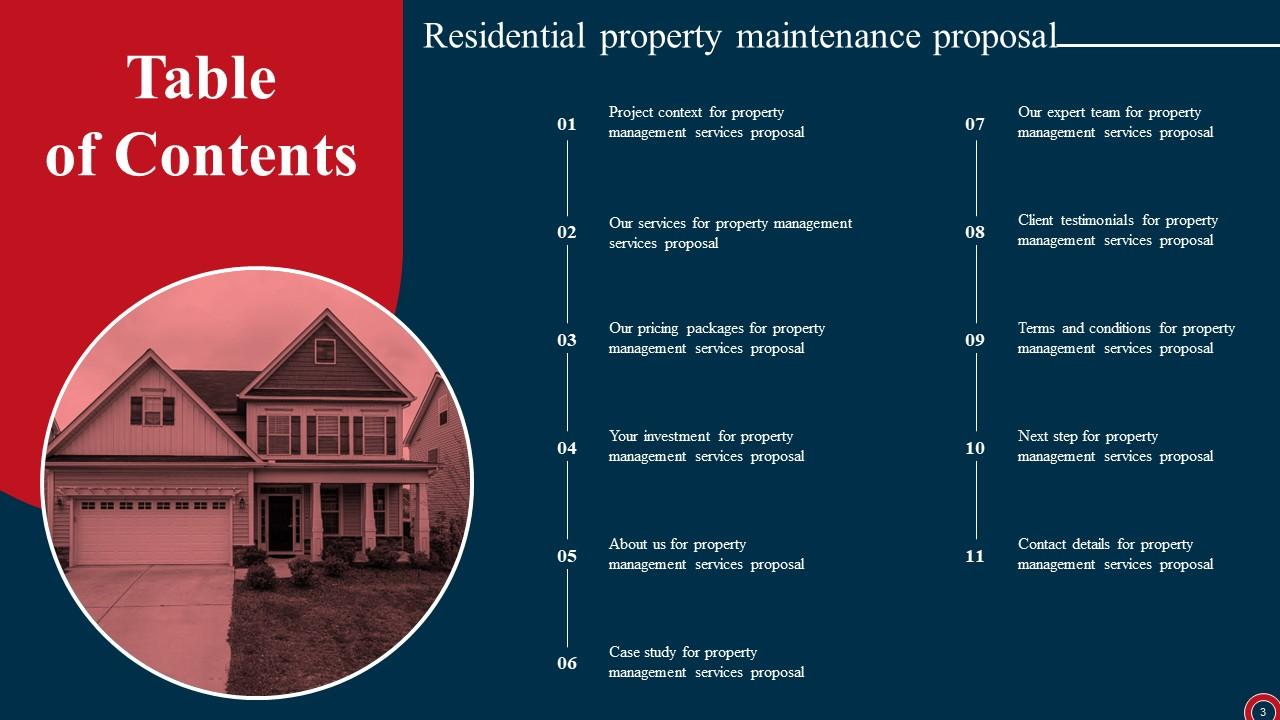
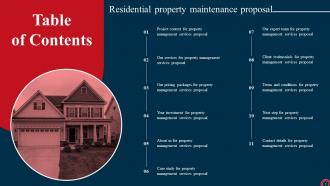
Slide 3: This slide contains the Table of Contents.
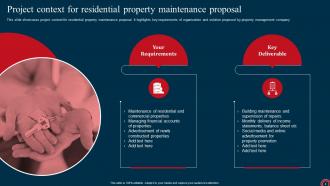
Slide 4: This slide showcases project context for residential property maintenance proposal.
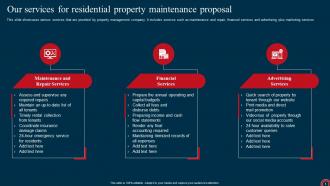
Slide 5: This slide states the various services that are provided by property management company.
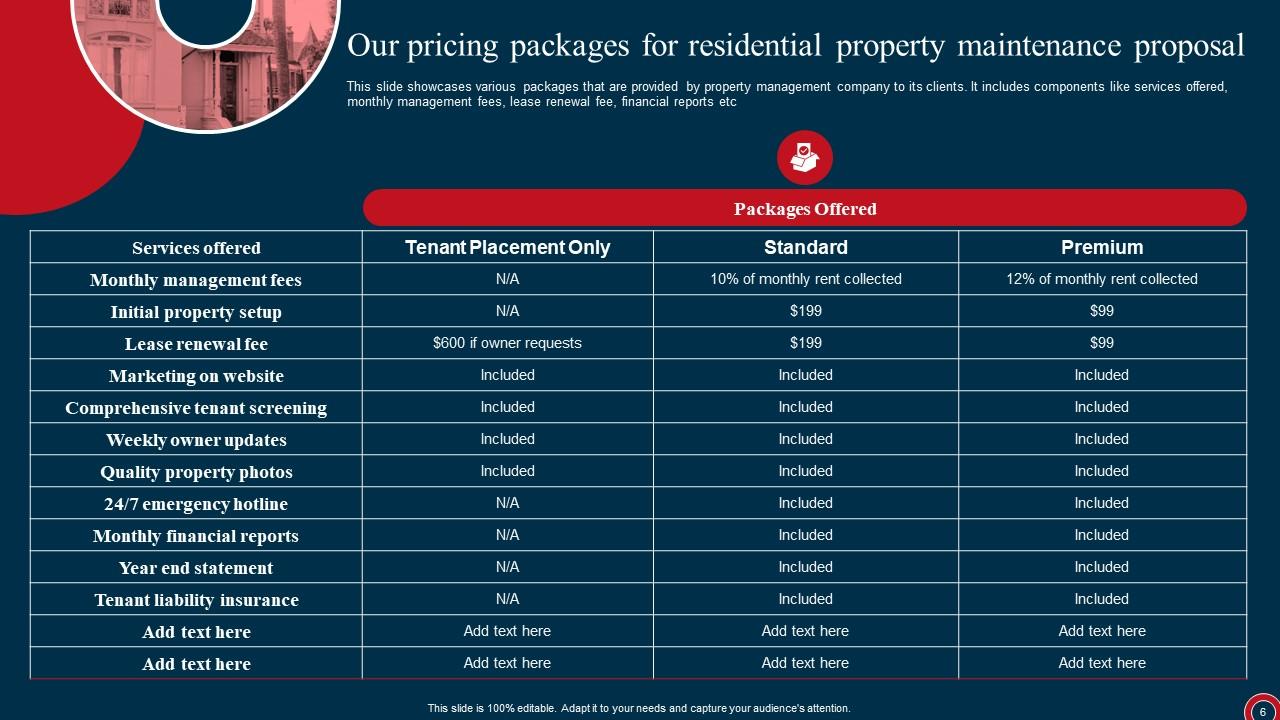
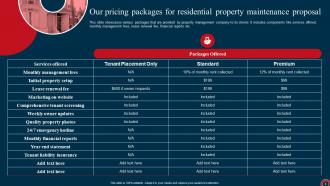
Slide 6: This slide reveals the various packages that are provided by property management company to its clients.
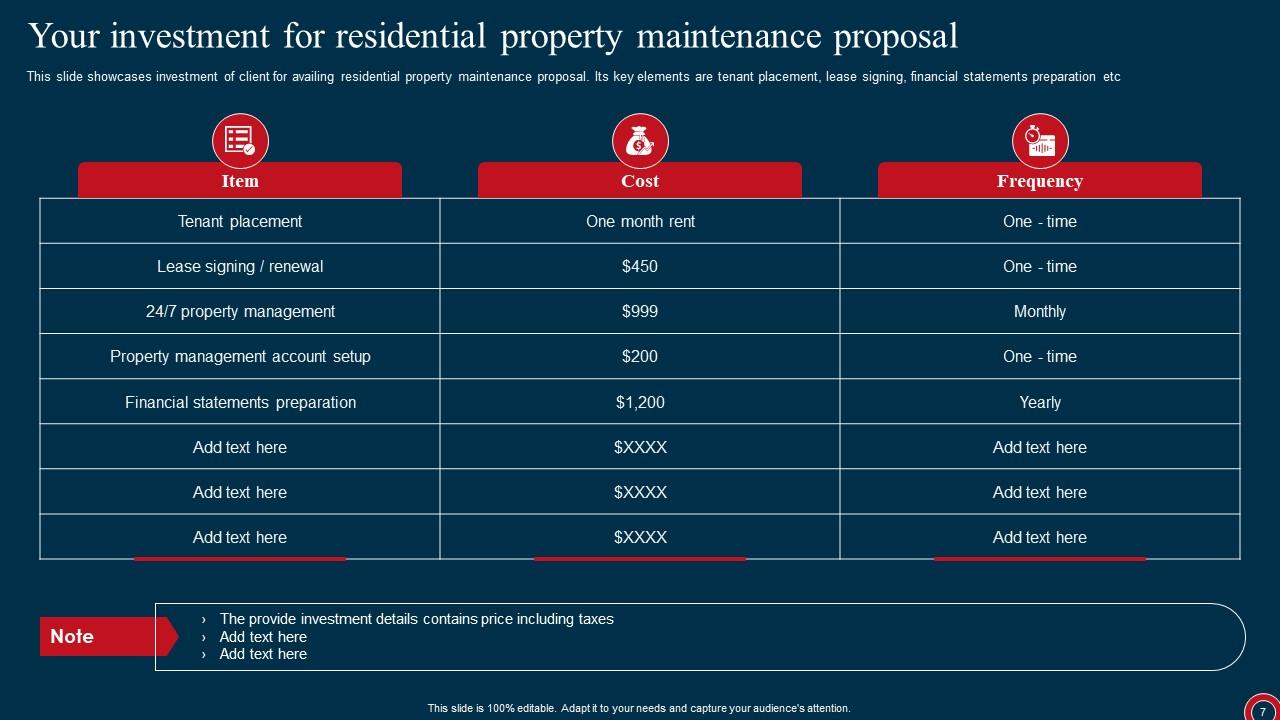
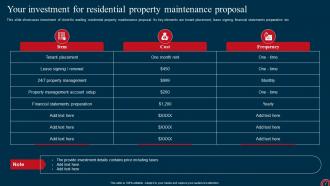
Slide 7: This slide highlights the investment of client for availing residential property maintenance proposal.
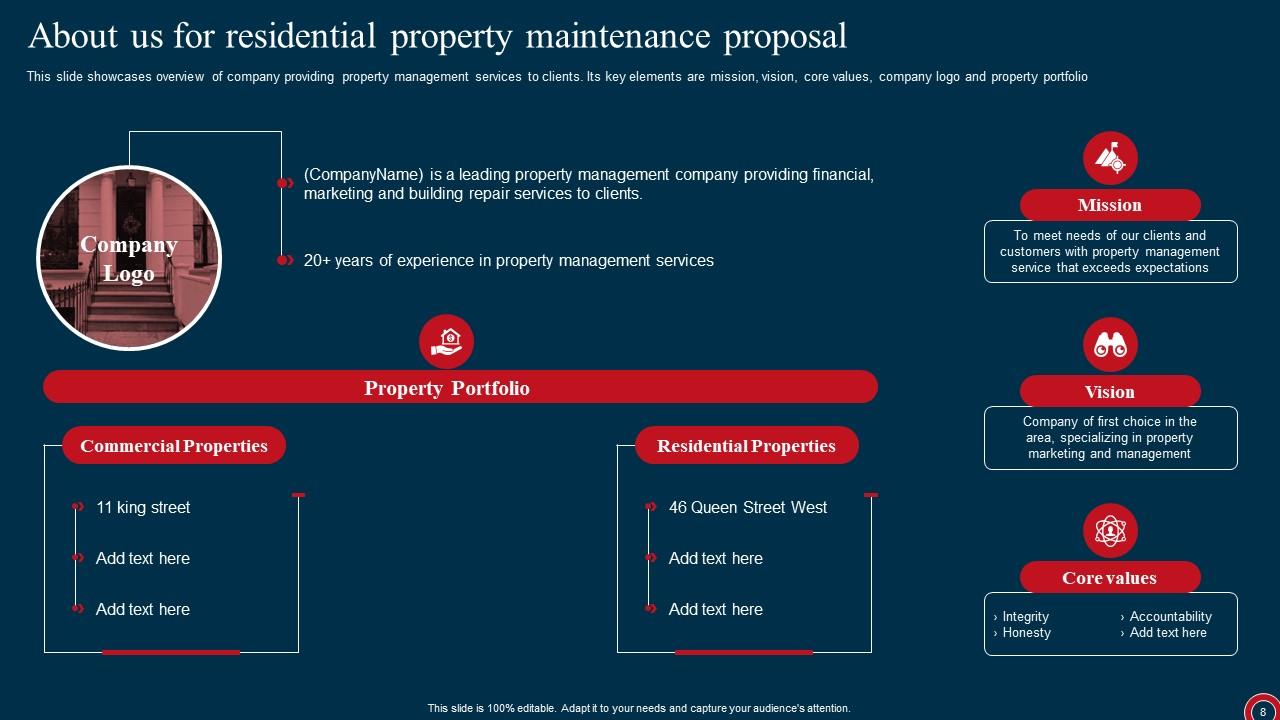
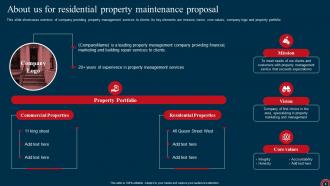
Slide 8: This is the About Us slide stating the company-related information.
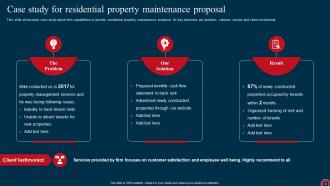
Slide 9: This slide portrays the Case study for residential property maintenance proposal.
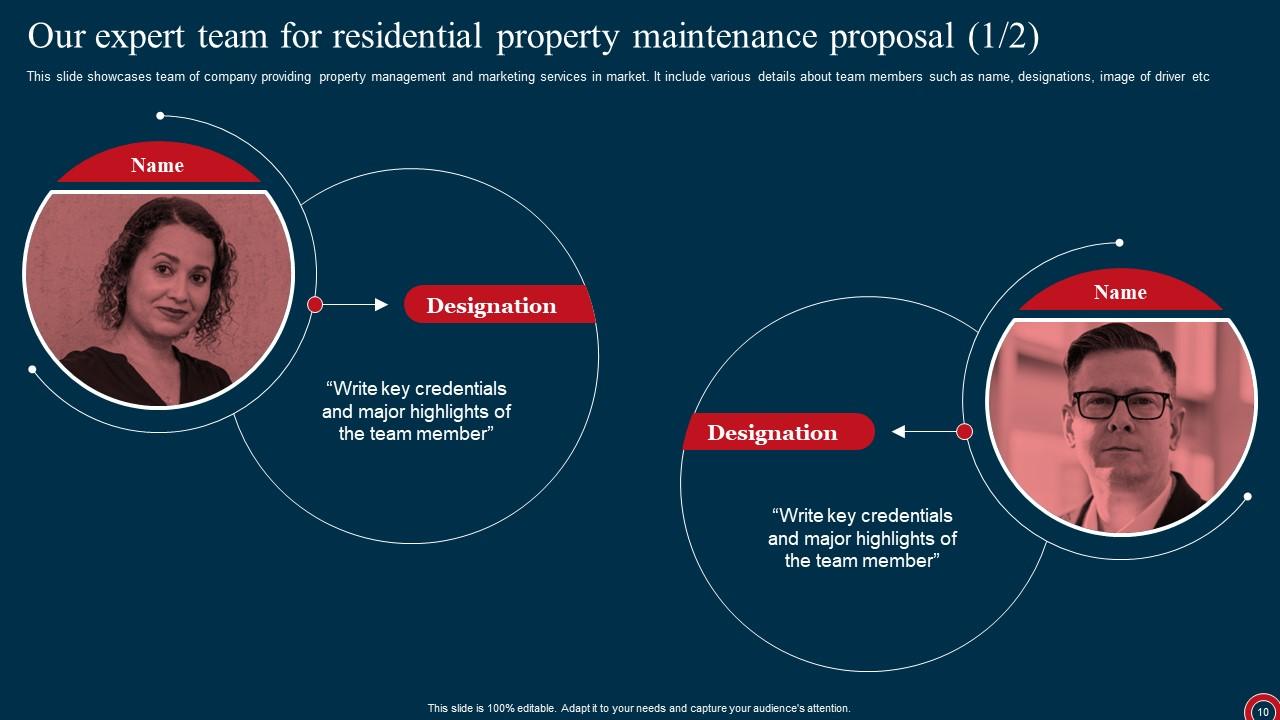
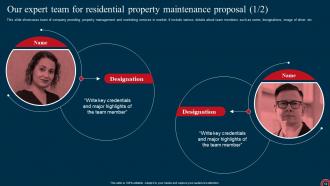
Slide 10: This slide presents the team-related information.
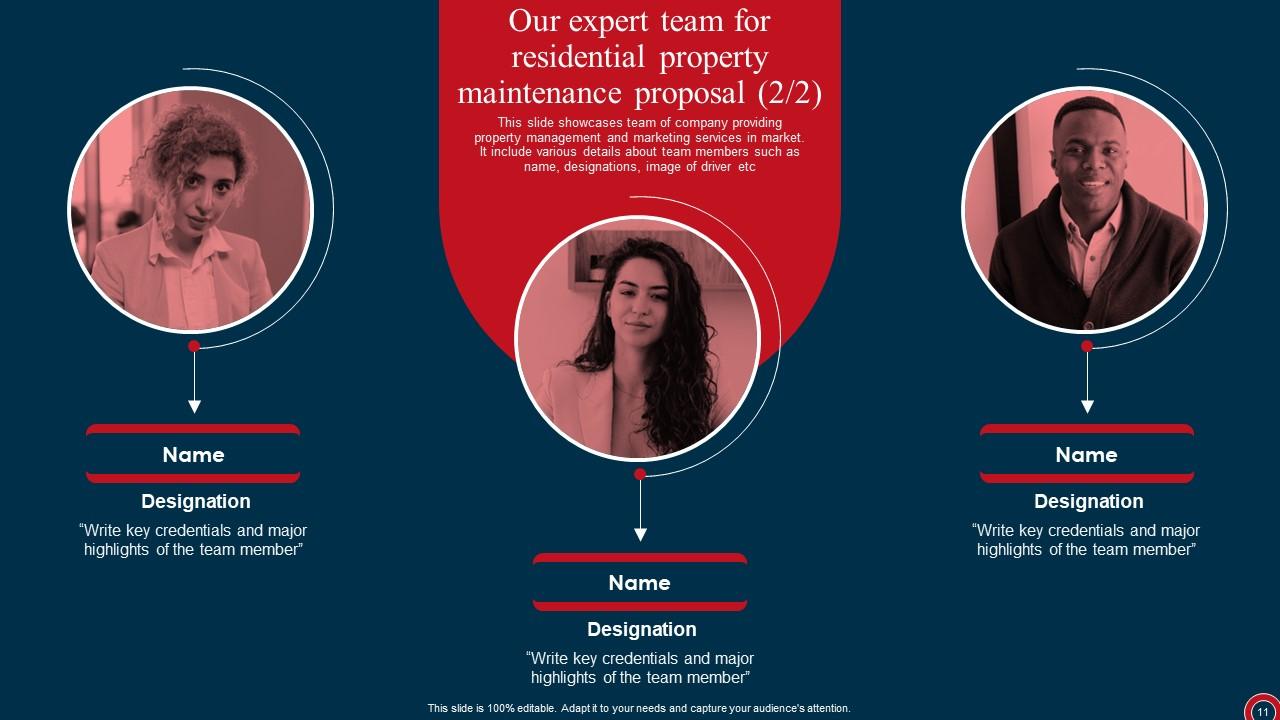
Slide 11: This slide continues the information related to the team members.
Slide 12: This slide displays the Client testimonials for residential property maintenance proposal.
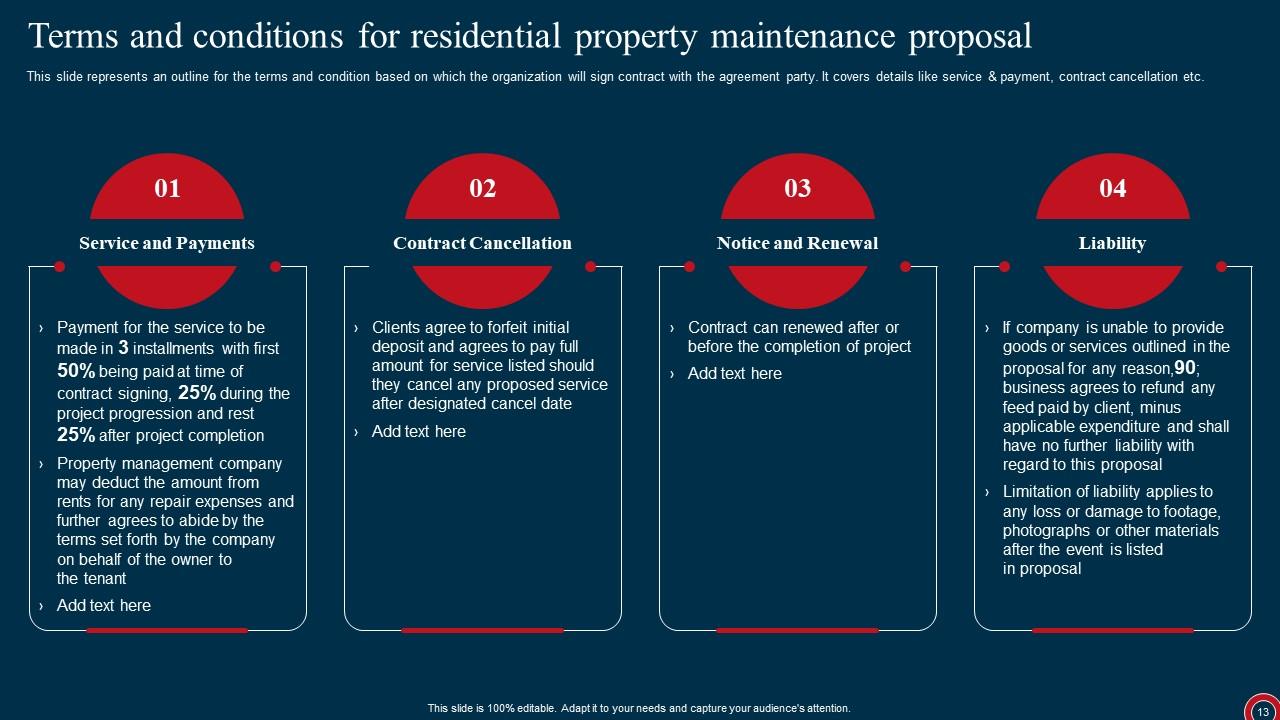
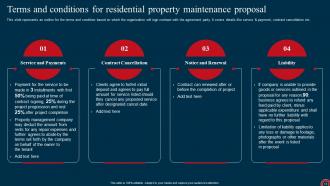
Slide 13: This slide exhibits the Terms and conditions.
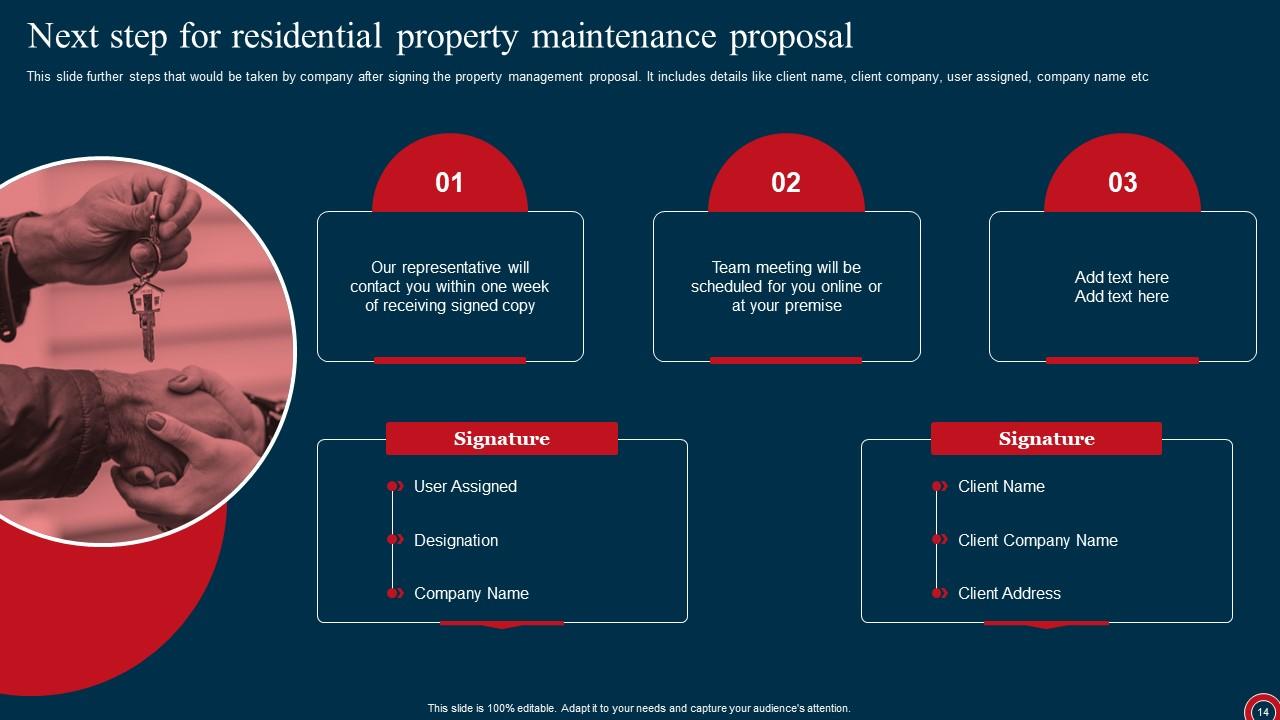
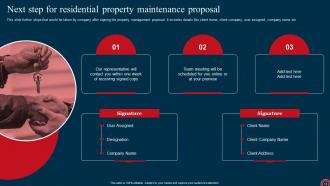
Slide 14: This slide states the Next step for residential property maintenance proposal.
Slide 15: This slide represents the Contact details of the organization.
Slide 16: This is the Icons slide containing all the Icons used in the plan.
Slide 17: This slide is used for depicting some Additional information.
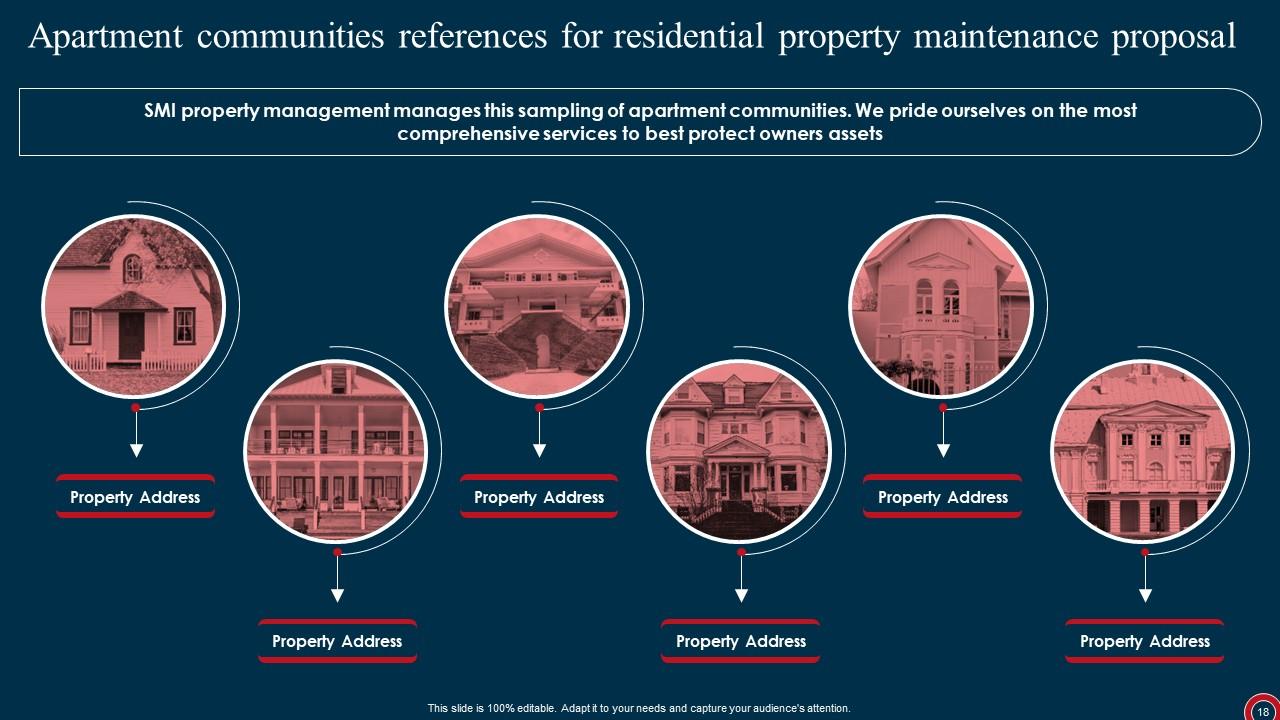
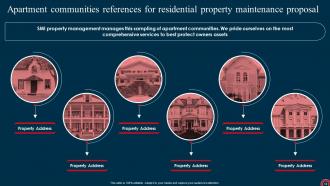
Slide 18: This slide shows the Apartment communities references for residential property maintenance proposal.
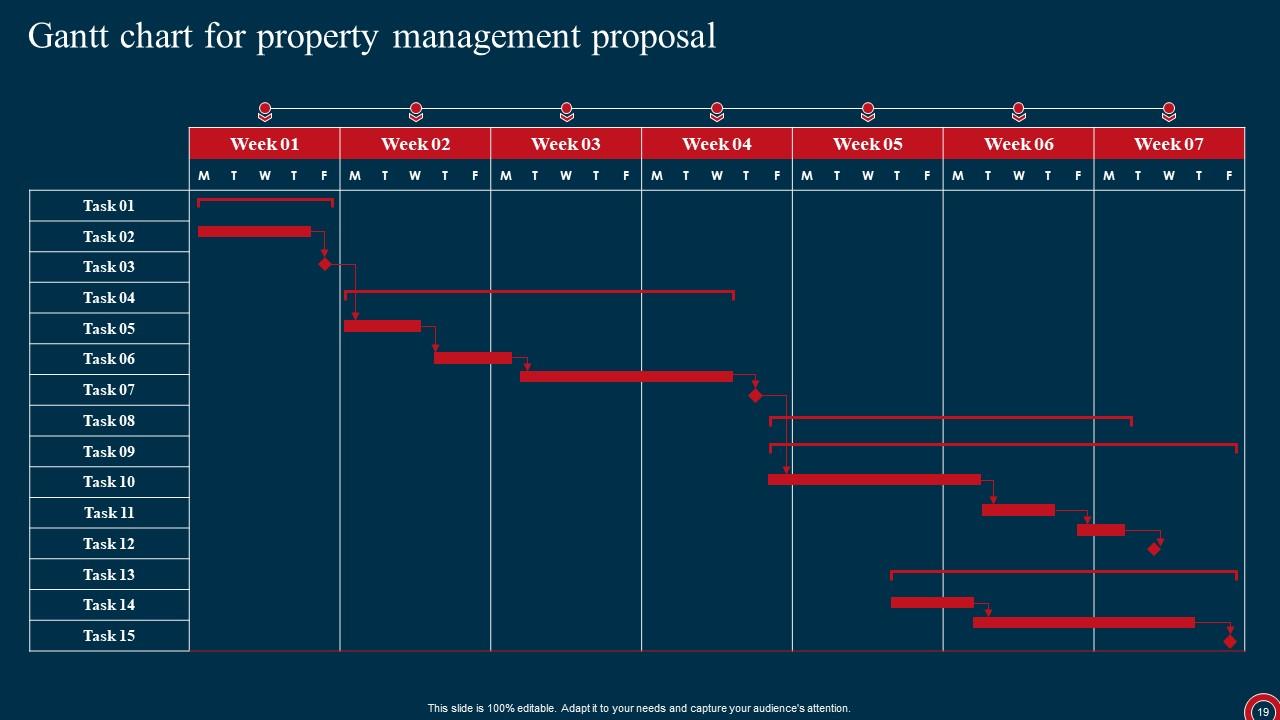
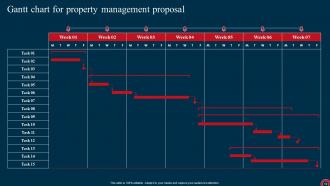
Slide 19: This slide displays the Gantt chart for property management proposal.
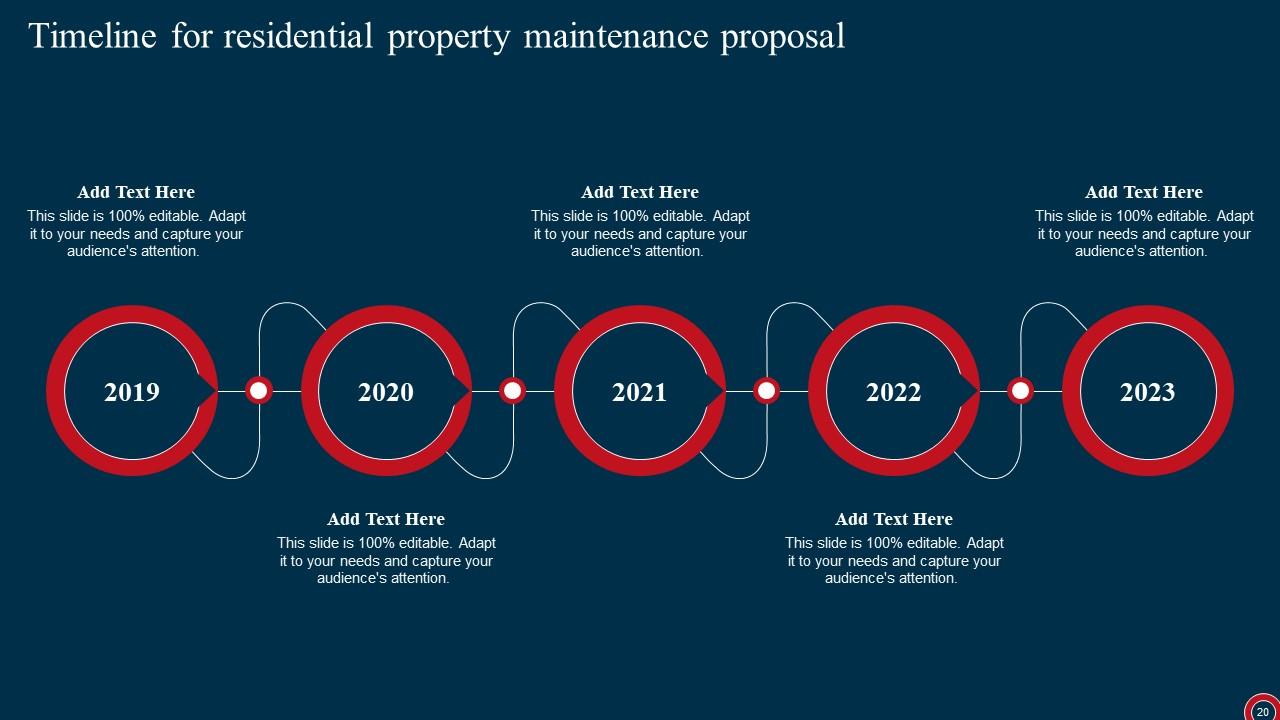
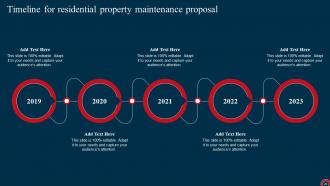
Slide 20: This slide exhibits the company Timeline.
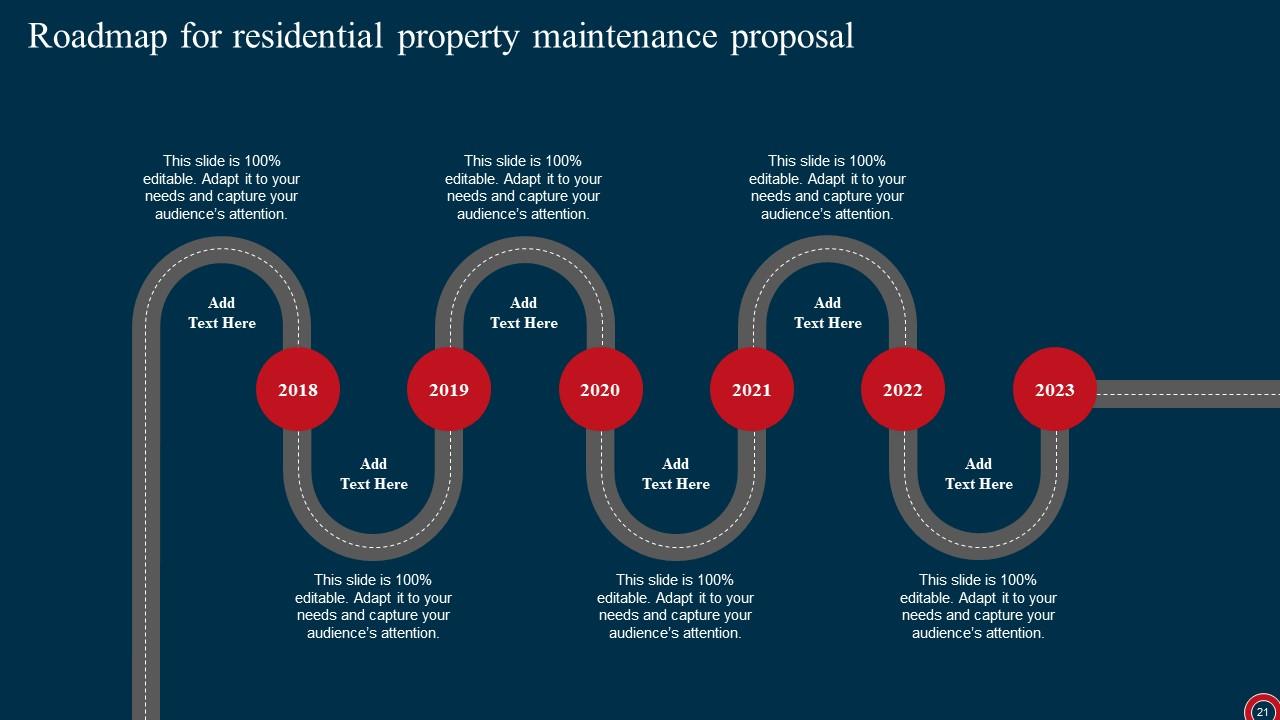
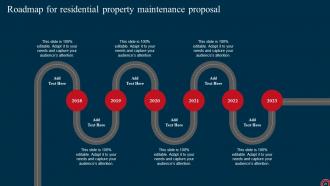
Slide 21: This slide displays the firm's Roadmap.
Slide 22: This slide incorporates the organization's mission, vision, and goals.
Slide 23: This is the 30 60 90 days plan slide for effective planning.
Residential Property Maintenance Proposal Powerpoint Presentation Slides with all 28 slides:
Use our Residential Property Maintenance Proposal Powerpoint Presentation Slides to effectively help you save your valuable time. They are readymade to fit into any presentation structure.
FAQs for Residential Property Maintenance Proposal
So for your maintenance proposal, definitely break down the scope of work - HVAC, plumbing, exterior stuff, all that. Monthly and quarterly schedules matter too. Pricing should be itemized so they're not wondering where their money goes. Emergency contacts are clutch - property owners freak out about 3am disasters, honestly. Team credentials and insurance info obviously need to be there. Oh, and before/after photos from other jobs work really well. Makes it way more convincing than just describing what you do. Service schedules can be tricky to nail down but once you do, everything flows better.
Honestly, staying on top of maintenance is a game-changer for keeping tenants happy. They see you're not just waiting for stuff to break - you're actually being proactive about their place. No more 2am calls about burst pipes (learned that one the hard way). Quick fixes mean less disruption to their lives, and when people see you genuinely care about the property, they'll stick around longer. They treat it better too. I'd start with quarterly walk-throughs and maybe just use a basic spreadsheet to track everything. Nothing fancy needed.
Honestly, you can't compete without solid tech these days. Smart sensors for HVAC, IoT stuff tracking water usage - clients expect that baseline now. Predictive maintenance software is huge too since it catches problems before they blow up your budget. Most property managers are done with phone calls, they want apps for work orders and tenant stuff. I swear, showing real efficiency data is what wins proposals. Like actual numbers, not just "we'll make things better." Oh and definitely mention the specific tools you use - clients love seeing you've thought it through. The whole pitch should focus on long-term savings and making their daily headaches disappear.
Honestly, I'd check those proposals every 6 months if possible. Annual reviews are the bare minimum but stuff changes fast - weather beats up properties, systems get old, some tenants are just harder on places than others. Those seasonal inspections you're doing? Perfect timing to reassess everything. I always look for patterns in repairs too - like if you're fixing the same thing over and over, maybe it's time to replace it entirely instead of patching. Just set a phone reminder twice a year. Takes maybe an hour but saves you headaches later.
Honestly, it comes down to a few big things. Property size is huge - bigger lawns mean more hours. How often they want you there matters too since weekly visits cost way more than monthly ones. Then there's what you're actually doing - mowing grass is totally different from full landscaping with seasonal flowers and gutter cleaning thrown in. Your location affects travel time and what people expect to pay around there. If you're doing snow removal or summer stuff, you'll need seasonal pricing too. I always tell people to itemize everything so clients know exactly what they're getting and can drop services if they want.
Definitely put everything in writing first - like who handles clogged drains, lightbulbs, air filters, all that basic stuff. Make a simple maintenance guide and stick it right in the lease. I learned this the hard way after way too many "wait, I thought YOU were supposed to fix that" fights. Walk through it with them when they move in too. Oh, and send reminders about seasonal things - HVAC filters, winterizing pipes if you're somewhere cold. Basically make it so obvious that nobody can claim they didn't know later.
Dude, don't be vague about scope and pricing - that'll kill you. Spell out exactly what maintenance you're doing, how often, and what happens when stuff breaks that isn't on you. Gray areas are profit killers. Never lowball just to get the job either, especially with material costs being insane right now. Payment terms need to be super clear too - late fees, the works. Oh, and honestly? Over-communicate everything upfront. I've seen too many contractors get burned by clients who suddenly have different expectations halfway through.
Okay so definitely put together a maintenance schedule in your proposal - HVAC tune-ups, gutter cleaning, inspections every 6-12 months. I know it sounds super boring but honestly that's where you save the most cash long-term. Way better than getting those panicked calls about broken furnaces in the middle of winter, you know? Catching problems early when they're still cheap fixes is key. Break down specific costs so owners can actually see the savings upfront. Plus it prevents those nightmare emergency calls that somehow always happen on weekends.
First thing - figure out liability coverage and who's on the hook if workers mess something up. Your contract needs clear work scope, payment schedules, and how to bail if needed. Insurance is non-negotiable: general liability plus workers comp. Local licensing and building codes matter too, especially for electrical stuff. Honestly, getting sued because someone took shortcuts is a nightmare you don't want. Have a lawyer check the indemnification parts before you sign - that language can really screw you over down the road if you're not careful.
Yeah so basically you gotta stay ahead of the seasons or you'll hate yourself later. Spring = gutter cleaning and checking what winter messed up. Summer's when I prep the AC and do exterior painting (though honestly the heat sucks for that). Come fall, you're winterizing pipes and getting the heating system serviced - plus all those damn leaves everywhere. Winter's mostly about having a snow game plan and stopping ice dams. Pro tip: start prepping like a month early for each season. Trust me, you don't want to be fixing your heater when it's already freezing.
Honestly, the key is grouping properties by location and hitting them all on the same day. I learned this the hard way after driving across town three times in one day like an idiot. Block out specific days for maintenance instead of doing it randomly - way less chaotic. Set up recurring reminders for seasonal stuff like HVAC and gutter cleaning. Always give residents 48 hours notice though, they hate surprises. Build in extra time because jobs always run long. Map everything out first and create logical routes. Oh, and definitely have a backup day ready for when weather screws things up.
Property type totally changes your maintenance game. Single-family homes need full yard work, HVAC stuff, exterior repairs - way more comprehensive than apartments. Luxury places? Those tenants are paying big money so they want everything fixed yesterday with nice finishes. Multi-unit buildings are more about common areas and keeping costs down across multiple units. Student housing gets trashed constantly compared to senior communities - I'd focus on tough materials over pretty ones. Honestly, just walk through each property type you manage and write down what actually breaks. That'll tell you everything.
Track your cost per unit, emergency repairs, and tenant satisfaction - those are the big ones. Response times matter too because nobody wants angry residents blowing up your phone. Before changing anything, get your baseline numbers down first. Then check monthly for trends. The preventive vs reactive maintenance ratio is huge - good plans should slowly shift you toward more preventive stuff. Honestly, this one metric alone tells you if you're heading in the right direction or just throwing money at problems. Monthly reviews help you catch issues before they snowball into bigger headaches.
Dude, don't just write "we'll follow safety stuff" - that's way too vague. Actually list the ordinance numbers for smoke detectors, HVAC checks, electrical standards, all that. I made this mistake before and a client totally called me out on the generic language. Super awkward. Schedule those safety audits regularly too, and keep records of everything because inspectors are obsessed with documentation. Oh and honestly? The more specific you get about which regulations you're handling, the more professional you look. Show them exactly how you'll stay compliant during the whole maintenance process.
Dude, you definitely want emergency maintenance clauses in there. They save your ass when stuff breaks at the worst times - like pipes bursting on Sunday night. Basically you'll have everything mapped out ahead of time: who to call, cost limits, what actually counts as an "emergency" (super important because tenants will try to claim everything is urgent). Response times get way faster since you're not scrambling to find contractors. Your tenants won't hate you because problems get fixed quick. Plus you're covered legally since it's all documented. Oh, and disputes usually happen over what qualifies as emergency maintenance, so be specific about that part.
-
Satisfied with the way SlideTeam resolved my query regarding the right business PPTs that I was having difficulty finding. I found the perfect match with their assistance.
-
The templates are handy and I can personalize them as per my needs. Glad to be your subscriber!