


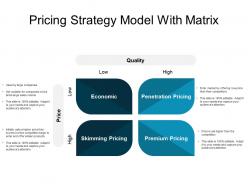
Pricing strategy model with matrix





Try Before you Buy Download Free Sample Product
 Impress Your
 Audience
 100%
100% Editable
 Save Hours
 of Time


Our Pricing Strategy Model With Matrix are topically designed to provide an attractive backdrop to any subject. Use them to look like a presentation pro.
People who downloaded this PowerPoint presentation also viewed the following :
Pricing strategy model with matrix with all 2 slides:
Use our Pricing Strategy Model With Matrix to effectively help you save your valuable time. They are readymade to fit into any presentation structure.
FAQs for Pricing strategy
So a pricing matrix is like a grid where you plot different price points against things like customer types, product features, whatever matters for your business. Way better than just slapping on a standard markup, you know? Instead of guessing or copying competitors, you're actually customizing prices based on real criteria. Honestly wish more companies did this - most just wing it and wonder why their pricing feels off. You map out your main variables first, then build the matrix from there. Pretty sure you'll spot pricing gaps you didn't even realize existed once you see everything laid out properly.
So basically you make this pricing grid comparing your stuff to competitors - like different product levels, customer types, whatever. Think of it as your pricing cheat sheet. The cool part? You'll spot where competitors are charging way too much (jackpot!) or where you're probably undercharging. Honestly, most people just wing their pricing which is crazy. Map out maybe 3-5 main competitors with your best products first. Then you can actually tweak prices based on real data instead of just guessing. It helps you either grab more customers or make better margins.
You need three main things: customer segments, product tiers, and what makes each tier worth the price. So like small biz vs enterprise customers, different feature levels, that kind of thing. Most people way overcomplicate this stuff though - I've seen companies spend months on pricing models that never see daylight. What actually works is mapping out how much each segment will pay versus what they think they're getting in return. Just start with a simple 3x3 grid and test it with real customers first. You can always add more complexity later, but honestly the basic version usually does the job.
So basically you'll want to create different tiers based on stuff like how much they use your product, company size, or what features they actually need. Enterprise vs startup pricing is like comparing apples to... I dunno, expensive oranges? You can also split by industry, location, or whether they pay monthly or annually. Map each segment to what they value most and can realistically afford. Some companies do secret tiers for big strategic deals too. Honestly, just start with your 3-4 main customer types. Build pricing that speaks to what each group cares about instead of trying to be everything to everyone.
So basically a Pricing Matrix Model helps you figure out how different prices will hit your sales and revenue. You can test scenarios - like what if I bump prices 10% or 20% - and see how many units you'd sell plus total revenue. Pretty useful for planning stuff out, honestly. It pulls from your past sales data and market trends to find that sweet spot where you're making the most money instead of just winging it. I'd start with your best-selling products first. Keep it simple though - maybe 3-5 different price points and watch how the numbers shift.
Look at three main things: your costs (materials, labor, all that overhead stuff), what competitors charge for similar stuff, and what makes your product actually worth it. Customer surveys about what they'd pay are super helpful - way better than just guessing. Also track how demand changes when you adjust prices and figure out your profit goals. The annoying part? All these factors sometimes contradict each other. I'd start by ranking which metrics actually matter for your market, then build from there. You can always tweak the formula later once you see how it plays out.
So the Pricing Matrix Model is basically a way to juggle multiple pricing factors at once - demand, competition, inventory, customer types, whatever. You set up rules that automatically adjust prices when things change. Way smarter than just picking a price and hoping for the best, honestly. It lets you test different price points across customer groups too, which is huge. I'd say start with clear parameters in your matrix, then check the data weekly to see what's actually working. Beats guessing every time.
Oh totally, pricing matrices work for pretty much any industry. The trick is just swapping out the variables for what makes sense in your space. Like a SaaS company would use features vs user tiers, but manufacturing guys care more about volume and specs. Framework stays the same though - you're still plotting price against two main value drivers that customers actually care about. Works for software, physical products, services, whatever. I've seen it used everywhere honestly. Just don't pick random metrics that sound impressive but don't matter to your buyers or competitors.
Customer feedback is your best friend when tweaking pricing - it tells you if you're actually on the right track or living in a fantasy. Listen to what features they actually value, not what you think they should want. Too many companies (mine included, honestly) build these elaborate pricing tiers that make perfect sense internally but totally miss the mark. You'll spot gaps in your pricing and figure out what people will actually pay for. Survey customers after they buy something, and check in with your existing base regularly about how they feel about costs. Short surveys work better than long ones, trust me.
Dude, real-time data changes everything with pricing. Your system can pull competitor prices, customer buying patterns, all that stuff automatically instead of you guessing every few months. AI handles the heavy lifting - adjusts prices based on demand, what's in stock, seasonal patterns. Way better than the old spreadsheet method, trust me. Connect your CRM and sales tools so it updates itself. Start by looking at your current sales data first though. You'll probably find spots where you're undercharging without realizing it. The analytics catch things you'd totally miss otherwise.
Don't overcomplicate it from day one - I've seen teams build these insane spreadsheets that are impossible to navigate. Test your pricing assumptions first instead of just hoping they work. Sales teams will push back hard because they hate losing control over deals, so get them on board early. Markets shift constantly, but so many companies just set their matrix once and forget about it. Start with maybe 3-4 key variables max. Try it with a smaller customer group first - way less risky that way. The simple approach usually wins here, trust me.
Honestly, it's all about finding that sweet spot where customers feel like they're getting a steal but you're still making decent money. I'd map out your products - cost vs what people actually think they're worth. The high-value, reasonable-cost stuff? That's where you want to focus. Instead of just slashing prices, work on making things seem more valuable through better marketing or features. Test different price points with small groups to see when people start backing out. Oh, and definitely survey customers regularly about what they think stuff is worth - don't just guess. Update your strategy every few months based on real feedback.
Southwest and Delta are classic examples - they're constantly tweaking ticket prices based on demand and routes. Salesforce does it really well too with their tiered plans that scale up with features. Netflix adjusts their subscription costs by country, which makes sense when you think about it. Hotels like Marriott change rates all the time based on events happening nearby. Oh, and occupancy predictions obviously. If you're thinking about trying this, I'd start by figuring out what actually drives value for your customers first. Then build your pricing structure around those key segments and variables.
Honestly, I'd check it monthly if your market moves fast. Quarterly works too, but things change so damn quick now - competitors drop prices, costs spike, demand shifts overnight. Don't stick to the schedule if something major happens though. New competitor shows up? Supply chain goes nuts? Review it right away. Oh, and make sure whoever's doing this actually gets your market, not just some random person with time to kill. Set a calendar reminder now or you'll totally forget.
Yeah, pricing matrices can definitely help with loyalty. Customers appreciate transparency - when they see clear reasons for different price points (volume, features, service levels), they're way less likely to feel screwed over. Think restaurant menu vs "market price" - which would you trust more? But here's the thing: if people feel stuck in the wrong tier or think you're gouging them, it'll totally backfire. You've gotta make sure each segment feels they're getting fair value. I've seen companies mess this up by designing tiers around internal convenience rather than what actually makes sense for customers. Don't be those guys.
No Reviews