


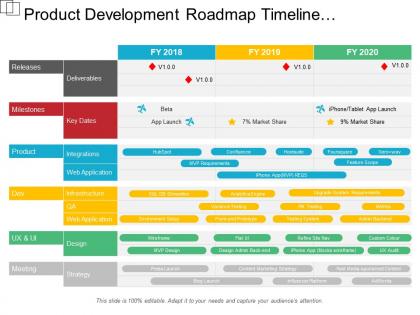
Product development roadmap timeline infrastructure strategy deliverables for three fiscal years




Try Before you Buy Download Free Sample Product
 Impress Your
 Audience
 100%
100% Editable
 Save Hours
 of Time


Alert folks about forthcoming events with our Product Development Roadmap Timeline Infrastructure Strategy Deliverables For Three Fiscal Years. Advise them to be on their guard.
People who downloaded this PowerPoint presentation also viewed the following :
Product development roadmap timeline infrastructure strategy deliverables for three fiscal years with all 5 slides:
Extract the facts and figures with our Product Development Roadmap Timeline Infrastructure Strategy Deliverables For Three Fiscal Years. Base your calculations on certified data.

FAQs for Product development roadmap timeline infrastructure strategy deliverables for
Honestly, start with discovery and research - figure out what your market actually wants. Then brainstorm solutions during ideation. After that, prioritize what's worth building first (this part's harder than it sounds). Planning comes next where timelines become your reality, followed by development and execution. Launch it, then evaluate how things went. Your roadmap's gonna change though - I've never seen one that doesn't. The discovery phase is clutch since everything else builds on it. Don't stress about getting it perfect right away.
Figure out what actually matters to your business and users first - that's your anchor point. I throw together a basic scoring system looking at customer demand, how hard it'll be to build, and money stuff. Keep it simple though, don't overthink the framework. Quick wins help with team morale, but you can't just grab all the low-hanging fruit forever. Talk to real users before you lock in big features - I've seen too many roadmaps built on guesses. Also, tweak things every few months because nothing ever goes exactly as planned anyway.
Okay so market research is like your GPS for product decisions - shows you where to actually go instead of wandering around lost. Talk to real users first to figure out what they're struggling with and what features they'd actually pay for. I can't tell you how many teams I've watched waste months building random stuff nobody wanted because they thought they knew better than their customers. Use the research to rank features by what people are literally asking for, not just what sounds cool in meetings. Saves you from those "why did we build this again?" moments later.
Honestly, get everyone talking from day one - like actually talking, not just sending emails back and forth. Engineering can't just decide everything while marketing finds out two weeks before launch (been there, it's a nightmare). I'd set up weekly check-ins where people can speak up about conflicts before they blow up. Tools like Miro help since everyone sees the same timeline instead of working off different assumptions. Oh, and definitely pick one person to own the roadmap decisions. Otherwise you'll have five different opinions and nothing gets done.
Honestly, Productboard and Aha! are solid for roadmaps - they handle dependencies without making you want to scream. Roadmunk's decent too. Tight budget? Airtable works surprisingly well, or you could build something in Notion if you're into that. Miro's my go-to when I need something visual that'll impress stakeholders. Figma works for timelines too, though that's probably overkill. Whatever you do, stay away from spreadsheets - trust me on this one, they turn into absolute chaos the second priorities change. Start with whatever project tool you're already using, then figure out what's missing later.
Your product goals need to connect directly to business objectives - they're basically the tactical moves that hit your strategic targets. Business wants 20% more revenue? Focus your product goals on user retention or new market expansion. Here's where I've learned the hard way - every roadmap item should trace back to a business goal, otherwise you're just building shiny features nobody asked for. The roadmap shows how specific initiatives will actually move both product metrics and business numbers. Start with your top 3 business objectives, then work backwards to figure out what product goals will get you there.
Don't get sucked into planning every tiny detail 18 months out - half that stuff will change anyway. Seriously, I've seen teams spend weeks on roadmaps that were outdated before they finished them. Skip the exact delivery dates when talking to stakeholders; roadmaps shift and you don't want to be stuck defending why Feature X is two weeks late. Talk to actual customers before deciding what's "priority one." And yeah, I know it's tempting to cram everything into next quarter, but you'll just stress everyone out. Monthly reviews keep you sane and let you pivot when reality hits.
Quarterly reviews are the bare minimum, but monthly check-ins work way better. Things move so fast now - customer needs shift, competitors drop new features, you know how it is. I'd block out like 30 minutes each month for quick adjustments, then do bigger strategic stuff quarterly. The trick is not making it feel like you're constantly redoing everything from scratch (that gets exhausting). Monthly tweaks keep you nimble. Your roadmap should bend without breaking, if that makes sense. Most successful teams I know do it this way and it seems to work pretty well.
Track your milestone hits, sprint velocity, and whether features actually ship on time - that's your delivery side. But honestly? The outcome stuff matters way more. Check if people are using what you built, customer satisfaction scores, plus whatever business metrics you were trying to move (revenue, retention, whatever). Delivery metrics keep you honest about execution, sure. Outcomes tell you if you're building the right crap in the first place. Set up some basic dashboard so you can see trends and pivot when things aren't working. Both matter but outcomes are king.
Set up regular feedback touchpoints - surveys, user interviews, support tickets, that stuff. Most teams collect it then never look at it again, which drives me crazy. Create a weekly 30-minute review where you sort feedback by impact vs effort. High-impact stuff goes straight into your roadmap milestones. Oh, and definitely tell customers when you actually build their suggestions - they love that. I'd start with whatever feedback source you already have rather than trying to do everything at once. The systematic approach is what makes it work, not just collecting more data.
Honestly, just match your style to who you're talking to. Execs want the big picture stuff - timelines and business impact. Dev teams need all the nitty-gritty feature details. Visual roadmaps are a game changer over boring spreadsheets (seriously, night and day difference). Set up regular meetings and shared dashboards so everyone stays in the loop. Be super clear about dependencies and risks - people hate surprises but they'll respect you for being upfront. Oh, and establish a regular update schedule. That way nobody's constantly bugging you asking "what's the status?"
Agile basically turns your roadmap into something that can actually adapt. You're not stuck planning every tiny detail months out - instead you work with bigger themes and figure out specifics closer to launch. Quarterly cycles work way better than those massive yearly plans (which honestly never work out anyway). Each sprint teaches you something new, so you're constantly reshuffling priorities based on what users actually want and how the market's moving. The trick is getting everyone cool with timeline changes - they're not screw-ups, they're just smart adjustments when you learn better info.
Honestly, just throw everything into a spreadsheet first - way easier than those overcomplicated project tools. Map out what you're waiting on internally (design team, approvals, whatever) plus external stuff like vendors or integrations. Figure out what's on your critical path and add buffer time because things always get messy. Someone needs to own each dependency, and you gotta check in regularly or people forget. Here's the thing though - have backup plans for anything risky. Trust me, when stuff inevitably falls apart, you'll be so glad you thought of alternatives ahead of time instead of scrambling.
Keep your big picture goals solid but stay flexible with the short-term stuff. Quarterly planning works way better than trying to map out two years - trust me on this one. Reserve some sprint time specifically for testing new tech or pivoting when needed. Every 6-8 weeks, sit down and actually review your roadmap (not once a year like most teams). You'll also want clear rules for when to chase something shiny versus sticking with your current plan. Oh, and don't pack your schedule too tight - you need breathing room when opportunities pop up.
Honestly, I'd go with something like the 70-20-10 split - most of your bandwidth on maintaining current stuff, then 20% improving what you already have, and maybe 10% on totally new experiments. Though those numbers totally depend on where your company's at right now. The real trick is connecting your quick releases to the bigger picture somehow. Set up milestone markers so people can actually see how today's work builds toward your long-term vision. Be upfront about what you're giving up when you choose one thing over another - that transparency goes a long way. Start by just mapping what's already on your roadmap against impact timelines versus strategic value. You'll probably spot some obvious adjustments right away.
-
Design layout is very impressive.
-
Use of icon with content is very relateable, informative and appealing.