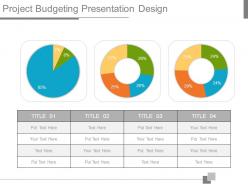
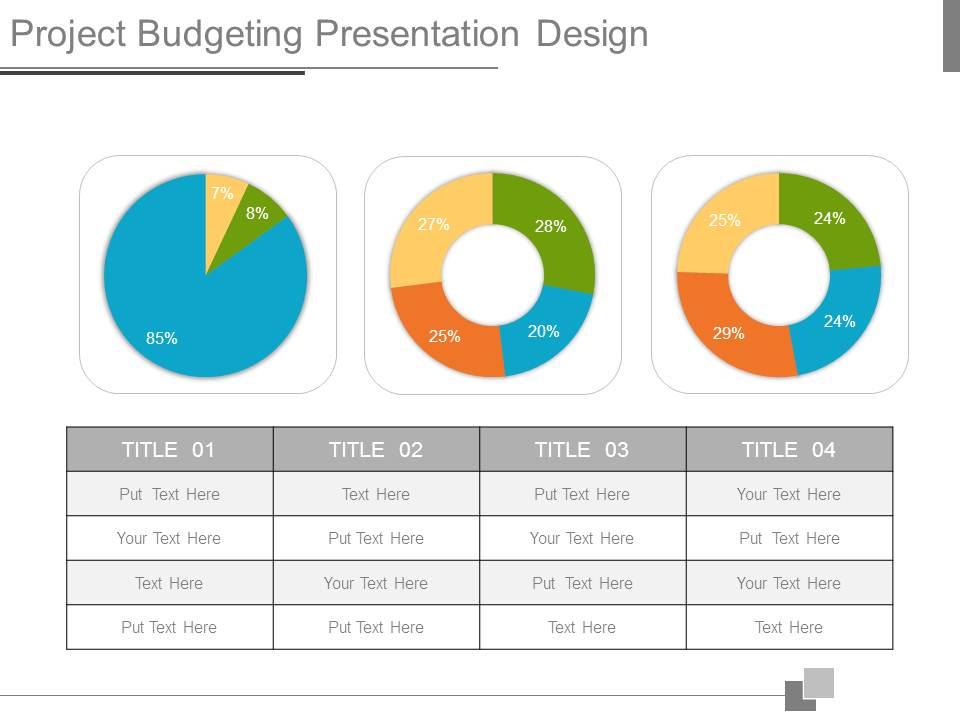
Project budgeting presentation design
Try Before you Buy Download Free Sample Product
Audience
Editable
of Time
Buck up the invalids with our Project Budgeting Presentation Design. Boost their confidence in handling disability.
People who downloaded this PowerPoint presentation also viewed the following :
Project budgeting presentation design with all 4 slides:
Inefficiency doesn't feature due to our Project Budgeting Presentation Design. Ensure every element functions at it's best.
FAQs for Project
So for your project budget, definitely break down labor first - salaries, contractors, all that stuff. Materials and equipment are obvious ones. Then you've got overhead like office space and software licenses. Oh, and travel costs if you're doing any of that - seriously, hotels are insane right now. Third-party services too, like consultants or whatever vendors you might need. I always get super detailed with the breakdown so you can actually track where money's going versus what you planned. And honestly? Pad that contingency fund by at least 15% because something weird always happens.
Honestly, you gotta break everything down into smaller chunks first - way better than just throwing out some random number for the whole thing. Check if you've got data from past projects or look up what others in your industry are doing. Always pad it with extra time/money because I swear something weird always comes up. Your team members are gold here - they actually know how long stuff takes, not just what sounds good on paper. Don't forget the obvious costs like labor and materials, but also random things like tools or outside help. Oh, and write down why you estimated what you did so you can fix it later when reality hits.
Start with a solid baseline budget and check actual costs weekly - seriously, this will save your ass. I'd set approval gates for anything over $500 (or whatever threshold works). Small expenses add up fast, so track everything from day one. Regular team check-ins help you spot cost creep before things get ugly. Build in a 10-15% buffer upfront too - way better than panicking later when you're over budget. The whole thing's about staying ahead of problems instead of constantly putting out fires. Even those random $20 purchases matter more than you think.
Always add a buffer to your budget - like 10-20% depending on how messy the project might get. My first big project taught me this when our vendor jacked up prices halfway through (still mad about that lol). Keep a list of potential problems and what they'd cost you. Track spending as you go so you catch issues early instead of scrambling later. Oh, and write down all the weird expenses that pop up - you'll thank yourself when planning the next project since you'll actually know what to expect.
Dude, you absolutely need stakeholders for budgeting. They're the ones giving you requirements that'll make or break your costs. Plus they control the money - can't ignore that! Get your tech teams involved early because they actually know what stuff takes to build. Business folks are gold when you need to cut features (which always happens, let's be real). Don't just dump final numbers on them though - that's asking for drama. Loop them into budget talks from the start. Oh, and they're your best shot at getting extra funding when scope inevitably changes. Trust me on this one.
Look, historical data is like having a crystal ball for your budget. Track what you actually spent vs what you estimated on past projects - even rough numbers help. You'll start seeing where you always blow it (usually scope creep, honestly). The more you track, the better you get at catching problems early. I keep a basic spreadsheet breaking down costs by project phase. Sounds boring but it beats guessing every time. Once you have a few projects logged, patterns jump out at you. Way better than winging it and hoping for the best.
Honestly, just start with Excel or Google Sheets - they're still what most teams use anyway. If you need something fancier later, Monday.com and Asana have decent budget tracking plus way better collaboration. Microsoft Project is good too if you want the whole scheduling thing built in. Smartsheet's kind of the sweet spot between spreadsheets and actual project tools, though I always forget it exists lol. Really just use whatever you already have first. Only upgrade when you're actually hitting walls with your current setup, not just because something looks shinier.
Honestly, check it every two weeks if things are moving fast. Monthly works when everything's cruising along smoothly, but active projects? Nah, you need eyes on it more often. I learned this the hard way on my last big project - scope creep is sneaky. Weekly during those crazy periods isn't excessive either. The trick is spotting problems before they blow up your whole budget. Just throw a 15-minute check on your calendar and actually do it. Sounds boring but it'll save your butt later when costs start going sideways.
Hit the critical path stuff first - those delays will absolutely wreck your timeline. Then look at what resources you actually have vs. what you need. Sometimes you're stuck paying premium for specialists or factoring in training time (ugh). Oh and definitely pad your budget for surprises, especially with new vendors - they always find ways to nickel and dime you. I'd grab your must-haves first, then see what's left for the nice-to-have features based on what'll actually move the needle. Learned that one the hard way last time around!
Honestly, just trace every single expense back to your actual goals. Like, can you explain exactly how that budget item gets you closer to objective X? I made this mistake once - bought some shiny software that seemed awesome but did literally nothing for our key metrics. Such a waste. Break your main goals down into real deliverables first, then figure out what money goes where. Monthly check-ins are clutch for catching when you're spending on stuff that doesn't matter. If you can't draw a clear line from the expense to a specific outcome, ditch it. Sounds harsh but it works.
Scope creep will murder your budget if you're not careful - seriously, it's the silent killer. Those random indirect costs? They show up like clockwork and nobody ever plans for them. Build in at least 10-20% contingency because your timeline estimates are probably way too optimistic (we all do this). Here's what actually works: check your spending weekly, maybe bi-weekly max. Don't wait until the end to see where your money went - by then you're already screwed. Catching overruns early means you can actually do something about it instead of just watching everything fall apart.
Oof, budget overruns are the worst. You gotta be upfront with everyone right away though - don't try to hide it or "figure it out later." Figure out what went wrong first. Scope creep? Bad estimates? Random costs nobody saw coming? Once you know that, look at your options. Can you trim some features? Move money around from other parts? Honestly, sometimes you just need more budget and that's reality. I've watched too many PMs try to magically make numbers work and it never ends well. Get your story straight, come up with 2-3 actual solutions, then go to your sponsor. Document whatever you decide so nobody can claim they didn't know later.
Honestly, budgets mess with team morale way more than people realize. Underfund a project and everyone's scrambling to do the impossible with crappy tools - total nightmare. I've watched teams burn out fast when they can't get basic resources. But nail the budget? Your people actually focus on their work instead of stressing about money constantly. Here's the thing though - stakeholders will still try sneaking in "quick additions" that blow everything up. Best move is getting your team involved in budget talks early. They'll understand the trade-offs and won't feel like decisions just happened to them, you know?
Start by digging into past projects that were similar - that's your best baseline. Breaking everything down into smaller chunks makes estimating way less painful and more accurate. Get your team involved since they're the ones actually doing the work, and honestly their input is usually spot-on. I always do three estimates: best case, worst case, and realistic. Don't forget buffers though - like 10-20% extra depending on how risky things look. Oh, and track your estimates against what actually happens from day one. You'll thank yourself later when you can adjust course instead of scrambling at the end.
Dude, communication can totally make or break your project budget. I've watched teams blow past their numbers by like 50% just because nobody was on the same page about what they were actually building. Scope creep becomes this monster when stakeholders aren't aligned on priorities upfront. You'll catch problems way earlier if everyone's talking regularly - even those uncomfortable money conversations that nobody wants to have. Trust me, having those awkward budget talks at the start beats scrambling when everything goes sideways later. Plus you actually get people bought into the plan instead of fighting you on every expense.
-
Understandable and informative presentation.
-
Great designs, Easily Editable.