


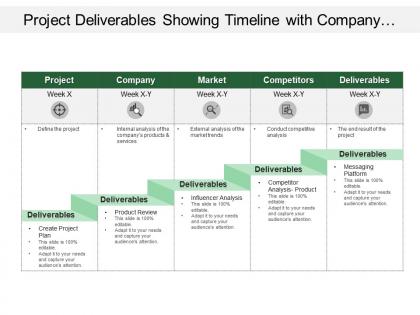
Project deliverables showing timeline with company market and competitors





Try Before you Buy Download Free Sample Product
 Impress Your
 Audience
 100%
100% Editable
 Save Hours
 of Time


Delete difficulty with our Project Deliverables Showing Timeline With Company Market And Competitors. A click is enough to make it easy.
People who downloaded this PowerPoint presentation also viewed the following :
Project deliverables showing timeline with company market and competitors with all 5 slides:
Create better facilities for development with our Project Deliverables Showing Timeline With Company Market And Competitors. They always aim to empower.
-
Project deliverables showing timeline with company market and competitors
-
Project deliverables showing timeline with company market and competitors
-

Project deliverables showing timeline with company market and competitors
-

Project deliverables showing timeline with company market and competitors
-

Project deliverables showing timeline with company market and competitors
FAQs for Project deliverables showing timeline with company
Okay so you need five main things in your timeline. Start with clear descriptions of what you're delivering and realistic deadlines - seriously, don't be overly optimistic here. Map out which tasks depend on others finishing first because that'll save you so much stress later. Assign someone to own each deliverable. Oh, and definitely build in buffer time, like 10-15% minimum. Things always take longer than you think. I'd list everything chronologically first, then work backwards from your final deadline. Also include milestones for reviews and approvals - those drag on forever.
Honestly, just start with what's gonna move the needle business-wise and what other people are waiting on. High-impact stuff that unblocks everyone else? Do that first. Then figure out the rest based on who's available and what stakeholders are breathing down your neck about. I know everyone rolls their eyes at this, but that urgency vs importance grid actually works. Color-code your timeline too - makes it way easier to spot the critical stuff. Oh, and definitely pad your estimates because something always goes sideways. The whole thing needs to be flexible since priorities change like every other week anyway.
Microsoft Project and Smartsheet are your go-to if you need serious Gantt charts with all the dependency stuff. Asana, Monday.com, or ClickUp work great for team collaboration - everyone can jump in and update things live. Budget tight? Excel or Google Sheets totally work for basic timelines. I'm personally obsessed with Notion because it's so flexible, though maybe that's just me being extra. Oh, and honestly? Just use whatever your team already knows. Nobody wants to deal with learning new software when you're trying to hit deadlines.
Oh man, dependencies will absolutely wreck your timeline if you don't map them out first. Here's the thing - when one task can't start until another finishes, any delay just cascades down the line like dominoes. The worst part? Critical path stuff usually gets hit hardest since those chains are already the longest. I've watched entire projects slip weeks over what seemed like tiny dependencies that nobody caught during planning. My advice? Find all your dependencies upfront and pad some extra time around the critical ones. Trust me on this - better to have buffer time you don't need than scramble later.
Your stakeholders are basically your sanity check when it comes to timelines. They'll call out unrealistic deadlines before you commit to something impossible. Plus they catch stuff you miss - like dependencies or resource conflicts that could totally mess things up later. Better to get the "um, that's not gonna work" feedback upfront than deal with chaos down the line. I learned this the hard way on a project last year, honestly. Get their input on buffer time and priorities so everyone's on the same page. Just make sure you loop them in before making any big timeline changes - saves those awkward conversations later.
Honestly, start by figuring out what could screw you over for each deliverable. Stakeholder delays, resource conflicts, tech problems - you know the drill. Then tack on extra time based on how likely each thing is to happen. I learned the hard way to add at least 20% buffer for anything risky because Murphy's Law isn't joking around. Have backup plans ready for your critical stuff too. Quick risk check for each milestone, then pad your timeline accordingly. Trust me, it's way better than panicking when everything goes sideways at once.
Track your schedule variance first - that's planned vs actual dates. Resource utilization and scope creep percentage matter tons too. Honestly, milestone hit rate is probably the most telling metric because missing key deadlines is what kills projects. Oh, and definitely watch dependency delays - that's where everything usually falls apart in my experience. Quality stuff like rework percentage is clutch since rushing just creates more work later. I'd stick to maybe 3-4 metrics tops when you're starting out. Check them weekly so you can catch problems early. More than that and you'll be drowning in spreadsheets instead of actually getting shit done.
Look, don't sit there hoping you'll magically catch up - tell them right away. Shoot a quick message with what's delayed, why it happened, and new dates. People hate surprises when they're counting on your stuff. I learned this the hard way once. Tell them what you're doing differently next time and ask if your new timeline screws up their plans. Big delays? Definitely hop on a call. Being upfront about bad news actually makes people trust you more, which sounds backwards but it's true. Way better than scrambling to explain later.
Dude, most people are terrible at guessing how long stuff actually takes - myself included lol. Break everything into smaller chunks so you can spot problems early. I always toss in like 20% extra time because something random always goes wrong. Weekly check-ins keep everyone honest. Those visual boards (Gantt charts or whatever) are clutch so people can actually see progress. Here's the big thing though - speak up the second you think you might be behind. Don't just cross your fingers and hope it'll work out.
Honestly, dig into your old projects first - like the last 3-5 that were similar. You'll probably notice the same stuff always goes over time (external dependencies are the worst for this). New tech implementations? Yeah, those never go as planned either. Track how off your estimates were and where things got stuck. Then actually pad your future timelines based on what really happened, not what you wished had happened. I know it sounds obvious but most people just keep making the same optimistic guesses. Look at your accuracy rates and resource stuff too - the data doesn't lie even when we want it to.
Break your big deliverables into smaller chunks first. Then assign each piece to specific people with real deadlines. Weekly check-ins are honestly way better than monthly - nobody procrastinates as much when they know you'll ask about it next week. Make sure everyone gets how their work connects to other people's tasks, otherwise you'll have people just sitting around waiting. Oh, and visual stuff like Gantt charts or those Kanban boards really help - suddenly everyone can actually see how their part matters. You should probably set up a timeline meeting this week to get started.
Yeah, uneven workloads will absolutely wreck your timeline - I've seen it happen so many times. What happens is your key people get slammed while others are basically twiddling their thumbs. Then everything backs up because the overloaded folks become bottlenecks for all the dependent stuff. Check in on everyone's capacity weekly, honestly that's the only way to catch it early. When you spot the imbalances, move tasks around. Cross-training helps too since work can actually flow between people instead of getting stuck. Oh and definitely pad your timeline around your busiest team members - they're usually where things go sideways first.
Honestly, just pad your timeline with buffer time - like 10-20% extra between major milestones depending on how complex things get. Break big deliverables into smaller pieces since they're way easier to move around when stuff inevitably changes. I always do this rolling wave thing where I plan the immediate stuff in detail but keep future deliverables pretty high-level until I'm closer to them. Figure out what's actually critical path vs. what can slide if needed. Oh, and write down your assumptions early! When things go sideways (they will), you'll know exactly how it impacts your timeline instead of scrambling to figure it out.
Track your schedule variance first - basically comparing when stuff was supposed to happen vs when it actually did. Then look at milestone completion rates and whether you're hitting your critical path deadlines. Your schedule performance index should ideally be above 0.9, though honestly perfect scores are unicorns. What really matters is spotting patterns - are you always late on design reviews but early on testing? Those trends matter way more than one missed deadline. Oh, and definitely throw this data into some kind of visual dashboard. Makes everything clearer when you're explaining delays to your boss.
Honestly, continuous improvement is where the magic happens with timeline stuff. Every project teaches you something new about how long tasks actually take vs what you thought they'd take. I swear, some delays are so predictable once you start paying attention. After each project (or even big phases), take like 20 minutes to jot down what went sideways and why. Then adjust your future estimates based on those patterns. You'll get way better at spotting the stuff that always causes problems. It's basically building your own little database of "oh yeah, this type of thing always takes longer because..."
-
Informative presentations that are easily editable.
-
Great experience, I would definitely use your services further.