

Projected profit and loss statement restaurant cafe business idea ppt elements




Try Before you Buy Download Free Sample Product
 Impress Your
 Audience
 100%
100% Editable
 Save Hours
 of Time


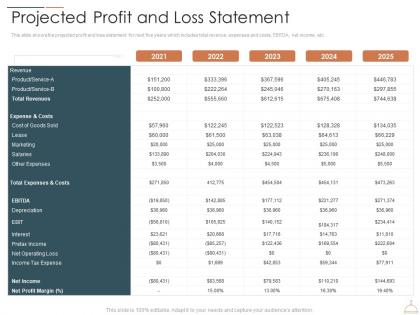
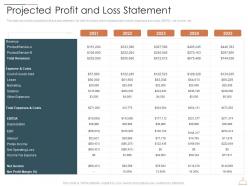
This slide shows the projected profit and loss statement for next five years which includes total revenue, expenses and costs, EBITDA, net income, etc.
People who downloaded this PowerPoint presentation also viewed the following :
Projected profit and loss statement restaurant cafe business idea ppt elements with all 2 slides:
Use our Projected Profit And Loss Statement Restaurant Cafe Business Idea Ppt Elements to effectively help you save your valuable time. They are readymade to fit into any presentation structure.
FAQs for Projected profit and loss statement restaurant cafe business
So for your P&L, start with revenue from all your income streams. Then subtract cost of goods sold to get gross profit. Operating expenses come next - salaries, rent, marketing, utilities, all that stuff. Don't forget the random ones like insurance or software subscriptions (I literally always miss those on my first try). Add depreciation and interest if you have loans or big equipment. Monthly breakdowns for year one are clutch - investors actually want to see how seasonal your business gets. Bottom line becomes your net income. Just be realistic with the numbers, seriously.
Start with your past sales data - that's your foundation. Then add realistic growth based on what you're seeing in the market and what you're planning to do differently. Seasonal stuff matters way more than most people realize, so don't skip that part. Break everything down by product or customer type to get specific. Factor in new launches, price changes, whatever's coming up. Honestly, being too conservative is better than being crazy optimistic and missing by miles. I always do three versions - best case, worst case, and what'll probably actually happen. Keeps you ready for anything.
Dude, you gotta write down ALL your assumptions - pricing, customer growth, seasonal stuff, major expenses, the works. Market conditions matter too, plus whatever you're planning for marketing or new hires. Oh and operational things like gross margins, rent bumps, supply costs. Being super transparent makes your P&L way more believable honestly. Put it somewhere obvious because I guarantee you'll forget your own logic in like 3 months. When someone asks "where'd these numbers come from?" you'll actually have an answer instead of just scrambling around looking confused.
Honestly, using your old data beats making stuff up every time. Pull your last 2-3 years of monthly numbers and you'll start seeing patterns - like how January always sucks for sales or how you blow the marketing budget every product launch. Those trends are gold for building realistic projections. Way better than random guessing, which is basically what you're doing without historical context. Stakeholders actually trust your numbers when they can see the logic behind them. Just dig into your seasonal trends and growth rates from before - it makes the whole forecasting thing way less of a shot in the dark.
Don't go crazy with revenue projections - I learned this the hard way my first time around. Expenses always creep up on you, especially the random stuff you didn't think about. Seasonal dips will hit harder than expected. Here's what kills me though: people use the same assumptions for like 5 years straight. Markets change! Growth happens (hopefully). Basic math errors are surprisingly common too - I've caught myself doing it. Oh, and always pad things a bit because something weird will definitely go wrong at some point.
Look at 2-3 years of your past data first - you'll spot the obvious patterns pretty quick. Retail crushes it in Q4, landscapers basically hibernate all winter, that kind of stuff. Don't just divide your revenue by 12 and call it good. Instead, bump up the busy months and dial back the slow ones. I honestly think most people get way too aggressive with growth assumptions though. Build in some wiggle room because customers are weird and markets shift when you least expect it. Oh, and seasonal forecasting literally saved my ass when I was planning inventory last year - makes everything so much more realistic.
So industry benchmarks are basically your sanity check for P&L projections. You'll want to compare your gross margins and operating expenses against similar companies - not just anyone in your general industry, but actual comparable businesses. I usually look at things like COGS percentages and marketing spend ratios. Super helpful when you're entering new markets or don't have much historical data to lean on. Honestly, I've seen too many entrepreneurs get burned by being way too optimistic without checking what's realistic first. Cross-reference everything against those benchmarks before you finalize anything.
So your P&L projections are basically showing investors you're not just throwing stuff at the wall and hoping it sticks. They want to see you actually understand your revenue streams and costs - like when you'll break even and all that. It proves you've thought through the business model instead of just winging it with their cash. Honestly, investors eat this stuff up because it helps them figure out the risk vs reward thing. Just make sure your numbers aren't totally insane because they'll definitely grill you on every assumption during due diligence. Been there!
So basically, fixed costs don't change no matter how much you sell - rent, insurance, regular salaries. Variable costs go up and down with your business activity, like materials or shipping. But here's where it gets tricky: some costs are both! Your phone bill probably has a base fee plus usage charges. I learned this the hard way when I first started budgeting. When you're doing projections, list out everything and sort each expense into these buckets. Variable costs should match your revenue forecasts. It makes your P&L way more realistic.
Honestly? Do it monthly if you can swing it. Quarterly might work for super stable businesses, but most of us don't have that luxury. Revenue jumps around, surprise expenses hit - you know the drill. Monthly's especially crucial if you're growing fast or dealing with seasonal stuff. I always forget to do mine though, so I literally put it on my calendar as a recurring thing. Same time each month works best for spotting patterns. Trust me, consistency beats perfection here. Your future self will thank you when tax season rolls around.
Honestly, just start with Excel or Google Sheets if you're comfortable with them - they're flexible and get the job done. If you're already using QuickBooks or Xero for your books, their forecasting features are actually pretty decent. LivePlan's solid for dedicated planning software. PlanGuru is powerful but probably way more than you need unless you're running crazy scenarios all day. Oh, and there's Fathom which syncs with your accounting stuff automatically. My take? Don't overthink it. A simple projection you'll actually update is way better than some fancy setup you'll abandon after two months.
Set up different columns or tabs for each scenario in your P&L. Base case first, then best case (higher revenue, lower costs) and worst case (conservative revenue, higher expenses). Three scenarios max - any more than that and it gets way too cluttered, trust me. Same line items across all versions so you can compare easily. The trick is staying realistic with your assumptions. Don't go crazy optimistic on the best case or totally pessimistic on worst case. These scenarios help you figure out which variables actually move the needle on profitability. It's basically stress-testing your business model without the actual stress.
Honestly, a projected P&L is like having a crystal ball for your business decisions. You can play around with different scenarios - hiring more people, launching products, whatever - and see how they'd mess with your profits before spending actual money. I've seen too many friends make expensive mistakes they could've avoided. Spot cash flow issues early, test if your pricing makes sense, figure out which projects are actually worth it. Try doing quarterly projections and tweak them monthly. Way better than just winging it and hoping things work out.
So basically, you need to figure out where your revenue matches your total costs - that's your break-even point. Fixed costs first (rent, salaries, all that boring stuff that stays the same). Then figure out variable costs per unit. The math is pretty simple: divide fixed costs by your profit per unit (selling price minus variable costs). Honestly, once you see it on your P&L, it's super obvious - like suddenly the numbers just click. That's literally the moment you stop bleeding money. I always tell people to be realistic about their sales targets though, don't just pick random numbers.
Honestly, it's like getting a report card on how well you predicted the future. Look at where your revenue killed it versus where costs went totally off the rails. The biggest differences tell you the most - that's where I'd start digging. You'll catch patterns too, like seasonal stuff or whether that bad month was just a fluke. Really helps you figure out if your original assumptions were realistic or if you were just being optimistic. Focus on those major variances first since they show what actually needs fixing.
-
Helpful product design for delivering presentation.
-
Informative presentations that are easily editable.
-
Use of different colors is good. It's simple and attractive.
-
Very unique and reliable designs.
-
Unique design & color.