


Pros And Cons Of Market Development Strategy Growth Strategies To Successfully Expand Strategy SS




Try Before you Buy Download Free Sample Product
 Impress Your
 Audience
 100%
100% Editable
 Save Hours
 of Time


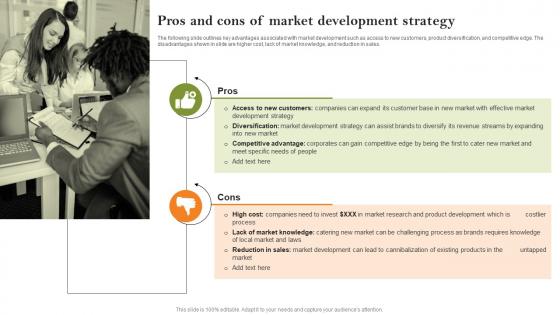
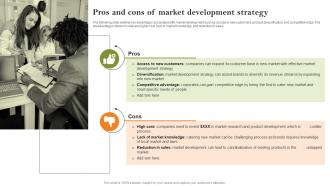
The following slide outlines key advantages associated with market development such as access to new customers, product diversification, and competitive edge. The disadvantages shown in slide are higher cost, lack of market knowledge, and reduction in sales.
People who downloaded this PowerPoint presentation also viewed the following :
Pros And Cons Of Market Development Strategy Growth Strategies To Successfully Expand Strategy SS with all 6 slides:
Use our Pros And Cons Of Market Development Strategy Growth Strategies To Successfully Expand Strategy SS to effectively help you save your valuable time. They are readymade to fit into any presentation structure.





FAQs for Pros And Cons Of Market Development Strategy Growth Strategies To Successfully
Honestly, you'll need to nail four things here. Research your new audience first - like really dig into what bugs them daily. Then figure out how you're different from whoever's already there (this part's crucial). Your go-to-market approach has to be custom too - I see so many people just recycle their old playbook and wonder why it flops. Finally, set up some way to measure if it's actually working. Oh, and don't try to conquer everything at once. Pick one segment, test it small, then scale up if it sticks.
Start with your current customer data - what patterns do you see? Check out demographic changes and trends your competitors aren't catching. Honestly, customer surveys are where you'll strike gold because people straight up tell you what's missing. Don't forget about adjacent markets either - maybe your product solves totally different problems elsewhere. Geographic expansion is pretty straightforward if location's been holding you back. Oh, and here's the thing - data's great but you've gotta actually talk to people to make sure you're not way off base before spending serious money.
Honestly, market research is like your GPS for expansion - without it you're just driving blind. It shows you which new markets or customer segments are actually worth your time (not just the shiny ones that look good on paper). You'll understand what people really want and how to beat competitors already camping there. Too many companies I know just jumped in without doing their homework first... big mistake. Start with some basic secondary research to see what's out there, then get specific with primary research on the most promising opportunities. Trust me, it's way cheaper than learning the hard way.
Start by figuring out who you're actually up against - check their websites, pricing, what customers are saying about them. SEMrush or Ahrefs can show you their digital game too. Don't just look at obvious competitors though. Sometimes companies solving the same customer problem in totally different ways are your real competition. I always spend way too much time reading reviews because that's where you find the good stuff - what people actually hate about existing solutions. The whole point is understanding how people solve this problem right now, not just making a list of company names.
You're gonna need a mix of metrics to really see what's happening. Track your market penetration rate, customer acquisition cost, and revenue growth from the new market - those are your bread and butter. Brand awareness surveys are super helpful too, even if they're kinda annoying to set up. Customer lifetime value tells you if you're getting decent people or just random signups. Oh, and time-to-market profitability is huge because nobody wants to bleed money forever. Honestly, a basic dashboard with monthly check-ins works way better than overthinking it. You can always adjust if things aren't clicking.
Dude, the data alone makes it worth it - analytics tools help you spot markets you'd totally miss otherwise. Social media's perfect for testing different messages without spending a fortune. I probably spend way too much time on this stuff, but CRM systems are game-changers for seeing what actually works with prospects. Automation scales everything up without killing your budget. You don't want to go overboard though. Pick maybe 2-3 tools that play nice together. Honestly, trying to do market development without tech these days? You're just making it harder on yourself.
Honestly, the three big killers are misreading the market, bleeding money, and watering down your brand. Cultural stuff can absolutely destroy you - I've watched companies bomb because they didn't get local tastes at all. Do solid research first, maybe run some small tests before diving in headfirst. Find local partners who actually know what they're talking about (not just consultants with fancy PowerPoints). Set hard spending limits and know when to bail out. Oh, and don't let chasing shiny new markets mess up what's already working for you.
Honestly, culture can make or break your whole market entry. Don't just translate your stuff - that's amateur hour. You've got to actually understand how people think and behave there. Like, collectivist cultures will hate your "be the individual hero" messaging that works in the US. Religious practices matter. So does how people communicate and their social structures. We totally bombed our first attempt in Asia because we didn't get this. Do a cultural audit with local partners first - it'll save you from looking like idiots later. Sometimes you'll need to change your entire business model, not just the marketing copy.
Start by figuring out who matters locally - government people, business associations, community leaders. Hit up chamber meetings and trade shows (yeah, they're kinda boring but you actually meet useful people there). Join local business groups or team up with companies that already have connections. Learn how business works in that area too. Different places have their own way of doing things, and you don't want to come off like some outsider just grabbing money and leaving. Show them you're sticking around for the long haul. That makes a huge difference honestly.
Honestly? Focus on market penetration first if you're not crushing your current market yet. Way cheaper and less risky than chasing shiny new segments. Double down where you already get your customers and have that product-market fit dialed in. New markets only make sense when you've hit a wall with existing customers or found adjacent opportunities that actually build on your strengths. Most companies - and I've seen this so many times - jump to new markets way too early because it's more exciting than the boring work of growing current accounts. Max out what you've got first, then expand when those returns start flattening out.
Honestly, first figure out what's actually stopping you - money, regulations, or big competitors hogging everything. Money problems? Maybe find a partner or ease in slowly instead of going all-out. Regulatory stuff is annoying but get proper help early (I've seen people get burned trying to wing it). Big competitors are tough, but look for gaps they're ignoring or bring something they can't just copy overnight. Oh, and sometimes buying a smaller player who already knows the ropes makes way more sense. Just tackle your biggest roadblock first.
Partnerships are basically your fast track into new markets without building everything yourself. Your partner already has the customer relationships, distribution setup, and knows how the local market works - it's like borrowing someone else's credibility. Plus you're splitting the costs and risks, which honestly saves your ass when you're not sure if something will work. The trick is finding someone whose strengths cover what you suck at. Map out what you need vs. what you bring, then hunt for companies that match up. Way easier than going it alone.
Pricing's huge for breaking into new markets - seriously, it can totally make or break you. Going low helps you steal market share fast, but premium positioning works if you want that quality reputation. Here's the catch though: price basically screams what your brand is about. Price too cheap and people assume your stuff sucks. I'd definitely scope out what competitors charge first - also figure out what your new customers can actually spend. Oh and don't forget, you're kinda stuck with whatever perception you create initially, so choose wisely.
Social media's honestly perfect for finding new customers - just dig into your analytics to see who's actually engaging. Monitor industry conversations for gaps you could fill. LinkedIn works great for B2B stuff, but don't sleep on TikTok if you're ignoring Gen Z (learned that one the hard way). Try creating different content for each audience segment you want to test. Platform analytics will show you which demographics bite. Think of it as market research that happens to double as marketing. Start with small campaigns first - you don't want to blow your budget on a hunch that doesn't pan out.
So Starbucks killed it in China by tweaking their menu for local tastes but keeping that signature vibe. Netflix was smart too - instead of just dubbing American content, they actually made shows for each region. Apple? They went full premium in emerging markets, banking on that whole "aspirational" thing rather than trying to be the cheap option. Uber expanded everywhere but honestly had some rough patches (remember all that drama?). The main thing is you gotta research what locals actually want first. Then figure out how to adapt without losing what makes you... well, you.
-
Professionally designed slides with color coordinated themes and icons. Perfect for enhancing the style of the presentations.
-
The best part about SlideTeam is their meticulously prepared presentations (complete-decks and single-slides both), infused with high-quality graphics and easy to edit. All-in-all worthy products.