


Quality Assurance QA Vs Quality Control QC Ppt Powerpoint Inspiration




Try Before you Buy Download Free Sample Product
 Impress Your
 Audience
 100%
100% Editable
 Save Hours
 of Time


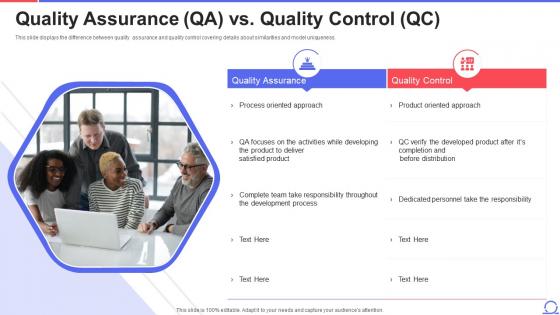
This slide displays the difference between quality assurance and quality control covering details about similarities and model uniqueness.
People who downloaded this PowerPoint presentation also viewed the following :
Quality Assurance QA Vs Quality Control QC Ppt Powerpoint Inspiration with all 6 slides:
Use our Quality Assurance QA Vs Quality Control QC Ppt Powerpoint Inspiration to effectively help you save your valuable time. They are readymade to fit into any presentation structure.





FAQs for Quality Assurance QA Vs Quality Control QC
So QA is about preventing problems before they happen - you're building quality into your processes, training people right, all that upfront stuff. QC is the opposite. You're checking work after it's done, catching mistakes that already slipped through. Honestly? Most teams I've worked with do way better when they focus more on the prevention side. It's so much cheaper than fixing stuff later. But you still need both - just get your QA processes solid first, then worry about the testing part. Makes a huge difference in how smoothly projects actually run.
So basically, QA stops problems before they happen by building quality into your whole process. QC is what catches the stuff that still gets through - honestly, you need both working together. I always think of QA as prevention, QC as your backup plan. Getting this combo right means customers actually get what they expect, which keeps them coming back. The money side is huge too - fixing things early through good QA is way cheaper than dealing with complaints later. Start by nailing your QA processes first, then use whatever QC finds to keep improving everything.
Think of QA like proofreading while you write instead of waiting till the end. You catch stuff early - code reviews, design sign-offs, documenting processes - so there's way less to fix later. My old team learned this the hard way after spending weeks debugging everything at launch. QC still matters for final checks, but it becomes confirming things work rather than hunting down a million issues. Look at where problems usually show up in your current setup and just build prevention steps right into those spots. Makes everything so much smoother.
Look, documentation in QA is like having GPS instead of getting lost every time. Start with your biggest pain points - test plans, checklists, workflows. Everyone needs to follow the same steps or things get messy fast. Plus you can actually see patterns over time instead of just guessing what went wrong. Training materials are huge too (nobody wants to retrain people constantly). Keep everything updated though - outdated docs are worse than no docs. I learned this the hard way when our team was basically improvising everything. Build it piece by piece and don't overthink it.
So QA-heavy stuff is like software, pharma, aerospace - places where screwing up means people die or you lose millions. They do tons of documentation, code reviews, all that prevention work. Manufacturing and food production? More QC-focused. They're checking products after they're made, not preventing issues beforehand. Assembly lines with inspectors everywhere (well, not literally everywhere but close enough). Really comes down to whether your industry can handle fixing problems later or if you absolutely have to stop them before they happen. Some companies honestly don't have a choice.
So here's the thing - Six Sigma and Agile are totally different because they prevent problems instead of just catching them later. With traditional QC, you're basically playing cleanup after everything goes wrong. But these methodologies? They bake quality right into the process from day one. Six Sigma digs into data to kill problems at their source, while Agile keeps feedback flowing constantly. Way better than the old "test everything at the end" nightmare we used to do. Think of it like this - QC is a bouncer, but QA methodologies design the whole event so you don't need one. Map out your current process first and spot where you can switch from inspecting to preventing.
Hey! So for QA stuff, track your defect detection rates and test coverage percentages - those are solid basics. Mean time to resolution matters too. QC is different though - focus more on defect escape rates and customer complaints. First-pass yield is clutch if you're manufacturing anything. Finance nerds go crazy for cost of quality metrics, especially that prevention vs correction breakdown. Don't forget cycle times for testing and inspections. Honestly? Pick like 3-4 metrics that actually matter to your business instead of drowning in data. You want QA trending up while QC stays consistently low.
Dude, collaboration totally makes or breaks quality work. Your QA folks need to buddy up with developers early on - like during planning, not just at the end when everything's already built. Developers actually don't hate this as much as you'd think! QC inspectors should be talking constantly with production teams about what's really going down on the floor. You get way faster fixes that way. The knowledge sharing alone is worth it. Honestly, just start with weekly check-ins between QA and QC teams. You'll find they're dealing with similar headaches more often than not.
Honestly, there's so much good stuff out there now for quality control. AI and machine learning can spot defects before they happen and automate testing - way faster than doing it manually. Computer vision catches visual problems that people miss sometimes. IoT sensors monitor everything in real-time across your production line, which is pretty neat. The statistical software has gotten way better too, with dashboards that actually make sense. Cloud systems let your team access data from anywhere. My advice? Figure out what's causing you the biggest headaches first. Then pick tools that solve those specific problems instead of going crazy trying to implement everything.
Oh totally, cultural differences mess with QA/QC big time. Japan and Germany? Super structured with clear bosses calling the shots. But other places are way more team-oriented about quality stuff. The feedback thing is tricky too - being direct works great until you're dealing with cultures where saving face matters more. I've watched entire projects crash because nobody thought about this. What works is actually asking your international teammates what quality approaches make sense in their area first. Way better than trying to force the same process everywhere (learned that one the hard way).
So many options here - depends what you're targeting. ISTQB is solid for software testing, and Six Sigma is huge everywhere (Black Belt sounds impressive, right?). ASQ has good ones too like CQA for auditing or CQI if you're more hands-on inspection. Six Sigma's probably your safest bet since literally everyone recognizes it. Universities have quality management programs too if you want something deeper. But honestly? I'd snoop around job postings at companies you actually want to work for first. See what they're asking for, then pick based on where you're at experience-wise. No point getting certified in something nobody cares about.
Honestly, remote work forced companies to go digital with their QA stuff way faster than they planned. Manufacturing got wrecked obviously, but even software teams had to completely rethink testing. Now everyone's using automated tools and cloud-based systems for quality management. QC teams got super creative with remote monitoring and AI detection - which is actually pretty cool. QA benefited though since everything being digital means way better documentation. My advice? Figure out what automation tools your industry's adopting. You'll need those skills sooner than you think.
Honestly, the worst mistake I see is companies mixing up QA and QC - they're totally different things. Most teams just test stuff after it's built and call it "quality assurance." That's actually quality control, which is reactive. Real QA happens upfront when you're designing processes. QC can't magically fix broken workflows anyway - you're basically just catching problems instead of preventing them. My advice? Map out what you're actually doing versus what you think you're doing. The gap might shock you. I've seen teams convinced they had solid QA practices who were really just doing damage control.
So basically, feedback loops help you catch problems before they blow up. Your QA team can update their testing on the fly instead of sticking to some ancient test plan that doesn't work anymore. QC spots patterns in defects way faster too - honestly, this part saves so much headache later. Instead of just tossing work between teams, you're actually talking to each other. Set up regular check-ins where QA, QC, and devs share what's going wrong (and what's going right). Everyone learns from the mess-ups as they happen rather than weeks later.
Dude, AI and machine learning are about to flip QA and QC upside down. Predictive analytics will catch problems before they happen - which is honestly wild when you think about it. Real-time monitoring and automated testing? That's becoming standard pretty much everywhere now. IoT sensors will track literally everything and give you instant data. The whole industry's shifting from "oops, let's fix this mess" to actually preventing issues upfront. My advice? Start messing around with automation tools now and get decent with data analytics. Trust me, that's where everything's going super fast.
-
Great designs, really helpful.
-
Wonderful templates design to use in business meetings.