

Real estate construction proposal powerpoint presentation slides




Try Before you Buy Download Free Sample Product
 Impress Your
 Audience
 100%
100% Editable
 Save Hours
 of Time


Hard-work and perfection is the key element to design a beautiful infrastructure. Innovative buildings and residents grab the attention of every individual. So, every person thinks to design a more creative building than others. To have an outstanding infrastructure, it is necessary to design it with new and modern technology. However, a professional is needed who can build the house or any other infrastructure as per their customer requirements. Choose the right deal for completing your project with the aid of our topic-specific Real Estate Construction Proposal PowerPoint Presentation Slides. You can exhibit your services and win over the potential clients by using this visually-appealing real estate construction proposal PPT layout. Use our eye-catching construction proposal presentation template to create a great-looking proposal that holds the interest of your clients. Be unique and customize the cover letter as per your needs that leave a lasting impression on your prospects as well. Employ this creatively designed infrastructure construction proposal PowerPoint theme to showcase your streamlined, efficient, and cost-effective approach to design the buildings. This template includes a table of contents that contains the project overview, services offered, project schedule, fee summary, work contract, etc. In the project overview section, you can mention the site work & excavation, and concrete foundation & slab. Talk about the interior & exterior services your company offers like insulation, railings, window & door openings, paint & trim, garage door, rear deck, drainage spouts, front porch, and many more. You can outline the investment your clients need to make on the building permits, insurance, temporary electricity usage during construction, clean up on the job site, clean up on the occupant home, and temporary transformer electrical hooks up. With the help of this real estate construction proposal PPT slide, you can mention your previous projects and accomplishments. Conduct a proper survey on the project site and build the trust of your clients towards your services by downloading our ready-to-use real estate construction proposal PowerPoint presentation template.
People who downloaded this PowerPoint presentation also viewed the following :
Content of this Powerpoint Presentation
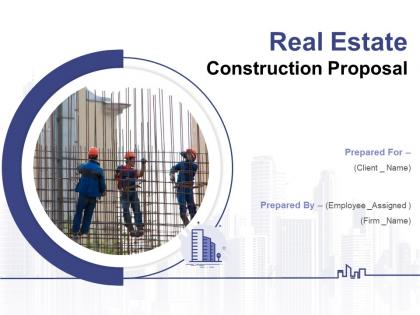
Slide 1: This slide introduces Real Estate Construction Proposal. State Client name, Employee assigned and firm name.
Slide 2: This slide displays Cover Letter for Construction Services.
Slide 3: This slide displays Cover Letter for Real Estate Construction Proposal.
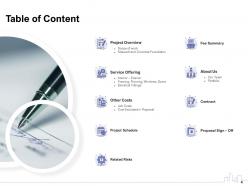
Slide 4: This displays Table of Content.
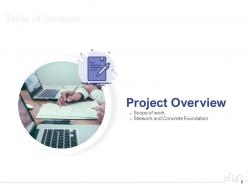
Slide 5: This slide displays Table of Content with- Project Overview, Scope of work, Sitework and Concrete Foundation.
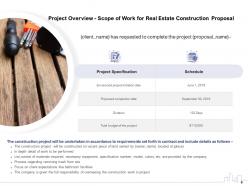
Slide 6: This slide depicts Project Overview - Scope of Work for Real Estate Construction Proposal
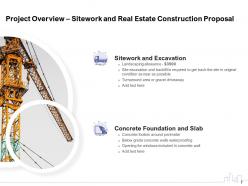
Slide 7: This slide showcases Project Overview – Sitework and Real Estate Construction Proposal.
Slide 8: This slide displays Table of Content.
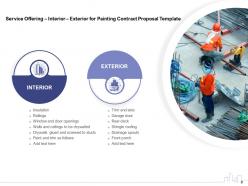
Slide 9: This slide depicts Service Offering – Interior – Exterior for Painting Contract Proposal Template
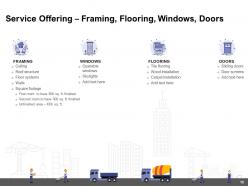
Slide 10: This slide showcases Service Offering – Framing, Flooring, Windows, Doors
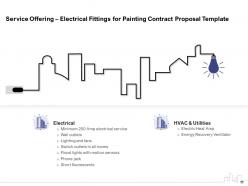
Slide 11: This slide depicts Service Offering – Electrical Fittings for Painting Contract Proposal Template.
Slide 12: This slide displays Table of Content.
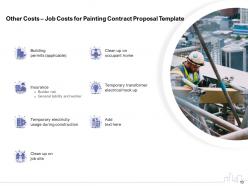
Slide 13: This slide displays Other Costs – Job Costs for Painting Contract Proposal Template
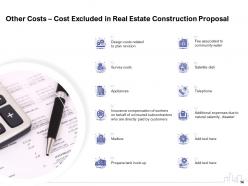
Slide 14: This slide describes Other Costs – Cost Excluded in Real Estate Construction Proposal.
Slide 15: This slide shows Table of Content with- Project Schedule
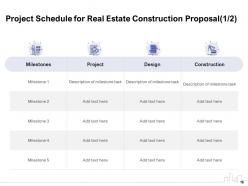
Slide 16: This slide depicts Project Schedule for Real Estate Construction Proposal.
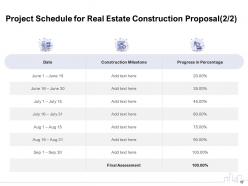
Slide 17: This slide displays Project Schedule for Real Estate Construction Proposal.
Slide 18: This slide showcases Table of Content with- Related Risks
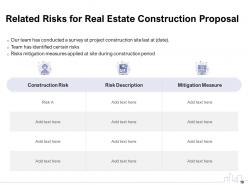
Slide 19: This slide showcases Related Risks for Real Estate Construction Proposal.
Slide 20: This slide displays Table of Content with- Fee Summary
Slide 21: This slide talks about Fee Summary for Real Estate Construction Proposal.
Slide 22: This slide showcases Table of Content with- About Us, Our Team, Portfolio.
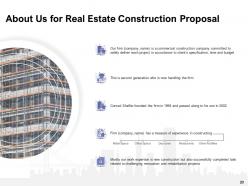
Slide 23: This is About Us slide to showcase Company spfor Real Estate Construction Proposal.
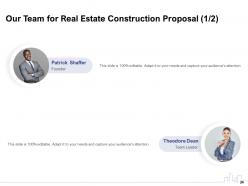
Slide 24: This is Our Team slide with Names and Designations.
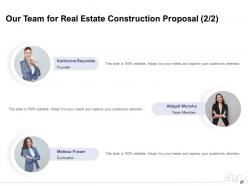
Slide 25: This is Our Team slide with Names and Designations.
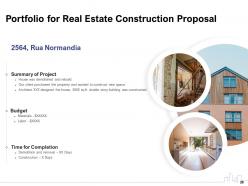
Slide 26: This slide showcases Portfolio for Real Estate Construction Proposal.
Slide 27: This slide displays Table of Content with- Contract.
Slide 28: This slide depicts Contract for Real Estate Construction Proposal.
Slide 29: This slide represents Table of Content with- Proposal Sign – Off
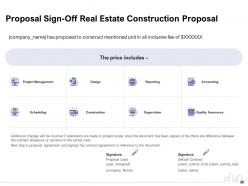
Slide 30: This slide showcases Proposal Sign-Off Real Estate Construction Proposal.
Slide 31: This is Contact Us slide with Address, Contact number and Email address.
Slide 32: This is Icons Slide for Real Estate Construction Proposal.
Slide 33: This slide is titled as Additional Slides for moving forward.
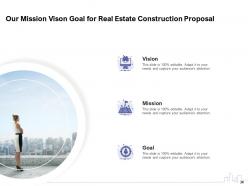
Slide 34: This slide displays Our Mission Vison Goal for Real Estate Construction Proposal.
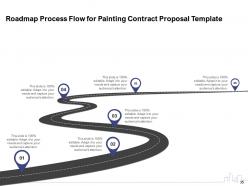
Slide 35: This slide depicts Roadmap Process Flow for Painting Contract Proposal Template.
Slide 36: This slide showcases Timeline for Painting Contract Proposal Template.
Slide 37: This is 30 60 90 Days Plan slide.
Real estate construction proposal powerpoint presentation slides with all 36 slides:
Feel emboldened with our Real Estate Construction Proposal Powerpoint Presentation Slides. They will assist you in any crusade.







FAQs for Real estate construction proposal
So you need project scope with all the specs laid out, plus a realistic timeline hitting major milestones. Budget breakdown is huge - materials, labor, contingency funds, the works. Show off your team's background and similar projects you've crushed before. Clients eat that stuff up. Don't skip the boring stuff either: permits, insurance, payment terms. Oh, and definitely cover how you'll handle changes or delays because something always goes sideways. I learned that the hard way on my kitchen reno. Get everything super clear upfront so nobody's pissed later.
Look, including market analysis in your construction proposal is what separates the pros from the wannabes. You'll want solid data on comparable properties, pricing trends, demand patterns - that stuff shows lenders you're not just winging it. Honestly, I've watched perfectly good projects get shot down because someone skipped this step. It also helps you catch problems early, like if the market's already flooded or property values are dropping. My buddy learned that the hard way last year. Bottom line: research your local market first, then work that info into your proposal so people know you've done your homework.
Dude, get your budget right or you're screwed. Seriously - I've watched so many people tank because they guessed wrong on foundation costs or totally spaced on permit fees. Materials, labor, utilities, contingencies... all that stuff needs real numbers, not wishful thinking. Your budget controls everything else too - timeline, financing, whether you'll actually turn a profit. Oh and here's the thing nobody tells you: whatever number you land on, add another 10-15% because something always goes sideways. Trust me on this one.
Just do a Gantt chart or visual timeline - way easier to follow than a wall of text. Split everything into phases: permits, site prep, foundation, framing, all that. Give yourself buffer time because honestly, when does construction ever go smoothly? Mark the spots where you need client decisions so they can't say you didn't warn them. Don't forget to show dependencies - like you can't start digging until permits come through. The whole point is making something they can actually read without their eyes glazing over.
Start with the money stuff - ROI projections, cash flow, market comps. That's what actually matters to them. Then add your strategic advantages like location, demographics, team experience. Most investors honestly just skim past everything if your numbers suck upfront. Address the big worries too: construction timeline, permits, exit options. Charts work way better than paragraphs of text - nobody wants to read novels. Oh and always finish with clear next steps and when you need their decision by. Makes you look organized instead of just hoping they'll magically get back to you.
Split your risks into buckets - financial, regulatory, environmental, timeline stuff. Each one needs probability, impact, and how you'll handle it. I make these simple risk matrices showing high/medium/low because honestly, clients eat that visual stuff up. Don't sugarcoat the big issues like permit delays or bad soil. That'll bite you later. Show your backup plans instead. The whole point is proving you've actually thought this through, not pretending everything's perfect. Wrap it up with your top 3-4 strategies for managing the worst-case scenarios.
Okay so first things first - check your zoning stuff and make sure you're not violating any building codes. That's where people mess up big time. Environmental assessments might be needed depending on what you're doing. Permits are honestly the worst part - total bureaucratic nightmare but you gotta do it. Get your contractor agreements locked down early, plus liability coverage and insurance obviously. Oh and resolve any title problems now, not later when it'll cost you way more. Seriously though, hire a real estate lawyer from the start. Trust me on this one.
Dude, visuals are everything in construction proposals. Nobody wants to drop $2M on something they can't picture, you know? Renderings and floor plans turn your ideas into something real they can actually see. Plus it breaks up all that boring text - honestly, who has time to read pages of specs? I always tell people to lead with one killer rendering on the cover. Shows you mean business. Progress timelines are huge too because clients get nervous about delays. High-quality shots of your past work don't hurt either. Makes the whole thing way more engaging than just words on a page.
Start with the obvious stuff - solar panels, smart HVAC, LED lights everywhere. LEED and ENERGY STAR certifications are gold to these investors, they eat that up. Water-saving systems and EV charging stations are big too. Oh, and don't sleep on native landscaping - sounds small but it shows you get the whole sustainability picture. The key thing though? Give them real numbers. Like actual dollar amounts on energy savings and tax breaks. That's honestly what seals the deal more than anything else. Eco-investors love the mission but they still want to see profit.
Make a "track record" section with your best finished projects - include real numbers like square footage, how you did on budget, whether you hit deadlines. Before/after photos are huge. Clients love seeing proof you actually deliver, not just talk a big game. Get permission to name drop past clients if you can. Don't just list stuff though - explain how each project's problems connect to what they're dealing with now. Oh and definitely grab some testimonials that call out your reliability and quality. Those carry way more weight than anything you say about yourself.
Break down the financing stuff into clear chunks - start with regular construction loans, then hit the alternatives like private money, SBA loans, maybe seller financing. Timeline info is clutch too since everyone wants to know how long they'll be waiting around for answers. Include the rates, down payments, and what they need to qualify for each option. Being upfront about costs saves you headaches later, trust me. Oh and definitely end with which route you think makes the most sense for their situation and explain why - people want that guidance, not just a menu of options.
Include specific numbers showing how you're helping the community - job creation, local business partnerships, that kind of thing. Document any meetings you've had with residents (trust me, housing projects get people fired up). Add details about infrastructure improvements, green spaces, or affordable units you're creating. Honestly, resident quotes and support letters are gold - committees eat that stuff up. Oh, and make sure you can show you actually listened to complaints and worked them into your design. The metrics matter, but proving you're not just bulldozing through neighborhood concerns is huge.
Definitely go with IoT sensors and automated HVAC - investors eat that stuff up. Solar integration and smart water systems are solid picks too. EV charging stations? Even better if your project makes sense for it. Here's the thing though - even simple tech like keyless entry can make your whole proposal feel way more current. I'd probably throw in app-controlled amenities too. Just don't go overboard with random gadgets that don't actually do anything useful. Focus on what'll save money or make tenants happy. That's your ROI story right there.
Make a RACI matrix - breaks down who's responsible, accountable, consulted, and informed for each part. Split your proposal into chunks like permits, design approvals, contractor stuff, budget tracking. Then assign owners to everything. Honestly, this step saves so much drama later when deadlines hit. Don't forget decision-making levels too - people need to know when they can just handle things vs. when they need approval. Oh and nail down communication rules upfront. I've seen projects go sideways fast when everyone's stepping on each other or thinking someone else covered the important bits.
Honestly, just call the planning department first and ask for a zoning summary report - way easier than trying to decode their website. You'll want to nail down the basics: residential vs commercial zoning, setback rules, height limits, parking requirements. Density restrictions too if you're doing multifamily stuff. Building codes and permits are huge - I've seen projects get completely derailed because someone missed a key permit requirement. Also check if there's any weird overlay zones or historic district nonsense that could complicate things. Environmental restrictions can pop up too, especially near water.
No Reviews