


Restaurant operations management competitive analysis of restaurant industry




Try Before you Buy Download Free Sample Product
 Impress Your
 Audience
 100%
100% Editable
 Save Hours
 of Time


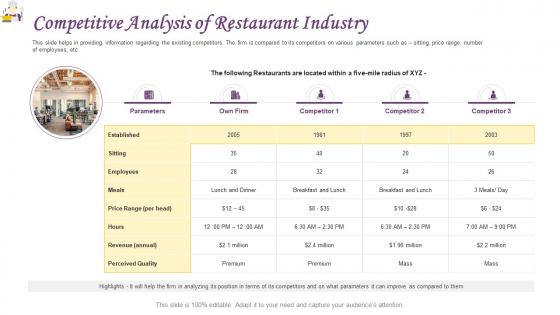
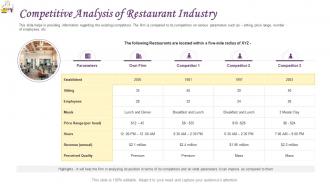
This slide helps in providing information regarding the existing competitors. The firm is compared to its competitors on various parameters such as sitting, price range, number of employees, etc.
People who downloaded this PowerPoint presentation also viewed the following :
Restaurant operations management competitive analysis of restaurant industry with all 6 slides:
Use our Restaurant Operations Management Competitive Analysis Of Restaurant Industry to effectively help you save your valuable time. They are readymade to fit into any presentation structure.





FAQs for Restaurant operations management competitive analysis
Look, you've got four main areas to nail down: front-of-house flow, kitchen ops, inventory, and scheduling. Your POS needs to sync with inventory so you don't sell out of your popular dishes during dinner rush - learned that one the hard way. Honestly, understaffing will tank your service while overstaffing kills profits. Create checklists for everything and drill your team on procedures until they're second nature. Oh, and table turnover timing is crucial but don't make guests feel rushed. I'd pick whichever area is causing you the biggest headache right now and start there.
Look, inventory software will save you so much headache - it automates all that manual tracking you're doing now. Real-time stock levels, alerts when stuff's running low, cost breakdowns showing where your money goes. The POS integration is actually pretty cool too. It'll help cut waste by tracking expiration dates and suggesting menu tweaks based on what's available. Honestly, food costs are brutal right now so anything helps. I'd start with your priciest ingredients first - you'll see the benefits way faster that way.
Dude, you've gotta nail the training thing. Your staff literally makes or breaks everything - they mess up orders less, handle crazy rush hours way better, and actually know how to upsell without being weird about it. People stick around longer too when they're not constantly confused about what they're supposed to do. Honestly, I've seen restaurants go from chaos to smooth operations just by getting this right. Fast table turns = more money per shift, which is pretty obvious but worth mentioning. Don't just do it once when they're hired though. Make it ongoing or you'll be back where you started.
Dude, definitely start with a solid POS system - that's gonna be your backbone for everything. Get one that connects to kitchen display screens so you're done with those messy paper tickets (seriously, who can read that chicken scratch anyway?). QR menus and mobile ordering are clutch during busy periods since customers can order directly without waiting for servers. The coolest part? When your POS syncs with inventory, it'll automatically mark items as 86'd. I'd probably go POS first, then add the other stuff later. Trust me, the time savings are insane once everything's talking to each other.
Hot foods stay above 140°F, cold stuff below 40°F - this is where most restaurants totally screw up. Get decent thermometers and actually check temps! Your team needs to wash hands for 20 seconds (not that pathetic rinse thing people do). Keep raw meat away from ready-to-eat food, rotate stock FIFO style. Cross-contamination will ruin you, so get different colored cutting boards for different foods. Oh, and make a daily cleaning checklist - sounds boring but you'll thank me later when you're not dealing with health department drama.
Dude, data analytics is a game changer for restaurants. Instead of guessing why Tuesday was slow, you'll actually know if it was weather or bad pricing. Track which dishes make money (not just what sells). Figure out staffing from real patterns instead of hunches. Start with one thing though - maybe food costs or scheduling. Don't try to analyze everything at once, that's overwhelming. Weather data integration is honestly pretty cool too. You can spot problems brewing before they hit your bottom line. It's like finally having answers instead of just crossing your fingers and hoping.
Honestly, portion creep will kill your margins faster than anything else - I've seen it happen so many times. Track your food and labor percentages weekly (aim for 28-35% food, 25-35% labor). Your inventory needs to be tight, and prep planning saves you from throwing money in the trash. Schedule based on actual sales data, not gut feelings. Cross-train everyone so you're not stuck with too many people during dead periods. Oh and definitely push back on supplier pricing - most places just accept whatever quote they get first.
Dude, good service literally makes or breaks everything else. Happy customers stick around longer, spend more, and don't freak out when the kitchen's running behind. Your staff will actually enjoy their shifts instead of dreading them. Bad service though? Total nightmare - slow turnover, constant complaints, comps eating into profit. I've seen places go under because they skimped on front-of-house training. Honestly, investing in your servers is probably the smartest money you'll spend. Like, way better ROI than most equipment upgrades.
Honestly, I'd start with just watching your staff during busy shifts - see how they handle cranky customers and work with the team. Mystery shoppers are clutch for front-of-house people, though they can be pricey. Customer surveys tell you what guests really think, and trust me, people don't hold back online. For servers, track their sales numbers and upselling. Kitchen staff? Look at how fast they're getting orders out. Oh, and definitely do regular check-ins with everyone - catches problems before they blow up. Mix like 2-3 of these methods though, don't just rely on one thing.
Your layout is everything, trust me. Servers constantly weaving around cooks? Total nightmare. Same goes for prep stations being miles from cooking areas - your staff shouldn't need a marathon between every plate. The dining room's just as crucial though. Smooth server flow means they can actually handle their sections without playing human Tetris around tables and chairs. Honestly, just shadow your team during a dinner rush. You'll spot exactly where people are crashing into each other or taking these ridiculous detours. Those little inefficiencies add up fast.
Oh man, there's so much to juggle! Health department inspections are brutal - they'll shut you down fast if you mess up food safety stuff. Labor laws are a nightmare too, covering wages, overtime, worker classification, all that. If you're doing alcohol, liquor licensing is its own special hell. Don't forget ADA compliance, fire codes, zoning rules... honestly makes my head spin just thinking about it. Insurance is obviously huge too. I'd get a restaurant lawyer on speed dial and maybe set up some kind of calendar system? My cousin opened a place last year and said the compliance stuff was way worse than he expected.
Look at your past sales data to spot the patterns - when do things get crazy busy vs dead? Plan your staffing and menu changes like 6-8 weeks out, not when you're already drowning. Most places just hope for the best and then freak out when summer hits different than they thought. Cross-train your team so you can actually handle the rush. Oh, and during slow months? Seasonal specials or teaming up with local events can help pull people in. Seriously though, the planning ahead part is what separates restaurants that thrive from ones that barely survive each season.
Honestly, start with your route planning - that's where most places screw up. Get some decent delivery software to group orders by area, and don't cheap out on insulated bags because lukewarm food is basically a guaranteed bad review. Track your delivery times obsessively. I'd also make sure your drivers know basic food handling stuff - sounds obvious but you'd be surprised. Oh, and definitely set up a system so customers aren't sitting there wondering where their order is. Before you change anything though, figure out where you're actually losing time. That's your starting point.
Honestly, just nail the basics first. Have regular check-ins where you actually listen - don't be one of those managers who nods then ignores everything. People hate that. Celebrate wins publicly, even small ones like someone nailing a difficult customer interaction. Give them a real path to move up too, nobody wants to feel stuck forever. Oh and during crazy busy times? Stay calm yourself. Your energy sets the whole tone. If you're stressed and snippy during dinner rush, your team will be too, and customers feel that vibe immediately.
Dude, there's way cooler stuff than just scrolling through Yelp all day. QR codes at tables work great - people actually fill them out while they're eating instead of forgetting later. Sentiment analysis tools like Brandwatch scan everything automatically and ping you when someone mentions your place. Some restaurants are doing AI chatbot follow-ups via text after meals, which honestly feels a bit much to me but whatever works. Oh, and voice analysis is getting pretty crazy now too. I'd start simple with the QR thing and see how it goes.
-
Excellent design and quick turnaround.
-
Really like the color and design of the presentation.