

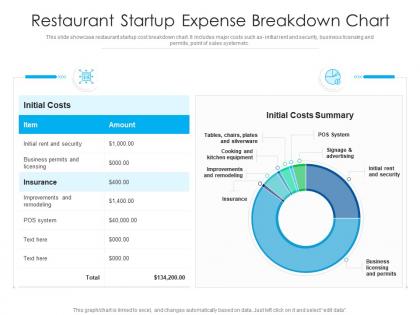
Restaurant startup expense breakdown chart




Try Before you Buy Download Free Sample Product
 Impress Your
 Audience
 100%
100% Editable
 Save Hours
 of Time


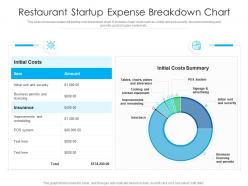
This slide showcase restaurant startup cost breakdown chart. It includes major costs such as- initial rent and security, business licensing and permits, point of sales system etc.
People who downloaded this PowerPoint presentation also viewed the following :
Restaurant startup expense breakdown chart with all 2 slides:
Use our Restaurant Startup Expense Breakdown Chart to effectively help you save your valuable time. They are readymade to fit into any presentation structure.
FAQs for Restaurant startup
Initial capital requirements for launching a restaurant typically include equipment and kitchen setup, lease deposits and renovations, licensing and permits, initial inventory, and working capital for operations. These investments range significantly by concept and location, with many restaurateurs finding that thorough financial planning and phased investment approaches help manage cash flow while building sustainable operations in an increasingly competitive market.
Location and market demand significantly impact restaurant startup costs through rent variations, local wage requirements, permit fees, and competitive pressures. Prime urban locations with high foot traffic command premium rents but offer greater revenue potential, while emerging markets may require additional marketing investments to build customer awareness, ultimately balancing higher initial costs against long-term profitability opportunities.
Hidden restaurant startup costs include equipment maintenance contracts, staff training programs, point-of-sale system integrations, insurance premiums, and regulatory compliance fees. These expenses often surprise new restaurateurs by adding 15-20% to initial budgets, with many establishments finding that thorough financial planning and contingency reserves ultimately deliver smoother operations and sustainable growth trajectories.
**INPUT**: How can one properly budget for equipment and supplies in a restaurant startup? **OUTPUT**: Proper restaurant startup budgeting involves allocating 20-30% of total investment to equipment, prioritizing essential items like commercial refrigeration, cooking stations, and POS systems first. Smart entrepreneurs research used equipment markets, negotiate supplier payment terms, and create detailed inventory lists by menu category, with many successful restaurants finding that phased purchasing and strategic vendor partnerships significantly reduce initial capital requirements while maintaining operational efficiency. [Word count: 60]
Interior design typically represents 15-20% of restaurant startup costs, encompassing furniture, lighting, flooring, wall treatments, and atmospheric elements that define customer experience. This investment significantly impacts brand positioning, customer retention, and operational flow, with many successful restaurants finding that strategic design choices enhance perceived value, justify premium pricing, and create memorable experiences that drive repeat business.
Restaurant startups should allocate 3-5% of their total startup budget for pre-opening marketing and branding, typically ranging from $10,000-$50,000 depending on location and concept. This investment enables brand identity development, website creation, social media presence, and local community engagement, with many successful restaurants finding that strategic pre-launch marketing delivers faster customer acquisition and stronger opening-week revenue.
Restaurant permits and licenses typically include business registration, food service permits, liquor licenses, signage permits, and health department certifications, with costs ranging from $500 to $50,000 depending on location and concept. These regulatory requirements streamline operations by ensuring compliance, building customer trust, and avoiding costly violations, with many restaurateurs finding that thorough permit planning ultimately delivers faster approvals and smoother launches.
Labor costs can be estimated by calculating wages for front-of-house staff, kitchen personnel, management roles, and support positions, while factoring in benefits, payroll taxes, and training expenses. Many restaurant startups find that labor typically represents 25-35% of total revenue, with fine dining establishments often requiring higher staffing ratios than casual concepts, ultimately helping entrepreneurs create realistic budgets and operational projections.
Essential restaurant insurance coverages include general liability, property insurance, workers' compensation, liquor liability, and cyber liability protection. These policies typically cost between $3,000-$10,000 annually depending on restaurant size and location, with many startups finding that comprehensive coverage ultimately delivers operational security, regulatory compliance, and financial protection against unforeseen incidents.
Leasing typically requires lower upfront costs through security deposits and first month's rent, while purchasing demands substantial down payments, closing costs, and immediate equity investment. However, buying builds long-term asset value and eliminates ongoing rent expenses, with many restaurant entrepreneurs finding that leasing preserves working capital for equipment, inventory, and marketing during crucial early months.
Restaurant entrepreneurs can access traditional bank loans, SBA loans, equipment financing, investor partnerships, crowdfunding platforms, and alternative lending options like merchant cash advances. These financing methods enable aspiring restaurateurs to secure kitchen equipment, cover lease deposits, and manage initial operating expenses, with many successful establishments combining multiple funding sources to minimize personal risk while establishing competitive market positioning.
Menu development costs significantly impact restaurant startup budgets through recipe testing, ingredient sourcing, food photography, and professional consultation fees. These expenses, while representing substantial upfront investment, ultimately deliver competitive differentiation and operational efficiency, with many successful restaurants finding that strategic menu planning reduces long-term food costs and enhances customer satisfaction.
Operational costs represent ongoing monthly expenses like payroll, rent, utilities, inventory, and marketing, while initial startup costs cover one-time investments in equipment, permits, renovations, and initial inventory. First-year operational costs typically run 60-80% of total revenue, with many restaurant owners finding that managing food costs, labor efficiency, and inventory turnover becomes crucial for sustainable profitability and long-term success.
Restaurant startup cost recovery typically ranges from 2-5 years, depending on concept, location, operational efficiency, and market conditions. While fine dining establishments often require longer recovery periods due to higher initial investments, fast-casual and quick-service restaurants frequently achieve profitability faster through streamlined operations and lower overhead, with many successful ventures finding that strategic cost management and strong customer acquisition ultimately accelerate their path to sustainable returns.
Technology investments significantly impact restaurant startup budgets by increasing initial costs while delivering long-term operational savings through POS systems, kitchen automation, inventory management software, and digital ordering platforms. While these investments require substantial upfront capital, restaurants typically find that automated processes reduce labor costs, minimize waste, and enhance customer experiences, ultimately delivering faster service and improved profit margins.
-
Awesome use of colors and designs in product templates.
-
Best way of representation of the topic.