


Risikoanalyse Powerpoint-Präsentationsfolien




Try Before you Buy Download Free Sample Product
 Impress Your
 Audience
 100%
100% Editable
 Save Hours
 of Time


Identifizieren und bewerten Sie die Faktoren, die den Erfolg des Projekts gefährden, indem Sie diese Risiko-Analyse-Präsentationsfolien verwenden. Heben Sie die Pläne zur Verwaltung der erwarteten Risikoarten hervor, indem Sie professionell gestaltete Vorlagen für den Risikomanagementplan verwenden. Identifizieren Sie die mit dem Projekt verbundenen Risikoarten mithilfe des vollständigen Pakets der Risiko-Identifizierungs-Präsentation. Sie können auch den Rahmen zur Bewertung des Risikoniveaus mit Hilfe der bereits verfügbaren Grafiken zur Risikobeurteilung präsentieren. Sie können den Risikoscore präsentieren und die Wahrscheinlichkeit seines Auftretens bestimmen. Verwenden Sie die Parameter in der Risikoanalysetabelle und analysieren Sie das Risikoniveau. Demonstrieren Sie die Schritte zur Berechnung des Risikos und seiner Gewissheit unter Verwendung der Folien zum Geschäftsrisiko. Erwähnen Sie, wie auf das Risiko reagiert werden kann, indem Sie positive und negative Risikofaktoren hervorheben. Reduzieren Sie die Auswirkungen der Risiken, indem Sie Risikomanagementstrategien einbeziehen. Verringern und verwalten Sie so das Risiko Ihres Unternehmens, indem Sie diese Präsentation zum Risikominderungsplan herunterladen.
People who downloaded this PowerPoint presentation also viewed the following :
Inhalt dieser Powerpoint-Präsentation
Folie 1: Diese Folie führt in die Risikoanalyse ein. Nennen Sie Ihren Firmennamen und beginnen Sie.
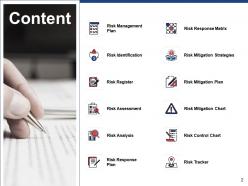
Folie 2: Auf dieser Folie wird der Inhalt der Präsentation gezeigt.
Folie 3: Diese Folie präsentiert den Risikomanagementplan, der Folgendes beschreibt: Risikoart, Ergebnis, bestehende Risikobehandlungsmaßnahmen, Bewertung, vorgeschlagene Risikobehandlungsmaßnahmen zur Risikominderung, zusätzliche Ressourcen, Zieldatum und verantwortliche Person.
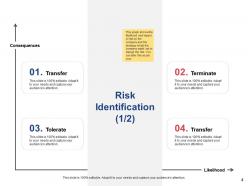
Folie 4: Diese Folie stellt die Risikoidentifizierung mit einer Grafik dar, die die Wahrscheinlichkeit und die Auswirkungen des Risikos auf das Unternehmen sowie die Strategie zeigt, die das Unternehmen zur Risikobewältigung wählen könnte.
Folie 5: Dies ist eine weitere Folie zur Risikoidentifizierung, auf der Faktoren wie Kosten, Zeit, Ressourcen usw. beschrieben werden.
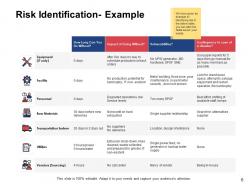
Folie 6: Auf dieser Folie wird die Risikoidentifizierung - Beispiel beschrieben, mit Zeitraum, Auswirkungen des Handelns, Schwachstellen und Notfallplan für den Fall einer Katastrophe.
Folie 7: Diese Folie zeigt ein Risikoregister, um alle Risiken, denen das Unternehmen ausgesetzt ist, und ihre Auswirkungen auf die Unternehmensleistung genau zu verfolgen.
Folie 8: Auf dieser Folie wird die Risikobewertung beschrieben, mit einer Risikobewertungsanleitung mit Wahrscheinlichkeit und Auswirkungen sowie einem Risikobewerungssystem mit Konsequenzen, Eintrittswahrscheinlichkeit und Entdeckungswahrscheinlichkeit.
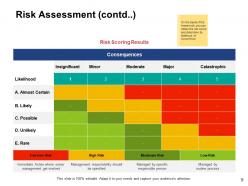
Folie 9: Dies ist eine weitere Folie zur Fortsetzung der Risikobewertung, mit der Sie die Risikopunktzahl und deren Eintrittswahrscheinlichkeit ermitteln können.
Folie 10: Auf dieser Folie wird die Risikoanalyse - vereinfachtes Format mit zugehöriger Tabelle und Textfeldern präsentiert. Sie können diese Werte und Parameter nach Ihren Anforderungen ändern.
Folie 11: Diese Folie zeigt die Risikoanalyse - Komplex. Dies ist eine komplexe Version der Risikoanalyse. Folgen Sie den beschriebenen Schritten, um das Risiko zu berechnen.
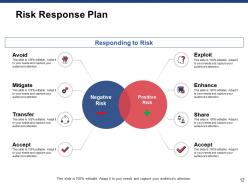
Folie 12: Diese Folie stellt den Risikoreaktion-Plan dar, der positive und negative Möglichkeiten der Reaktion auf die Risikoniveaus beschreibt.
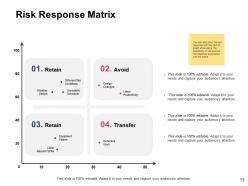
Folie 13: Auf dieser Folie wird die Risikoreaktion-Matrix mit Hilfe einer Grafik gezeigt, die die Risikowahrscheinlichkeit und die damit verbundene Risikoreaktion beschreibt.
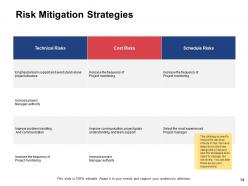
Folie 14: Diese Folie präsentiert Risikoreduzierungsstrategien, die technische, Kosten- und Terminrisiken beschreiben.
Folie 15: Auf dieser Folie wird die Reduzierungsstrategie mit zugehörigen Bildern und Texten gezeigt.
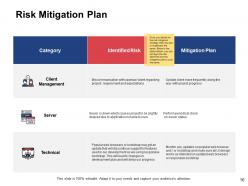
Folie 16: Diese Folie zeigt den Risikoreduzierungsplan in Tabellenform.
Folie 17: Auf dieser Folie wird das Risikoreduzierungs-Diagramm mit der Wahrscheinlichkeit und den Auswirkungen des Risikos gezeigt.
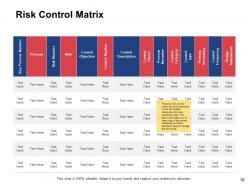
Folie 18: Diese Folie zeigt die Risikokontrollmatrix. Mit dieser Matrix können Sie ein Protokoll der Kontrollmaßnahmen führen, die Sie zur Bewältigung der Risikoniveaus beschlossen haben.
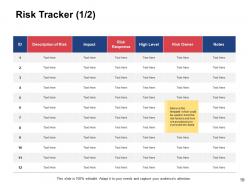
Folie 19: Auf dieser Folie wird der Risiko-Tracker präsentiert, mit dem Sie die Risikofaktoren und Ihre Planung zur Überwindung derselben verfolgen können.
Folie 20: Dies ist eine weitere Folie zur Präsentation der Risiko-Artikel-Verfolgung, mit der Sie die Risikofaktoren und die bisher erzielten Fortschritte verfolgen können.
Folie 21: Diese Folie zeigt Risikoanalyse-Symbole.
Folie 22: Diese Folie trägt den Titel Zusätzliche Folien für den Fortschritt.
Folie 23: Dies ist die Folie Unser Team mit Namen und Bezeichnungen.
Folie 24: Dies ist die Folie Über uns zur Darstellung von Unternehmensspezifikationen usw.
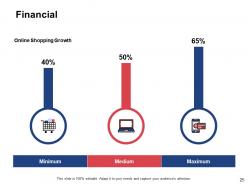
Folie 25: Dies ist eine Finanzfolie. Zeigen Sie hier Ihre finanzrelevanten Informationen.
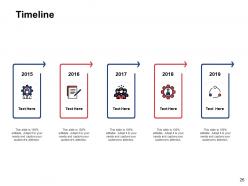
Folie 26: Dies ist eine Zeitplan-Folie zur Darstellung von zeitraumbezogenen Informationen.
Folie 27: Diese Folie trägt den Titel Wichtige Hinweise. Geben Sie hier Ihre Hinweise ein.
Folie 28: Dies ist eine Puzzle-Folie mit Textfeldern.
Folie 29: Dies ist eine Standort-Folie mit Karten zur Darstellung von Daten zu verschiedenen Standorten.
Folie 30: Dies ist eine Ideen- oder Glühbirnen-Folie, um eine neue Idee darzustellen oder Informationen, Spezifikationen usw. hervorzuheben.
Folie 31: Auf dieser Folie wird ein Aktienkurs-Diagramm mit einem Vergleich von zwei Produkten gezeigt.
Folie 32: Dies ist eine Dankeschön-Folie mit Adresse, Telefonnummern und E-Mail-Adresse.
Risikoanalyse Powerpoint-Präsentationsfolien mit allen 32 Folien:
Verwenden Sie unsere Risiko-Analyse-Präsentationsfolien, um Ihre wertvolle Zeit effektiv zu sparen. Sie sind fertig erstellt, um in jede Präsentationsstruktur zu passen.













FAQs for Risk Analysis
So you need four main things: figure out what could go wrong, assess how likely/bad each thing would be, plan how to deal with them, and keep monitoring everything. Someone needs to own each risk too - otherwise nothing gets done. Honestly, the monitoring part is where most people mess up because risks change all the time. Just start with a simple spreadsheet that tracks probability, impact, and who's responsible for each one. Don't overthink it at first. You can always make it fancier later, but getting the basics down and reviewing them regularly will save you from most disasters.
Here's what works best - start with qualitative stuff like risk matrices to get the big picture fast. Expert judgment helps you figure out what could actually go wrong. Once you've got that mapped out, pick your biggest risks and hit those with the heavy quantitative analysis. Monte Carlo simulations, probability calculations, all that fun math stuff. Honestly, trying to quantify everything right off the bat is just a waste of time. Run both approaches at the same time if you can swing it - way faster than doing them one after the other. The qualitative work basically tells you where to spend your number-crunching energy.
Dude, visuals are a game-changer for risk stuff. Heat maps and tornado charts make all those boring spreadsheet numbers actually make sense. I swear, nothing kills a meeting faster than someone droning through text-heavy slides - executives just zone out completely. Monte Carlo simulations look way cooler as charts too. Start simple though, even basic probability matrices work wonders. Your team will actually get what the big risks are instead of squinting at rows of data. Visual dashboards show patterns instantly and help non-tech people understand how different risks connect. It's like night and day honestly.
Honestly, just make a simple grid - probability on one side, impact on the other. Throw your risks on there and see what jumps out. The high-prob, high-impact stuff is obvious, but those "unlikely but would totally destroy us" scenarios? Yeah, don't sleep on those either. Give everything a number so you're not just winging it based on feelings. Pick your top 5-10 worst ones and start there. Also factor in what your company can actually handle right now - no point planning for risks you can't afford to address anyway. Check back every few months since things change. Way better than just hoping for the best.
Honestly, the biggest mistake is getting way too attached to historical data - black swans don't care about your past trends. Cherry-picking info that backs up your gut feeling is another trap I see constantly. Don't look at risks like they're separate things either. They connect and make each other worse, which sucks but it's reality. Also, numbers aren't everything - sometimes stakeholders worry about stuff that's hard to quantify but still matters. Oh, and definitely have someone who didn't build your model tear it apart. Fresh eyes catch the blind spots.
Here's the thing - you can't just copy-paste risk frameworks between industries. Finance is all about credit risk, market swings, and staying compliant with SOX or Basel III. Healthcare? Totally different beast. Patient safety comes first, then you've got HIPAA, device failures, clinical trials gone wrong. The basic tools are the same (those probability/impact grids we all love to hate), but everything else shifts. Your risk categories, thresholds, reporting - it all changes. Finance teams lose sleep over quarterly numbers while healthcare folks prioritize keeping patients alive. Pretty different stakes. My advice? Map out your industry's regulations and figure out what your stakeholders actually care about before building anything.
Dude, Monte Carlo simulation is where it's at - @RISK or Crystal Ball will blow your mind for the quantitative stuff. Excel risk matrices are totally fine for simpler qualitative work though. There's also GRC platforms like Resolver if you want something fancier, but honestly they can be overkill. Primavera Risk Analysis is solid if you're already doing project scheduling. Python's everywhere now too for custom models - I've been meaning to learn it better myself. My take? Just start with whatever you already know and don't overthink it.
So scenario planning is basically stress-testing your risk analysis with different "what if" situations. You map out realistic contexts - like supply chain problems hitting during a recession, or losing a major client when new regulations drop. Way more useful than just listing risks by themselves, honestly. The big win? You'll catch those domino effects and risk interactions that regular analysis totally misses. I'd probably start with 3-4 realistic scenarios next time you're doing risk assessment. It's one of those things that sounds boring but actually gives you solid insights.
So here's what I'm seeing everywhere right now - AI predictive analytics is huge, and real-time risk monitoring instead of those boring annual reports we used to suffer through. Climate risk stuff is basically mandatory now across most industries. ESG isn't optional anymore either, it's baked into everything. Behavioral risk analysis got massive after the pandemic (I mean, who predicted toilet paper hoarding?). Honestly, continuous assessment is where it's at these days. You should probably pick up at least one AI risk tool soon - like this quarter if you can swing it.
Start with surveys, interviews, or focus groups to get different perspectives on what risks actually matter. Customers will spot things your internal team totally misses - they see operational stuff way differently than investors do. Map out which stakeholder groups get hit by each risk, then reach out accordingly. Don't just do this once at the beginning either. Set up regular check-ins throughout your analysis. Oh, and ask each group what keeps them awake at night about your organization - you'll be surprised what comes up.
Look, you can't just analyze risks once and forget about it - that's like getting a physical then ignoring your health for three years. Threats change constantly. New vulnerabilities show up out of nowhere, business stuff shifts around, and suddenly your risk analysis is useless. Honestly, I've seen too many companies get burned this way. Set up some automated alerts if you can swing it, but at minimum do quarterly reviews. Better than scrambling when everything's on fire. It's your early warning system - catches problems while you can still do something about them instead of when you're already screwed.
Look, risk analysis stops you from making decisions based on pure guesswork. You can actually compare what might go wrong against what you'll probably gain. Plus it shows you stuff you didn't even think about before. Honestly, the spreadsheets are mind-numbing but whatever - it beats wasting money on ideas that sound brilliant until they implode. The real trick? Don't just create the analysis and forget about it. Actually use what you learned to decide where your time and cash should go. Way better than crossing your fingers and hoping things work out.
Honestly, the biggest thing is making sure you're not screwing over vulnerable people - that's where most risk analyses become total disasters ethically. Who's actually benefiting from your work vs who might get hurt by whatever decisions come next? Be upfront about your assumptions and methods so people can follow your logic. Don't just chase short-term gains if it means ignoring long-term damage to communities. Also, transparency matters way more than most analysts think. Ask yourself if you're putting profit ahead of people's actual wellbeing, because that's usually where things go wrong.
Your cultural background totally changes how risky something feels to you. I've noticed this so much working with international teams - what seems fine to one person feels terrifying to another. Some cultures are way more cautious, others dive right into uncertainty. It affects whether you're thinking about just yourself or the whole group, plus how much you actually trust the system. Time horizons are different too, like short-term vs long-term thinking. When you're doing risk stuff with your team, definitely get different viewpoints in the room and talk through what "acceptable" even means to everyone.
So here's what works - lead with the bottom line first. What does this actually mean for their decisions? Charts and heat maps are your friend because nobody wants to stare at spreadsheets all day. Skip the jargon completely. Talk about budget impact, timelines, stuff they genuinely care about. Real scenarios beat abstract probabilities every time - like, tell them a story they can picture. Always mention how confident you are in the numbers so they know if it's solid or just your best guess. Oh, and don't just dump problems on them. Give clear options with the trade-offs spelled out. That's honestly the biggest thing.
-
Great designs, Easily Editable.