

Risk management action plan l2138 ppt powerpoint presentation example file




Try Before you Buy Download Free Sample Product
 Impress Your
 Audience
 100%
100% Editable
 Save Hours
 of Time


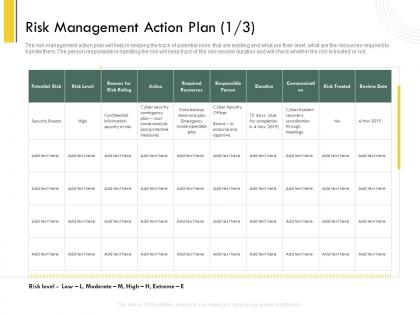
The risk management action plan will help in keeping the track of potential risks that are existing and what are their level, what are the resources required to handle them. The person responsible in handling the risk will keep track of the risk resolve duration and will check whether the risk is treated or not.
People who downloaded this PowerPoint presentation also viewed the following :
Risk management action plan l2138 ppt powerpoint presentation example file with all 2 slides:
Use our Risk Management Action Plan L2138 Ppt Powerpoint Presentation Example File to effectively help you save your valuable time. They are readymade to fit into any presentation structure.

FAQs for Risk management action plan l2138 ppt powerpoint
Honestly, I'd start simple and just map out what could go wrong first. Then rank those risks by how likely they are and how badly they'd mess things up. For the scary ones, figure out who's handling what and when - having clear owners is huge. Also, don't set it and forget it! Risks change all the time, so you need regular check-ins. Oh, and definitely have backup plans for your worst-case scenarios. I made the mistake once of skipping that step... not fun. A basic template works fine to start - you can always make it fancier later.
So basically, go through each phase of your project and think about what could blow up. Get your team together for brainstorming - they see the real problems way before the higher-ups do. Check out what went wrong in similar projects before, and look at your dependencies and resources. Oh, and external stuff too like whether your vendors are actually reliable. I keep a risk register that I update weekly because honestly? Things change fast and new problems pop up all the time. The trick is making it routine, not just something you do once at the beginning and forget about.
Risk matrix is probably your best bet - just plot probability vs impact on a simple grid. High chance + big damage = deal with it first, obviously. Some people get into fancy numerical scoring where you assign points for cost, timing, compliance stuff. Honestly though? Most teams I've worked with do fine with a basic 3x3 or 5x5 matrix. Don't overthink it. You can also rank by urgency - like maybe something's gonna be brutal but you've got six months to prep. Whatever system you pick, just make sure your team will actually stick with it consistently.
Oh man, stakeholder involvement makes or breaks everything. Different people spot different problems you'd totally miss otherwise. When they help build the plan, they actually care about making it work - versus getting some document dumped on them from management. I swear, half the "comprehensive" plans I've seen just gather dust because nobody felt heard during the process. You want operations people, finance folks, basically anyone who'd deal with the mess if things go sideways. Get them involved early though, not after you've already decided everything.
Look, they're both useful but for different reasons. Qualitative is your high/medium/low stuff - perfect for the initial sweep and explaining things to people who hate spreadsheets. Numbers come later with quantitative analysis, where you actually calculate probabilities and dollar amounts. Most teams I know do qualitative first to spot the big risks, then get into the math for whatever looks scary. Start broad, then zoom in. Oh and quantitative is basically required if you're dealing with regulators or need to justify budget requests - they want hard data, not your gut feelings.
Quarterly reviews are your bare minimum - mark those dates now and don't skip them. But here's the thing: if something big hits your industry or business, don't just sit there waiting for your next scheduled review. I've watched companies get blindsided because they stuck to their annual timeline while everything around them shifted. New regulations pop up? Review immediately. Major business change? Same deal. Those quarterly check-ins keep you honest, but you've got to stay flexible when your risk picture changes. Actually, my old boss used to say rigid planning kills more projects than bad planning does.
Honestly, most people mess up by being super vague about risks and not saying who's actually responsible for what. Don't make some crazy complicated plan that looks pretty but nobody uses - I swear those things just sit there forever. Keep your timelines realistic too, and make sure you can actually do the stuff you're planning with whatever budget/people you have. Oh and this isn't something you do once and forget about! That's huge. Start simple, be specific about deadlines and who owns each piece, then just review it every few months so it doesn't get stale.
Honestly, tech makes risk management way less painful. Set up automated alerts and dashboards so you're not constantly checking stuff manually - it'll save you hours. AI can actually spot potential problems before they blow up, which is pretty neat when it actually works. The real game changer though? Having everything in one place where your team can see the same info. I'd start small - pick whatever manual process eats up most of your time and find a tool to automate that first. Way easier than trying to overhaul everything at once.
Look, risk management plans are totally different depending on your industry. Healthcare? You're worried about patient safety, HIPAA stuff, and avoiding lawsuits - like, people could actually die if you mess up. Finance companies focus way more on cybersecurity and market crashes. Sure, the basic framework looks similar, but the actual risks are completely different. A hospital might obsess over infection control while banks are all about catching fraud. Oh, and don't even get me started on the regulations - they're worlds apart. Just build your plan around what'll actually kill your business, not some cookie-cutter template.
Honestly, different people need totally different info. Executives just want the big picture stuff - what's gonna hurt us and how bad. Your project teams though? They need all the nitty-gritty technical details. Heat maps work great because nobody's reading through those boring risk spreadsheets anyway. Skip the jargon when you're talking to non-tech people - they'll tune out fast. Don't dump everything in one giant report either. Set up regular check-ins instead, mix it up with emails and dashboards. Oh, and always give them something specific they can actually do about it.
Track stuff like how fast you respond to incidents and whether you're actually meeting those mitigation deadlines you set. Leading indicators matter too - training completion rates, that kind of thing. Most companies mess this up by setting everything up then never looking at it again, which is pointless. Pick maybe 3-5 metrics that actually matter to your business instead of trying to measure every little thing. Set up quarterly check-ins to see if your risk exposure is getting better or worse. Oh, and don't forget to track whether people are even following the procedures - I've seen too many places where the fancy plan just sits in a drawer.
Dude, skipping risk management is asking for trouble. Courts don't mess around - if something blows up and you can't prove you had basic protections in place, you're screwed. We're talking lawsuits, hefty fines, maybe even criminal stuff depending on what you do. Way riskier than driving without insurance, honestly. You could get hit with negligence claims or breach those industry rules like SOX or GDPR. But here's the thing - having actual documentation of your risk plan? That's gold when lawyers come knocking. Shows you weren't just winging it.
Look, if your executives don't actually care about risk management, neither will anyone else. People can smell fake commitment from a mile away. The culture thing is massive - when leaders create that psychological safety vibe, employees will actually flag problems instead of staying quiet. I've seen too many places where people just keep their heads down because speaking up gets you in trouble. You want bosses who admit when they screw up and encourage honest feedback. Otherwise you're just throwing money at fancy risk frameworks that nobody takes seriously. Short version: leadership sets the whole tone here.
Honestly, I'd start with ISO 31000 or COSO frameworks - they're super comprehensive and give you solid structure. Your company's old incident reports are actually way more valuable than most people think, so dig into those first. Check out risk assessment templates from the big consulting firms online (Deloitte, PwC have decent free ones). Industry associations usually have specific stuff too. Oh, and don't overthink it initially. Grab a simple template and customize it for your actual risks instead of building everything from scratch - learned that the hard way on my last project.
Honestly, training just makes everyone way sharper at catching problems before they spiral. Your team starts noticing red flags sooner and actually knows what to do about them. Everyone's finally working from the same playbook too, which cuts down on so much back-and-forth confusion. The trick is keeping it real-world, not death-by-PowerPoint stuff. Figure out where your people are missing things first. Then get training that hits those exact weak spots. It's kinda like learning to drive - you need actual practice, not just reading the manual.
-
Easy to edit slides with easy to understand instructions.