Enterprise Risk Management Risk Assessment Table With Actions And Escalation Level

Rating:
80%
Enterprise Risk Management Risk Assessment Table With Actions And Escalation Level
Slide 1 of 6

or

Favourites Favourites

Try Before you Buy Download Free Sample Product

Audience Impress Your
Audience
Editable 100%
Editable
Time Save Hours
of Time
The Biggest Sale is ending soon in
0
0
:
0
0
:
0
0
Rating:
80%
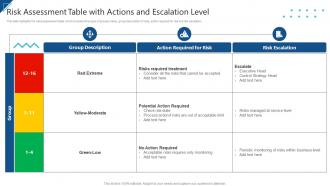
This slide highlights the risks assessment table which includes three type of groups risks, group description of risks, action required for risk and risk escalation. Present the topic in a bit more detail with this Enterprise Risk Management Risk Assessment Table With Actions And Escalation Level. Use it as a tool for discussion and navigation on Group Description, Action Required Risk, Risk Escalation. This template is free to edit as deemed fit for your organization. Therefore download it now.

FAQs for Enterprise Risk Management Risk Assessment Table With Actions

So you need four main things for ERM to actually work. First, figure out what could blow up (risk identification), then measure how likely and bad each thing is. After that, decide your game plan - dodge it, minimize it, pass it off to someone else, or just roll with it. Oh and don't forget the monitoring part because things change constantly. Leadership has to be on board though, otherwise you're just wasting time. The whole thing needs to connect with how you make big decisions too. I'd honestly start small with buy-in first, then expand once people see it's not just more paperwork.

Honestly, start by figuring out what could actually kill your business in your specific industry. Tech companies worry about different stuff than manufacturers, you know? Map out your sector's weird risks - regulations, supply chain mess, how customers behave, competitors being annoying. Don't waste time on generic corporate BS that applies to everyone. Healthcare? Data breaches and compliance screw-ups should be your nightmare scenarios. Restaurant chain? Maybe not so much. Tailor your risk appetite and strategies around what actually matters for your space. Check what similar companies are doing too - it's a decent starting point.

Honestly, tech makes ERM so much easier - it automates all that tedious data collection and gives you real-time monitoring across everything. Dashboards let you actually see what's happening with risks instead of squinting at spreadsheets. Predictive analytics can catch problems before they blow up, which is pretty cool. The automated reporting alone will save you hours of grunt work. Cloud platforms are great for getting different departments on the same page without those painful email threads. Just make sure whatever you pick plays nice with your current systems - nobody wants more data headaches. I'd start with whatever manual stuff is driving you crazy first.

Track both the obvious stuff (actual losses, violations) and the early warning signs like how fast people complete risk training or respond to incidents. Don't get stuck on perfect numbers though - trends matter way more. I'd survey your team every few months about whether they actually feel confident making risk decisions. That cultural piece is honestly harder to measure but super important. Dashboards are tempting but they get messy quick. Pick maybe 5-6 key things and review quarterly to see if you're preventing problems instead of just cleaning up messes. Way better than drowning in data nobody looks at anyway.

Ugh, getting leadership on board is always the worst part. People think risk management is someone else's problem instead of theirs. Then you've got departments that won't talk to each other - total nightmare. Half the companies I've seen don't even have decent tech to track this stuff properly. Risk reporting? Good luck getting anything consistent. The whole culture shift takes forever too. Honestly though, just pick one department and run a small test first. Show them it actually works, then expand. Way easier than trying to change everything at once.

Honestly, risk culture is what makes or breaks your whole ERM setup. People will either hide problems or actually speak up about them - depends entirely on whether they feel safe doing it. I've seen too many companies with fancy risk frameworks that nobody follows because the culture sucks. Good culture means leadership walks the walk, employees aren't scared to raise red flags, and you're thinking about risk in regular decisions instead of just during quarterly meetings. Watch how people in your company actually talk about failures or near-misses. That'll tell you everything you need to know about where you really stand.

So data analytics is amazing for catching risks you'd totally miss otherwise. Instead of just guessing, you can crunch huge amounts of data to spot patterns and actually put numbers on how likely bad stuff is to happen. Way better than the old Excel nightmare we used to deal with. You'll get real-time monitoring plus predictive models that show which problems are heading your way. My old boss was obsessed with this stuff and honestly, he had a point. Figure out what your main risk indicators are first, then just plug them into whatever analytics tool your company already has.

So it really depends on your industry - financial services gets hit the hardest with SOX, Basel III, and Dodd-Frank stuff requiring formal frameworks and stress testing. Healthcare has to deal with HIPAA which drives their data security approach. Energy companies? They're stuck managing environmental regs that shape operational risk. Manufacturing actually has it easier on the ERM side (lucky them), but you'll still hit safety standards. My advice is figure out what regs actually apply to you first, then build around those requirements. Don't just copy someone else's program and hope it works.

Look, bake risk assessment right into your planning meetings from the start. Don't treat it like some separate thing you'll handle later - that's how companies mess up. When you're setting goals, immediately ask what could go wrong and build fixes into your roadmap. Also get your risk people in those strategy sessions because they catch stuff others miss. Honestly, most places still do this backwards. Make talking about risks as normal as talking budgets. Oh and identify what could derail each objective early - saves you tons of headaches down the road.

Look, for big organizations you'll need both numbers and gut-check approaches. Monte Carlo sims are solid for financial stuff. Bow-tie analysis maps out where operations can fail. COSO and ISO 31000 give you structure, but honestly? Execution beats perfect frameworks every time. Heat maps help visualize risks across different units - executives love those visual things. Scenario planning tackles the "what if the world ends" situations. My advice: start with whatever your team already gets, then add fancier tools as you go. Don't overcomplicate it from day one.

Honestly, getting stakeholders involved in your ERM program is a game-changer. They'll spot risks you totally missed and give you real-world perspective on what's actually likely to blow up. Plus people are way more cooperative when they help build the solution instead of having some corporate policy dumped on them. I mean, nobody likes being told what to do, right? Map out your key players first, then set up regular touchpoints to keep everyone in the loop. Oh and make it feel collaborative - that top-down approach never works as well as you'd think.

Stop dumping 50-page PDFs on people - nobody reads those things anyway. You'll want to use normal language instead of corporate speak. Make examples that actually relate to what different teams do day-to-day. Email works, but so do quick team huddles or even Slack updates, whatever fits your vibe. Interactive stuff helps too - maybe run some workshops where people can ask real questions. Your leadership team needs to visibly back this up though, otherwise it just looks like another compliance exercise. Figure out who your main players are first and talk about what matters to them specifically.

Honestly, don't try to predict every single threat - you'll drive yourself crazy. Focus on building flexibility instead. Get your team doing regular check-ins on industry trends and new regulations that might mess with your business. Quarterly scenario planning is clutch - just run through different "what if" situations and see how you'd handle them. I mean, it sounds a bit like fortune telling, but you're really just looking for patterns. Cross-train people so they can jump between roles. Build strong communication systems. Most importantly though? Start with your biggest weak spots and create backup plans for those first.

ERM basically makes your team think through what could blow up before making big decisions. You're not just chasing opportunities anymore - you're actually asking "what are we missing here?" It runs like background software during planning sessions, which honestly slows things down sometimes but makes choices way more solid. Your leadership stops making gut calls and starts building real cases for why they're doing something. Pretty useful when you need to defend decisions later. I'd start by figuring out which decisions could use more structured thinking around risk.

Okay so first thing - get your leadership to actually write down specific risk limits for each area, not that wishy-washy "we don't like risk" stuff. Real numbers matter here. What dollar amount of revenue loss is too much? How many regulatory hits can you take? Document this clearly so teams know what's actually acceptable day-to-day. Most places totally blow this by staying way too vague (honestly drives me crazy). Run workshops where people work through real scenarios - like actually practice this stuff. Don't just email out policies and hope for the best. Test it with simulations too.

Ratings and Reviews

80% of 100
Review Form
Write a review
Most Relevant Reviews
  1. 80%

    by Edgar George

    Great combination of visuals and information. Glad I purchased your subscription.
  2. 80%

    by Dwayne Matthews

    I have been using SlideTeam for the past six months. Very happy and satisfied!

2 Item(s)

per page: