


Risk Management Lifecycle Process Powerpoint Presentation Slides





Try Before you Buy Download Free Sample Product
 Impress Your
 Audience
 100%
100% Editable
 Save Hours
 of Time


Our Risk Management Lifecycle Process Powerpoint Presentation Slides are topically designed to provide an attractive backdrop to any subject. Use them to look like a presentation pro.
People who downloaded this PowerPoint presentation also viewed the following :
Content of this Powerpoint Presentation
Slide 1: This slide introduces Risk Management Lifecycle Process. State Your Company Name and begin.
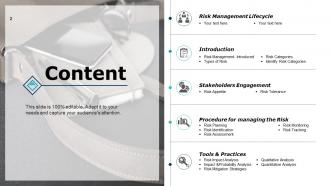
Slide 2: This slide shows content of the presentation.
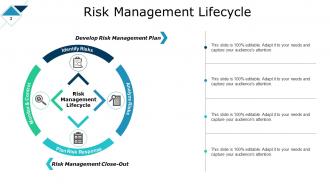
Slide 3: This slide presents Risk Management Lifecycle with related diagram.
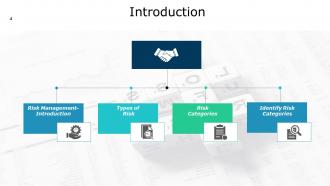
Slide 4: This slide displays Introduction describing- Risk management introduction, Types of risks, Identify risk categories, risk categories.
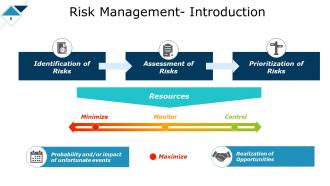
Slide 5: This slide represents Risk management Introduction describing Identification of risks, Assessment of Risks and prioritization of risks.
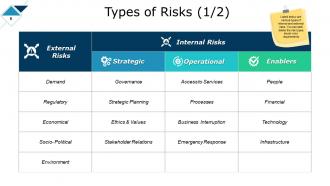
Slide 6: This slide shows Types of Risks describing External, Strategic, operational and enables risks.
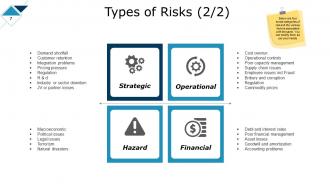
Slide 7: This is another slide on Types of Risks describing- Strategic, Operational, Hazard and Financial risks.
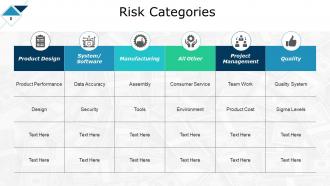
Slide 8: This slide showcases Risk Categories which includes- Product Design, System/ Software, Manufacturing, Project Management, Quality and all other.
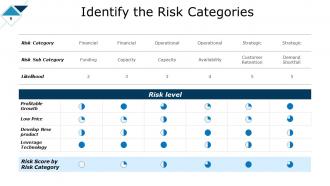
Slide 9: This slide represents Identify the Risk Categories with risk level and other sub categories.
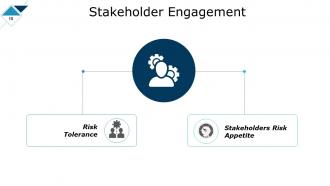
Slide 10: This slide shows Stakeholder Engagement describing Stakeholders Risk Appetite and Risk tolerance.
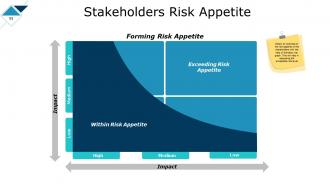
Slide 11: This slide displays Stakeholders Risk Appetite describing risk appetite with the help of bar graph.
Slide 12: This slide shows Risk Tolerance on a scale describing risk from very low to very high.
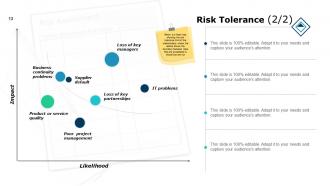
Slide 13: This is another slide on Risk Tolerance describing risk tolerance limit of stakeholders.
Slide 14: This slide shows Procedure describing- Risk planning, risk register, risk identification, risk assessment, risk monitoring and risk tracking.
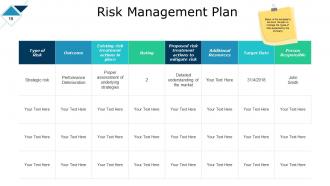
Slide 15: This slide presents Risk Management Plan describing- Type of Risk, Outcome, Existing Risk Treatment Actions in Place, Rating, Proposed Risk Treatment Actions to Mitigate risk, Additional Resources, Target Date and Person Responsible.
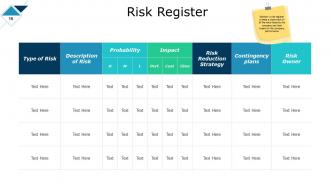
Slide 16: This slide displays Risk Register with- Category, Risk, Probability, Impact, Mitigation and Risk assessment.
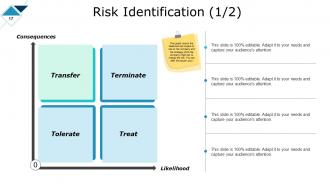
Slide 17: This slide represents Risk Identification with a graph that shows the likelihood and impact of risk on the company and the strategy which the company might opt to mange the risk.
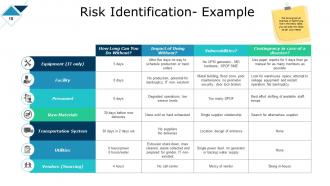
Slide 18: This slide showcases Risk Identification- Example describing Time period, Impact of Doing, Vulnerabilities and Contingency in case of a disaster.
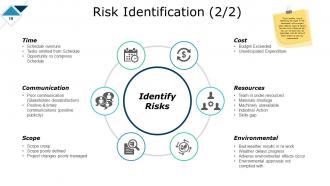
Slide 19: This is another slide on Risk Identification describing factors like cost, time, resources etc.
Slide 20: This slide shows Risk Assessment describing Risk Rating Guide with probability and impact along with Risk scoring system describing Consequences, Likelihood of Occurrence and Likelihood of detection.
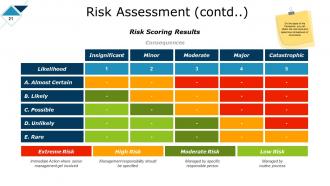
Slide 21: This is another slide continuing Risk Assessment, with this you can obtain the risk score and determine its likelihood of occurrence.
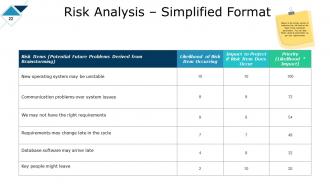
Slide 22: This slide presents Risk Analysis – Simplified Format with related table and text boxes. You can alter these values & parameters as per your requirements.
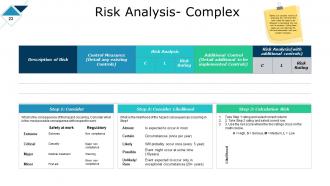
Slide 23: This slide displays Risk Analysis- Complex. This is a complex version of analysing the risk level. Follow the described steps to calculate risk.
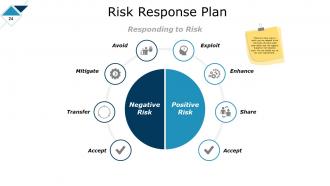
Slide 24: This slide represents Risk Response plan describing positive and negative ways of responding to the risk levels.
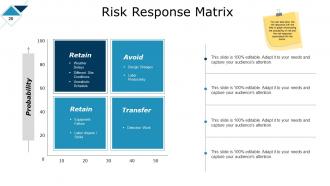
Slide 25: This slide showcases Risk Response Matrix stating the contingency plan, its duration and the person responsible.
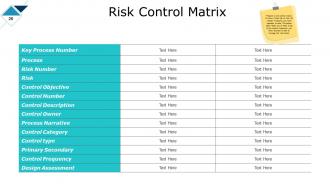
Slide 26: This slide shows Risk Control Matrix. This matrix helps you to keep a log of the control measures you have decided to take to manage the risk levels.
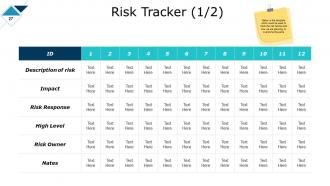
Slide 27: This slide presents Risk Tracker which could be used to track the risk factors and how we are planning to overcome the same.
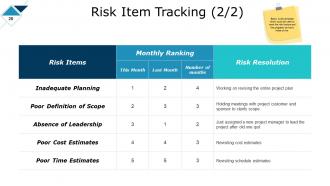
Slide 28: This is another slide presenting Risk Item Tracking which could be used to track the risk factors and the progress we have made so far.
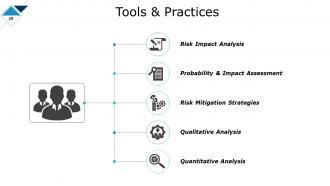
Slide 29: This slide showcases Tools and Practices describing- Risk Impact analysis, Quantitative analysis, Qualitative analysis etc.
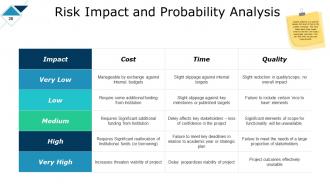
Slide 30: This slide shows Risk Impact and Probability Analysis.
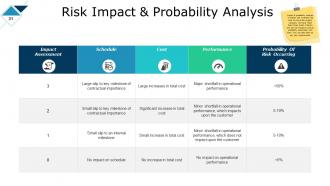
Slide 31: This is another slide on Risk Impact & Probability Analysis.
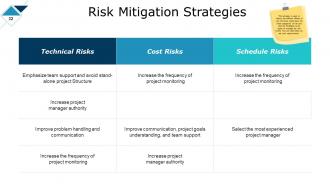
Slide 32: This slide presents Risk Mitigation Strategies describing Technical, cost and scheduled risks.
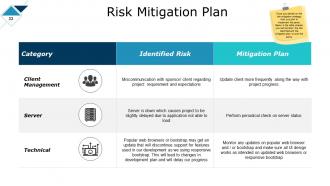
Slide 33: This slide displays Risk Mitigation Plan in a tabular form.
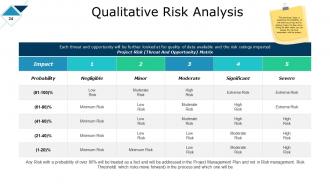
Slide 34: This slide represents Qualitative Risk Analysis for assessing the probability of risk event occurring and its relative impact if it does occur.
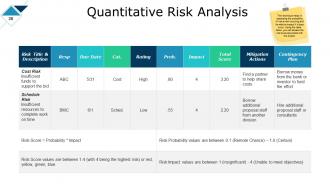
Slide 35: This slide showcases Quantitative Risk Analysis in a tabular form.
Slide 36: This slide displays icons for Risk Management Lifecycle Process.
Slide 37: This slide reminds about a 15 minutes Coffee Break.
Slide 38: This slide is titled as Additional Slides for moving forward.
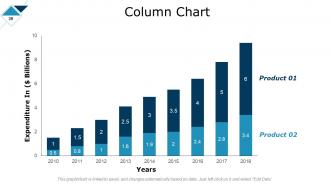
Slide 39: This slide shows Column Chart with two products comparison.
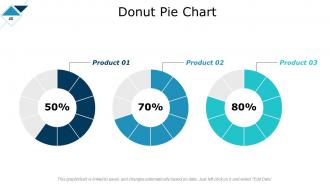
Slide 40: This slide displays Donut Pie Chart with data in percentage.
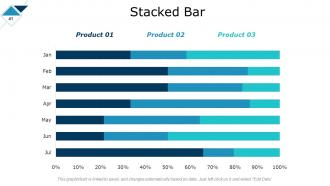
Slide 41: This slide presents Stacked Bar chart with three products comparison.
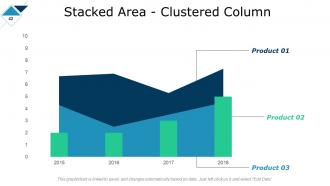
Slide 42: This slide showcases Stacked Area - Clustered Column chart.
Slide 43: This is Our Vision slide with related Imagery and text boxes.
Slide 44: This is Our Team slide with names and designation.
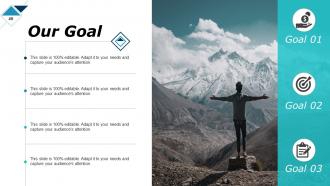
Slide 45: This is Our Goal slide. Show your important goals here.
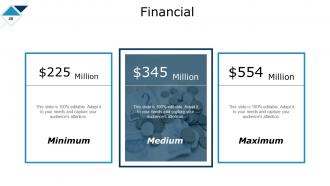
Slide 46: This is a Financial slide. Show your finance related stuff here.
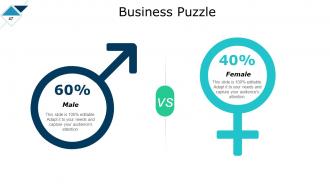
Slide 47: This is a Comparison slide to state comparison between commodities, entities etc.
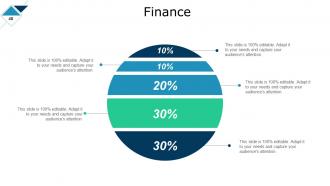
Slide 48: This is a Finance slide. Show your finance related stuff here.
Slide 49: This slide shows Mind Map for representing entities.
Slide 50: This is an Idea Generation slide to state a new idea or highlight information, specifications etc.
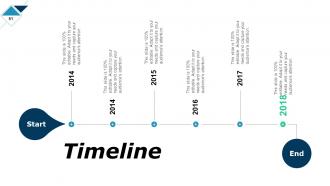
Slide 51: This is a Timeline slide. Show information related with time period here.
Slide 52: This is Our Target slide. State your targets here.
Slide 53: This slide shows Magnifying Glass to highlight information.
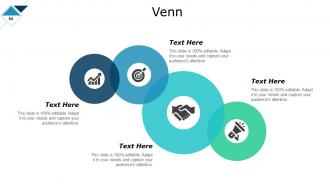
Slide 54: This is a Venn slide with text boxes.
Slide 55: This is About Us slide to show company specifications etc.
Slide 56: This slide shows Magnifying Glass to highlight information.
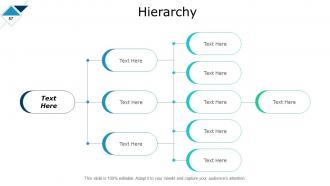
Slide 57: This is a Hierarchy slide with text boxes to show information.
Slide 58: This is a Thank You slide with address, contact numbers and email address.
Risk Management Lifecycle Process Powerpoint Presentation Slides with all 58 slides:
Use our Risk Management Lifecycle Process Powerpoint Presentation Slides to effectively help you save your valuable time. They are readymade to fit into any presentation structure.












FAQs for Risk Management Lifecycle Process
So there are five main phases that keep cycling: identification, assessment, planning how to handle stuff, actually doing it, then monitoring. First you spot risks, then figure out how likely they are and what damage they'd cause - honestly this part gets pretty subjective based on who's on your team. After that, you tackle the biggest threats first, put your fixes in place, and watch to see what's working. It's not like a straight line though, you're always circling back when new problems pop up. I'd set up regular check-ins so you don't just do this once and call it good.
Honestly, risk identification totally depends on what industry you're in. Healthcare's all about patient safety and data breaches - super strict compliance stuff. Manufacturing? They're worried about equipment breaking down and supply chain mess-ups. Financial services are probably the most paranoid (for good reason) - credit risks, market volatility, operational failures, you name it. Tech companies stress about hackers and their IP getting stolen. Each field has basically created their own playbook for spotting risks. My advice? Don't start from scratch - look at what the standard frameworks already cover for your industry first.
Look, start with a basic risk register - don't overcomplicate it at first. Probability/impact grids work great for quick assessments, and if you're dealing with financial stuff, Monte Carlo simulations are your friend. Mix structured approaches like SWOT with casual stakeholder chats because people always know things they forget to mention in formal meetings. I've watched way too many teams get stuck overthinking this and never actually start. Monitor risks as you go since they change constantly. Build up complexity only when your project actually needs it - most don't require fancy modeling right out the gate.
Start with a risk matrix - just plot probability vs impact on a simple grid. Rate everything 1-5 on both sides, then multiply for your priority score. High probability + high impact risks? Those are your fire drills, handle them first. After that I'd go for the medium impact but likely stuff, then the scary-but-unlikely scenarios. Honestly, don't even bother with low-low risks unless you're bored. Pick your top 3-5 and actually fix them instead of making some massive spreadsheet you'll never look at again.
Oh dude, you absolutely need stakeholder buy-in for risk management. Like, you'll miss so much stuff working alone. The people actually doing the work? They spot risks you'd never think of. Plus when they help figure out the problems, they're way more invested in fixing them later. Map out your key people early and keep them in the loop the whole time - not just that initial kickoff meeting everyone forgets about. Make it a real conversation, not some one-way presentation. Trust me, you'll catch issues way before they blow up into actual disasters.
At minimum, check your risk management stuff yearly - but that's honestly pretty bare bones. Big changes should kick off immediate reviews. Don't wait around if there's new regulations or you just had a major incident. I've watched companies get blindsided because they were too rigid about their annual schedule while everything around them was shifting. Quarterly mini-reviews work great for catching new risks before they blow up. Then do your big comprehensive review once a year. Oh, and definitely set those calendar reminders now or you'll totally forget.
So many choices, really depends on your budget though. The big enterprise platforms like ServiceNow and MetricStream are solid but expensive as hell. RSA Archer too. Smaller teams? Honestly spreadsheets work fine at first, just get crazy messy later. Heat maps are pretty useful for visualizing risks. My take - don't overthink it with the fanciest tool. Pick whatever your team won't hate using every day. Better to start with something simple that plays nice with your current setup. You can always upgrade once you figure out what you actually need.
You've got to figure out who needs what first - map out your stakeholders. Executives just want the big picture stuff, like "here's how this impacts revenue." But your ops teams? They need the nitty-gritty action items. Skip the tech speak entirely - focus on business impact instead. Dashboards are clutch for regular updates (honestly way better than endless email chains). Here's the thing though - don't disappear when stuff hits the fan. That's where most people screw up. Set up regular check-ins and have real conversations for the scary issues. Templates help too.
Honestly, the worst part is when you craft this amazing risk plan and then... no budget. Or no people to actually do it. Super frustrating. Getting other departments on board is brutal too - they're always like "that's not really our priority right now." People hate change even when it protects them, which makes zero sense but whatever. I'd start talking up your plans way before you need approval. Oh and definitely have backup options because resources always get slashed at the worst moments. Trust me on that one.
Okay so legal requirements are basically your non-negotiable starting point for risk management - you can't ignore them. Think SOX, GDPR, financial regs, safety standards... whatever applies to your industry. They'll dictate how you assess risks, what documentation you need, reporting deadlines, all that fun stuff. Honestly it's annoying but these frameworks do help organize your processes. The trick is figuring out what applies to you early on. You don't want to be that person scrambling at the last minute because you forgot about some mandatory control requirement.
Honestly, it all comes down to whether your company actually wants to hear bad news or not. If people get punished for speaking up about problems, everyone's just gonna hide stuff and pretend everything's fine. But when leadership actually listens and doesn't shoot the messenger, you'll catch issues way earlier. I've seen this play out so many times - executives who ignore their own rules basically tell everyone else those rules don't matter. Look at what happens when someone raises concerns. Do they get thanked or do they get blamed? That'll tell you everything about whether your risk management is real or just for show.
Track both types - leading stuff like risk assessments, near-misses, and training rates help you catch problems early. Lagging ones are your actual incidents, money lost, violations. Honestly, I'd throw in some culture surveys too since people's attitudes about risk matter way more than most companies realize. Pick maybe 5-7 metrics tops that'll actually change how people behave. Don't go crazy with data you can't use. Start with whatever's easiest to measure consistently, then add more sophisticated tracking later. The whole thing falls apart if you're drowning in metrics nobody acts on.
Think of lessons learned as your personal risk management playbook. You dig into what went sideways (or surprisingly well) in past incidents, then spot the patterns and gaps you missed before. Data beats guessing every time, honestly. Update your risk assessments based on what you find. Strengthen those weak spots and build better early warning systems. Here's the thing though - you've got to actually write this stuff down and work it into your regular processes. Otherwise you'll just keep making the same dumb mistakes over and over.
Think of continuous monitoring as your security radar - it spots trouble brewing before things get messy. Here's the thing: you can't just run one risk assessment and forget about it. Threats change daily, new vulnerabilities surface, and yesterday's minor issue could be tomorrow's nightmare. Honestly, skipping regular monitoring is like driving blindfolded (dramatic but true). Set up automated alerts so you're not constantly babysitting everything. Monthly reviews work well, though you'll want to check more often after big system changes. It keeps you ahead of problems instead of scrambling to catch up later.
Think of risk management like your company's immune system - it helps you bounce back from chaos way faster. You'll want to map out your critical processes first and figure out what could completely wreck them. That's honestly where most people should start but don't. Good risk management isn't just about preventing disasters (though that's nice). It actually builds this adaptive muscle so your team knows how to roll with the punches when weird stuff happens. And trust me, weird stuff always happens. The whole point is creating those protective layers so operations keep humming even during the really messy times.
-
Top Quality presentations that are easily editable.
-
Easily Understandable slides.
-
Great experience, I would definitely use your services further.