


Sales And Operational Plan For Clothing Business




Try Before you Buy Download Free Sample Product
 Impress Your
 Audience
 100%
100% Editable
 Save Hours
 of Time


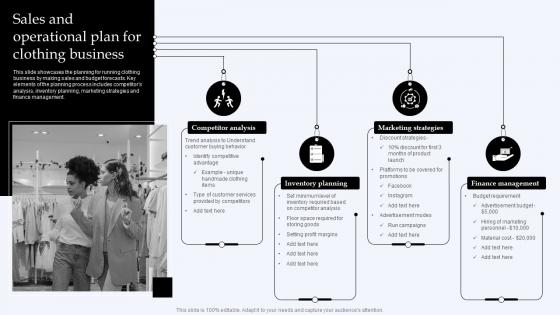
This slide showcases the planning for running clothing business by making sales and budget forecasts. Key elements of the planning process includes competitors analysis, inventory planning, marketing strategies and finance management.
People who downloaded this PowerPoint presentation also viewed the following :
Sales And Operational Plan For Clothing Business with all 6 slides:
Use our Sales And Operational Plan For Clothing Business to effectively help you save your valuable time. They are readymade to fit into any presentation structure.





FAQs for Sales And Operational Plan
So Sales Ops is like the behind-the-scenes crew that keeps everything from falling apart. Your sales team gets to focus on closing deals while these people handle all the messy stuff - data analysis, forecasting, setting quotas, territory mapping. They're also managing your CRM and creating those dashboards everyone pretends to understand. Honestly, they're probably the reason your sales process doesn't completely suck. When deals start stalling or numbers look weird, Sales Ops will have the real story with actual data to prove it. Pretty much the unsung heroes of any decent sales org.
Sales Ops is like having that friend who's crazy organized and actually enjoys spreadsheets. They dig into all the data stuff - forecasting, territory planning, quota setting - so you don't have to pretend you love pivot tables. Your CRM stays functional instead of becoming a digital nightmare (and trust me, we've all seen those disasters). They'll optimize your processes and manage the tech stack while you focus on what you do best. Honestly, good sales ops people are worth their weight in gold because they turn gut feelings into actual strategy. Let them handle the analytical stuff and lean on them for insights.
Focus on sales cycle length, conversion rates, and quota numbers first. Pipeline velocity is huge too - that's where you'll spot the real bottlenecks slowing everything down. Revenue per rep, obviously. Deal sizes and how accurate your forecasts are will tell you if this stuff actually works or if you're just creating busy work (which happens more than you'd think). Pick maybe 3-5 metrics that directly hit revenue and review them weekly with the team. Monthly reviews are honestly too slow - things move too fast to wait that long.
Start by mapping out what you're doing now and find where things get stuck - that's your gold mine. Automate the boring stuff first: lead scoring, follow-ups, data entry. Honestly, most reps hate that busywork anyway. Set up clear stages in your sales process so everyone knows what boxes to check before moving deals along. A good CRM workflow helps too - automatically routes leads and tracks everything. Oh, and templates are huge for proposals and handling objections. Don't reinvent the wheel every time. Focus on your biggest bottlenecks first since that's where you'll actually see results.
Dude, tech basically runs sales ops now. CRM systems track your pipeline while analytics tools help you forecast and spot trends. Automation handles the boring stuff - lead routing, follow-ups, all that. Good dashboards are seriously addictive once you start using them properly. Oh, and make sure everything integrates or you'll hate dealing with scattered data everywhere. My advice? Look at what's eating up your team's time first - like, the really annoying manual tasks. Then find tools to automate those specific things. Way more effective than just buying random software and hoping it works.
Dude, get those teams talking weekly instead of just those awkward quarterly meetings. Map out exactly where leads go after marketing hands them off - I bet you'll find some are just disappearing into the void. Sales ops needs to show marketing which lead sources actually turn into money, not just clicks. Marketing also needs to see what happens after they pass leads over (most have zero clue honestly). Oh and definitely set up shared dashboards so everyone's looking at the same numbers. Once marketing can see which leads actually close, they'll stop focusing on just getting more volume. Trust me, both sides think the other knows what's working but they really don't!
Ugh, Sales Ops is such a headache sometimes. Three main issues always pop up: your data's a complete mess because reps enter stuff however they want, sales and marketing teams can't agree on anything, and everyone's stuck doing boring manual work all day. Fix the data thing first - set up some validation rules and actually train people properly. Get both teams on the same KPIs so they stop fighting. Then automate the repetitive stuff like lead scoring and reports. Trust me though, don't try tackling everything at once or you'll lose your mind. Pick one issue and make sure your boss is actually on board before you start changing things.
So Sales Ops is like being the translator between sales and everyone else - which is harder than it sounds tbh. Map out where communication breaks down first, then tackle those spots. Set up cross-functional meetings and build dashboards that marketing and finance can actually read. The real issue? Different teams literally speak different languages. Marketing obsesses over MQLs, sales wants SQLs, finance just cares about revenue numbers. You'll need to create common metrics everyone can get behind. Oh and don't forget solid handoff processes between sales and customer success - that's where things usually fall apart.
Honestly, start with your data - if it's messy, you're screwed from the get-go. I'd run a few different methods: look at historical patterns, check your pipeline, get bottom-up forecasts from reps. Compare all three and see where they don't match up. Don't just do this once though - update weekly or every other week. Your sales team knows their deals better than anyone, but here's the thing: you can't just trust what they say. Cross-check with actual win rates and how deals usually progress. Oh, and track how accurate you've been over time. That's how you'll figure out what's actually working versus what sounds good on paper.
Don't wait until launch week - jump into planning now while you can still make changes. Work with marketing to nail down who you're actually selling to and set up lead scoring for the best prospects. Your reps are gonna freak out without proper materials, so build battle cards and objection scripts ASAP. Also, get your CRM tracking set up early - you'll want to catch conversion issues before they tank your launch. I learned this the hard way on my last product rollout. Start building that dashboard now so you're not scrambling later trying to figure out what went wrong.
Dude, the tech stack thing is killer - everyone goes crazy buying tools then can't find their data anywhere. Marketing and sales never agree on what counts as a "real" lead either, which is maddening. Don't make your process super rigid because buyers are all different. I learned this the hard way lol. Track your whole funnel, not just closed deals. Oh and actually train people when you change stuff! Sounds obvious but most companies skip it. Honestly just audit what you have first before buying more junk.
Honestly, analytics is what finally made my sales numbers make sense. Instead of throwing darts at a board for forecasts, I started looking at actual patterns from past quarters. Game changer. You can see which lead sources are worth your time and which reps need help vs who's crushing it. The pipeline stuff is huge too - catches problems before they tank your month. I'd pick one thing you're always second-guessing (conversion rates maybe?) and just build a simple dashboard around that first. Don't overthink it.
Honestly, start with Excel and SQL - those are non-negotiable. Salesforce too, since most companies live in there. Half your day you'll be playing detective, figuring out why the numbers don't add up or some process broke. Communication matters a ton because you're stuck between angry salespeople and demanding executives (fun times). Pick up some basic project management skills and maybe mess around with automation tools like Zapier. Oh, and pivot tables - master those things. Salesforce reports too. Those two alone will make you look like a wizard to most sales teams.
Dude, market trends will totally mess with your Sales Ops setup. Your CRM workflows? They can become useless fast - I've watched whole systems crash when industries went digital overnight. Buyer habits change, new competitors pop up, and suddenly you're scrambling to fix forecasting models and commission plans. Territory planning gets thrown out the window too. Honestly, the "we've always done it this way" mentality will kill you. Build in flexibility from day one and watch those early warning signals. Track the right leading indicators so you're not blindsided when everything shifts.
CRM first - Salesforce or HubSpot are solid choices for your main hub. Sales enablement stuff like Outreach or SalesLoft comes next for your sequences and outreach. Analytics gets tricky though - Tableau's powerful but honestly kind of a pain to learn. The tool stack thing spirals out of control super quick if you're not careful. I'd say stick to those three buckets initially. Anaplan's decent for forecasting but it's pricey. Your CRM probably handles more reporting than you think, so mess around with that first before you start throwing money at other platforms. Save yourself the headache.
-
Great quality slides in rapid time.
-
The designs are very attractive and easy to edit. Looking forward to downloading more of your PowerPoint Presentations.