


Sales Challenges Powerpoint Presentation Slides





Try Before you Buy Download Free Sample Product
 Impress Your
 Audience
 100%
100% Editable
 Save Hours
 of Time


With Sales Challenges PowerPoint Presentation Slides, overcome business obstacles and hazards. Find business opportunities and solutions to improve the processes, operations, and projects using sales issues PPT slideshow. Incorporate marketing problems PPT templates to present various sales issues your business is facing. Raise concern by showcasing the visuals. Encourage your team to have an open discussion and find solutions to the problems with the help of the right sales strategy presentation deck. This ready-to-use marketing hurdles PPT slideshow consists of sales process template describing-preparation, presentation, closing, prospecting, approach, objections, follow-up and many other slides like sales team structure and sales graph, etc. Download now and grab this professionally designed business obstacles PPT presentation to engage your audience in the important discussion. Use these sales management problems visuals to showcase problems and overcome those challenges to run your business smoothly. Our business development hurdles Powerpoint presentation slides can be helpful for your sales team. Handle inhibited attitudes with our Sales Challenges Powerpoint Presentation Slides. Encourage folks to act freely.
People who downloaded this PowerPoint presentation also viewed the following :
Content of this Powerpoint Presentation
Slide 1: This slide introduces Sales Challenges. State Your Company Name and begin.
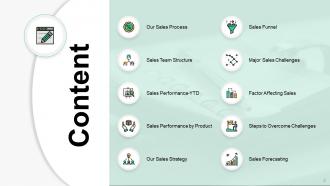
Slide 2: This slide shows Content of the presentation.
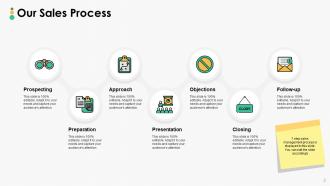
Slide 3: This slide presents Our Sales Process describing- Preparation, Presentation, Closing, Prospecting, Approach, Objections, Follow-up.
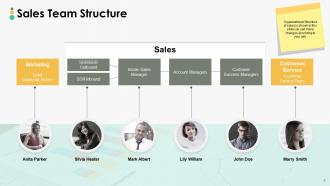
Slide 4: This slide displays Sales Team Structure with related diagram.
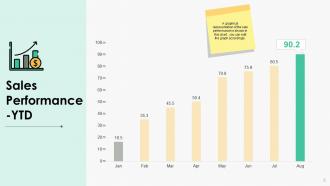
Slide 5: This slide represents Sales Performance- YTD with the help of bar graph.
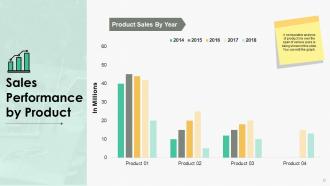
Slide 6: This slide showcases Sales Performance by Product over a span of various years.
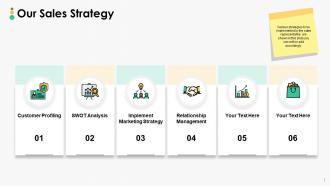
Slide 7: This slide shows Our Sales Strategy which are to be implemented by the sales representative.
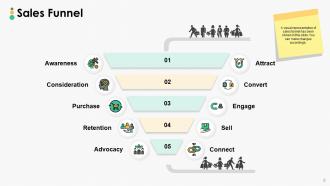
Slide 8: This slide presents Sales Funnel describing- Awareness, Consideration, Purchase, Retention, Advocacy, Convert, Engage, Sell, Connect, Attract.
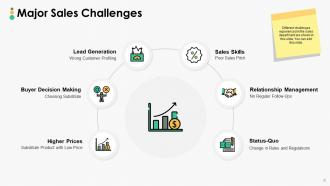
Slide 9: This slide displays Major Sales Challenges experienced in the sales department.
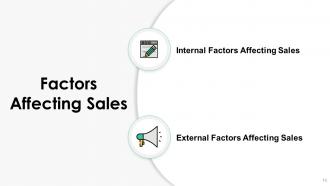
Slide 10: This slide represents internal and external Factors Affecting Sales.
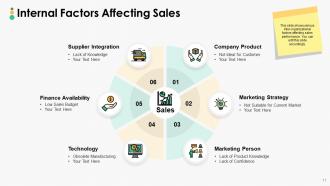
Slide 11: This slide showcases Internal Factors Affecting Sales describing- Company Product, Marketing Strategy, Marketing Person, Technology, Finance Availability, Supplier Integration.
Slide 12: This slide shows External Factors Affecting Sales describing- Law and Order, Economic Cycle, Competition, Consumer Expectation, Niche Marketer.
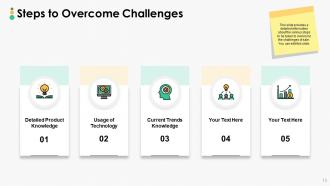
Slide 13: This slide displays Steps to Overcome Challenges such as- Detailed Product Knowledge, Usage of Technology, Current Trends Knowledge etc.
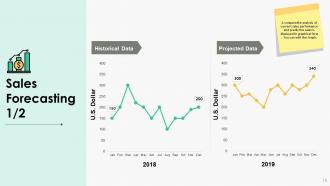
Slide 14: This slide represents Sales forecasting displaying current sales performance and predictive sales.
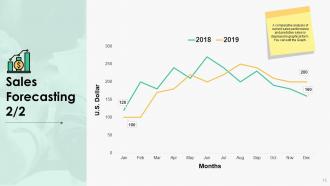
Slide 15: This slide showcases Sales Forecasting with the help of line graph.
Slide 16: This slide is titled as Additional Slides for moving forward.
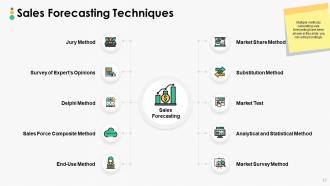
Slide 17: This slide shows Sales Forecasting Techniques describing various methods such as- Jury Method, Survey of Expert’s Opinions, Delphi Method, Sales Force Composite Method, End-Use Method, Market Share Method, Substitution Method, Market Test, Analytical and Statistical Method, Market Survey Method.
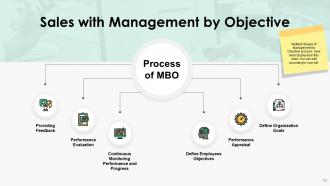
Slide 18: This slide presents Sales with Management by Objective with stages as- Define Organization Goals, Define Employees Objectives, Continuous Monitoring Performance and Progress, Performance Evaluation, Providing Feedback, Performance Appraisal.
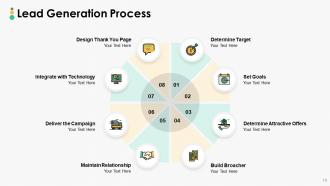
Slide 19: This slide displays Lead Generation Process displaying various inbound and outbound stages.
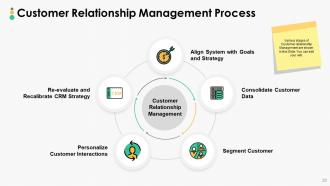
Slide 20: TThis slide represents Customer Relationship Management Process as- Align System with Goals and Strategy, Consolidate Customer Data, Segment Customer, Re-evaluate and Recalibrate CRM Strategy, Personalize Customer Interactions.
Slide 21: This slide displays Sales Challenges Icons.
Slide 22: This slide reminds about a 15 minutes Coffee Break.
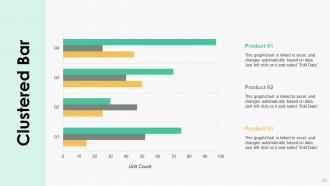
Slide 23: This slide shows Clustered Bar graph with three products comparison.
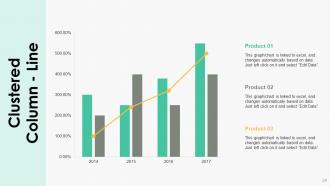
Slide 24: This slide presents Clustered Column - Line chart with three products comparison.
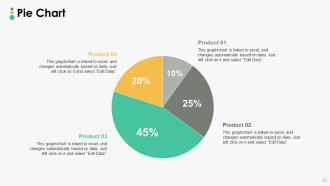
Slide 25: This slide displays Pie Chart with data in percentage.
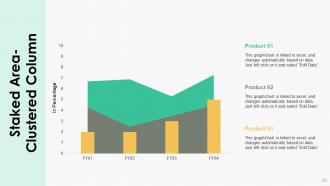
Slide 26: This slide represents Staked Area-Clustered Column chart with three products comparison.
Slide 27: This is Our Mission slide with related imagery and text.
Slide 28: This is Meet Our Team slide with names and designation.
Slide 29: This is About Us slide to show company specifications etc.
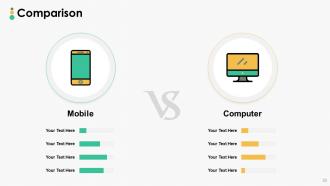
Slide 30: This is a Comparison slide to state comparison between commodities, entities etc.
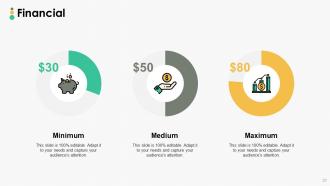
Slide 31: This is a Financial slide. Show your finance related stuff here.
Slide 32: This is a Timeline slide to show information related with time period.
Slide 33: This is another slide continuing Timeline.
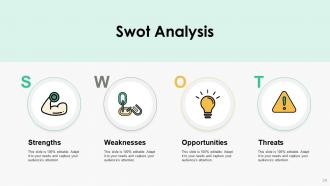
Slide 34: This slide shows Swot Analysis describing- Strengths, Weaknesses, Opportunities and Threats.
Slide 35: This slide shows Puzzle with text boxes for specifications.
Slide 36: This is a Creative idea slide to state a new idea.
Slide 37: This is a Venn slide with additional text boxes to show information.
Slide 38: This is a Lego slide with text boxes.
Slide 39: This is a Thank you slide with address, contact numbers and email address.
Sales Challenges Powerpoint Presentation Slides with all 39 slides:
Give your ideas the designer touch. Each of our Sales Challenges Powerpoint Presentation Slides were made for you.



FAQs for Sales Challenges
You'll constantly hear "it's too expensive," "not the right time," "gotta check with my boss," and "we don't need this." Trust issues pop up a lot too - like whether your product actually works. That authority thing is the worst though. Half the time you're talking to someone who can't even make decisions! But here's what I've learned - most objections aren't real rejections. They just want more info. Don't get defensive right away. Ask stuff like "what's really driving that concern?" and dig deeper. Works way better than jumping into pitch mode.
Don't just slash your price right away - that's what newbies do. Start asking what they were planning to spend, or what specifically bothers them about the pricing. Half the time it's not even about money, it's about whether they see the value or if the timing's weird for their budget. Focus on what results they'll actually get instead of just the cost. Break down what each piece is worth if they're still hung up on numbers. Oh, and give them a few different options at different price points. People love feeling like they're choosing rather than being sold to.
Dude, emotional intelligence totally changes the sales game. You start picking up on what people are *actually* worried about instead of just hearing their objections at face value. Like when someone gets pushy or shuts down, your EQ helps you read between the lines and adjust how you're coming across. I swear, half of sales success is just not taking every "no" as a personal attack on your character or whatever. Watch for body language during video calls - people tell you so much without saying it. Active listening during those conversations makes a huge difference too.
Honestly, you've gotta completely switch up your approach depending on who's in the room. C-suite executives? Hit them with ROI numbers and big picture stuff right away - they literally don't have time for feature demos. Mid-level managers are way more interested in how you'll make their daily chaos easier and help their team actually get stuff done. Technical people though - totally different story. They want the nitty-gritty on integrations and security specs. I learned this the hard way after bombing a few meetings with the same generic pitch deck (ugh, so embarrassing). Now I always research their role first and swap in case studies from similar companies. What's actually keeping them awake at 2am worrying?
Yeah, the economy totally messes with your sales game. Boom times? You can push premium stuff and upsell like crazy. But when things get tight, suddenly everyone's obsessing over ROI and cutting costs. Your sales cycles drag on forever because nobody wants to make quick decisions anymore. It's honestly pretty annoying, but you get better at reading people. You'll probably need to tweak your pricing or go after different customers entirely when budgets shrink. The trick is catching these shifts early - like, before your competitors do. Stay flexible and don't get stuck doing the same pitch when the world's changing around you.
Honestly, start with conversion rates between each stage - that's your bread and butter. Deal size and how long your sales cycle takes matter too, but pipeline velocity is where I'd focus first. Basically how fast stuff actually moves through. Win rate's critical though - no point cramming your pipeline with garbage leads that'll never convert. Quality beats quantity every time. I'm weird about tracking this stuff but the numbers don't lie. Benchmark where you're at now, then set some realistic targets for next quarter. Don't go crazy with improvements right away.
Honestly, CRM systems are game-changers for sales teams. Think of it as your central hub where you track leads, deals, and follow-ups so stuff doesn't slip through the cracks. You can automate reminders and actually see what's working in your pipeline. Cold calling's still alive, by the way - just barely lol. But seriously, the biggest win is never losing deals because you spaced on following up. My take? Choose whatever CRM your team will actually use daily, not some overcomplicated beast with bells and whistles nobody needs.
Honestly, start with making sure everyone actually knows the team goals, not just their own numbers. Pipeline reviews help a ton - let people share what's working and what isn't. Weekly huddles are solid but keep them short or people zone out. The thing that really moves the needle though? Make helping each other actually pay off somehow - team bonuses, recognition, whatever works. Peer shadowing is clutch too, and shared battle cards save everyone time. I'd probably just pick one thing to start with and see how it goes before adding more stuff.
Look, buyer behavior is basically your cheat sheet for understanding how people make decisions. You'll know their pain points and what actually motivates them - so no more guessing games or random pitches that fall flat. Map out how your typical customer thinks through a purchase. What gets them emotional vs. logical at different stages? Once you nail that down, you can position your product to hit exactly what matters to them. Honestly, it's kind of wild how much easier sales becomes when you stop trying to convince everyone and start speaking directly to what they already care about.
Honestly, you gotta celebrate the tiny stuff - callbacks, moving a prospect forward one step, whatever. Your brain needs those little wins when the big deals aren't happening. Weekly mini-targets saved my sanity way more than monthly quotas ever did. Vent to your team too, share those brutal prospect stories. I know it's cheesy but I swear revisiting why you started helps. Track something new this week that shows you're moving forward, not just closing. Even something dumb like number of calls made. Progress beats perfection every time.
Dude, feedback loops are a game changer - they get sales and marketing actually working together instead of being weird about territory. Your sales team tells marketing what objections they keep hearing, marketing adjusts the messaging. Pretty straightforward. Marketing shares which campaigns are crushing it, sales knows who to call first. I swear half the companies I know just... don't do this? It's such low-hanging fruit. Both teams get way better at their jobs when there's that constant back-and-forth happening. Honestly, just start with a weekly meeting where everyone shares wins and what's bombing.
Sales training totally works, but you gotta be smart about it. Don't just pick some random program and hope for the best. First, figure out where your team's actually struggling - maybe it's handling objections or closing deals. Then find training that hits those exact problems. I've watched teams flip their whole conversion game around once they got focused help on their weak spots. Oh, and definitely track your numbers before and after so you'll know if it's working. Honestly, most people skip that step and wonder why they can't tell if training helped.
Dude, stories beat boring stats every time. Your prospects need to see themselves in the situation, you know? Like instead of "30% efficiency boost," tell them about Company X staying late every Friday until they got your software. Now they're out by 5pm and the manager actually has weekends again. People's brains are literally wired for narratives - we can't help but connect emotionally. I always do problem, solution, result that matches what they're dealing with. Way more powerful than just listing features.
Honestly, your CRM data is gold for this stuff. Look for patterns in deal velocity and conversion rates - when those numbers start tanking, you've got problems brewing. I'm weirdly addicted to pipeline dashboards because they catch this early. Win/loss analysis shows you exactly where deals die (usually the same spots every time). Set up alerts for your key metrics so you're not obsessively checking manually like I used to do. Customer behavior changes are huge red flags for churn too. Start with maybe 3-4 metrics max - otherwise you'll drown in spreadsheets and miss what actually matters.
Honestly, it's all about showing you actually get their problems better than the next guy. Don't just rattle off features - talk about real outcomes they'll see. I swear, half the reps I know still do this wrong. Build actual relationships first. When you follow up, bring something useful to the table each time instead of those annoying "just checking in" emails. Social proof works like crazy - case studies, testimonials, whatever shows companies like theirs winning. Oh, and create urgency by showing what happens if they do nothing. That hits harder than listing benefits sometimes.
No Reviews