


Qualité du service Diapositives de présentation PowerPoint





Try Before you Buy Download Free Sample Product
 Impress Your
 Audience
 100%
100% Editable
 Save Hours
 of Time


La qualité du service est une mesure de la façon dont un service répond aux attentes des clients et les dépasse. La qualité du service peut être mesurée de plusieurs manières, mais le plus souvent, elle est mesurée à travers des enquêtes ou des formulaires de commentaires des clients. La qualité du service est importante car elle peut vous aider à améliorer votre entreprise et à mieux répondre aux besoins de vos clients. Les modèles de présentation sur l'assurance qualité technologique de SlideTeam vous aideront à créer des présentations étonnantes sur la qualité du service. Nous avons une large gamme de modèles faciles à utiliser et à modifier, afin que vous puissiez créer une présentation parfaitement adaptée à vos besoins. Nos modèles sont également conçus par des experts, vous pouvez donc être sûr qu'ils seront de la plus haute qualité. Téléchargez dès maintenant nos modèles de présentation sur l'assurance qualité technologique et commencez à créer de belles présentations dès aujourd'hui.
People who downloaded this PowerPoint presentation also viewed the following :
Contenu de cette présentation Powerpoint
Diapositive 1 : Cette diapositive présente la qualité de service. Indiquez le nom de votre entreprise et commencez.
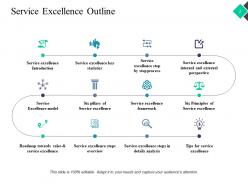
Diapositive 2 : Cette diapositive montre le plan de l'excellence du service décrivant : - Introduction à l'excellence du service, - Processus étape par étape de l'excellence du service, - Perspectives interne et externe de l'excellence du service, - Statistiques clés de l'excellence du service, - Six piliers de l'excellence du service, - Modèle d'excellence du service, - Feuille de route vers l'excellence des ventes et du service, - Aperçu des étapes de l'excellence du service, - Analyse détaillée des étapes de l'excellence du service, - Conseils pour l'excellence du service, - Cadre de l'excellence du service, - Six principes de l'excellence du service.
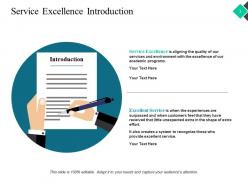
Diapositive 3 : Cette diapositive présente l'introduction à l'excellence du service avec des images et du texte associés.
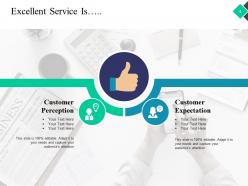
Diapositive 4 : Cette diapositive est intitulée Un service excellent décrit la perception et les attentes du client.
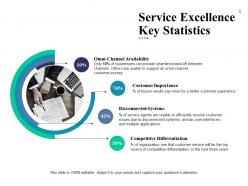
Diapositive 5 : Cette diapositive représente les statistiques clés de l'excellence du service décrivant : - La disponibilité omnicanale, - L'importance du client, - Les systèmes déconnectés, - La différenciation concurrentielle.
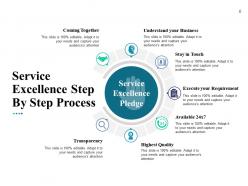
Diapositive 6 : Cette diapositive présente le processus étape par étape de l'excellence du service : - Se rassembler, - Transparence, - La plus haute qualité, - Disponible 24h/24 et 7j/7, - Exécuter vos exigences, - Rester en contact, - Comprendre votre entreprise.
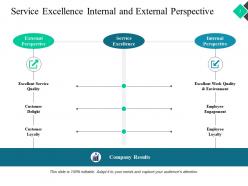
Diapositive 7 : Cette diapositive montre les perspectives interne et externe de l'excellence du service avec les informations associées.
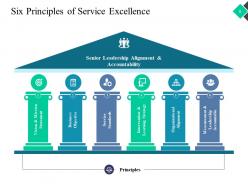
Diapositive 8 : Cette diapositive présente les six principes de l'excellence du service qui comprennent : - Énoncé de vision et de mission, - Objectif commercial, - Normes de service, - Stratégie d'intervention et d'apprentissage, - Alignement organisationnel, - Mesure et responsabilité du leadership.
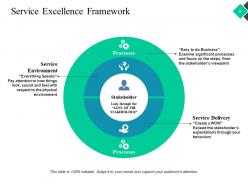
Diapositive 9 : Cette diapositive affiche le cadre de l'excellence du service avec l'environnement de service et la prestation de service.
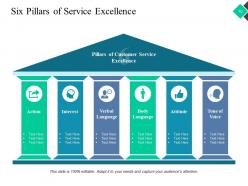
Diapositive 10 : Cette diapositive présente les six piliers de l'excellence du service qui comprennent : - L'action, - L'intérêt, - Le langage verbal, - Le langage corporel, - L'attitude, - Le ton de la voix.
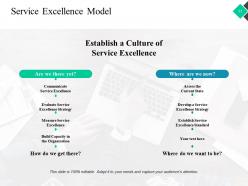
Diapositive 11 : Cette diapositive montre le modèle d'excellence du service expliquant : - Y sommes-nous arrivés ? - Comment y arriver ? - Où en sommes-nous maintenant ? - Où voulons-nous aller ?
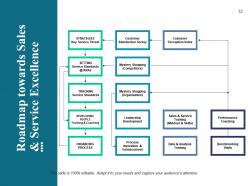
Diapositive 12 : Cette diapositive présente la feuille de route vers l'excellence des ventes et du service avec un diagramme et du texte associés.
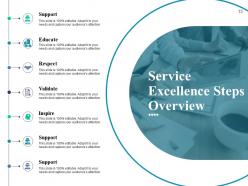
Diapositive 13 : Cette diapositive représente l'aperçu des étapes de l'excellence du service décrivant : - Soutenir, - Éduquer, - Respecter, - Valider, - Inspirer, - Soutenir.
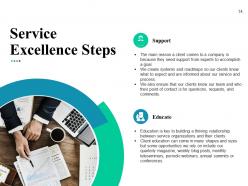
Diapositive 14 : Cette diapositive montre les étapes de l'excellence du service décrivant le soutien et l'éducation avec des images associées.
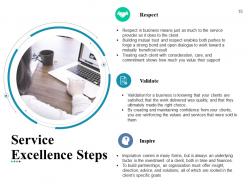
Diapositive 15 : Voici une autre diapositive présentant les étapes de l'excellence du service décrivant : Respecter, valider et inspirer.
Diapositive 16 : Voici une autre diapositive poursuivant les étapes de l'excellence du service décrivant Cultiver et Engager.
Diapositive 17 : Cette diapositive présente les conseils pour l'excellence du service : - Être confiant, poli et aimable, - Toujours établir un contact visuel direct avec le client, - Avoir une bonne présentation, - Avoir de bonnes manières au téléphone, - Tenir un registre clair des demandes des clients.
Diapositive 18 : Cette diapositive montre les icônes de la qualité de service.
Diapositive 19 : Cette diapositive est intitulée Diapositives supplémentaires pour aller de l'avant.
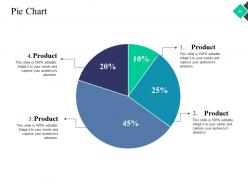
Diapositive 20 : Cette diapositive montre un diagramme circulaire avec une comparaison de quatre produits.
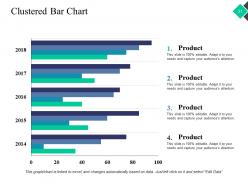
Diapositive 21 : Cette diapositive présente un diagramme à barres clusterisé avec une comparaison de quatre produits.
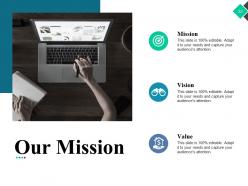
Diapositive 22 : Voici la diapositive Notre mission avec des images et des zones de texte.
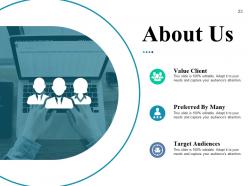
Diapositive 23 : Voici la diapositive À propos de nous pour présenter les spécifications de l'entreprise, etc.
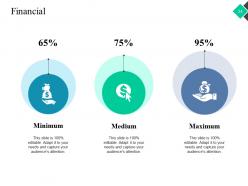
Diapositive 24 : Voici une diapositive financière. Montrez ici les éléments liés aux finances.
Diapositive 25 : Voici la diapositive Rencontrez notre formidable équipe avec les noms et les désignations.
Diapositive 26 : Voici la diapositive Nos objectifs. Montrez ici vos objectifs.
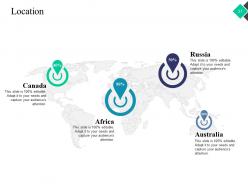
Diapositive 27 : Voici la diapositive Lieu avec des cartes de pays pour montrer les données liées à l'emplacement.
Diapositive 28 : Voici une diapositive Chronologie. Montrez ici les informations liées à la période.
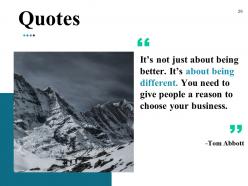
Diapositive 29 : Voici une diapositive Citations pour mettre en évidence ou énoncer quelque chose de spécifique.
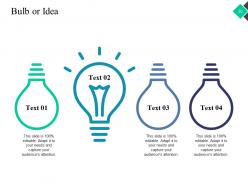
Diapositive 30 : Voici une diapositive Ampoule ou Idée pour montrer une nouvelle idée ou mettre en évidence des spécifications/informations, etc.
Diapositive 31 : Voici une diapositive de remerciement avec l'adresse, les numéros de contact et l'adresse e-mail.
Qualité du service Diapositives de présentation PowerPoint avec les 31 diapositives :
Utilisez nos diapositives de présentation PowerPoint sur la qualité du service pour vous aider à gagner un temps précieux. Elles sont prêtes à s'intégrer dans n'importe quelle structure de présentation.






FAQs for Service Quality
So there's this SERVQUAL model everyone talks about - reliability, responsiveness, assurance, empathy, and tangibles. Reliability's the big one though. Your customers have to trust you'll actually do what you say. Responsiveness is how fast you get back to them, and assurance covers whether your team knows their stuff. Empathy gets overlooked a lot but it's honestly where you can really stand out - just being human with people. Oh, and tangibles are the physical stuff they see. I'd start with nailing reliability since that drives most satisfaction, then tackle the rest.
Mix quantitative stuff with qualitative - customer surveys are your bread and butter here. NPS and CSAT scores give you real numbers to track. Mystery shopping helps too, plus feedback forms and keeping an eye on social media. The data gets pretty overwhelming honestly (learned that the hard way). Focus on response times, how fast you resolve issues, and whether customers actually stick around. Those are your main KPIs. Oh, and don't just collect data to feel productive - actually do something with what you find or it's pointless.
Honestly, good training makes such a huge difference for service quality. Your team actually knows what they're doing when weird situations come up, plus they can use all your systems properly. I've worked places that totally skipped this - you could tell right away from how awkward customer interactions were. Confident employees will solve problems themselves instead of just dumping everything on managers. Oh, and don't just do it once when people start. Keep it going or they'll forget half the stuff you taught them.
Good service = loyal customers, pretty simple. People won't put up with crap service more than once or twice. Build that trust and emotional connection, and customers will stick with you even when competitors offer cheaper prices. Honestly, word-of-mouth from happy customers is pure gold. You'll get way more repeat business too. But here's the thing - consistency matters big time. One terrible experience can totally wreck months of building that relationship. So yeah, train your team well and make sure everyone's on the same page about service standards.
Honestly, the worst ones are inconsistent training and not having clear standards. Your team probably doesn't have the power to actually fix things on the spot - which pisses everyone off. Most companies get obsessed with numbers but forget customers are actual people. Oh, and systems that don't connect? Total nightmare. Customers hate repeating themselves five times. I'd just ask your frontline people what's driving them crazy - they know exactly where everything falls apart. Sometimes the obvious problems are hiding right there.
Honestly, CRM systems are total game-changers - your team can pull up customer history instantly instead of playing detective. Chatbots handle the basic stuff so your people can focus on real problems. AI's getting scary good at predicting what customers want before they even know it themselves. Video support and live chat speed everything up too. The trick is picking tech that actually fixes your pain points, not just buying shiny new tools because they look cool. Figure out where you're bottlenecking first, then find something that directly tackles those specific headaches.
Okay so here's the deal - service quality and brand reputation are totally connected. Good service builds trust and gets people talking positively about you, which obviously helps your reputation. But one terrible experience? It can wreck years of hard work because people LOVE complaining online. Strong brands face higher expectations though, so you can't just phone it in. My advice - treat every single customer like they're about to post a review, because they probably are. It's honestly that simple.
Oh man, this is so true from my experience too! Americans love chatty, friendly service - the whole "how's your day going?" thing. But try that in Japan and customers think you're being unprofessional. They want quiet efficiency instead. Germans? Don't even think about being late, that's their biggest pet peeve. Meanwhile other cultures care way more about building a personal connection than sticking to some rigid schedule. Eye contact expectations are all over the place too. You've really gotta study your specific customers and train your team based on what THEY expect, not some universal approach.
Look, start collecting feedback everywhere - surveys, reviews, social media, whatever. When customers complain, don't just fix it and move on. Dig into why it happened so you can stop it next time. Your team needs regular training, but here's the thing - let them actually solve problems without running to a manager constantly. Set some clear standards and check them with mystery shoppers or audits. Most companies screw this up because they treat it like a weekend project instead of something ongoing. Everyone should care about service quality, not just the front desk people. Pick one metric to track this week and go from there.
Honestly, most people collect feedback but then just... sit on it. Don't be that person. Start with surveys or just pay attention to your reviews - whatever's easiest. Look for patterns in complaints and fix the stuff that's actually bugging people most. Here's what really works though: tell customers when you've made changes based on their suggestions. They love knowing they were heard. Pick one way to gather feedback this week and actually do something with it. Even small fixes can make a huge difference in how customers see you.
Look, service design basically controls how customers feel at every step. You map out their whole journey and catch annoying stuff before it pisses people off - think confusing websites or forever hold times. Honestly, most companies are terrible at this. The key is keeping things consistent everywhere - your app, phone support, whatever. Otherwise customers get whiplash from the different experiences. Oh, and don't try to fix everything at once, you'll go crazy. Just audit what you've got now and pick the three worst pain points to start with.
Yeah, so it really depends on what industry you're in. Healthcare and banking? People expect perfection - one mistake and you're screwed. Retail's more about the whole experience and being responsive to customers. Tech companies can sometimes slide by with bugs if they're doing cool stuff (look at how Tesla got away with delivery issues early on). Manufacturing just wants things consistent and built to last. Honestly, the customer service part matters less there. You gotta figure out what your sector cares about most - speed, getting it right, personal service, or being cutting-edge. Then focus your energy there.
Honestly, start with customer satisfaction scores and NPS - those give you the real deal on how people feel about your service. Track your response times and first-call resolution rates too, that operational stuff matters more than you'd think. Retention and churn data are gold but they lag behind, so don't expect instant insights there. Oh, and Customer Effort Score is pretty clutch if your customers have to jump through hoops to get help. I'd stick to maybe 3-4 metrics max though. Going overboard just creates noise and you'll end up ignoring half the data anyway.
Honestly, start with your three biggest service issues and nail those first. Don't try to fix everything at once - you'll just overwhelm everyone. Get your SOPs written down for every customer interaction, then actually train people the same way at every location. Here's what most companies mess up though: they never check if it's working. Mystery shoppers are your best friend here, or just do random quality checks. Digital dashboards help too so managers can see what's happening in real-time. But seriously, if your standards aren't clear and you're not enforcing them consistently, you're wasting your time.
Look, your team basically mirrors whatever you do - it's wild how that works. If you're always putting customers first and actually celebrating people who crush it for clients, they'll follow suit. But here's the thing - you've gotta give them real power to fix problems, not just empty promises. The second you start half-assing it or making service feel like a chore, your whole team checks out too. Honestly, just think about what you did today. Are you walking the walk, or are you accidentally sending mixed signals without realizing it?
-
Thanks for all your great templates they have saved me lots of time and accelerate my presentations. Great product, keep them up!
-
Graphics are very appealing to eyes.
-
Awesome use of colors and designs in product templates.
-
Very unique, user-friendly presentation interface.
-
Understandable and informative presentation.