


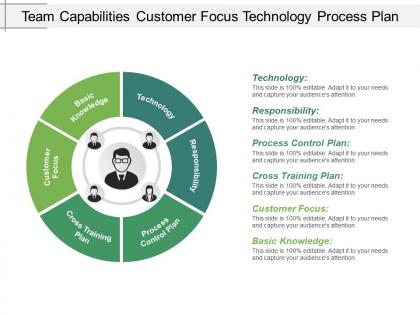
Team capabilities customer focus technology process plan




Try Before you Buy Download Free Sample Product
 Impress Your
 Audience
 100%
100% Editable
 Save Hours
 of Time


Bring in extra footfalls with our Team Capabilities Customer Focus Technology Process Plan. You will become the destination of choice.
People who downloaded this PowerPoint presentation also viewed the following :
Team capabilities customer focus technology process plan with all 5 slides:
You pitch your ideas fast and true. Give them the curve with our Team Capabilities Customer Focus Technology Process Plan.

FAQs for Team capabilities customer focus
Honestly, it's all about adaptability and communication. Your team has to roll with different time zones, work styles, and cultural stuff without everything falling apart. Good collaboration skills matter, but what really makes the difference is letting people use their actual strengths instead of cramming everyone into the same box. Psychological safety is huge too - probably more than people realize. Everyone needs to feel okay screwing up or speaking their mind. Oh, and clear roles help tons so nobody's stepping on each other's toes. Don't just hope this stuff happens naturally though. Build it intentionally, because diverse teams are seriously unstoppable once you nail the basics.
Honestly, start with a skills audit and regular performance check-ins - way more helpful than you'd think. Map out what skills you need vs. what your team actually has. The gaps become super obvious fast. One-on-ones are clutch for getting people to self-assess their strengths and weak spots. I'd also dig into past project results since that shows real capability, not just what people claim they can do. Oh, and make it ongoing - annual reviews are basically useless. A simple skills matrix works great for tracking everything visually. Much easier than complicated spreadsheets.
Dude, diversity really does make teams way stronger. Different backgrounds mean people catch stuff others totally miss. You get better problem-solving when everyone's not thinking the same way, you know? Plus diverse teams actually understand customers better since they reflect real people. The friction from different perspectives is good too - stops everyone from just agreeing with whatever the loudest person says (which happens more than you'd think). Short version: audit who you have now and figure out what voices are missing. It's honestly one of the easiest ways to level up.
Start with basic stuff you can track right now - velocity, quality scores, maybe some skill assessments. Jira and surveys work fine, honestly. Pick 3-4 things that actually matter instead of tracking everything (I've watched teams go crazy with spreadsheets). Retrospectives are clutch for the softer stuff numbers can't catch. Do quarterly check-ins to spot patterns and see where people need help. Don't overthink it at first - just measure what's easy, then tweak as you figure out what actually tells you if someone's improving. The human side matters way more than perfect data anyway.
Honestly, hands-on practice beats sitting through another boring training session any day. Get your experienced people paired up with the newbies for mentoring. Mix up who does what so everyone gets the bigger picture - cross-training is clutch. You'll want regular check-ins to see what's actually working (spoiler: half of it probably isn't). Oh, and make sure people can mess up without getting their heads chopped off. That's where the real learning happens. Don't go crazy trying to do everything at once though. Pick one thing that makes sense for your team right now and start there.
Honestly, just pick a few tools and stick with them - that's like 80% of the solution right there. We use Slack for quick chats and Asana for tracking projects, but Google Workspace works too. The real trick is getting everyone to actually use the same stuff consistently (good luck with that, by the way). Video calls are still necessary for complicated discussions where you need to hash things out. Don't go overboard though - three or four tools max, otherwise people get overwhelmed and start doing their own thing again.
Dude, your leadership style totally changes what your team can pull off. Micromanaging? That's a creativity killer - learned that the hard way. Give people room to breathe plus clear direction and they'll blow your mind with results. I've noticed collaborative leaders build way better problem-solving skills across everyone, though sometimes you gotta be more direct when stuff hits the fan. Really depends on what your team needs in the moment. Different people respond to different approaches too, so watch how your style lands and tweak it. Sounds obvious but most managers never actually do this.
Honestly, the key is making improvement feel routine instead of this big scary thing. Celebrate when someone picks up a new skill or suggests a better process - even tiny wins matter. I'd schedule regular retrospectives every few weeks (yeah, another meeting, I know) but actually ask "what's working, what sucks, what should we try?" People need to feel safe admitting they messed up or sharing random ideas without getting shut down. Oh, and here's the thing - you can't just talk about experimenting with new stuff. Actually give your team time and budget to test things out. Otherwise it's all just corporate lip service.
Look, virtual teams are amazing for getting access to talent you'd never find locally - plus you can basically work around the clock with different time zones. The flexibility is unreal. But man, communication becomes such a pain. You miss all those random hallway conversations where the best ideas happen. Trust builds way slower when you're not grabbing coffee together, and cultural stuff gets weird sometimes. I learned this the hard way at my last job. Short answer: you need to be really deliberate about setting up regular check-ins and picking the right tools, because none of the magic just happens naturally like it does in person.
Honestly, your team's vibe is everything when it comes to getting better at stuff. When people actually trust each other and talk openly, everyone learns way faster. Psychological safety matters so much - like, people won't share good ideas if they think they'll get shot down. I've literally watched amazing teams fall apart because of one person being awful to work with. Good teams create this natural flow where knowledge just spreads around and builds on itself. Watch how your group deals with arguments or celebrates stuff - that'll tell you if you're actually growing together or just pretending to be productive.
Honestly, start by figuring out what skills you're actually missing - the gap might be smaller than you think. Training your current team works great if you've got time. Cross-training is seriously underrated, like way more helpful than people realize. Need something faster? Contractors or consultants can jump in right away. Maybe team up with another department that already has those skills? Just be real about your timeline though. Building skills internally takes forever, so if you're in a rush, external help is probably your best bet. Don't try to do everything at once either.
Honestly, soft skills are what make or break a team. You know how some groups just click while others are a total mess? It's usually about emotional intelligence. When people can actually read each other and handle their own stuff, there's way less drama. Plus they listen instead of just planning what to say next (guilty as charged lol). Teams with solid interpersonal skills work through conflicts better and trust each other faster. Here's the thing - your technical people are probably already smart. These soft skills just make everything they do work smoother.
Honestly, start with weekly lunch sessions where people share what they know - those are clutch. Rotate folks between different projects too so skills spread around naturally. We learned this the hard way when Sarah left and took half our deployment process with her lol. Code reviews are actually amazing for this stuff, plus set up some shared docs or wikis for the important processes. Mentoring helps tons too. Don't try doing everything at once though. Pick one thing and see how it goes first.
Honestly, the trick is getting really specific with your feedback - none of that "great work" fluff that doesn't actually help anyone. I dig into concrete stuff like what behaviors worked and what didn't. Regular check-ins catch problems early too, which saves everyone headaches later. Here's something interesting: peer feedback usually cuts deeper than manager feedback. People are just more real with each other. Once you've got all this intel, create actual action plans around it. Your team will develop exactly what they need instead of just random skills. It's pretty straightforward but most people skip the specifics part.
Honestly, conflict resolution skills are a game-changer for teams. When people know how to work through disagreements properly, you don't just avoid drama - you actually get better ideas out of it. Most creative breakthroughs happen when different viewpoints clash and then merge into something new. Your team learns to really hear each other out, speak up about what they need, and find solutions everyone's cool with. I mean, nobody enjoys awkward tension at work, right? But if you teach these skills before problems pop up, conflicts become way less scary and way more productive.
-
Presentation Design is very nice, good work with the content as well.
-
Out of the box and creative design.