


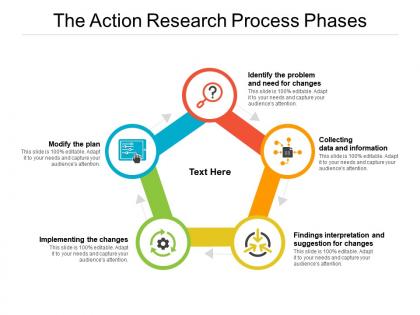
The action research process phases




Try Before you Buy Download Free Sample Product
 Impress Your
 Audience
 100%
100% Editable
 Save Hours
 of Time


Halt errors with our The Action Research Process Phases. Catch the fault before it effects.
People who downloaded this PowerPoint presentation also viewed the following :
The action research process phases with all 5 slides:
Halt the abuse with our The Action Research Process Phases. Bring an end to all exploitation.
FAQs for The action
So action research is basically a four-step cycle you keep repeating. You start by figuring out what's bugging you in your classroom - like why kids aren't engaging or whatever. Next, plan out what you're gonna try differently and how you'll track if it's working. Then comes the fun part: actually doing it while collecting data. After that, you reflect on the whole mess - what bombed, what was brilliant, all of it. Honestly, I love how it just keeps going because once you finish reflecting, you're already spotting the next thing to fix.
Okay so planning and reflection are constantly bouncing off each other in action research. You'll start with your initial plan, then reflect on what's actually going down and realize you need to pivot. Honestly, the whole process is way messier than I expected - nothing linear about it. Your reflections show you holes in your original thinking. Then you adjust, reflect again on those changes, and the cycle keeps going. One thing I learned the hard way? Don't fall in love with your first plan because it's gonna change as you dig deeper into what's really happening.
So basically, you're collecting different stuff depending on where you are in the cycle. Planning phase? Grab baseline data to see what's actually going on and spot problems. Then when you're implementing, you're constantly gathering info to track what's happening - honestly this part gets pretty chaotic but it's super useful. Reflection time means collecting outcome data to figure out if your thing actually worked or not. Finally, revised planning uses everything you've collected to plan round two. Just don't go crazy collecting random data - each phase needs a clear purpose that actually helps you make decisions.
Get stakeholders involved from day one - have them help define the actual problem and research questions since they know the context way better than you do. During planning, ask for their input on methods and whether stuff is actually doable (trust me, they'll spot problems you'd totally miss). Some should be implementing with you during the action phase while others give feedback. The reflection part is huge - run group sessions where everyone digs into what worked and what bombed. Oh, and rotate who's involved so people don't get burned out. Basically treat them like co-researchers, not guinea pigs.
Triangulation is your best friend here - grab data from interviews, observations, documents, whatever you can get. Don't just stick to one method. Member checking is clutch too, even though I always procrastinate on it. Go back to participants and make sure you're not totally misreading their experiences. Keep a reflexive journal throughout each cycle so you can catch your own biases creeping in. The whole iterative thing with action research actually works in your favor since you can test stuff multiple times. Oh, and honestly? Start small. Pick two triangulation methods max and just commit to doing member checks after every cycle.
Honestly, just pick something that's actually driving you crazy at work but that you can control. I'd avoid those huge systemic problems - they'll just make you want to pull your hair out. Think smaller: maybe how to get people more engaged in team meetings, or figuring out a better way to train new hires. The magic happens when you can actually try stuff out, see what works, then tweak it. Write down three things that bug you most at work, then pick whichever one you could realistically mess around with and improve. You want something where you can experiment and actually measure if it's working.
Okay so first off, get proper consent during planning - but honestly, that's just the beginning. Data collection is where shit gets real. Protect people's anonymity, store everything securely, and don't pressure anyone. Analysis phase? Super tempting to cherry-pick stuff that supports what you want to find, but resist that urge. When you're wrapping up and sharing results, be transparent and let participants have input on how you present things. Oh, and consent isn't a one-and-done deal - keep checking in with people throughout the whole process.
Match your communication style to who you're talking to. Executives want the high-level stuff with clear ROI - they don't have time for details. Practitioners need the actual findings they can work with. Multiple formats from the same data work best because honestly, those 30-page reports just collect dust. Visual dashboards are great, plus brief presentations and interactive workshops where people can actually ask questions. Don't just hand over findings and walk away - facilitate real conversations about how they'll implement this stuff. Oh, and definitely schedule follow-ups so they can process everything first.
Honestly, time is your biggest enemy - people get swamped and start doubting the whole thing pretty quick. Data collection gets messy too, especially when your research questions shift (and trust me, they will). The hardest part? Keeping momentum going between cycles. There's always this weird lag between doing stuff and actually reflecting on it. Oh, and trying to be both researcher AND change agent is basically like wearing two hats that don't fit right. You're supposed to stay neutral but also push for changes - it's exhausting. Build in extra time for everything and just keep talking to people about what's happening.
Honestly, just start with what you already know - Excel's great for spotting basic patterns. If you're doing interviews, NVivo or Atlas.ti will save your sanity when coding responses (though they take some getting used to). Survey tools like Qualtrics are clutch because they auto-generate charts and stats. No more manual number crunching like the old days! Google Sheets works well too, especially if you want participants analyzing their own data - that collaborative angle is huge in action research. Don't overthink the tech side though. Pick something that won't have you Googling tutorials for hours instead of actually analyzing.
Focus on whether you actually fixed what you were trying to fix - did people really benefit? Check the immediate results, but also see if changes lasted after you wrapped up. Honestly, the behavioral shifts are what get me most excited when I see them happening. Look at whether your approach could work in other similar situations too. Don't just rely on surveys alone though - measure impact from different angles. Stakeholder engagement matters a lot throughout the whole thing. Oh, and document everything well! Other people can learn from what you did.
So basically you keep cycling through those phases - plan, act, observe, reflect - instead of just doing them once. Each time around, you use what you learned to tweak your approach and go again. It's way messier than regular research, which honestly threw me off at first. Your research question might shift, methods get better, understanding gets deeper. The spiral thing is the whole point though - just make sure you're documenting what changes between rounds so you can actually see how your thinking evolved. Pretty different from the straight-line approach we're used to.
Okay so collaboration is honestly a game-changer for action research. Instead of just doing your own thing academically, you're actually creating real change when you loop in stakeholders and community folks from the start. They help you spot problems you'd miss and come up with solutions people will actually use. Plus it keeps you from going down those weird research rabbit holes we all love. The best part? Everyone's already invested in your findings because they helped create them. My advice - figure out who's impacted by your question and get them involved during planning, not after.
Okay so here's the thing - you gotta bake sustainability into your plan from day one, not slap it on later. Write down literally everything: what works, what bombs, your whole process. Trust me, when people leave (and they will), you'll thank yourself for having it documented. Also get your colleagues and admin on board early because changes just die without that support. I've watched amazing programs vanish because only Sarah in room 204 knew how to run them, you know? Keep your systems dead simple so anyone can follow them. Oh and set those 3-month check-in reminders now - seriously, do it right after reading this.
So the big difference is really just how you collect info. Qualitative = interviews, stories, observations - all that messy human stuff that tells you *why* things happen. Quantitative is surveys and numbers measuring actual change. Most people start with qualitative because it feels less intimidating, honestly. The planning and reflecting parts? Pretty much the same either way. Here's what I'd do - just pick whatever method will actually answer your question. Don't overthink it or choose based on what sounds more "official." You'll drive yourself crazy that way.
No Reviews