


Timeline Showcasing Order To Cash Flow Process




Try Before you Buy Download Free Sample Product
 Impress Your
 Audience
 100%
100% Editable
 Save Hours
 of Time


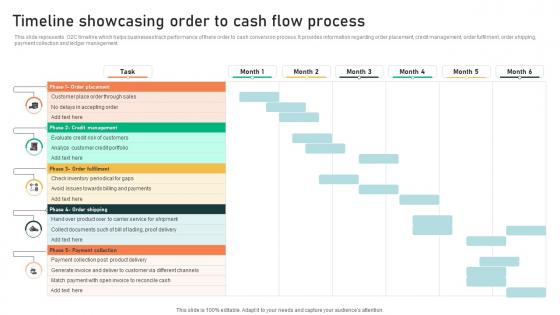
This slide represents O2C timeline which helps businesses track performance of there order to cash conversion process. It provides information regarding order placement, credit management, order fulfilment, order shipping, payment collection and ledger management.
People who downloaded this PowerPoint presentation also viewed the following :
Timeline Showcasing Order To Cash Flow Process with all 6 slides:
Use our Timeline Showcasing Order To Cash Flow Process to effectively help you save your valuable time. They are readymade to fit into any presentation structure.





FAQs for Timeline Showcasing Order To
So O2C breaks down into five steps: order management where you capture and validate orders, credit management to check if customers can pay, fulfillment for picking/packing/shipping, invoicing, then collections to actually get paid. Credit checks are where most people screw up - I see it all the time. You'll think "oh this customer looks legit" and skip it, but that bites you later. Everything's connected too, so one mistake early on creates a mess downstream. Start by mapping what you're doing now. Find your bottlenecks first, then fix those instead of overhauling everything at once.
Honestly, just automate everything you can first - templates, customer data, electronic sending instead of printing stuff. But here's what actually made a huge difference for me: send invoices right after delivery instead of waiting to batch them weekly. Sounds obvious but most people don't do it, and it'll cut your collection time by days. Make your invoices super clear too - payment terms, due dates, who to contact if there's issues. Oh and sync your invoicing with your CRM so you're not entering customer info twice. Even basic email automation beats doing it manually every time.
Dude, automation is seriously the way to go with O2C processes. Gets rid of all that boring manual stuff that slows everything down. Set up automated invoicing and real-time tracking, then connect your CRM and ERP so everything talks to each other. AI can actually do credit checks and predict payments now which is kinda wild. Your team ends up catching mistakes way earlier instead of babysitting every transaction. Honestly though, just pick whatever's causing you the biggest headache right now - that's where you'll see results fastest if you automate it first.
Honestly, just talk to your customers constantly throughout the whole process. Send them updates when stuff ships, throw in tracking numbers, and if something goes wrong? Tell them immediately - don't make them wonder where their order is. That silence thing drives people absolutely insane. Your support team needs to see order statuses in real-time too, otherwise they're useless when customers call. Oh, and make paying easy with different options. Streamlined invoicing helps a ton. Communication isn't just nice to have anymore - it's literally how you beat competitors who suck at it.
Manual data entry errors are gonna be your worst nightmare, plus invoicing delays and customers who take forever to pay. Honestly, automation is a lifesaver here - set up order processing to handle itself and add validation rules so you don't get those ridiculous mistakes that snowball into bigger problems. For invoicing, automate triggers when stuff ships. Payment delays are harder to fix, but do credit checks early and make your terms crystal clear. Oh, and definitely map out where things are getting stuck first. Then just focus on whatever's costing you the most headaches or cash.
Honestly, start with tracking your inventory in real-time - overselling is the worst. Barcode scanners or RFID will save your butt on picking errors. For expensive stuff, always double-check before it goes out the door. You'll want some kind of automated system that catches screw-ups before shipping. Having everyone follow the same process matters way more than people think. Quality checks at different points help tons too. Look at where you're messing up most right now and fix those spots first. It's like plugging holes in a boat - tackle the biggest leaks.
DSO is definitely your biggest priority - shows how fast you're actually getting paid. After that, I'd watch order processing time and invoice accuracy rates. Cash conversion cycle matters a ton too for working capital stuff. Oh, and first-call resolution on payment disputes - those things drag on forever if you don't nail them quickly. Honestly though, don't go crazy tracking like 15 different things. Pick maybe 3-4 that actually move the needle for your business. Check them monthly and you'll spot the real bottlenecks pretty fast.
Oh yeah, analytics can totally help with that O2C stuff! Start with basics like days sales outstanding and invoice processing times - they'll show you where things get stuck. Payment prediction is where it gets interesting though. You can actually figure out which customers will probably pay late (super useful for adjusting credit terms). I'd say focus on one metric at first instead of going crazy with everything. Pull your data into some dashboards and look for patterns in delays. The predictive side takes some setup but honestly? Worth it once you nail it down.
Ugh, late payments are the worst - they totally screw up your cash flow. Your DSO shoots up, which means money's just sitting there instead of working for you. Plus your collections team wastes tons of time chasing the same people over and over. I swear some customers think invoices are just suggestions. You end up having to get stricter with credit terms or ask for deposits upfront from the repeat offenders. The whole O2C process gets messy fast. Best thing? Set up those automated reminders early before it becomes a headache.
Dude, you should definitely automate your invoicing - it'll save you so much time. The system can generate invoices from your orders automatically and send them right out. No more typing everything manually (which honestly gets old fast). Payment tracking happens in real-time too, so you always know what's outstanding. Your team won't be stuck doing the same boring tasks over and over. For collections, set up automatic reminders - customers get nudged without you having to remember. Payment gateways make it super easy for people to actually pay you quickly. I'd start with whatever invoice types you send most, then add others later.
Honestly, just set your credit policies upfront and don't cave when people push back - that's where most companies mess up. Run proper financial checks before approving limits, and automate whatever you can so there's less room for "special cases." Your sales team will hate the restrictions at first, but they'll thank you later when customers actually pay their bills. Keep a close eye on those aging reports too. Like, weekly at minimum. Have a clear plan for when payments start dragging - don't just hope it'll work itself out. Trust me, treating this stuff as actual risk management instead of busy work will save you so much stress down the line.
Honestly, good inventory management is a game-changer for speeding up your Order to Cash cycle. You can fulfill orders right away instead of making customers wait while you restock or hunt for alternatives. Accurate stock data also cuts down on those annoying order cancellations and billing headaches later. I've watched companies literally shave days off their cycles just by fixing their inventory visibility - it's pretty wild how much of a difference it makes. The trick is finding that sweet spot between having enough stock ready but not drowning in excess inventory that eats your cash flow. Start with auditing your current stock accuracy.
When you connect your ERP with O2C, you can actually see what's happening across your whole customer process in real-time. No more data sitting in separate systems or people manually passing stuff between sales, fulfillment, and finance. The automation part is pretty sweet - orders just move from your CRM straight through inventory and invoicing without anyone typing the same info twice. Customers get way better service because everyone's looking at the same data. Processing gets faster, errors drop. I'd start by figuring out where your current handoffs are slowest. That's probably where you'll see the biggest wins first.
Set up categories for different dispute types first - pricing errors, quantity issues, damaged stuff, whatever. Route them to the right teams fast. Honestly, a shared spreadsheet beats scattered emails every time for tracking everything. You'll want clear timelines for resolution and keep customers posted on progress. Your collections team needs to see open disputes so they're not bugging people about legit contested invoices - learned that one the hard way. Document patterns you notice. Short resolution windows work better than you'd think. Fix the root problems upstream when possible.
Look, your O2C process is basically your cash flow lifeline. Quick order processing and collection = money in your account faster. Bottlenecks kill you though - slow invoicing, delayed shipping, those annoying 60-day payment terms. Cash just sits there doing nothing while you're waiting around. Honestly? Start with your invoice-to-payment timeline first. That's where most companies see the biggest wins. I've seen businesses completely turn around their working capital situation just by tightening up that part of the cycle. Every day you shave off matters more than you'd think.
-
Thank you SlideTeam for such an excellent service.
-
I want to express my gratitude to SlideTeam’s presentation design services team for helping me create the best presentation of my life!