


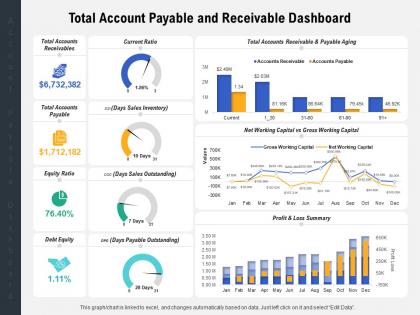
Total account payable and receivable dashboard




Try Before you Buy Download Free Sample Product
 Impress Your
 Audience
 100%
100% Editable
 Save Hours
 of Time


Our Total Account Payable And Receivable Dashboard are topically designed to provide an attractive backdrop to any subject. Use them to look like a presentation pro.
People who downloaded this PowerPoint presentation also viewed the following :
Total account payable and receivable dashboard with all 2 slides:
Use our Total Account Payable And Receivable Dashboard to effectively help you save your valuable time. They are readymade to fit into any presentation structure.
FAQs for Total account payable
Honestly, it's all about getting to know your clients' actual business goals - not just what they're buying right now. Build real relationships first. Then stay ahead of problems by tracking their usage patterns and satisfaction scores religiously. I swear, catching issues early saves so much headache later. Regular check-ins are clutch, though scheduling them when everyone's crazy busy is... well, good luck with that. Quarterly business reviews work great if you bring actual insights instead of boring updates. Oh, and don't just react to stuff - be consultative. Think bigger picture about where they're headed.
Honestly, automation saves me so much time with the boring stuff - invoice processing, payment reminders, all that data entry nonsense. I started with just automating my weekly reconciliation reports (took like 3 hours before, now it's instant). Client onboarding runs itself now too. The error reduction alone is worth it since I'm terrible at catching typos in spreadsheets. Pick one annoying task you do every week and find a tool for it. Don't go crazy trying to automate everything at once though. Focus on relationship stuff instead of drowning in admin work.
Focus on the stuff that actually matters - uptime, response times, error rates. Those tell you if your system's working when people need it. Account creation rates and login success are huge for business impact. Security stuff like failed logins matters too, obviously. User satisfaction scores are gold but honestly a pain to collect consistently. I'd probably start with maybe 3-4 metrics that align with what your users care about most. Don't go overboard tracking everything at first. Time-to-resolution for account issues is another good one if you're dealing with support tickets.
Look, automate the boring stuff first - payment processing, basic data entry, standard account updates. That covers your speed problem right there. But don't go crazy trying to rush everything because you'll just create bigger headaches down the road. Keep humans in the loop for big accounts, weird transactions, anything that could mess up client relationships. Real-time dashboards help you catch problems fast without jamming up the works. Honestly, figure out which tasks you're doing over and over - probably like 80% of them. Those repetitive ones? Perfect candidates for automation.
Honestly, cloud tech is running the whole show for account management these days. Real-time syncing, automated reports, accessing everything from your phone - it's all there. Your team can jump in from anywhere and everything backs up automatically. The AI stuff actually finds patterns you'd totally miss on your own, which is pretty cool. When your client list grows, the system just scales with you instead of forcing some expensive upgrade nightmare. Oh and definitely check what you're currently using - bet there's automation you're not taking advantage of yet.
Honestly, good accounts management is a game changer for cash flow. You'll get paid way faster when you actually stay on top of invoicing and chase down overdue accounts. I learned this the hard way at my last job - we were so chill about collections and it nearly killed us! Also negotiate better terms with your suppliers while you're at it. The data's super useful too. You can spot patterns like which clients are always late payers and plan around those cash gaps. Set up automated reminders for everything and check your aging reports weekly. Sounds boring but it works.
Ugh, client retention is probably your biggest pain point - mine too honestly. Regular check-ins help, plus actually showing them the ROI numbers (even when it's tedious). Communication gets messy fast, so I started doing weekly touchpoints and writing everything down. Saves my ass when clients forget what we agreed on. Oh, and be super clear about timelines upfront! I learned that one the hard way. Managing expectations is like... half the job? Track client health scores if you can - total game changer for catching issues early. Way better than scrambling later.
Ugh, regulatory changes are such a pain - you're constantly updating KYC stuff, tweaking data policies, and adding verification steps that make account opening drag on forever. Different regions want different things too, which is honestly the worst part if you're dealing with global accounts. You end up managing like three different compliance frameworks at once. Oh, and the rules keep changing mid-game obviously. Set up alerts for regulatory updates in your main markets - trust me on this one. Also get tight with your compliance team now before you actually need them. They'll save your butt when new requirements drop out of nowhere.
Honestly, start with super clear payment terms upfront - net 30 works but tweak it based on your cash flow situation. Follow-up is where most people drop the ball (I get it, asking for money sucks). AR aging reports are your best friend for catching issues early. Short sentences work. Also, try offering like 1-2% discounts for early payment - sounds tiny but it actually moves the needle. Oh and don't wait until invoices are 60 days overdue to start panicking. Being proactive saves you so much headache later.
Honestly, data analytics beats guessing every time. You'll actually see patterns in how clients pay, figure out who's worth your time, and catch problems before they explode. Once you get into it regularly, it's pretty addictive tbh. Watch for stuff like declining engagement or sketchy payment trends - way better than scrambling later. My advice? Pick like one or two metrics you actually care about first. I made the mistake of tracking everything at once and it was just noise. Focus on what moves the needle for your biggest accounts.
So basically, reconciliation is like your financial safety net - you're comparing your books against bank statements and invoices to catch screw-ups early. Missing payments, fraud, data entry mistakes... all that stuff gets spotted before it snowballs. I know it sounds tedious as hell, but trust me, it'll save you major headaches down the road. Do it monthly minimum, daily if you've got crazy transaction volume. Your books stay clean and you'll actually know if your numbers are legit. Way better than finding out months later that something's been off the whole time.
Honestly, CRM systems are lifesavers - they dump all your customer info in one spot so you're not hunting through random spreadsheets anymore. Each client's history, what they like, their complaints, it's all right there. The automation stuff handles follow-ups and reminds you about calls without you having to keep mental notes (which I'm terrible at anyway). You can sort accounts by how much they're worth too. Just start with your biggest clients first and add the rest later. Way better than sticky notes everywhere.
Honestly, communication is probably the biggest one - you're basically the middleman between everyone. Being good with numbers helps a lot since you'll handle budgets and talk ROI with clients. Problem-solving is huge because trust me, stuff breaks constantly and clients want fixes yesterday. You also need decent people skills to read the room during tense meetings. Oh, and project management keeps you sane when you're juggling like five accounts at once. I'd say pick whichever one you're worst at and work on that first.
So accounts management is basically having all your customer info in one spot - purchase history, support issues, what they actually like. Game changer because you're not starting from scratch every time. You'll catch red flags before people bail, find legit upsell chances, and skip the spam-y mass emails. Honestly, most companies are terrible at this part. Just start tracking touchpoints consistently so your conversations feel human instead of robotic. Makes such a difference when customers feel like you actually know them.
Dude, bad accounts management is such a nightmare - it totally kills your cash flow and pisses off clients. Late payments start stacking up, billing gets messy, and suddenly your team's wasting hours fixing problems instead of actually growing the business. Plus you can't even predict when money's coming in, which makes planning anything impossible. Honestly, it screws with everything from day-to-day operations to how investors see you. I'd say start by looking at your current setup and figure out what's breaking the most - usually it's because nothing's automated or your payment terms are confusing as hell.
-
Professional and unique presentations.
-
Good research work and creative work done on every template.
-
Excellent products for quick understanding.
-
Very unique, user-friendly presentation interface.
-
Colors used are bright and distinctive.
-
Amazing product with appealing content and design.
-
Unique design & color.
-
Thanks for all your great templates they have saved me lots of time and accelerate my presentations. Great product, keep them up!