


Toyota motor corporation company profile overview financials and statistics from 2014-2018




Try Before you Buy Download Free Sample Product
 Impress Your
 Audience
 100%
100% Editable
 Save Hours
 of Time


Get a cast iron guarantee from our Toyota Motor Corporation Company Profile Overview Financials And Statistics From 2014-2018. Their commitment is boundless.
People who downloaded this PowerPoint presentation also viewed the following :
Toyota motor corporation company profile overview financials and statistics from 2014-2018 with all 73 slides:
Our Toyota Motor Corporation Company Profile Overview Financials And Statistics From 2014-2018 ensure boundless enthusiasm. Their commitment is guaranteed.





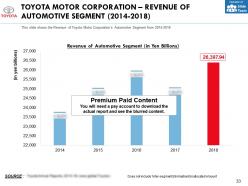
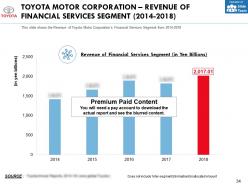
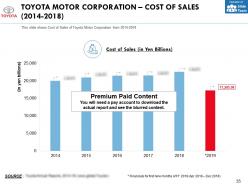
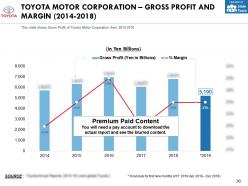

FAQs for Toyota motor corporation company profile overview financials and
Dude, Toyota killed it during 2014-2018. Revenue climbed from like $256B to $272B, pretty steady growth. Net income was solid too - stayed between $18-23 billion each year. What really blew my mind though? Their operating cash flow hit $20+ billion consistently. That's just nuts for any company, honestly. 2016 was kinda rough with some weird one-time charges dragging things down, but they recovered fast. Operating margins held around 7-8% most years. If you're analyzing this stuff, focus on that cash flow consistency - shows their business model can handle whatever gets thrown at it.
So Toyota's revenue was all over the place from 2014-2018. Started around $256 billion in 2014, then hit some rough patches in 2015-2016 when global car sales slowed down. The yen exchange rates were brutal too - really screwed with their numbers since they report in Japanese currency. They bounced back toward 2018 though. Oh wait, I think I mixed up my numbers earlier - let me not confuse you more than I already have! Point is, if you're comparing them to other automakers, definitely look at the constant currency figures. Otherwise you're not really seeing how the business actually performed.
So Toyota killed it from 2014-2018 for a few reasons. The weak yen was massive - made their exports super competitive and inflated overseas profits when converted back. They also got really good at cutting costs through their production system tweaks. Volume went up in North America and Asia too, which helped. Oh, and the Prius hybrid stuff let them charge premium prices, which was smart honestly. If you're digging into their numbers from back then, start with the currency stuff - that's where you'll see the biggest swings year to year.
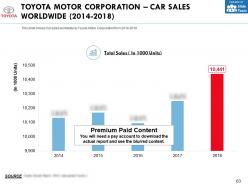
Toyota crushed it from 2014-2018, going from 10.2 to 10.6 million cars sold. North America bounced back strong for them, Asia stayed solid. Europe was kinda meh but whatever, that's typical. Their hybrid tech was genius timing - everyone suddenly cared about fuel efficiency. Here's the smart part: they spread across so many markets that when one region tanked, others made up for it. Like when my portfolio actually works lol. Geographic spread really saved their ass during rough patches.
So Toyota went all-in on this TNGA platform thing from 2014-2018. They cut their platforms from like 100 down to maybe 30-40, which is honestly pretty smart when you think about it. Same parts across different cars = way cheaper to make everything. They doubled down on that lean manufacturing stuff they're famous for too. Plus supply chain tweaks here and there. I remember reading their financials got way better during this time - margins improved even though car prices stayed competitive. Classic Toyota move really, just making everything more efficient behind the scenes.
Yeah, so Toyota got hammered by currency stuff from 2014-2018. The yen kept getting stronger, which is brutal for exporters like them - suddenly their cars cost more overseas and all that foreign profit looked way smaller when converted back. 2016-2017 was particularly rough with the yen vs dollar moves. They actually had to keep lowering their profit forecasts because of it, which is pretty embarrassing for a company that size. Honestly, when you're looking at their numbers from those years, you'll want to strip out the FX noise to see how they actually performed operationally.
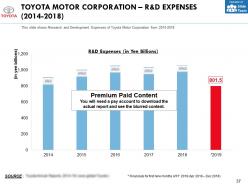
Yeah, Toyota's R&D spending was huge for their financial success from 2014-2018. They dumped money into hybrid tech, self-driving cars, and fuel cells - honestly, the Prius was like a cash cow during those years. Gas prices went up and boom, they were already positioned perfectly with their hybrid lineup. Smart timing, really. Their early investments let them charge premium prices while actually cutting production costs over time. Oh, and their market share definitely grew in the segments where they'd been doing the most research. Pretty solid strategy if you ask me.
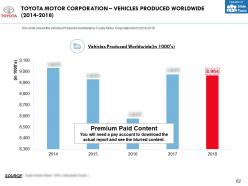
So Toyota actually kept their production super steady from 2014-2018 - we're talking 10.2 to 10.5 million vehicles each year. 2016 hit their peak at 10.5 million, which is honestly pretty impressive. Then it dropped a bit to 10.2 million in 2017-2018, but that's still crazy consistent. What gets me is how they pulled this off while everything else was going nuts in the global market. If you're using this for comparison stuff, I'd say focus on how steady they were rather than growth. Shows they really know how to run their operations.
So Toyota actually cut their debt by a ton between 2014-2018. We're talking from like $130 billion down to $105 billion - that's about 20% less debt. Pretty impressive honestly, especially since most companies just keep piling it on these days. Their debt-to-equity ratio went from 0.6 to 0.4 too. The crazy part? They were still spending big on R&D and new plants the whole time. Shows they've got solid cash flow management figured out. If you're digging into their numbers, that's what I'd focus on - how they kept growing while actually paying down debt.
Yeah, competition totally hit Toyota hard from 2014-2018. Hyundai was slashing prices and Tesla was stealing the premium spotlight. Their operating margins dropped from 8.5% to 7.2% by 2017 - pretty brutal honestly. But Toyota's response was actually smart. Instead of joining the price war, they went all-in on hybrids and streamlined their manufacturing even more. Prius kept selling well despite cheap gas, which surprised everyone. While other automakers were bleeding money, Toyota stayed profitable. For your situation, I'd say copy their playbook - invest in what makes you different rather than racing to the bottom on price. Way smarter long-term.
Yeah, Toyota got slammed by regulatory changes from 2014-2018. Billions went into meeting new emissions standards and safety requirements - Europe and California were brutal. The whole VW diesel thing made regulators go crazy on everyone, even though Toyota wasn't really involved in that mess. Their margins took a hit for sure. Smart move though - they turned it into an excuse to pour money into hybrids and EVs. When you're looking at their financials, try to pull out those compliance costs from their regular operations. Otherwise the numbers look way worse than they actually were.
So Toyota's stock was pretty solid during those years - went from like $115 to over $130 by 2018. Not super exciting, but that's kinda the point with them. Their hybrid game was on point (way ahead of everyone else), plus they had consistent profits and cash flow. Yeah there were some dips when the market got weird, but nothing too crazy. Honestly it was boring in the best way possible - just steady growth that matched how well the company was actually doing. If you're thinking about car stocks, Toyota's basically the safe choice that won't give you heart attacks.
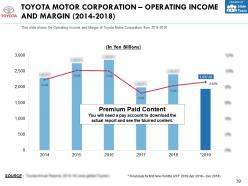
Looking at Toyota from 2014-2018, they were honestly pretty boring in the best way possible. ROE hung around 10-12% consistently, ROI stayed between 8-10%. Not gonna blow your mind, but super reliable. What really stood out was their debt-to-equity sitting at just 0.4-0.5 while other automakers were drowning in debt. Operating margins? Steady 7-8%. I know it doesn't sound exciting, but this kind of financial discipline is exactly why they didn't panic during rough patches. Sometimes consistency beats flashiness, especially in the car business.
So Toyota basically had to do a complete 180 during those years. Everyone suddenly wanted SUVs and crossovers instead of sedans - except the Camry somehow survived that bloodbath. They cranked up RAV4 and Highlander production and threw the C-HR into the mix. Smart move financially since SUVs have way better margins. By 2018 trucks and SUVs were like 70% of their US sales compared to 50% in 2014. The crazy part? They actually pulled off retooling their factories that fast to match what people wanted.
Dude, Toyota's whole 2014-2018 strategy was basically "save for a rainy day." They hoarded cash like crazy and didn't go nuts with debt, even when they were killing it profit-wise. Super boring but totally worked when everything went sideways later. The hybrid bet was genius too - positioned them perfectly when EVs started taking off. They somehow managed to spend big on growth while still being conservative with cash flow. Honestly pretty impressive balancing act. For your stuff, just keep decent cash reserves around. Don't blow it all on expansion just because you're doing well right now. You never know what's coming next.
No Reviews