


Value based pricing strategy powerpoint presentation slides





Try Before you Buy Download Free Sample Product
 Impress Your
 Audience
 100%
100% Editable
 Save Hours
 of Time


Introducing Value-Based Pricing Strategy PowerPoint Presentation Slides. With the help of a premium pricing PPT template, you can conduct market research in order to learn about customer demographics. By using this demand-based pricing PowerPoint presentation, you can highlight on various kinds of planning related to cost, competitor, and value-based factors. You can emphasize the steps which lead to the execution of data, thus you mention it using product preference analysis PPT visuals. By using a value-pricing plan PowerPoint presentation complete deck, you can create a report on the buyer’s personal data. With the help of pricing presentation powerpoint, you can create a buyer’ persona on the basis of demographic, mindset, language, and customer journey. This premium pricing PowerPoint presentation contains sheets, charts, reports, and graphs with which you can create a market segment record. The product preference analysis PPT comprises content ready twenty-four slides to create a comprehensive presentation. Therefore, download this ready-to-use value pricing strategies PowerPoint presentation deck and improve profitability.
People who downloaded this PowerPoint presentation also viewed the following :
Content of this Powerpoint Presentation
Slide 1: This slide introduces Value-Based Pricing Strategy. State Your Company Name and begin.
Slide 2: This slide shows Content of the presentation.
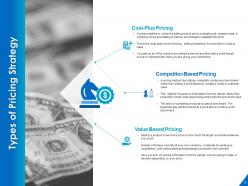
Slide 3: This slide presents Types of Pricing Strategy describing- Cost-Plus Pricing, Competitor-Based Pricing, Value Based Pricing.
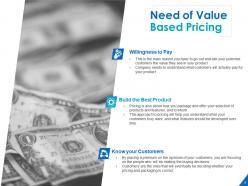
Slide 4: This slide represents Need of Value Based Pricing describing- Willingness to Pay, Build the Best Product, Know your Customers.
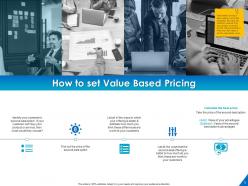
Slide 5: This slide explains How to set Value Based Pricing.
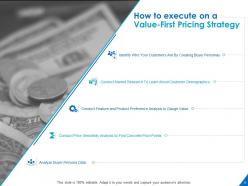
Slide 6: This slide describes How to execute on a Value-First Pricing Strategy.
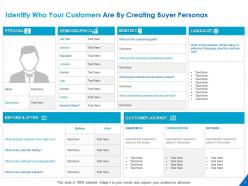
Slide 7: This slide helps to Identify Who Your Customers Are By Creating Buyer Personas.
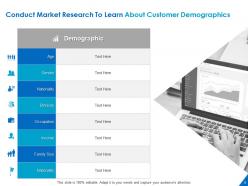
Slide 8: This is a slide to Conduct Market Research To Learn About Customer Demographics.
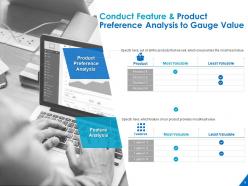
Slide 9: This slide Conducts Feature & Product Preference Analysis to Gauge Value.
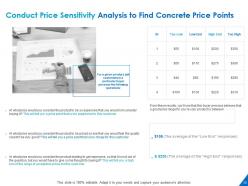
Slide 10: This slide Conducts Price Sensitivity Analysis to Find Concrete Price Points.
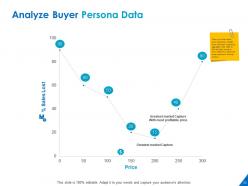
Slide 11: This slide represents Analyze Buyer Persona Data to find the best prices to drive sales for a particular buyer persona’s favorite product.
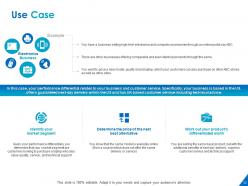
Slide 12: This slide shows Use Case with example.
Slide 13: This slide displays Value Based Pricing Strategy Icons.
Slide 14: This slide is titled as Additional Slides for moving forward.
Slide 15: This is Our Mission slide with related imagery and text.
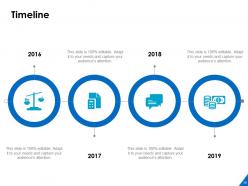
Slide 16: This is a Timeline slide to show information related with time period.
Slide 17: This is a Financial slide. Show your finance related stuff here.
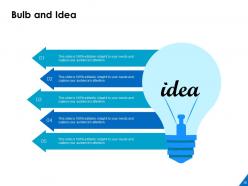
Slide 18: This is a Bulb and Idea to state a new idea or highlight information, specifications etc.
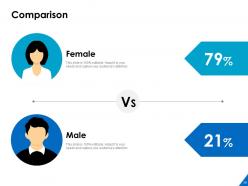
Slide 19: This is a Comparison slide to state comparison between commodities, entities etc.
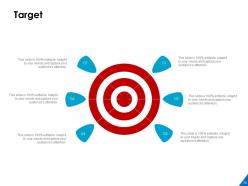
Slide 20: This is a Target slide. State your targets here.
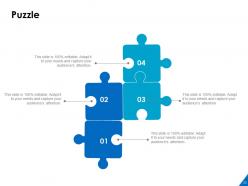
Slide 21: This is a Puzzle slide with text boxes.
Slide 22: This is Our Team slide with names and designation.
Slide 23: This slide shows Magnifying Glass to highlight information.
Slide 24: This is a Thank You slide with address, contact numnbers and email address.
Value based pricing strategy powerpoint presentation slides with all 24 slides:
Handle journalists with our Value Based Pricing Strategy Powerpoint Presentation Slides. Ensure you are given fair coverage.


FAQs for Value based pricing strategy
Honestly, it all comes down to three things: what customers think your stuff is worth, how much they'll actually pay, and what makes you different from everyone else. Do your homework first - surveys, interviews, checking out competitors. That research part is kind of a pain but you really can't skip it. Figure out what benefits your customers actually give a damn about, not what you think they should care about. Here's the thing though - different customer groups value different stuff, so you might need multiple pricing levels. I'd start by mapping out who your main customers are and what matters most to them, then price from there.
Honestly, customer perception is everything with value-based pricing. If people don't see the value you're talking about, they won't pay premium prices - period. You've got to shape how they view your benefits through your messaging and positioning. Here's the weird part though: perception isn't always logical. People make emotional decisions too. So focus on communicating your unique value clearly. Also, get feedback to actually understand how customers see what you're offering. Sometimes what you think is valuable isn't what they care about at all.
Look at software companies, pharma, and consulting - they're crushing it with value-based pricing. SaaS bills on ROI metrics, drug companies charge premiums for life-saving meds, consultants price by project value instead of hours. Airlines do this too with their dynamic pricing (though honestly, sometimes it feels like robbery). The trick? You need solid data proving your impact on customers. Figure out which clients get the most value from your product first. Then work backwards to build pricing tiers that actually capture that value. It's way more effective than just guessing what people will pay.
Look, you've gotta stop thinking about your product features and start thinking about what actually changes for your customers. Track the stuff that matters to them - money saved, time back in their day, whatever. Just ask them directly what value they're getting, honestly some will tell you about benefits you never even considered. Before/after comparisons work great for this. Put real dollar amounts on those improvements when you can. I know it sounds obvious but focus on their business results, not your cool features. Those ROI calculators are clutch too - makes everything way easier to talk about with prospects.
Look, competitive analysis is useful for getting a feel for what's out there, but don't let it dictate your pricing. I mainly use it as a sanity check - am I really delivering enough value to justify charging 30% more? Or can I actually get away with less while keeping margins healthy? The cool part is finding gaps where competitors aren't hitting what customers actually care about. That's where you can really differentiate. Check what others are doing to build your confidence and spot opportunities, sure. But honestly? Your final price should always tie back to the specific value you're creating for each customer segment, not what some competitor pulled out of thin air.
Stop with the vague "we're innovative" stuff - nobody cares. Show them real numbers instead: "we cut processing time by 40%" hits way harder. Customer testimonials are gold because people trust other customers more than your marketing (and honestly, most marketing sounds pretty over-the-top anyway). Focus on actual business impact - saved money, more revenue, less risk. When you talk pricing, make it about ROI. Short comparison charts work great too. Show the total value you deliver next to your price. Makes the conversation shift from "this costs too much" to "look what I'm getting."
Start with customer interviews and surveys - honestly, just asking people directly what they care about gets you 80% there. Van Westendorp pricing research helps nail down your price range. Conjoint analysis is clutch for seeing how people weigh features vs cost. Jobs-to-be-done frameworks dig into the real "why" behind purchases, which is gold. Your sales team probably knows stuff that won't show up in any data - run some value mapping workshops with them. Customer lifetime value calculations and competitive benchmarking fill in the gaps. But seriously, begin with simple interviews. You'd be shocked what people will tell you.
Honestly, value-based pricing can actually boost loyalty if you do it right. Customers stick around when they feel like they're getting their money's worth. Think about it - you'll pay more for that one restaurant where the service is amazing, right? Same principle applies here. The trick is being super clear about what value you're delivering. I'd start by asking your current customers what they actually care about most from your product. Once you nail that connection between price and real benefits, retention goes way up. People don't mind paying more when they get why it's worth it.
Honestly, figuring out what customers actually value is way trickier than you'd think - not just cost plus markup anymore. Your sales team's gonna hate retraining since they're used to defending prices with production costs. Finance will push back hard too because cost-plus is so clean and simple. Forecasting becomes a total mess when pricing gets unpredictable like this. Oh and the internal politics? Brutal. My advice would be testing it on just one product line first instead of going all-in. Baby steps work better than shocking everyone at once.
So basically, AI can totally transform how you do value-based pricing. You can dig into customer behavior data and figure out what different segments actually value about your product. The ML stuff is pretty neat - it'll predict how much people are willing to pay based on their characteristics and buying history. Real-time tracking lets you adjust prices on the fly too. Honestly, I'd start small though - just look at what customer data you've got lying around and connect it to whatever value metrics matter for your business. Don't overthink it.
Honestly, showing beats telling every time. Case studies with real ROI numbers are gold - people want proof, not promises. Free trials let them test drive before buying, which removes so much friction. Interactive demos are my personal favorite though, way more engaging than static presentations. Customer testimonials hit different too since we trust other people's experiences over sales pitches. Oh and comparison charts help highlight what makes you actually different from competitors. Pick whatever feels most natural for your product and see how people react. The whole point is making your value feel real instead of just another marketing claim.
Honestly, value-based pricing is a game changer because it makes your marketing way more focused. Instead of talking about features all day, you're automatically highlighting the actual results customers get. Your sales team will thank you - they can actually defend higher prices when marketing has already built up that value perception. The whole thing forces you to dig into what customers really care about, which you should probably be doing anyway. Short sentences work better sometimes. Figure out your top 3 value drivers first, then make sure they're all over your marketing stuff. It's like getting your pricing and positioning to finally play nice together.
Look, different customers literally value the exact same product in totally different ways. Some will pay extra for speed, others care more about reliability or whatever. The price gap between segments can be crazy - like way bigger than you'd think. You can't just throw one price at everyone and call it a day. Map out who your customers actually are first. Then build your pricing around what each group cares about most. Honestly, just start by asking your current customers what their biggest headaches are and what results they're actually after.
Track your profit margins first - they should go up if people are actually paying for value. Customer retention matters too since happy customers prove your pricing's right. Watch revenue per customer and how your sales conversations change. Are prospects arguing less about price and talking more about results? Win rates tell you everything, honestly. Keep losing deals just on price? Your value story probably sucks or you're targeting the wrong people. The conversations will feel different when you nail it - way less pushback, more focus on what you can deliver. Customer satisfaction scores help validate you're on track too.
Look, everyone thinks value-based pricing means you can just charge whatever sounds good. Wrong. It's about matching your price to what the customer actually gets out of it. You don't need perfect data either - rough estimates work fine at first. Another thing people get wrong? Thinking it only works for fancy products. Nah, any business can do this if they actually understand what problems they're solving. Honestly, the biggest myth is that it's super complicated when it's way easier than the old cost-plus stuff once you figure it out. Just start by asking one customer what you fix for them.
No Reviews