


Companys pricing strategies powerpoint presentation slides




Try Before you Buy Download Free Sample Product
 Impress Your
 Audience
 100%
100% Editable
 Save Hours
 of Time


Pricing strategies are the process of using consumer and industry data to determine the most appropriate price point for your product or service to increase revenue or profits. The optimum price point is when businesses will achieve their goals, whether those goals be improved profit margins, consumer growth, or a combination of the two. Check out our efficiently designed template on Companys Pricing Strategies that focuses on current issues faced by the company, reasons for customer attrition, impact on customers, and the company due to poor product pricing strategy. We have outlined the need for price optimization and challenges and solutions for setting prices. This proposal focuses on different pricing strategies such as skimming, cost-plus, value-based, premium, penetration, competition-based, psychological, and choosing the best pricing strategy model for the company. We have also covered the product pricing strategies in B2B and B2C business, inputs to determine prices, models for developing pricing strategies, optimizing pricing, the impact of implementing price optimization in business, and different dashboards. Book a free demo with our research team and customize the 100 percent editable proposal based on needs. Download our pricing presentation powerpoint now.
People who downloaded this PowerPoint presentation also viewed the following :
Content of this Powerpoint Presentation
Slide 1: This slide displays title i.e. 'Company's Pricing Strategies' and your Company Name.
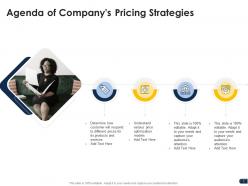
Slide 2: This slide presents agenda.
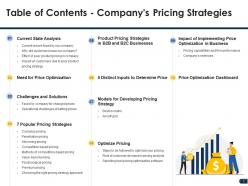
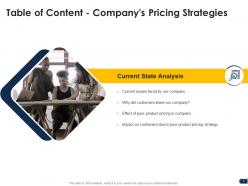
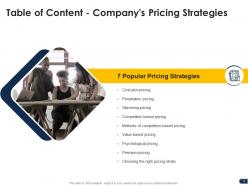
Slide 3: This slide exhibits table of contents.
Slide 4: This slide shows title for four topics that are to be covered next in the template.
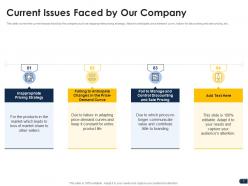
Slide 5: This slide covers the current issues faced by the company such as inappropriate pricing strategy, etc.
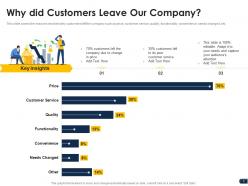
Slide 6: This slide covers the reasons involved why customers left the company such as price, customer service, quality, etc.
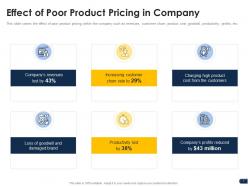
Slide 7: This slide covers the effect of poor product pricing within the company such as revenues, customer churn, product cost, etc.
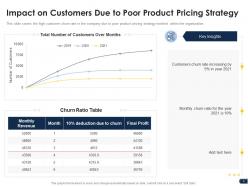
Slide 8: This slide covers the high customer churn rate in the company due to poor product pricing strategy involved within the organization.
Slide 9: This slide depicts title for next topic to be covered in the template.
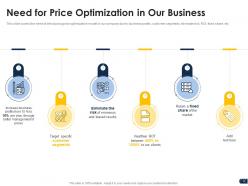
Slide 10: This slide covers the need of introducing price optimization model in our company due to business profits, customer segments, etc.
Slide 11: This slide highlights title for next two topics to be covered.
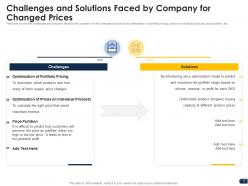
Slide 12: This slide covers the challenges and solutions faced by the company for the changed prices.
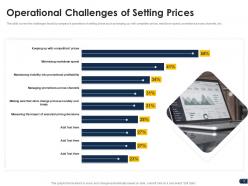
Slide 13: This slide covers the challenges faced by company’s operations of setting prices such as keeping up with competitor prices, etc.
Slide 14: This slide displays title for next ten topics to be covered in the template.
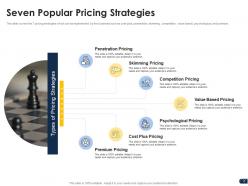
Slide 15: This slide covers the 7 pricing strategies which can be implemented by the business such as cost-plus, penetration, skimming, etc.
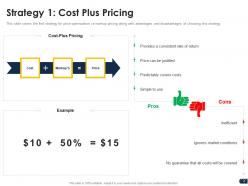
Slide 16: This slide covers the first strategy for price optimization i.e markup pricing.
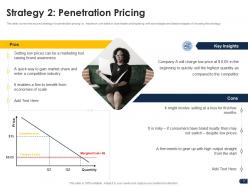
Slide 17: This slide covers the second strategy for penetration pricing i.e., maximum unit sales or loss-leader pricing.
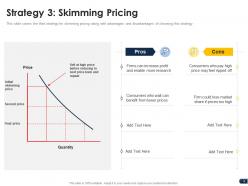
Slide 18: This slide covers the third strategy for skimming pricing.
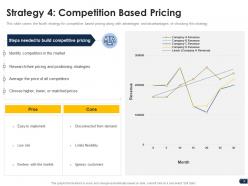
Slide 19: This slide covers the fourth strategy for competitive based pricing.
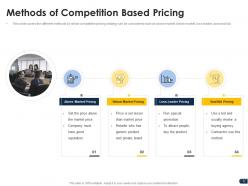
Slide 20: This slide covers the different methods by which competitive pricing strategy can be considered such as above market, below market, etc.
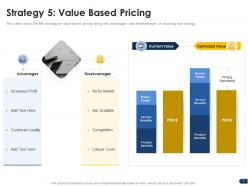
Slide 21: This slide covers the fifth strategy for value-based pricing along with advantages and disadvantages of choosing this strategy.
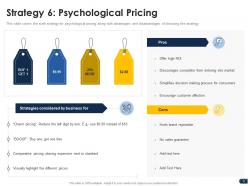
Slide 22: This slide covers the sixth strategy for psychological pricing.
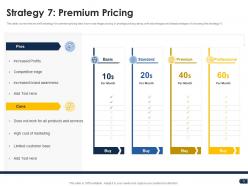
Slide 23: This slide covers the seventh strategy for premium pricing also known as image pricing or prestige pricing.
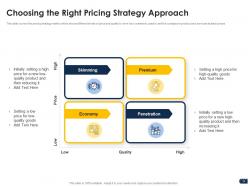
Slide 24: This slide covers the pricing strategy matrix which shows different levels of price and quality.
Slide 25: This slide presents title for next topic to be covered in the template.
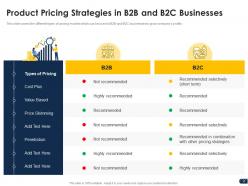
Slide 26: This slide covers the different types of pricing models which can be used in B2B and B2C businesses to grow company’s profits.
Slide 27: This slide exhibits title for next topic to be covered.
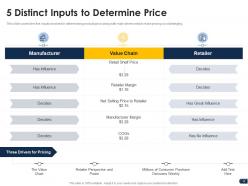
Slide 28: This slide covers the five inputs involved in determining product price along with main drivers which make pricing so challenging.
Slide 29: This slide shows title for next two topics to be covered.
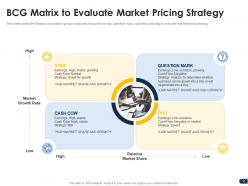
Slide 30: This slide covers the Boston consultancy group matrix which focuses on star, question mark, cash flow, and dog.
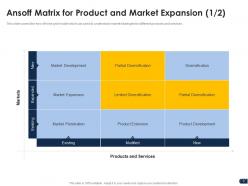
Slide 31: This slide covers the Ans-off nine grid model which can used to understand market strategies for different products and services.
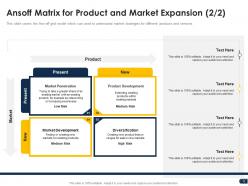
Slide 32: This slide covers the Ans-off grid model which can used to understand market strategies for different products and services.
Slide 33: This slide depicts title for next three topics to be covered in the template.
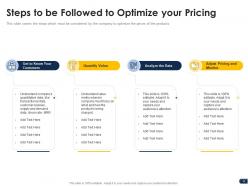
Slide 34: This slide covers the steps which must be considered by the company to optimize the prices of the products.
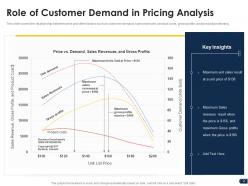
Slide 35: This slide covers the relationship between price and other factors such as customer demand, sales revenues, etc.
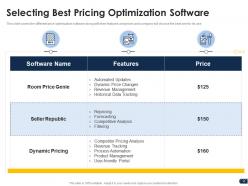
Slide 36: This slide covers the different price optimization software along with their features and prices.
Slide 37: This slide depicts title for next two topics to be covered in the template.
Slide 38: This slide covers the impact of choosing the right price optimization strategy for our company which maximizes ROI, increased salesforce, etc.
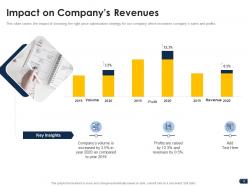
Slide 39: This slide covers the impact of choosing the right price optimization strategy for our company which increases company’s sales and profits.
Slide 40: This slide highlights title for next topic to be covered in the template.
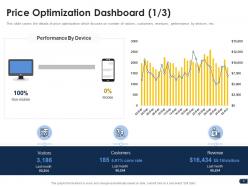
Slide 41: This slide covers the details of price optimization which focuses on number of visitors, customers, revenues, etc.
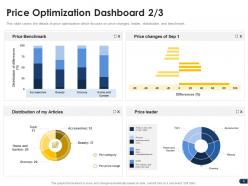
Slide 42: This slide covers the details of price optimization which focuses on price changes, leader, distribution, and benchmark.
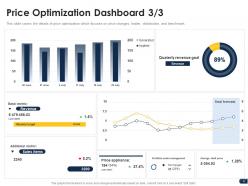
Slide 43: This slide displays continued content.
Slide 44: This slide presents title for additional slides.
Slide 45: This is the icons slide.
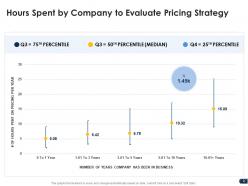
Slide 46: This slide presents 'Hours Spent by Company to Evaluate Pricing Strategy'.
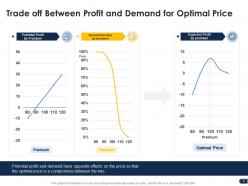
Slide 47: This slide exhibits 'Trade off Between Profit and Demand for Optimal Price'.
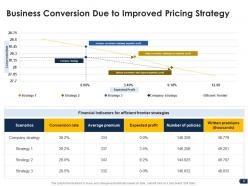
Slide 48: This slide shows 'Business Conversion Due to Improved Pricing Strategy'.
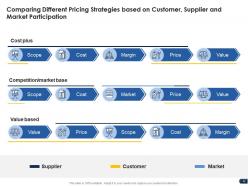
Slide 49: This slide depicts 'Comparing Different Pricing Strategies based on Customer, Supplier and Market Participation'.
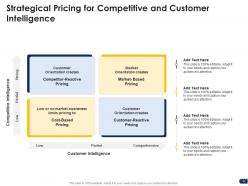
Slide 50: This slide highlights 'Strategical Pricing for Competitive and Customer Intelligence'.
Slide 51: This slide shows about your company, target audience and its client's values.
Slide 52: This slide shows details of team members like name, designation, etc.
Slide 53: This slide displays puzzle.
Slide 54: This is thank you slide & contains contact details of company like office address, phone no., etc.
Companys pricing strategies powerpoint presentation slides with all 54 slides:
Use our Companys Pricing Strategies Powerpoint Presentation Slides to effectively help you save your valuable time. They are readymade to fit into any presentation structure.


FAQs for Companys pricing strategies
Honestly, go with tiered pricing - basic, premium, and bundles work great for templates. I'd price individual ones around $15-35, but bundles are seriously where you'll make bank because everyone thinks they're scoring a deal. If you're cranking out templates regularly, maybe try a subscription thing? Oh and start with prices slightly higher than what feels right, then drop them if you need to. Way easier than trying to raise prices later - learned that the hard way. Just keep an eye on your conversion rates and test different price points.
Try that $19.99 instead of $20 trick - I know it sounds dumb but people actually fall for it every time. Bundle a few templates together with a small discount too. Here's what really works: show your most expensive package first, then your "popular" middle option looks way more reasonable. It's called anchoring and honestly kind of manipulative but whatever, everyone does it. Test different prices on your landing pages and see what converts best. Your audience might be totally different than what you expect. Oh and make the bundles feel like they're getting more value, not just paying more money.
Okay so competitor analysis is basically your sanity check for template pricing. I always end up going down rabbit holes on Creative Market and Etsy (honestly it's kind of addicting), but you gotta see what similar designs are actually selling for. Don't just copy their prices though - that's lazy. Look at bundle sizes, quality, features compared to yours. Your stuff might be way better! Make a simple spreadsheet with like 5-10 competitors and track their patterns. You'll start seeing the sweet spot pretty quick, then adjust based on what makes your templates different.
Honestly, subscriptions are way better than those feast-or-famine one-time sales that had me stressed every month. Your customers pay monthly/yearly for template access, so you get predictable income and they stick around longer. There's something psychological about already paying that makes people less likely to bail. I'd aim for maybe 10-20 fresh templates each month - enough to feel worth it but not crazy overwhelming for you. Oh, and definitely test different pricing with some of your current customers first. You'll figure out what actually converts without guessing.
Yeah, tiered pricing definitely works better for getting people to actually sign up. Most folks are scared of dropping serious cash right away, so having that cheap starter option removes the fear factor. Once they're playing around with your templates and getting comfortable, upgrading doesn't feel like such a big deal anymore. The trick is giving them enough good stuff in the basic tier to keep them happy - but not so much that they never need to upgrade, you know? I've seen this work really well for subscription businesses. People just naturally want more features once they're already invested in using something.
Honestly, freemium's pretty solid for presentation stuff. No upfront cost means tons more people will actually try your templates - and once they see your design quality, they're kinda hooked. Converting them later becomes way easier when they bump into limits or need fancier features for work presentations. The hard part? Finding that balance where free users get enough value to stick around but not so much they never upgrade. I'd probably start with like 3-5 decent free templates and see what your conversion numbers look like from there.
Honestly? Flash sales work crazy well for templates. I've seen conversion rates jump 2-3x during those promotion windows because people hate missing out on deals. Templates are kinda impulse buys anyway, so that urgency really pushes folks to actually hit purchase instead of bookmarking for "later" (which we both know never happens lol). Try 48-72 hour sales first - way better than those sketchy "SALE ENDS TONIGHT" emails that somehow run for three weeks straight. You'll probably notice sales stay higher even after the promo ends because of all the extra traffic and buzz it creates.
Start with checking what other template creators charge - gotta see what's working for similar quality stuff. Customer data is your best friend here: conversion rates, lifetime value, who's buying what. I get way too into A/B testing small batches at different price points, but it works. Track which templates actually sell well and watch for seasonal patterns too. Don't forget your production costs and time investment - that math matters. Pick 2-3 price points per category and test them out. The data will tell you what's working way better than guessing.
So basically, your brand positioning totally controls what you can charge. Premium, design-focused brands? They get away with 3-5x more because people expect to pay for that exclusivity. Budget brands have to compete on price though, so you need serious volume. The middle tier is honestly the hardest - you've got to prove why you're worth more than the cheap stuff. I've watched so many template creators price themselves high but their branding looks like garbage. Total mismatch. You really can't fake it - whatever price you want, your brand has to actually feel worth it to customers.
Yeah, the main problem is customers hate seeing prices jump around - especially for templates since they feel like buying art, not booking flights. Most template sites aren't even built for that kind of real-time pricing stuff anyway. You'd need months of data first to figure out demand patterns and what competitors are doing. Honestly, the whole psychology is just off for this market. People expect templates to have set prices. I'd try seasonal pricing instead - like raising prices before holidays when demand spikes. Way easier to manage and customers get it.
Here's the thing about value-based pricing - it actually builds loyalty because people feel like they're getting what they paid for. When you price based on results (time saved, how professional their stuff looks, etc.), customers see the connection between cost and benefit. Way better than just picking random numbers, honestly. You can do different tiers too - premium users pay more for fancy features while budget folks still get decent value. The trick is being upfront about why you're charging what you're charging. People don't mind paying if they understand what they're getting out of it.
Yeah, recessions definitely make people way pickier about spending. You'll probably need to cut prices or do bundle deals to keep sales up. Companies I know went full budget mode during the last downturn - it was wild how fast they switched gears. Maybe try emphasizing the money-saving angle instead of fancy features? Like, focus on ROI stuff. Also watch your conversion rates like a hawk because things can change super quick. Oh and honestly? Start testing cheaper price points now if you're already seeing people hesitate. Better to get ahead of it than scramble later.
Honestly, figuring out your customers is huge for pricing templates right. You've got freelancers who'll spend maybe $15, then corporate teams that don't even blink at $200. Wild difference there. I'd start by actually asking your current buyers about their company size and budgets - that info's gold for setting up price tiers. Small agencies need different stuff than startups do, so you can't just slap one price on everything. Maybe send out a quick survey? Once you know who's buying and what they'll pay, the whole pricing thing becomes way clearer.
Bundle your templates with matching stuff like icons and fonts - makes it feel way more valuable. I'd throw in different styles too, maybe call it "Complete Presentation Pack" with business and creative themes. People eat that up! Price it lower than buying separately and show how much they're saving. Oh, and target specific situations - "Startup Pitch Kit" works better than just random templates lumped together. The whole thing needs to feel intentional, you know? Not like you just grabbed whatever was lying around.
Don't just lump all the "too expensive" feedback together - that's where most companies mess up. Break it down by who's complaining and what they actually use. Enterprise folks wanting bulk discounts? That's different than solo designers hitting paywalls on specific features. I'd honestly avoid the panic move of cutting prices everywhere (seen that blow up too many times). Try smaller tweaks first - maybe add a middle pricing tier or extend your free trial. Just make sure you A/B test any changes with a small group before going all-in.
-
Qualitative and comprehensive slides.
-
Excellent design and quick turnaround.