


4ps of marketing powerpoint presentation slides
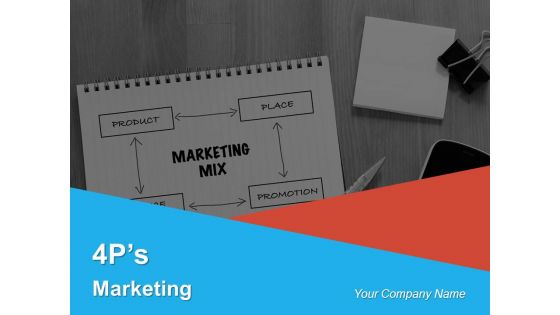




Try Before you Buy Download Free Sample Product
 Impress Your
 Audience
 100%
100% Editable
 Save Hours
 of Time


Building a 4p's of marketing PowerPoint show is no easy feat. To set an example of great PPT about marketing mix strategy you need to deliver a stunning visual show. Taking this into account here we have come up with our readymade slide presentation to illustrate the 4 p's of marketing. With help of this PowerPoint presentation you can share insights about new market opportunities, discussion of business strategies, efficient resource use and to combat rivals. Using this PPT sample you can highlight the importance of right marketing mix elements required for the success of a product. Not only this, this PowerPoint slide deck also supports to underline the key challenges as well as purpose of a marketing mix in new product development and improve business. To help you out further exclusive Powerpoint presentation slides like the product life cycle, extension strategies, pricing strategies and tactics, channels of distribution, types of promotion, marketing mix modeling etc. are included. In short, if you really need to do this fast, then just quickly download our 4 p's of marketing PPT. Illustrate the innards of the engine with our 4ps Of Marketing Powerpoint Presentation Slides. Explain how greater horsepower is generated.
People who downloaded this PowerPoint presentation also viewed the following :
Content of this Powerpoint Presentation
Great marketing is both a science and an art that businesses have sought to master for decades. It involves the psychological, which cannot be seen, and the completely measurable like how many sales were made during a day. In this blog, we will dig deep into the world of marketing, where the four Ps of Product, Place, Promotion and Price dominate. The 4Ps are the answer, provided these are scientifically chosen and executed. Once businesses can achieve this perfection in how they choose the 4Ps, market-product fit is assured. This results in better revenue, greater sales and understanding of customers' tastes. Better business is the inevitable end-product, reflected in much-better choice of the marketing 4Ps for the next product. Then, you also can focus on trickier aspects like customer service.
Our slides contain information meant to pique your consumers' attention and keep them coming back for more!
A Quick Summary: Our slides are packed with outstanding graphics and imagery to create a lasting impression.
Don’t forget to check out our blog on Marketing Mix Templates to enhance your marketing efforts.
Template 1 - What is Marketing Mix?
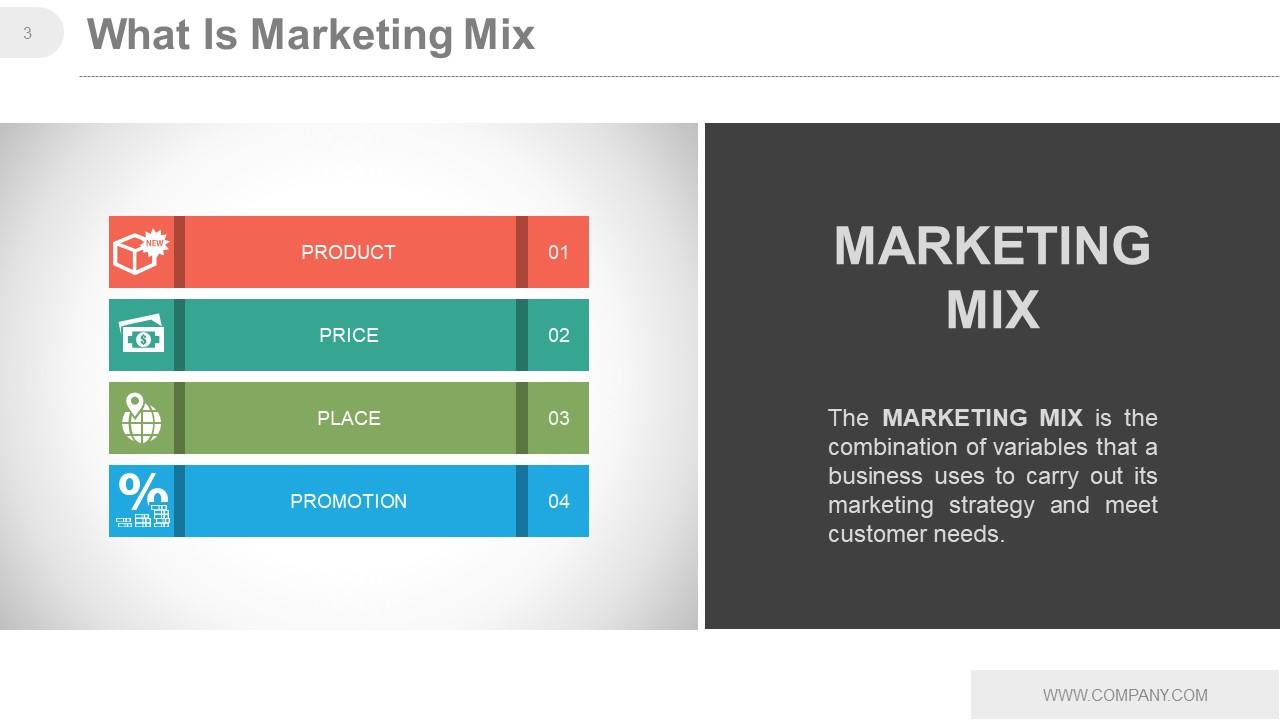
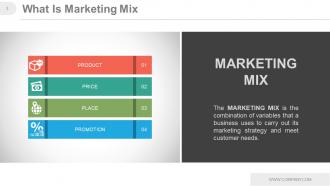
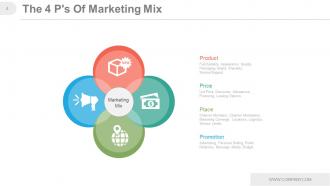
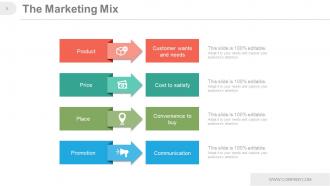
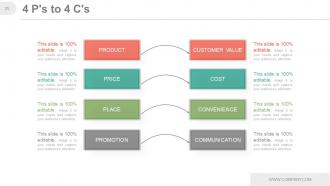
This slide includes marketing mix strategies that give companies the ability to connect with the consumer’s hearts and wallets. It is composed of Product, Price, Place, and Promotion strategies that are designed to meet those customer demands. Product is offered while Price is set; Place includes both physical stores and online platforms that offer accessibility; and Promotion is responsible for driving awareness through advertising or other communication channels. This assists businesses in developing effective marketing plans that resonate with target audiences to achieve success. The combination of these two dynamic elements gives companies the ability to develop efficient marketing strategies.
Template 2 - The Product
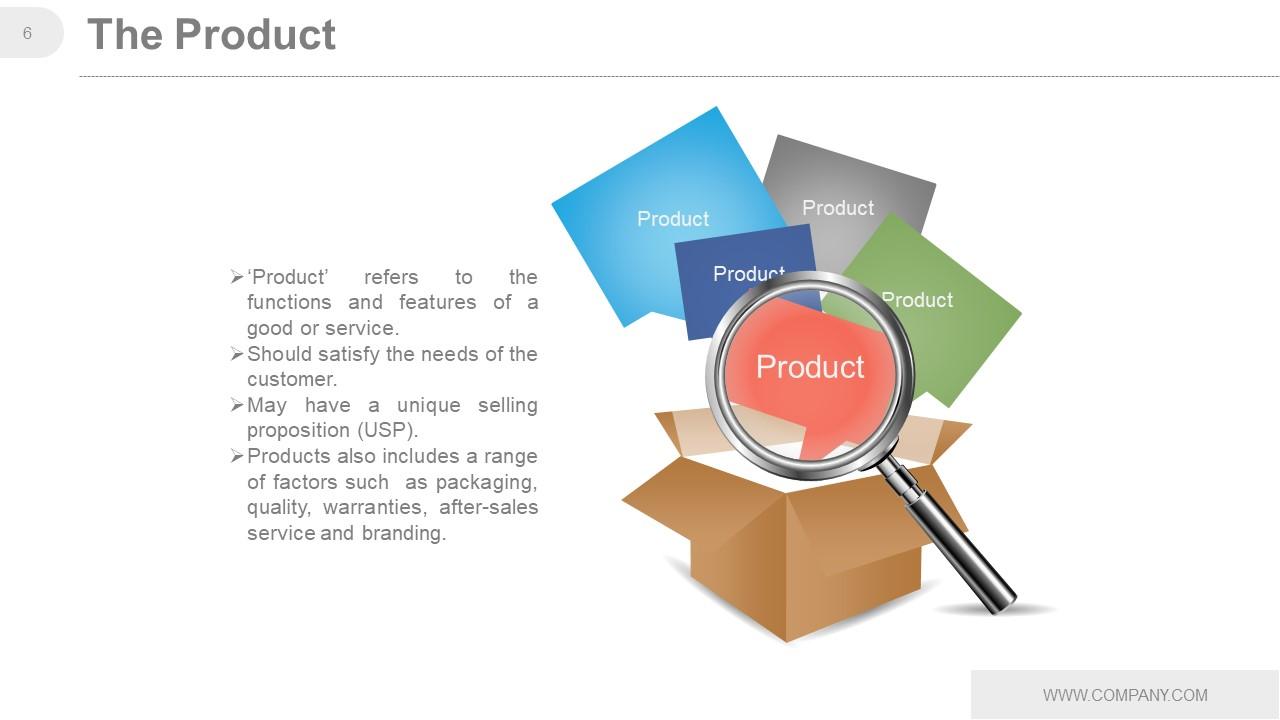
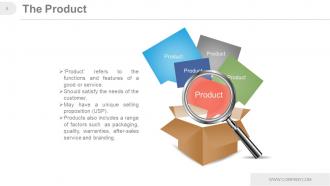
This slide specifies every element of a product or service, including its features and functionalities and how it is displayed and maintained. A product should fulfill client wants with distinctive characteristics while also meeting packaging, quality, warranty, and after-sales service requirements. Branding is essential for building client confidence in any excellent product; branding allows customers to identify quickly!
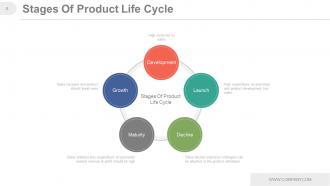
Template 3 - Stages of Product Life Cycle
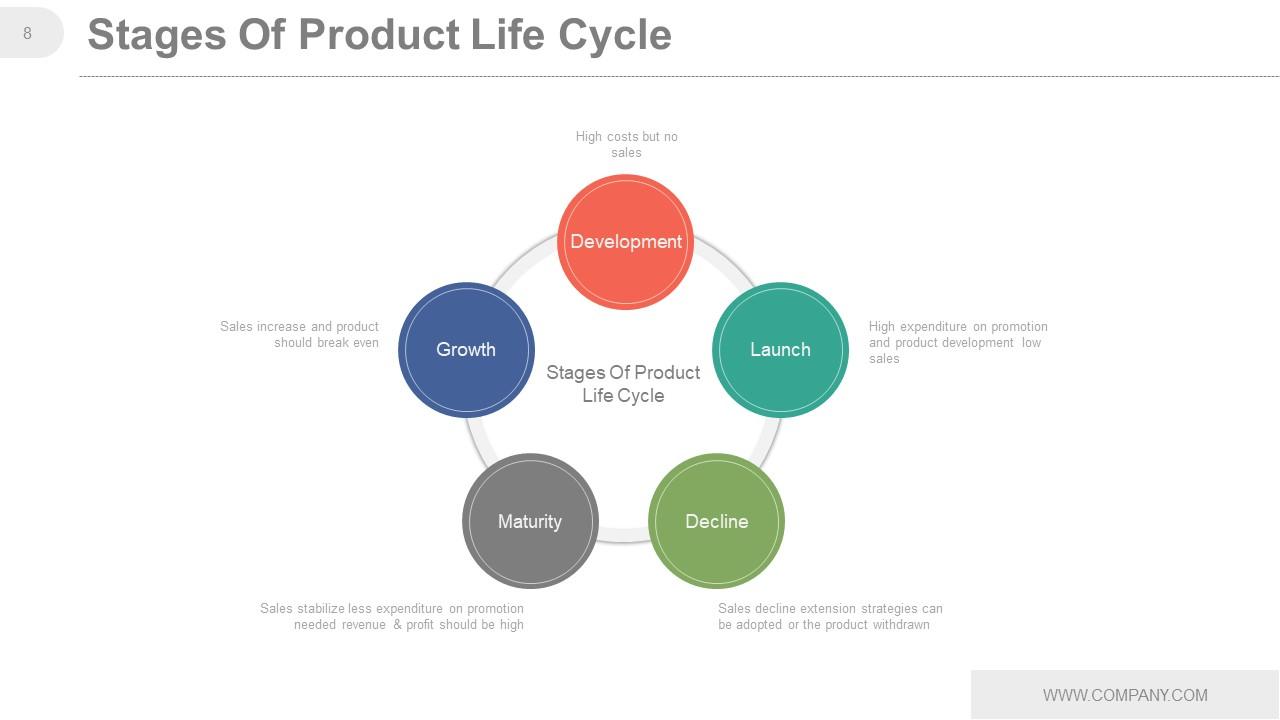
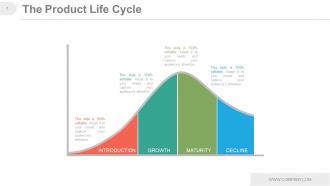
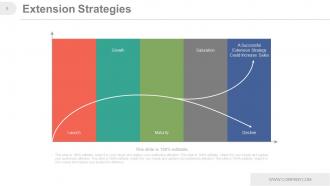
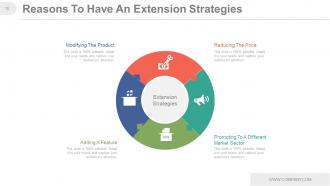
This slide describes how a product progresses from invention to market decline. The first step is development, which involves conceptualizing and designing ideas that might be expensive without producing any sales money. The launch stage is where your product or service is launched to the market via extensive advertising and further expenditure. As sales rise, your product reaches the growth stage, which is when sales begin to break even. Finally, it approaches maturity with consistent sales and lower promotional expenses. When a product enters the decline stage, sales begin to drop, and corporations may explore using tactics to extend its life or terminate it.
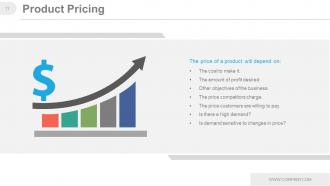
Template 4 - Product Pricing

This slide lists all criteria that influence the Price of goods or services. First, it evaluates the costs of production, such as materials and labor. Next, it examines if expected earnings coincide with corporate financial objectives. Other goals, like market penetration or premium positioning, may also influence pricing choices. Businesses use competitor pricing when determining how much comparable items cost. Understanding what customers are willing to pay is also essential; this varies depending on perceived value and market trends, with increased demand supporting higher prices but sensitivity to price changes becoming a factor for certain products, potentially resulting in decreased demand if costs rise too quickly.
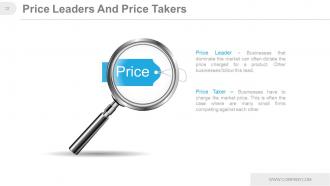
Template 5 - Price Leaders and Price Takers
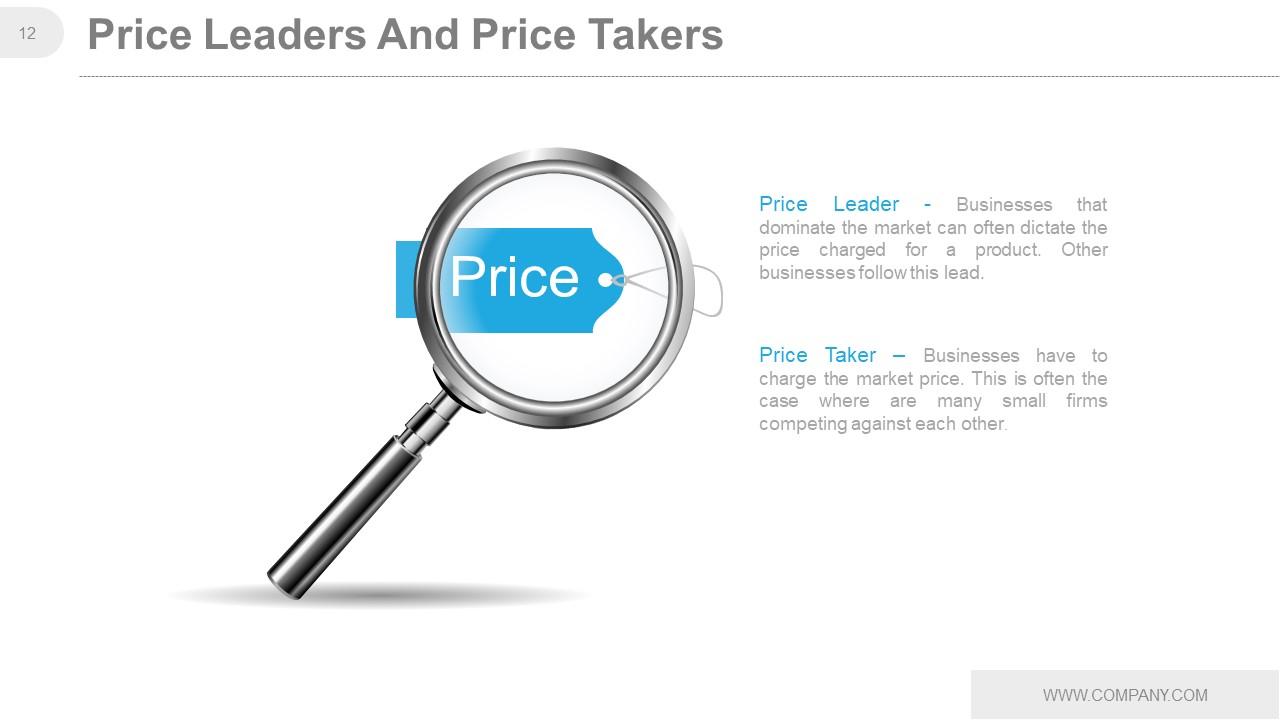
This slide depicts two opposing stances that enterprises may use when determining pricing in a market. Price leaders are the major players who control a market. These companies may establish pricing for goods or services, and other businesses tend to follow suit; their scale provides them with clout. Price takers are smaller enterprises or those with less market strength who cannot set prices and must instead accept the existing market pricing. The slide helps understand whether a company is an industry price leader or a price taker, which helps in the development of pricing strategies and the management of market rivalry.
Get an insight into our blog on the 4Ps of Digital Marketing Templates and take your businesses to a whole new level.
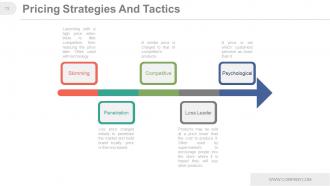
Template 6 - Pricing Strategies and Tactics
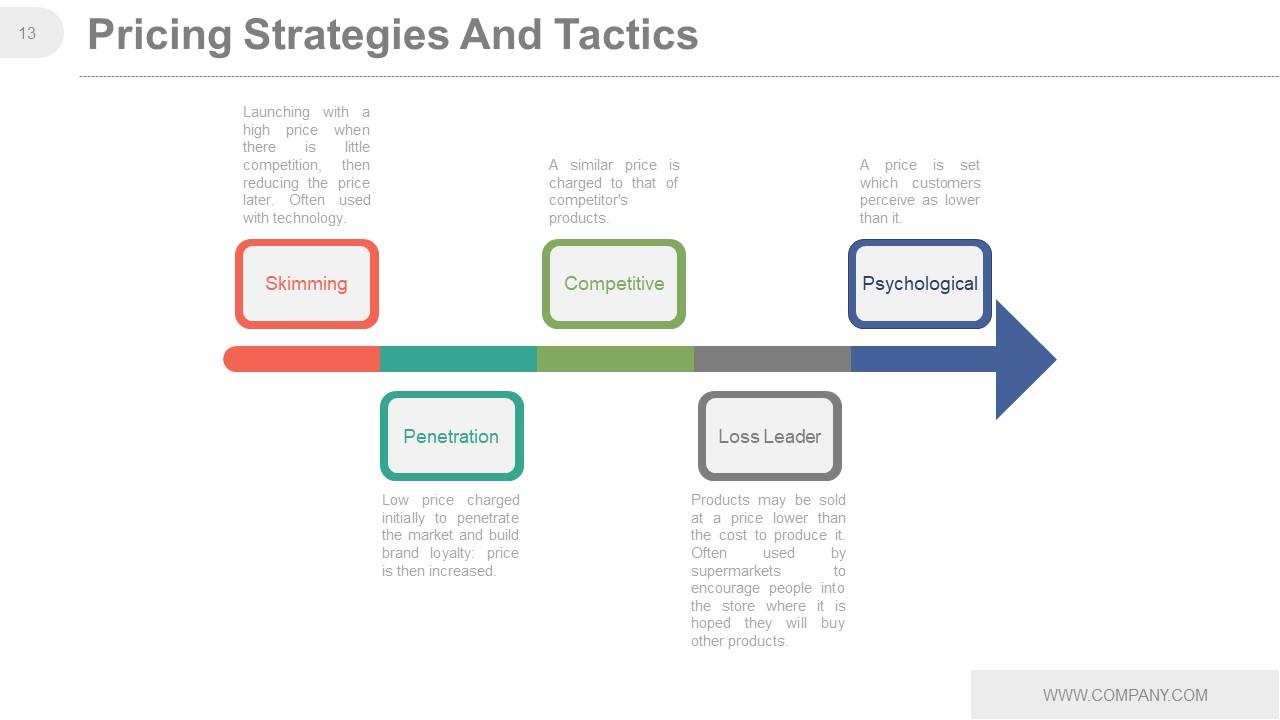
This slide provides a framework for companies to develop pricing strategies and tactics that are adapted, particularly with regard to their goods or services. It highlights skimming, which is one such technique in which corporations debut with higher prices to attract early adopters ready to pay a premium. At the same time, competition-based pricing entails establishing identical prices among rivals in order to retain market dominance.
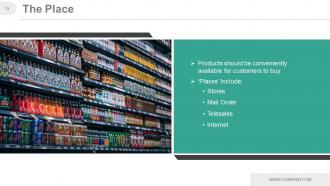
Template 7 - The Place

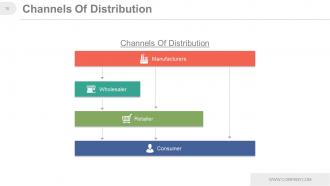
This slide design tries to make items more accessible to consumers by including many channels such as storefronts, mail order, telesales, and the internet. Stores are real retail sites where people can purchase things directly, while mail-order includes buying via catalogs or brochures from home delivery services and having them dispatched immediately. Telesales include selling things over the phone and receiving orders and payments via call centers. In contrast, internet sales allow clients to explore, select, and buy products from their homes using computers or mobile devices. Businesses that use numerous sales channels guarantee that their items are available and accessible to their target clients, which increases and maximizes sales prospects.
Template 8 - Promotions
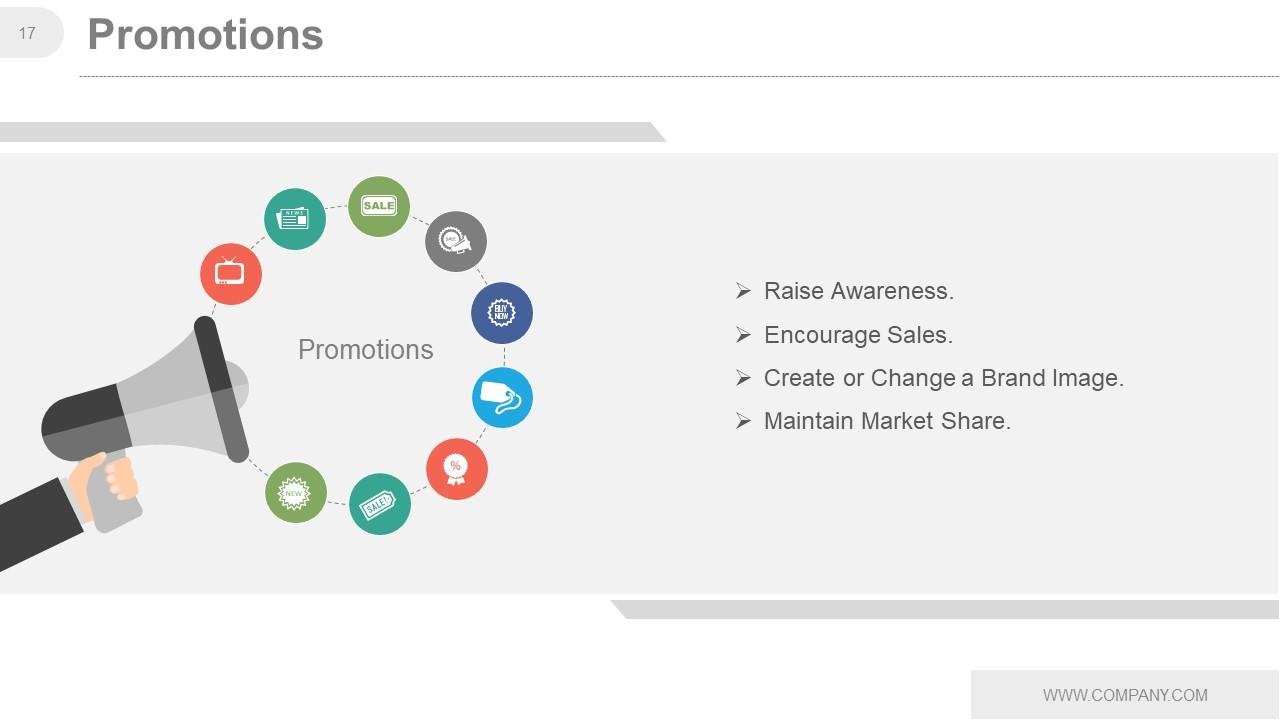
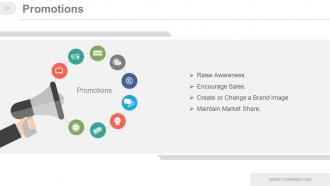
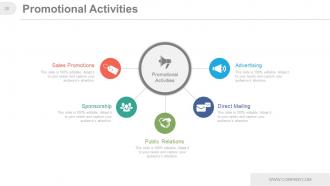
This slide is designed to spread the word about a product or service to attract new consumers and increase revenue. It is designed to raise awareness, increase sales, and shape how people view a company. Promotions include television, radio, and social media advertising campaigns to create awareness of your product or service, as well as special offers or discounts to persuade people to purchase. Promotions influence how consumers see a brand, making it more attractive or contemporary. Promotions also play an essential part in sustaining a company's market position when competition occurs; in general, they're an essential method for companies to get their goods recognized by consumers.
Template 9 Types of Promotion
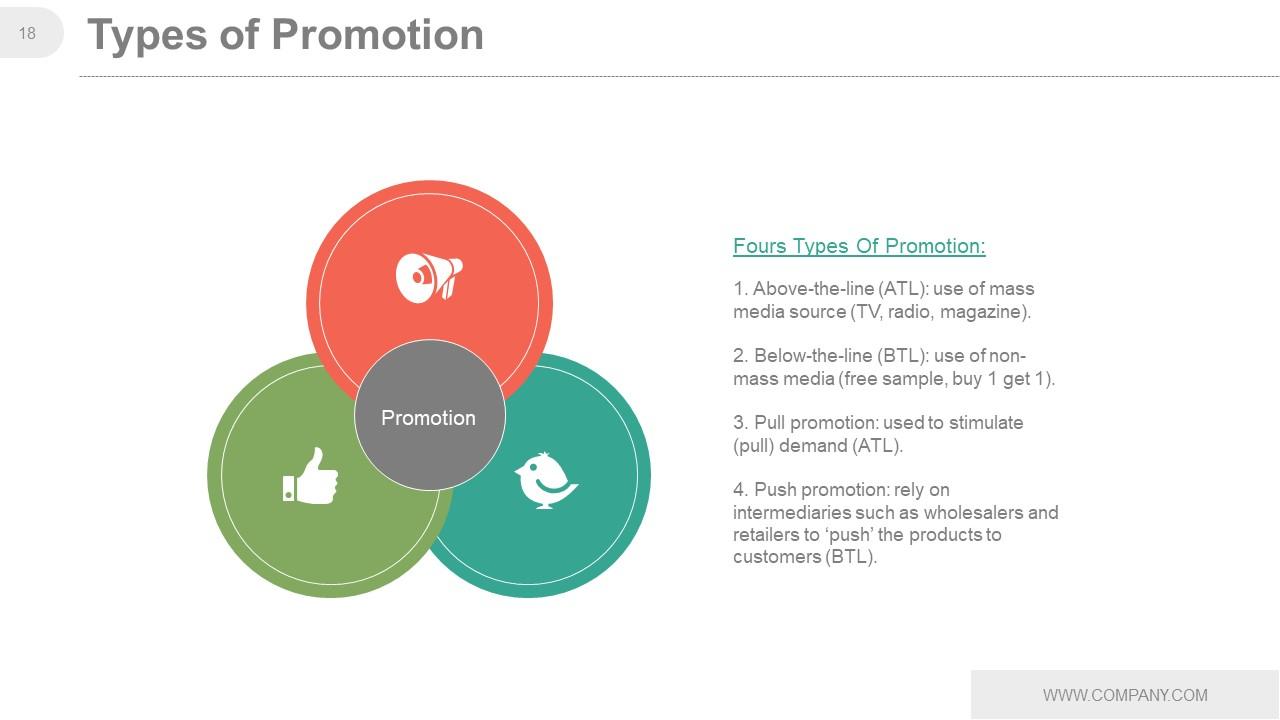
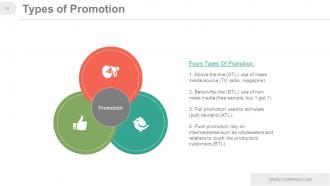
This slide describes four types of promotional actions in marketing. "Above the Line," for example, uses mass media channels like television and radio broadcasts, as well as newspapers, to reach a large audience and increase brand awareness. The second strategy, "Below the Line," focuses on specific client demographics or areas through non-mass media channels such as direct mail, sponsorships, and in-store incentives.
Template 10 - ATL and BTL Promotion
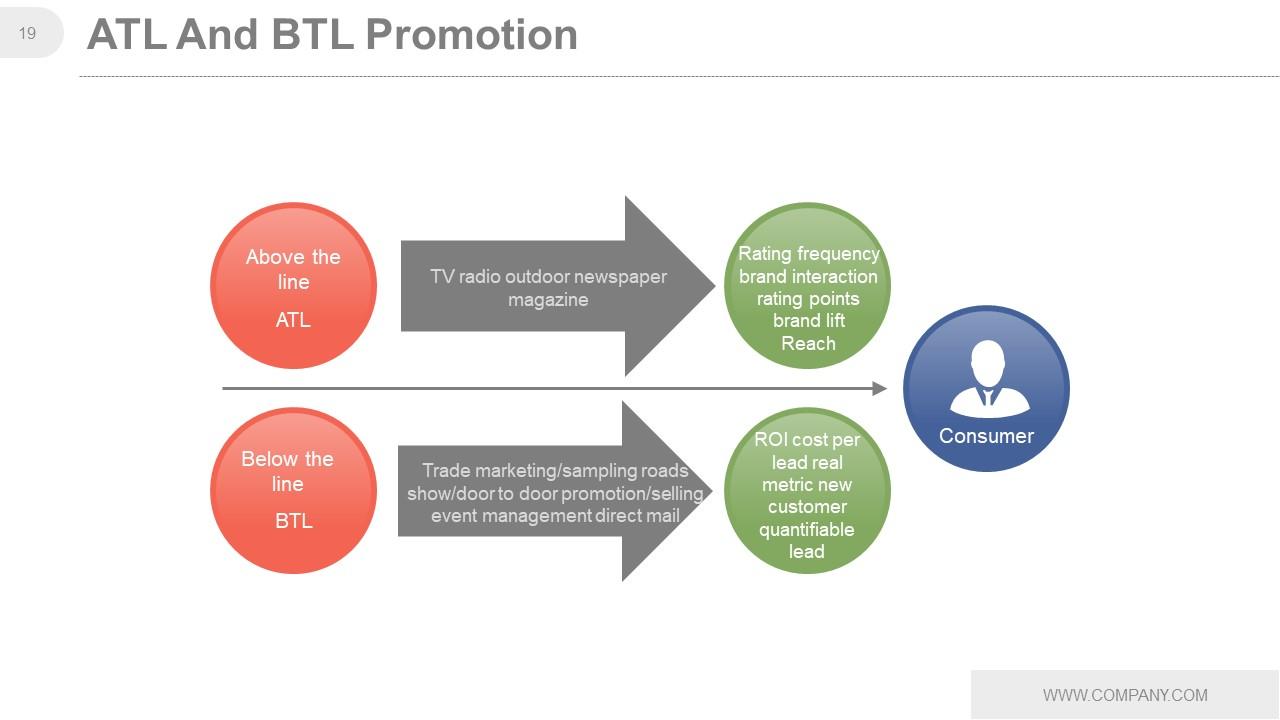
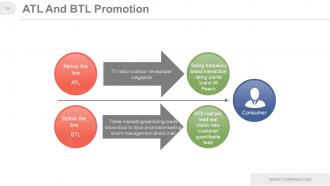
The slide describes a marketing strategy that includes reaching out to customers through a variety of channels. ATL (Above the Line) promotions use mass media outlets such as television, radio, outdoor advertising, newspapers, and magazines to reach a large audience and raise brand awareness.
****
Start your marketing adventure with confidence.
With the information and insights gathered from our presentation, you are now ready to face any marketing issues that may arise. Remember, no matter how much marketing or business expertise you have, the 4Ps are your road map to success. There is no limit to what may be done by skillfully managing goods, pricing, venue, and marketing!
Check out our blog on our 4Ps of Marketing Strategy and prepare effective strategies.
4ps of marketing powerpoint presentation slides with all 53 slides:
Handle the hounds with our 4ps Of Marketing Powerpoint Presentation Slides. Force your critics to actually back off.




FAQs for 4ps of marketing
So the 4Ps are Product, Price, Place, and Promotion - your main marketing levers basically. Product has to solve a real problem. Price should match the value but also what people will actually pay. Place is just getting it where customers can buy it (sounds obvious but you'd be surprised). Then promotion is telling people it exists. Here's the thing though - they all have to work together. If you're going premium, everything needs to match that vibe - your pricing, where you sell, your messaging. I've watched campaigns completely bomb when these don't align. Honestly, start with nailing product-market fit first, then figure out how the other three back that up.
Honestly, most people build what they *think* customers want instead of actually asking them. Surveys and reviews are your best friend here - way more valuable than guessing. Skip the fancy features nobody asked for (seriously, I've watched so many startups do this). Just solve real problems consistently. Oh, and packaging matters more than you'd think - it's still part of your product. Keep checking back with customers and don't be stubborn about changing things. Sometimes the feedback stings but it's usually right.
Honestly, it's all about knowing your audience and what they'll actually pay. Premium customers? Jack up those prices - they literally want expensive stuff because it feels exclusive. But if you're targeting budget shoppers, you gotta go low to get volume. Geographic stuff is huge too - Manhattan pricing will bomb in small towns, trust me. Oh, and that $9.99 vs $10 trick works differently depending on who's buying. Some people see right through it. Really comes down to doing your homework on each group's spending habits and adjusting from there.
Look, placement is huge for sales - if customers can't find you or it's a pain to buy, you're screwed. For online stuff, your website needs to actually work (shocking concept, right?), plus be where people already spend time like social media or Amazon. Physical stores? Location matters, but so does layout and getting your distribution right for your crowd. I've seen amazing products tank because they were impossible to find or the checkout was a nightmare. You gotta map out how people shop and fix whatever's making it annoying. Even something small like weird website navigation can kill conversions.
So promotion is like your megaphone, right? You're cutting through all the chaos to get noticed. It teams up with your product, pricing, and distribution to show people why they should actually care. We're talking ads, social media, PR stuff, sales promos - whatever makes people recognize your name. Honestly, half the brands out there are just screaming into the void because they haven't figured out where their audience hangs out. Your strategy needs to highlight what makes you different from everyone else. Find out where your people actually spend time, then show up there consistently. Don't overthink it.
Honestly, just listen to what your customers are actually saying about each part of your marketing mix. Reviews will show you which product features suck and which ones they love. Their price complaints? That tells you if you're way off the mark or spot-on. Watch where they want to shop - maybe they hate your website but love buying in-store, who knows. And promotion feedback is gold because people will roast a terrible ad without mercy. Set up surveys and check social media regularly. But here's the thing - don't just hoard all that data like a dragon. Actually use it to fix stuff.
Honestly, the worst mistake is treating each P like it's totally separate. Companies nail their product but then price it way out of reach for their actual customers. Or they'll spend forever perfecting ads that run in places their audience never sees - which is just painful to watch. I see teams get obsessed with product features while completely ignoring how they'll distribute the thing. Like, what's the point? All four pieces need to work together and actually match what your customers want. Otherwise you're just throwing money around.
Yeah, seasonal stuff totally changes your whole marketing mix. Product-wise, customers want different things - holiday flavors, summer collections, you know? Pricing gets interesting because you can jack up prices during peak times (Valentine's flowers are ridiculously expensive lol) but then you're stuck offering discounts when things slow down. Where people actually shop shifts too - everyone goes online for holidays, but farmers markets blow up in summer. Oh, and timing your promotions is honestly the hardest part. Start too early and people ignore you, too late and you've missed the boat. I'd just map out your calendar early but stay ready to change course.
So B2B is all about building relationships and showing real business value - like "this saves you 20% on costs" instead of "you'll feel amazing!" Pricing gets way more complicated too. Forget those $19.99 deals - you're dealing with negotiations and bulk discounts now. Distribution changes completely - direct sales teams replace retail stores. Your marketing shifts from flashy consumer ads to trade shows and LinkedIn (honestly, so much LinkedIn). Industry publications become your best friend. The whole vibe goes from emotional to rational. Short version: less feelings, more spreadsheets.
So digital transformation totally changes how the 4Ps work. Products become more about digital experiences - like how Netflix killed DVDs, you know? Pricing gets crazy dynamic with algorithms adjusting stuff in real time based on what competitors are doing. Physical distribution? That's dead. Now it's all about meeting customers wherever they're hanging out online. Promotion is probably the biggest shift though - everything's data-driven with targeted ads and influencer collabs instead of those expensive TV spots that may or may not work. I'd start by figuring out which of your 4Ps are still totally old-school and tackle those first.
Honestly, you'll want to track different stuff for each P to see what's actually moving the needle. Customer satisfaction and return rates for Product. Profit margins and how price-sensitive your customers are for Price - that one's huge. Promotion metrics are pretty straightforward: ROI, conversions, how much buzz you're creating. For Place, watch your distribution coverage and which channels actually bring in customers. The trick is picking maybe 2-3 metrics per P that tie back to what you're trying to accomplish overall. Don't just collect random data because you can.
Honestly, culture changes everything about marketing. McDonald's puts rice in their burgers in Asia - that's how different products need to be! Pricing becomes a nightmare because what people earn and spend varies so much. Your ads have to match local values too (trust me, I've seen campaigns bomb spectacularly). Distribution is weird - some places are all about online shopping, others want that face-to-face experience. My advice? Research the hell out of your target market first. Don't just copy-paste your home strategy and hope it works. Each of the 4 P's needs tweaking.
Dude, you can't skip competitor analysis when setting your 4Ps - I've watched so many launches crash because teams didn't do their homework first. Check their pricing so you're not wildly off-market. Look at what features they have (and what they're missing). Study where they're selling and how they promote stuff. Actually, I remember this one startup that priced 40% higher than everyone else without realizing it. Disaster. Map out like 3-5 direct competitors for each P before you lock anything down. Their gaps become your opportunities.
Yeah, totally! The 4Ps still work, you just flip them around for inbound. Your product becomes their solution. Pricing has to match the value you're actually giving people. "Place" is wherever your audience spends time online - which honestly took me forever to figure out when I started. Promotion turns into helpful content instead of annoying ads nobody wants. Think of it like the 4Ps but way less pushy. Map what you've got against your buyer's journey and you'll see how they connect. It's basically the same framework, just smarter about relationships.
Dude, social media totally flipped the script on marketing. Now you can pinpoint exactly who sees your stuff instead of just throwing ads everywhere and hoping. The crazy part? Your customers actually respond back and share things themselves - like, they become mini promoters for you. It's way more of a back-and-forth conversation now rather than just shouting into the void. Oh and people can make your content go viral which is pretty nuts when you think about it. Traditional advertising feels so one-sided compared to building actual communities around your brand. Don't treat it like a megaphone anymore.
-
Illustrative design with editable content. Exceptional value for money. Highly pleased with the product.
-
Illustrative design with editable content. Exceptional value for money. Highly pleased with the product.