

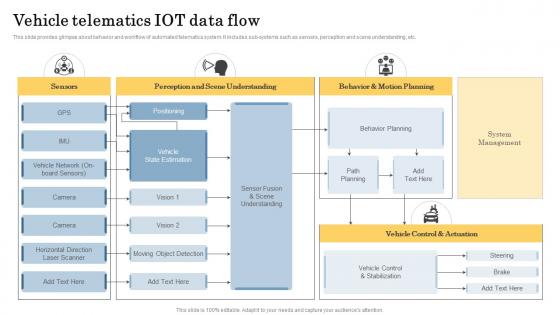
Vehicle Telematics Iot Data Flow




Try Before you Buy Download Free Sample Product
 Impress Your
 Audience
 100%
100% Editable
 Save Hours
 of Time


This slide provides glimpse about behavior and workflow of automated telematics system. It includes sub systems such as sensors, perception and scene understanding, etc.
People who downloaded this PowerPoint presentation also viewed the following :
Vehicle Telematics Iot Data Flow with all 6 slides:
Use our Vehicle Telematics Iot Data Flow to effectively help you save your valuable time. They are readymade to fit into any presentation structure.





FAQs for Vehicle Telematics
So you need a few key pieces - GPS receiver obviously, cellular connection to send data, and an OBD port that plugs into the car to grab stuff like speed and engine info. Accelerometers and gyroscopes are in there too for detecting hard braking or crashes (honestly the sensor tech is pretty impressive these days). There's also a processing unit that handles all the data before shooting it up to your fleet platform. The whole thing lets you see where your vehicles are in real-time and catch maintenance problems before they become expensive headaches.
So telematics basically shows you everything happening with your fleet in real time - where trucks are, how drivers are performing, fuel usage, when stuff needs fixing. Route optimization becomes way easier when you can see traffic patterns. Plus you'll catch risky driving before it costs you big time in accidents or insurance hikes. The maintenance scheduling alone is worth it - no more surprise breakdowns on busy days. I'd honestly start with just GPS tracking and driver monitoring if budget's tight. Those two will pay for themselves pretty quick through fuel savings and fewer incidents.
So GPS is basically what makes vehicle telematics actually work - it's constantly pinging location data to your platform every few seconds. Without it, you'd just have random sensor data floating around with zero context, which is pretty useless tbh. The location tracking lets you see routes, monitor how drivers are behaving, set up those geofence alerts, optimize dispatching - all that good stuff. One thing though - definitely check the GPS accuracy before committing to any system. If it's off by even a few meters, your data's gonna be wonky and you'll regret it later.
So telematics tracks all that driving stuff in real-time - speeding, harsh braking, crazy acceleration. Basically everything that freaks out insurance companies. Focus on your riskiest drivers first, that's where you'll see the biggest impact. Set up alerts when dangerous stuff happens and create scorecards so people can track how they're improving. Here's the thing though - rewarding good driving actually works better than just calling out the bad stuff. People respond way better to positive reinforcement than you'd expect. Use the data for targeted coaching instead of just collecting it.
Look, having real-time tracking is a game changer - you'll know exactly where your vehicles are and can give customers accurate ETAs instead of guessing. The cost savings alone make it worth it. Better routes mean less fuel, plus insurance companies love the data and often give discounts. Catching maintenance issues early saves you from those massive repair bills nobody wants to deal with. Honestly, the peace of mind factor is huge too - theft happens more than people think. Oh, and drivers tend to behave better when they know they're being monitored (which sounds harsh but it's true). Start with your most important vehicles first.
So telematics companies handle privacy through encryption and anonymization - your data gets scrambled when it's sent and stored. You can usually control what info gets collected and who sees it. Role-based permissions are pretty standard, so drivers won't see company-wide stuff and managers can't dig into personal details they don't need. Most decent platforms are super paranoid about security, which is good I guess. Oh, and definitely check if your vendor follows GDPR rules if that's relevant for you. Their privacy policies will tell you everything.
Delivery companies and trucking firms get the most out of telematics, but really any business with drivers on the road constantly should look into it. Construction crews, field service techs, even Uber drivers - they all see solid returns. The fuel savings alone are usually worth it, plus you get route optimization and safety data. Insurance premiums drop too, which is nice. I'd honestly start by adding up what you're spending on gas right now - that'll give you a baseline to see if it makes sense financially. My buddy runs a plumbing company and swears by it for keeping track of his guys.
So telematics is like the hub that connects everything in your fleet setup. GPS tracking, engine data, driver habits - it all feeds into other IoT stuff like fuel sensors and dashcams. Then you've got warehouse systems talking to route planners, which honestly gets pretty wild when you see it working. The cool part? All that data mixing together lets you catch maintenance problems early and fix routes on the fly. I'd start by figuring out which systems you actually need connected first, then build from there instead of trying to do everything at once.
Honestly, the cost thing hits hardest - hardware, software subscriptions, maybe even hiring someone to handle all that data. Your drivers will probably hate it at first because nobody wants to feel monitored 24/7. Can't really blame them there. Data integration is another nightmare, especially if you're running older systems that don't play nice together. Oh, and all that incoming data? It's overwhelming if you're not ready for it. Definitely try a pilot program first with like 5-10 vehicles. Work out the bugs before going full scale.
Dude, telematics will blow your mind - you finally see what's actually going on instead of flying blind. Routes that seem efficient? Half of them probably aren't. Your drivers might need training you didn't know about. Plus you can catch maintenance issues before trucks die on the highway (learned that one the hard way). The fuel savings alone are crazy. Just pick one thing to focus on first though - maybe delivery times or whatever's killing your budget most. Don't go overboard trying to track everything day one.
You'll probably save 10-25% on maintenance costs with telematics, which is pretty solid. The system alerts you when parts are wearing out - brakes, engine stuff, transmission problems - so you fix things before they totally break down. Drivers behave way better too when they know someone's watching their driving habits. Less crazy acceleration and hard braking. Honestly, catching small issues early is where you really win big instead of dealing with massive repair bills later. Track what you're spending now, then check back in six months to see the actual difference.
Dude, telematics is actually pretty solid for delivery tracking. Real-time GPS shows you exactly where trucks are and if they're stuck somewhere. Your customers get accurate ETAs instead of wild guesses. Plus the system catches potential problems early - like if a vehicle's having issues before it breaks down completely. Driver behavior data helps too, shows you fuel usage and which routes work best. Honestly the best part? Set up those automated alerts and give customers tracking links. Cuts down on all those "where's my stuff" phone calls by like 80%.
Honestly, predictive maintenance with AI is where everyone's headed right now. 5G is finally making real-time fleet decisions actually possible - no more waiting around. IoT sensors are everywhere now too. Electric vehicle stuff is exploding because companies are obsessed with battery optimization and charging efficiency. Edge computing's getting popular since waiting for cloud responses is pretty much useless when you need instant fleet data. Also cybersecurity - these trucks are basically computers on wheels so that's becoming a nightmare to manage. If you're upgrading anything soon, go with platforms that can handle 5G and have decent APIs. Trust me, you'll want that flexibility.
So basically telematics tracks your routes and shows you where you're wasting fuel. Drivers get live traffic updates to dodge jams - no more sitting there burning gas for nothing. It'll also call out the lead-foots who accelerate like maniacs or speed constantly. You can stay on top of maintenance too, which keeps engines running clean. I've heard companies drop fuel use by 10-15% pretty fast once they actually look at the data. Oh, and definitely start with your messiest routes first - that's where you'll see the biggest difference. Way easier than trying to fix everything at once.
So B2B telematics is basically for managing entire fleets - tracking delivery trucks, monitoring how drivers behave, route optimization, that kind of stuff. Way more complex honestly. B2C is just for your personal car - GPS, theft recovery, maybe getting insurance discounts based on how you drive. The tech underneath is pretty similar, but B2B has all these compliance headaches and integration requirements that make it a pain. I'd say figure out if you need to manage a bunch of vehicles or just want features for your own car first. That'll tell you which direction to go - though B2B solutions cost way more obviously.
-
Top Quality presentations that are easily editable.
-
The designs by SlideTeam are honestly the best I have seen so far. Will be definitely coming back for more.