


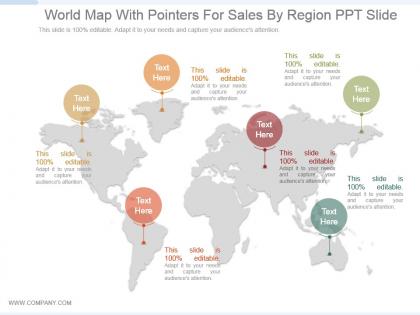
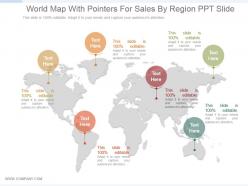
World map with pointers for sales by region ppt slide




Try Before you Buy Download Free Sample Product
 Impress Your
 Audience
 100%
100% Editable
 Save Hours
 of Time


Bring down the decibels with our World Map With Pointers For Sales By Region Ppt Slide. Conduct discussions in a cordial fashion.
People who downloaded this PowerPoint presentation also viewed the following :
World map with pointers for sales by region ppt slide with all 5 slides:
Be alto centric with our World Map With Pointers For Sales By Region Ppt Slide. Focus your thoughts on benefiting them.


FAQs for World map with pointers for sales by
Honestly, look at your best and worst regions first - that'll show you the patterns. Local economics matter way more than people think. Plus competition density can kill you in some areas while you dominate others. Pricing has to match what people can actually afford there, obviously. Cultural stuff is huge too... like what totally works in the Northeast might bomb in the South. Oh and get local reps who actually know their territory - outsiders usually miss key things. Don't forget each region has different regulations that'll trip you up.
Look, your customers' buying power totally depends on what's happening in their local economy. Rising unemployment? Push the budget-friendly stuff hard. But if you're dealing with a booming tech area, those people actually want the premium features - they've got cash to burn. I've watched sales teams bomb because they used identical pitches everywhere (honestly such a waste). You've gotta track industry changes too - like is manufacturing dying there or tourism picking up? That shifts your whole buyer profile. Pull economic data every few months and tweak your messaging to match reality.
Dude, cultural diversity is everything in regional sales. What works in New York might bomb completely in Tokyo or offend people in Mumbai. Different cultures have totally different expectations - some want to build relationships first, others just want the facts. Even your colors and images matter. Honestly, I learned this the hard way once. Decision-making varies too - some places need group buy-in while others rely on one person calling the shots. Your pricing and how you negotiate has to adapt. Best bet? Research local customs and definitely work with people who actually know the region inside out.
Okay so for regional sales stuff, start with revenue per region and growth rates - that's your foundation. Then dig into customer acquisition cost and lifetime value by region because that shows you where you're actually making money vs just burning cash. Units sold and average deal size tell you if people want cheap volume or they're going premium. Conversion rates are probably the most important though - like, if your pitch works in Texas but bombs in California, you need to know that. Market penetration metrics are solid too. Just don't try to track everything at once or you'll go crazy.
Yeah, demographics basically flip the whole script on buying behavior by region. Millennials in cities? Totally different beast compared to rural retirees - it's kinda wild how opposite they are. Income drives how price-sensitive people get, while cultural stuff shapes which brands they'll stick with. Age determines if they're shopping online or still hitting up physical stores (and what features actually matter to them). Your sales data probably shows these patterns already if you dig into it. Bottom line - don't treat every region the same. Segment your approach based on who's actually living there, and you'll see way better results.
Honestly, the trickiest part is navigating all the random regulations each place has - seriously caught me off guard when I first expanded. Cultural stuff matters way more than you'd think too. What kills it in the US might be totally wrong for Europe, you know? Distribution partners are huge but finding good ones is like dating lol. Oh and building trust from zero when nobody's heard of you yet... that's rough. My advice? Get a local consultant who actually knows their shit. Worth every penny and they'll save you from making dumb mistakes I did.
Honestly, start by grabbing your last 2-3 years of regional sales data - that stuff is pure gold. Break it down by region instead of lumping everything together. You'll start seeing which areas consistently kill it and which ones always lag behind. Seasonal patterns become super obvious this way. I'd map it against your business calendar too. Don't forget local factors though - economic conditions, competitors moving in, even weather patterns can mess with your numbers. Compare year-over-year growth rates for each region. Some areas might be trending up while others are tanking, and you'll miss that if you're just looking at overall company numbers.
Honestly, start with a decent CRM - Salesforce or HubSpot both handle regional stuff really well. Then grab something like Tableau for the visual side (leadership loves those pretty charts, trust me). Google Analytics + Data Studio actually works great if you're watching budget, especially for tracking which regions convert best online. Oh, and whatever you pick, make sure it plays nice with your current sales tools. I learned that one the hard way - spent way too many hours copy-pasting data between systems last year.
So here's the thing - city markets are absolutely brutal with competition everywhere, but rural spots? Maybe 2-3 main players max. Totally changes your game plan. Cities need you to stand out somehow and nail customer service since everyone's cutting prices. Smaller markets though, just show up consistently when others won't bother (honestly works better than you'd think). I've watched reps crush it in small towns just by being the reliable guy. Figure out your top 3 competitors in each area and build your pitch around beating what they do best.
Dude, you gotta dig into what each region actually cares about first. Like, their local culture, how they shop, what holidays matter to them - that stuff becomes your blueprint. Then tweak your messaging and visuals to match what clicks there. I bombed hard with a winter campaign in Florida once, so trust me on this lol. Economic factors matter too - what works in NYC might not fly in smaller markets. Test different versions and see what sticks. Oh, and don't just swap city names in the same boring template. People can smell that fake stuff from miles away.
Honestly, you've gotta create proper feedback loops between your regional teams and global strategy. Get your local sales reps sharing what customers are actually saying - cultural stuff, buying habits, competitive intel that HQ totally misses. Monthly regional calls work well for flagging trends and suggesting tweaks. I've watched companies crash and burn ignoring this kind of ground-level insight - it's painful to see. Then take that intel and customize your messaging and pricing for each market. Make it systematic though, not just crossing your fingers that good info randomly floats up.
So basically, different regions get hit completely different by seasons. Northern areas blow up in winter for heating stuff, south goes quiet. Then summer flips everything around. Q4 holiday shopping boosts most places, but tourist spots actually peak in summer - kinda weird but makes sense when you think about it. Weather screws with delivery timing too (February was a nightmare for us last year). Track your patterns for like 2-3 years so you're not constantly playing catch-up with inventory and staffing. Way easier than scrambling last minute.
Honestly, supply chain stuff changes completely based on where you're operating. Asia-Pacific usually means waiting longer but paying less - your forecasting better be on point though. Europe's got all these sustainability rules that'll mess with your sourcing. North America? Faster delivery, but labor costs will hit your budget hard. Latin America's infrastructure can be a nightmare (learned that one the hard way), and the Middle East has import restrictions everywhere. My advice: loop in your regional ops people super early when you're talking to clients. Sets realistic expectations from the start.
Start with real cultural training - not just basic demographics but how people actually buy stuff in each area. Honestly, I've watched so many teams crash and burn thinking their Northeast strategy will work down South. It won't. Get your reps chatting with locals outside of sales calls too. Maybe grab coffee, whatever. Role-play the specific problems each region deals with and how they make decisions. Don't make it a one-and-done thing though - set up monthly sessions where your best local reps share what's actually moving the needle in their territory right now.
Dude, cross-regional collaboration is a game changer for hitting your numbers. Teams can share what's actually crushing it in their markets - like customer preferences, pitch tactics that work, seasonal patterns you might've missed. Monthly calls work best, but focus on specific problems instead of boring general updates. Honestly, just having other reps to brainstorm with when you're stuck on a nightmare client is worth it alone. My old company did this and we'd steal each other's best ideas shamelessly. Set up knowledge-sharing sessions where everyone discusses wins, losses, and market intel. Short sessions though - nobody wants another hour-long meeting.
-
Good research work and creative work done on every template.
-
Very well designed and informative templates.