


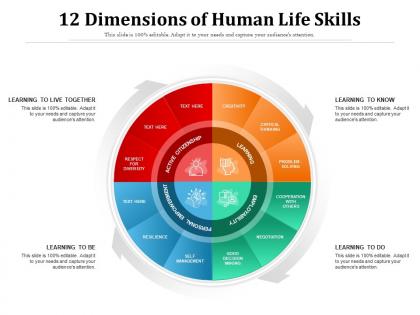
12 dimensions of human life skills




Try Before you Buy Download Free Sample Product
 Impress Your
 Audience
 100%
100% Editable
 Save Hours
 of Time


Our 12 Dimensions Of Human Life Skills are topically designed to provide an attractive backdrop to any subject. Use them to look like a presentation pro.
People who downloaded this PowerPoint presentation also viewed the following :
12 dimensions of human life skills with all 2 slides:
Use our 12 Dimensions Of Human Life Skills to effectively help you save your valuable time. They are readymade to fit into any presentation structure.
FAQs for 12 dimensions of
Honestly, start with communication and emotional intelligence - like actually being able to talk to people without it being weird. Critical thinking too, but that one's harder to practice. Time management is clutch (I'm still terrible at it tbh). You absolutely need basic financial stuff down - budgeting, credit, all that boring adult stuff. Oh, and learning how to actually learn things efficiently? Game changer. Everything moves so fast now that you'll constantly be picking up new skills. Pick whatever you suck at most and work on that first.
Look, communication skills literally make or break everything. Your relationships? How well you get along with your boss? It all comes down to whether you can actually talk to people properly. Good communication means you can express what you need without being weird about it, and you actually listen when others talk back. At work especially - I swear most office drama happens because someone didn't explain something clearly or took an email the wrong way. People judge you based on how you communicate, whether that's fair or not. Honestly, just start listening better. Like, really listening. It'll change everything.
Honestly, emotional intelligence is like the secret sauce that makes everything else click. You know when you can actually recognize what you're feeling and manage it? That's when your communication gets way better, relationships improve, and you handle stress without completely losing it. I mean, think about it - reading people's vibes and staying levelheaded basically determines whether you'll crush it at work or in your personal life. My advice? Next time something triggers you, just pause for a sec. Ask yourself "okay, what am I actually feeling right now?" Sounds simple but it's a total game-changer.
Honestly, just start questioning stuff more. When you're scrolling through news or about to buy something, ask yourself "why do I actually believe this?" The "5 whys" thing works great too - keep asking why until you get to the real root of a problem. I've gotten weirdly good at playing devil's advocate now, which probably annoys people sometimes lol. But seriously, try finding sources that disagree with you before forming opinions. Social media makes everyone react so fast without thinking. Pause before you accept things at face value. Start with questioning one assumption daily - it'll become automatic.
Look, conflict resolution is basically your secret weapon for not destroying relationships when things get messy. People actually want to work with you when you can listen without getting defensive and find middle ground. I swear, being the calm one in heated situations makes you weirdly valuable - everyone starts coming to you with their drama. The trick is catching problems early and using "I feel..." instead of "You always..." Trust me, that one swap alone changes everything. Plus you get better at stating your needs without sounding like a total ass about it.
Honestly, being adaptable is like having a superpower these days. Life's gonna throw weird stuff at you constantly, so when you can roll with changes instead of fighting them, you handle stress way better. You'll bounce back faster from crappy situations too. The cool part? You start seeing opportunities that other people miss because they're too stuck in their old ways. Oh, and your relationships improve since you can deal with different types of people better. My suggestion - just mess with your daily routine sometimes or tackle problems differently. Builds that flexibility over time.
Honestly, start by tracking what you actually do for like a week - write down every 30 minutes where your time went. It's kind of annoying but eye-opening. After that, try the Eisenhower Matrix thing (urgent vs important tasks). I swear by the two-minute rule though - if something takes under two minutes, just knock it out instead of adding it to your never-ending list. Block scheduling helps too where you batch similar stuff together rather than jumping around constantly. Pick one method first and see how it goes before diving into everything at once.
Honestly, most problems aren't as complicated as we make them out to be. First figure out what you actually want to happen - like, the specific outcome. Then just brainstorm a bunch of different ways to get there. Weigh what could go right vs. wrong with each option. Pick one and try it. Works for literally anything - crappy commute, budget issues, whatever. I used to overthink everything but now I just work backwards from what I want. Even if the first attempt flops, you've got a system to tweak things. Don't get stuck in analysis paralysis mode.
Dude, social skills are literally everything for networking and getting ahead. I've watched people with mediocre skills climb the ladder faster than super smart folks who just can't work a room - it's kinda crazy honestly. When you listen well and actually connect with people, those random chats become real opportunities. You'll get referrals, mentors, heads up about jobs before they're posted. Being able to read the room and follow up without being weird? That's gold. Try actually listening in your next meeting instead of planning what to say. Trust me, it changes everything.
Honestly, self-awareness is like the foundation for everything else. You can't manage your stress if you don't even know what sets you off, right? Same with relationships or picking a career that actually makes sense for you. I've noticed people who lack it just keep hitting the same walls over and over. The cool thing though - you can build it pretty fast. Just start paying attention to your reactions during the day. Ask people for honest feedback. Or do some quick reflection before bed. Maybe pick one pattern about yourself to notice this week? It's wild how much clarity you get once you start.
Honestly, resilience is just practice more than anything else. When stuff goes sideways, try seeing it as data instead of proof you suck - I know that sounds like self-help BS but it actually helps. Don't isolate yourself either, that makes everything worse. Be nicer to yourself than you'd be to your worst enemy lol. Focus on what's in your control and let the rest go (easier said than done obviously). Exercise helps a ton since your body and brain are weirdly connected. Oh and mindfulness if you're into that. Pick one thing though - don't try fixing everything at once or you'll burn out.
Money stuff actually connects to everything else pretty naturally. When you're teaching budgeting, tie it into time management - both need planning ahead. I always think it's cool how spending habits mirror other life patterns. Use real situations like apartment hunting to mix research skills with financial planning. Compound interest is perfect for showing patience and delayed gratification. Have them track spending AND time for a week - they'll totally see how resource management works the same way in both areas. The trick is keeping it hands-on instead of just theory. Makes way more sense that way.
Working with others is like a skill multiplier, honestly. You'll get better at communicating and actually listening to people. Plus you're constantly doing mini-negotiations and handling conflicts without thinking about it. I mean, working solo all the time does get pretty isolating after a while! Different people bring totally different approaches to problems, which expands how you think. The feedback thing is huge too - both giving it and taking it without getting defensive. Oh, and if you can swing it, try a cross-functional project. Those are intense but you learn so much across different areas at once.
Honestly, goals just give your brain something concrete to chase after. You won't get sucked into mindless Instagram scrolling when you've got a clear target. Breaking big skills into tiny pieces makes everything feel doable instead of impossible. Your brain actually releases dopamine when you check stuff off - it's like a built-in reward system. I'd say start small though. Pick one skill and commit to just 15 minutes daily. Consistency beats those crazy 3-hour sessions you'll burn out from anyway. Write it down somewhere you'll actually see it.
Honestly, just shake up your routine somehow. Take a different route to work or rearrange your desk - sounds boring but it actually works. I've noticed when I switch up even my morning coffee ritual, random ideas hit me later. Ask yourself "what if" about everything, even the dumb stuff. Give yourself 10 minutes to just walk or doodle without scrolling your phone (harder than it sounds lol). The weirdest thing that helps? Looking at totally random stuff for inspiration - like I got a work idea from watching my neighbor's landscaping. Pick one tiny thing to change this week and see what your brain does with it.
-
Awesome use of colors and designs in product templates.
-
Out of the box and creative design.