


30 60 90 Days Plan To Boost Pharmaceutical Sales




Try Before you Buy Download Free Sample Product
 Impress Your
 Audience
 100%
100% Editable
 Save Hours
 of Time


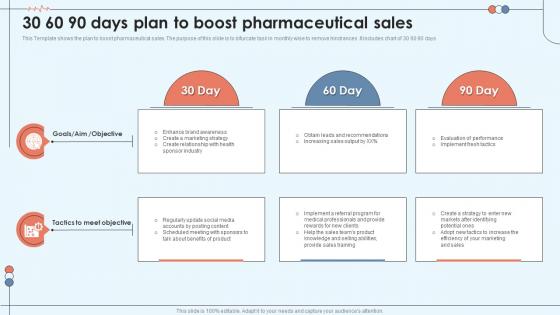
This Template shows the plan to boost pharmaceutical sales. The purpose of this slide is to bifurcate task in monthly wise to remove hindrances. It includes chart of 30 60 90 days.
People who downloaded this PowerPoint presentation also viewed the following :
30 60 90 Days Plan To Boost Pharmaceutical Sales with all 6 slides:
Use our 30 60 90 Days Plan To Boost Pharmaceutical Sales to effectively help you save your valuable time. They are readymade to fit into any presentation structure.





FAQs for 30 60 90 Days Plan To
Effective 30-60-90 day plans include specific learning objectives, relationship-building targets, performance metrics, skill development milestones, and strategic project contributions. These components streamline onboarding by establishing clear expectations, accelerating productivity timelines, and enabling systematic progress tracking, with many organizations finding that structured plans reduce time-to-competency while enhancing employee confidence and strategic alignment.
A 30-60-90 day plan helps new employees acclimate by providing structured learning phases, clear performance expectations, regular feedback checkpoints, and measurable goals that build progressively from basic orientation to full productivity. This strategic onboarding approach enables faster role mastery, stronger manager relationships, and increased confidence, with many organizations finding that structured plans reduce time-to-productivity by weeks while enhancing employee retention and engagement.
First 30 days strategies include stakeholder mapping, quick wins identification, team relationship building, priority goal setting, and communication protocol establishment. These foundational approaches streamline integration by creating early credibility, establishing clear expectations, and building essential networks, with many professionals finding that strategic early investments in relationships and understanding organizational dynamics ultimately accelerate long-term performance and competitive positioning.
Goals should evolve from foundational learning and relationship-building in the first 30 days to active contribution and process optimization in the next 60 days. This progression enables employees to transition from observation and skill acquisition to implementing improvements, taking on independent projects, and delivering measurable results, ultimately establishing their strategic value within the organization.
Common pitfalls include setting unrealistic expectations, lacking specific measurable goals, failing to align with organizational priorities, insufficient stakeholder input, and neglecting regular progress reviews. Many organizations find that overly ambitious timelines, vague objectives, and poor communication channels undermine plan effectiveness, while successful implementations focus on achievable milestones, clear accountability measures, and consistent feedback loops to ensure strategic alignment.
Visual presentation templates enhance 30-60-90 day plan communication by providing structured layouts, clear timeline visualizations, progress tracking mechanisms, and consistent formatting that simplifies complex information. These templates streamline stakeholder presentations across organizations, enabling managers to deliver compelling roadmaps while ensuring alignment between teams, ultimately delivering improved clarity and faster decision-making processes.
Leadership involvement significantly impacts 30-60-90 day plan execution through resource allocation, strategic guidance, obstacle removal, and team accountability. When leaders actively participate, they streamline decision-making processes, enhance cross-departmental collaboration, and provide immediate feedback, with many organizations finding that executive engagement accelerates goal achievement and ensures strategic alignment throughout implementation phases.
Key metrics include task completion rates, goal achievement percentages, skill development assessments, relationship-building indicators, and performance quality measures. These tracking mechanisms enable managers and new employees to monitor progress systematically, identify areas needing support, and ensure strategic objectives align with organizational expectations, ultimately delivering measurable onboarding success.
A 30-60-90 day plan adapts to different industries by focusing on sector-specific priorities, regulatory requirements, customer expectations, and operational workflows. Healthcare organizations emphasize compliance training and patient safety protocols, while tech companies prioritize product development cycles and agile methodologies, with retail focusing on seasonal demands and customer experience metrics, ultimately delivering industry-relevant onboarding and strategic alignment.
Feedback serves as a critical calibration mechanism for 30-60-90 day plans, enabling real-time adjustments to goals, timelines, and resource allocation based on actual performance data and stakeholder insights. Through regular check-ins with managers, peers, and team members, professionals can identify gaps, accelerate successful initiatives, and pivot strategies that aren't delivering expected outcomes, ultimately ensuring their plan remains aligned with evolving business priorities and maximizes their early impact.
When faced with unexpected challenges, adapt your 30-60-90 day plan by reassessing priorities, adjusting timelines, and reallocating resources while maintaining core objectives. This flexibility enables organizations to navigate disruptions strategically, with many finding that revised plans often deliver stronger outcomes by incorporating lessons learned, stakeholder feedback, and market changes into actionable solutions.
Tools that streamline 30-60-90 day plan creation include project management platforms like Asana and Trello, strategic planning templates, goal-tracking software, and presentation tools like PowerPoint with pre-built frameworks. These resources enhance planning efficiency by automating task organization, providing structured templates, and enabling real-time progress monitoring, ultimately delivering faster onboarding and clearer strategic alignment.
A well-structured 30-60-90 day plan enhances team collaboration by establishing clear communication protocols, defining shared objectives, creating cross-functional project milestones, and implementing regular feedback mechanisms. Through progressive goal alignment, teams streamline workflows, minimize operational silos, and build trust systematically, with many organizations finding that structured onboarding ultimately delivers improved project coordination and stronger team cohesion.
Successful 30-60-90 day plans in corporate settings include sales managers establishing client relationships and pipeline targets, new executives conducting stakeholder assessments and strategic planning, and department heads implementing process improvements and team development initiatives. These structured approaches enable organizations to streamline onboarding, accelerate productivity, and deliver measurable outcomes, with many companies finding that clear milestone planning ultimately enhances employee retention and operational efficiency.
Ensuring alignment requires mapping personal development goals to specific company priorities, incorporating team objectives into individual milestones, and regularly reviewing progress with supervisors to maintain strategic focus. This approach enables professionals to demonstrate value while advancing their careers, with many finding that clear connections between personal growth and organizational success ultimately deliver enhanced performance reviews and accelerated advancement opportunities.
-
Appreciate the research and its presentable format.
-
Thanks for all your great templates they have saved me lots of time and accelerate my presentations. Great product, keep them up!