


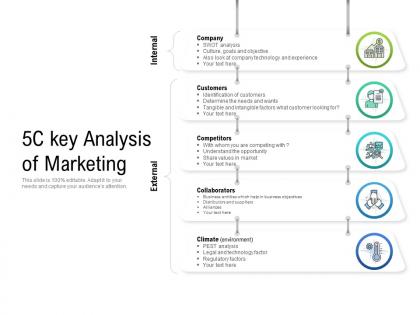
5c key analysis of marketing




Try Before you Buy Download Free Sample Product
 Impress Your
 Audience
 100%
100% Editable
 Save Hours
 of Time


Generate greater camaraderie with our 5C Key Analysis Of Marketing. Get folks to indulge in friendly activities.
People who downloaded this PowerPoint presentation also viewed the following :
5c key analysis of marketing with all 2 slides:
Get folks to indulge in friendly activities with our 5C Key Analysis Of Marketing. It helps generate greater camaraderie.
FAQs for 5c key
So the 5C thing is Company, Customers, Competitors, Collaborators, and Context. I'd start with Company - basically what you're good at and what you suck at internally. Then figure out your customers and what they actually need (not what you think they need). Competitors is honestly my favorite part because you get to judge everyone else's mistakes. Collaborators covers suppliers, partners, anyone you work with really. Context is all the external stuff - economy, regulations, whatever trends might mess with your business. Pro tip: just start with whichever one you already have info on. Way easier than trying to do them in order.
For each C, you'll need different approaches. Company stuff? Hit your internal data - financials, sales reports, customer feedback. Surveys and focus groups work best for understanding customers, plus social media listening. Competitor research is honestly my favorite part - check their websites, do pricing studies, mystery shop them. Partnership audits help with Collaborators. Market trends and regulations (the Context piece) come from industry reports and news. Oh, and don't just stick to numbers. Mix quantitative data with qualitative insights or you'll miss half the story.
Honestly, customer behavior is like the backbone of your whole 5C analysis. Map out their decision-making process first - that's where I'd start. You're digging into what actually drives their purchases, emotional triggers, pain points, all that stuff. Demographics matter but don't stop there. Their buying journey tells you how to position against competitors and what capabilities your company needs to build. It also shapes how you work with collaborators too. Once you nail down how customers think and act, everything else in the framework just clicks into place way easier.
Honestly, competitor research is gold for finding gaps they're missing. Check out their pricing, what features they're pushing, and especially customer complaints - that's where the real opportunities hide. I do this every week with our top competitors and their social media tells you SO much. Sometimes I get distracted scrolling through their posts but whatever. Look for areas where they're dropping the ball or ignoring certain customers. Then swoop in as the better option. Don't forget to see what marketing channels they're totally ignoring. Pick your top 3 competitors and dive deep this month.
Don't treat each C like it exists in a vacuum - they're all connected. Customer shifts affect your competitors, market changes impact collaborators, you know? Fresh data is everything. I used to just rehash old research and it bit me every time. Spend equal time on external stuff as internal capabilities (way too easy to get caught up analyzing your own company). Honestly, quarterly updates work best for most businesses. Short bursts keep you sharp. The biggest mistake? Skipping competitor intel while obsessing over internal processes.
The business environment literally affects all your Cs - it's the context for everything. Economic conditions change what customers want. Growing markets make competitors act totally different than declining ones. Your company's strengths might actually be weaknesses depending on what's happening around you. Even collaborators get pickier about partnerships when things are unstable. And climate factors? They can flip your whole strategy overnight - just look at how COVID destroyed restaurant business models in like two weeks. Pretty wild how fast things can change. You've got to analyze each C based on what's actually going down in your industry right now.
So the 5C Analysis is basically your startup's reality check before making any big moves. Break down your Company's strengths, what Customers actually want (not what you think they want), where Competitors are positioned, potential Collaborators, and the overall Context of your market. Honestly, it's like cramming before an exam - but way more important since your business depends on it. You'll catch opportunities that would've flown under your radar otherwise. Plus it saves you from those facepalm moments where you realize you missed something obvious. I'd run through this every quarter since things move so fast in startup land.
Honestly? Every quarter is a good baseline, but don't be rigid about it. Tech and fashion move crazy fast, so monthly makes way more sense there. Watch for the big stuff - customers acting weird, competitors dropping new products, your company doing a strategy 180. It's kinda like checking your car's oil regularly instead of waiting for the engine to die, you know? Also keep an eye on partner deals changing or market conditions shifting. I always forget this stuff, so definitely set those calendar reminders now.
Oh totally! Start with the 5C stuff as your base research - you know, company, customers, competitors, all that. Then just drop those insights into whatever framework you're already using. SWOT works great, or Porter's Five Forces if you're feeling fancy. The customer data flows perfectly into personas, and honestly the competitor piece is gold for positioning maps. I've been doing it backwards sometimes too - starting with SWOT then filling in gaps with 5C research. Works either way. Just use 5C as your fact-gathering phase, then plug everything into your team's favorite planning tool.
Honestly, consumer goods and retail companies get the most out of 5C Analysis - they're always scrambling to keep up with what people want. Tech companies too, obviously. Healthcare and finance love it because one new regulation can mess up everything they thought they knew about competition. Most B2C businesses see quick results since they're dealing with actual customers, not other businesses. Oh, and start with customers and competitors first - way easier than trying to tackle all five Cs at once. The other stuff you can figure out later once you've got those two mapped out.
Honestly, company capability is like the foundation of your whole 5C thing. Without knowing what you can actually pull off, everything else is just daydreaming. I've watched teams get pumped about some amazing opportunity only to crash when they realized they didn't have the right people or tech. Super painful to watch. You gotta be real about your strengths and weak spots first - that's what determines if your strategy is doable or just fantasy. Start with auditing what you've got now and where the gaps are. Then you can tackle the other four C's without setting yourself up for disappointment.
Each of the 5 Cs needs its own tracking approach, tbh. Company stuff - focus on market share, revenue growth, and how efficiently you're running things. Customer metrics are where it gets interesting though - satisfaction scores, how many people stick around, lifetime value. Basically the "do people actually like us" measurements. For competitors, watch their pricing moves and how much they're spending to grab new customers. Collaborators are trickier - relationship health and partnership ROI work well. Climate analysis means tracking regulatory shifts and economic indicators. Honestly, pick 2-3 solid metrics per category max. Otherwise you'll just drown in spreadsheets.
So 5C Analysis is basically your cheat sheet before making any big marketing moves. Company strengths/weaknesses, Customer needs, Competitors doing whatever they're doing, Collaborators (suppliers, partners), and Context like economic trends. Honestly, it sounds boring but it's clutch. Without it, you'll miss obvious opportunities or get blindsided by competition. I always forget about the Context part - like, who thinks about legal stuff when brainstorming? But that's exactly why people's campaigns sometimes tank. Just start with whichever area feels most broken right now.
So these external forces basically shape your whole 5C analysis from the outside. Economic stuff hits your customers' wallets hard. New regulations mess with how your company can operate. Competitors pivot when social trends shift - it's wild how fast that happens. Climate change is honestly disrupting everything now (didn't expect to care about that in business school lol). You can't control any of this, but it creates the backdrop for your entire framework. Just pick 3-4 major external trends that could shake up each C. Don't overthink it.
Tech changes everything when you're looking at the 5Cs. Real-time data beats old-school methods every time - you can actually watch customer behavior as it happens, spy on competitors through social listening, and catch market shifts instantly. Remote teams? Way easier now with cloud tools. Your company's digital presence becomes part of the whole assessment too. Oh, and don't forget your tech's carbon footprint counts toward climate impact now (honestly didn't think about that until recently). I'd start by checking what digital tools you're already using and see which of the 5Cs they're missing.
No Reviews