


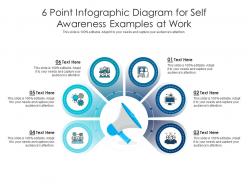
6 point diagram for self awareness examples at work infographic template





Try Before you Buy Download Free Sample Product
 Impress Your
 Audience
 100%
100% Editable
 Save Hours
 of Time


Derive factual results using this 6 Point Diagram For Self Awareness Examples At Work Infographic Template. Deploy this PowerPoint template to make and display prospective strategies using impressive graphics that enhance the visual quotient of the presentation. This infographic template also helps in elevating the aesthetic appeal of the presentation, making it useful for every organization. Apart from this, things and projects can be visualized from the onset using this PPT design. As this PowerPoint visual provides an abundance of information in a single layout, it can impress any viewer or higher managerial staff. It also boosts business actions by presenting flawless presentations. The biggest advantage of this slide is that it can be reproduced in various formats, including Google Slides. Therefore, download it now to present a unique presentation every time.
People who downloaded this PowerPoint presentation also viewed the following :
6 point diagram for self awareness examples at work infographic template with all 2 slides:
Use our 6 Point Diagram For Self Awareness Examples At Work Infographic Template to effectively help you save your valuable time. They are readymade to fit into any presentation structure.
FAQs for 6 point diagram for self awareness examples at
Dude, self-awareness is a total game-changer for teams. When you know your own communication style and what sets you off, you can actually work with people instead of against them. Like, you'll stop yourself from getting snappy when things get crazy, or realize when your need for everything to be perfect is just holding everyone back. I swear it's like having superpowers or something. You start picking up on room vibes better too. Oh and you actually listen instead of just planning what to say next - which honestly took me forever to figure out. Try watching your own reactions in meetings this week. That simple shift will make you way better to work with.
Honestly, self-aware leaders just make smarter calls because they actually know their own weaknesses and what sets them off. You can catch yourself before making emotional decisions - like when you're pissed about something totally unrelated but about to tear into your team. It also means admitting when you're clueless and need help (which sounds obvious but you'd be shocked how many leaders can't do this). Your team trusts you more when you're real with them too. Oh, and try asking yourself "why did I react like that?" after difficult conversations - it's weirdly revealing.
Honestly, journaling helped me a ton - just jot down what set you off emotionally and why you reacted that way. Ask people you trust for feedback too since we're all pretty blind to our own weird habits. Notice when you feel energized vs completely drained by certain tasks or people. Oh, and try pausing before you react when things get heated - sounds cheesy but it actually works. I'd pick just one of these to focus on this week rather than overwhelming yourself with everything at once. The reflection thing is probably the easiest place to start.
Honestly, knowing yourself is huge for job satisfaction. When you actually understand what gets you excited vs what drains you, it's way easier to find projects that click. I can always tell which coworkers have figured this out - they just seem more into their work, you know? Plus you'll catch red flags earlier instead of letting things spiral. Like if something feels wrong, you'll notice before it becomes a whole situation. The trick is just... idk, checking in with yourself regularly? See what's working, what sucks, then actually speak up about changes you need.
Honestly, self-awareness is a game changer for workplace drama. You start catching your own triggers before they blow up into real conflicts. Like when you notice you're getting defensive or totally misreading someone's tone - that's your cue to pump the brakes. I used to be terrible at reading the room, wish someone had told me this stuff earlier! Once you know your communication style and what sets you off, you can actually adjust how you handle tense moments. Your biases become way more obvious too, which helps you listen better to different viewpoints. Next time things get heated, just pause and ask what's really driving your reaction.
Honestly, just squeeze it into stuff you're already doing. When you're waiting for meetings to load or grabbing lunch, do a quick 2-minute mental check-in. I actually started doing this between Zoom calls and it's weirdly helpful. Ask yourself basic stuff like "how am I feeling?" or "what just went well?" Your commute works great too, or maybe journal for 5 minutes when you wake up. The trick is keeping it super small - don't try to carve out huge chunks of time because that never sticks. Pick one tiny moment and start there.
Honestly, getting feedback from coworkers is like having a mirror for your work personality. You might think you're being thorough, but they see micromanaging. Or you feel direct while they're thinking "wow, harsh." Most people won't just tell you this stuff unless you ask though – which is annoying but makes sense. I'd say check in with teammates you trust about how you come across in meetings or when you're collaborating. They'll spot blind spots you can't see yourself. It's weird how obvious our quirks are to everyone else.
Honestly, self-awareness is like having an internal pause button. You catch yourself making snap judgments - like I used to think quiet coworkers were just checked out (so wrong btw). Now when I get that gut reaction about someone or an idea, I actually stop and ask myself why. What's really driving this feeling? It's wild how often our assumptions are just... off. Try this: next time you're in a meeting and want to immediately shoot down an idea, pause first. Ask what you might be missing. Also, actively hunt for opinions that make you uncomfortable - they're usually the most useful ones.
The Johari Window is honestly pretty eye-opening for blind spots - you get feedback from others about yourself. 360-degree assessments are solid too since you hear from everyone around you. There's also the EQi 2.0 for emotional intelligence stuff. Personality tests like DISC or Myers-Briggs can help, though I'm kinda skeptical of how accurate they really are. But honestly? Sometimes the simplest approach works best. Try journaling regularly or just ask a colleague you trust: "What do I do well and what could I improve?" Start wherever feels right and go from there.
Once you figure out your own communication quirks, you can actually do something about them. I used to be that person who interrupted everyone - so annoying! Now I catch myself doing it. You'll start noticing when someone wants the full story vs just the main points. Some people need you to be super direct, others get offended by that approach. It's all about reading the room, honestly. Watch how people react when you talk - are they checking out? Getting defensive? That tells you everything. Don't be afraid to switch things up mid-conversation if your usual style isn't working.
Honestly? Time pressure kills everything - you're so swamped that stopping to think feels impossible. Corporate cultures don't help either since admitting you messed up is basically career suicide. Performance reviews make it worse because nobody wants to dig into their flaws when they're being evaluated. You end up surrounded by people who think exactly like you do, which makes spotting your own patterns nearly impossible. The trick is carving out tiny moments for reflection (even 5 minutes helps) and getting honest feedback from people outside your usual circle.
Okay so first thing - nobody's gonna be real with you if they think they'll get in trouble for it. Make it safe to mess up, you know? I'd start with those weekly team check-ins where everyone just shares one thing they figured out about themselves. Super low stakes. Regular feedback chats help way more than waiting for formal reviews. Oh and get your managers to admit their own weaknesses first - people copy what they see. Those 360 tools are solid but yeah, they freak some folks out initially. The whole point is making this stuff feel normal instead of only happening when someone screwed up.
Honestly, having someone outside your head is a game-changer. They'll ask questions that make you go "huh, why DO I always do that?" - like volunteering for the same types of projects or getting weird about certain situations. Your blind spots are invisible to you (obviously, that's why they're blind spots lol). The feedback part is clutch too. They can tell you how you actually come across when you're making decisions or trying to lead something. I'd pick one thing you feel totally stuck on and just ask them to help you figure out what's really going on underneath.
Honestly, self-awareness is a game changer for catching stress before it wrecks you. Know your triggers and you can actually deal with them instead of just grinding until you burn out. I definitely learned that one the hard way! It helps you speak up to your boss about what you need too. When you understand your own emotions better, you'll respond instead of just reacting when things get crazy. Oh and setting boundaries becomes way easier. Start small though - just check in with yourself regularly. Even asking "how am I actually doing right now?" helps more than you'd think.
Dude, self-awareness is seriously underrated. When you actually know your strengths, you can play to them instead of trying to be someone you're not. Same with weaknesses - catch them early before they bite you. You'll pick better jobs, deal with different people way easier, and not get all weird when someone gives you feedback. Honestly, I think managers notice this stuff more than we realize. They want to promote people who aren't constantly creating drama or missing obvious social cues. I've watched coworkers hit a wall just because they had zero clue how they came across. Ask someone you trust what you could work on - might shock you what they say.
-
Excellent products for quick understanding.
-
Very well designed and informative templates.
-
Great experience, I would definitely use your services further.
-
Nice and innovative design.