

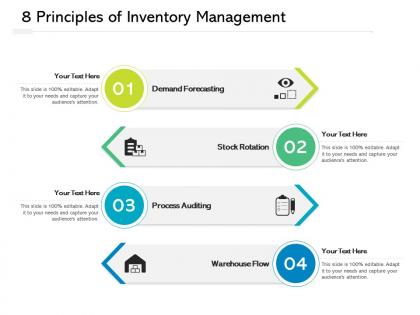
8 principles of inventory management




Try Before you Buy Download Free Sample Product
 Impress Your
 Audience
 100%
100% Editable
 Save Hours
 of Time


Our 8 Principles Of Inventory Management are topically designed to provide an attractive backdrop to any subject. Use them to look like a presentation pro.
People who downloaded this PowerPoint presentation also viewed the following :
8 principles of inventory management with all 2 slides:
Use our 8 Principles Of Inventory Management to effectively help you save your valuable time. They are readymade to fit into any presentation structure.
FAQs for 8 principles
So first thing - get your tracking system nailed down, that's your foundation. You'll need demand forecasting to predict what's coming, plus real-time tracking across all your locations. Automated reorder points are clutch though, seriously saves your butt when things get crazy. Supplier management keeps your relationships solid and gives you backup plans. Oh, and ABC analysis helps you focus on the expensive stuff that actually matters. Safety stock calculations handle those random spikes nobody sees coming. Honestly, I'd probably start with tracking then layer everything else on top.
Check your past sales data first - that's gonna show you the real demand patterns. Then calculate average usage and factor in how long suppliers take to deliver. Seasonal stuff matters too, obviously. The EOQ formula is clutch for this, though honestly the math is kinda annoying at first. Storage costs will eat into profits if you're not careful, plus some products go obsolete fast. Safety stock is huge for those random demand spikes that always seem to happen at the worst times. I'd start with your bestsellers, then expand once you've got it down.
So tech has completely changed how inventory works now. Barcode scanners, RFID, cloud software - all that stuff gives you instant updates on what's moving. Manual spreadsheets? Forget it, that's torture at this point. The AI forecasting is pretty solid too for avoiding stockouts or buying way too much crap you don't need. Real-time tracking means no more guessing games. Look, if you're still doing hand counts and crossing your fingers, grab even a basic system. Makes everything so much easier.
So basically you're trying to predict what'll sell so you don't end up with a warehouse full of junk or empty shelves when customers want stuff. Look at your sales from the last year or two - what sold when, seasonal patterns, all that. Honestly, it's like being psychic but with way more Excel involved lol. The trick is finding that sweet spot between having enough stock and not tying up all your cash in inventory that just sits there. Set up reorder points based on actual data, not gut feelings. You'll save yourself major headaches.
So there's a few main approaches you'll want to look at. ABC analysis sorts your stuff by value - high-value items get more attention, low-value ones less. EOQ is this calculation that figures out the perfect order size to keep costs down. Just-in-Time ordering only what you need right when you need it, though honestly that's been a nightmare with all the supply chain chaos lately. FIFO and LIFO matter if you're dealing with anything that expires. Safety stock is just keeping extra inventory as a cushion. Really depends on your business though - what works for retail won't work for manufacturing. I'd figure out what type of inventory you're mostly dealing with first.
Start with better demand forecasting so you're not just guessing what you'll need. ABC analysis helps too - watch your expensive inventory like a hawk, but don't stress about the cheap stuff. Most companies order way too much because they're paranoid about running out. That's where the money gets stuck. Drop-shipping works great for slow movers, and definitely push for better payment terms with suppliers. I'd honestly just look at what's been sitting around forever and start there - that's your biggest cash drain right now.
Honestly, JIT can save you tons on carrying costs - you're only buying what you actually need. Frees up cash and warehouse space too, which is nice. No more dead inventory collecting dust. But man, one supply hiccup and you're screwed. Like, your whole operation could stop if a shipment's late. Plus you lose those bulk discounts, which kinda sucks. Really depends on having rock-solid suppliers though. I'd test it with some non-essential stuff first - see if your suppliers can actually walk the walk before putting all your eggs in that basket.
So inventory turnover is just sales divided by average inventory - shows how fast you're moving stuff. High numbers mean you're selling through stock quickly, which rocks because it frees up cash and cuts storage costs. Low turnover though? That's sketchy. Usually means you're buying too much or demand sucks. I actually love this metric because it doesn't lie to you. Compare yours to what others in your industry are doing to see where you stand. Oh, and it's super helpful for spotting which products are just sitting there collecting dust so you can fix your buying strategy.
Okay so first thing - figure out if stuff is actually sitting there or just having a slow season. Check your sales data. Bundle the dead inventory with your best sellers, that usually works. Or just discount it and cut your losses honestly. I know it sucks but letting it sit there is worse for cash flow. Try donation too - you get tax write-offs and clear space. Some suppliers will take returns if you're lucky with your contracts. Oh and definitely start with the oldest stuff first, work backwards from there. Track what actually moves so you don't repeat this mess next time.
So you wanna know if your inventory's actually working? Check your turnover ratio first - shows how fast stuff moves off shelves. Stockout frequency matters too, plus what you're spending on carrying costs vs total inventory value. Days sales outstanding tells you if products are just sitting there forever (honestly the worst feeling). Fill rates and order accuracy are pretty crucial since pissed off customers aren't great for business. Don't go crazy tracking everything though - pick maybe 3 metrics that actually matter for your setup and check monthly.
Look, seasonal stuff totally messes with your normal inventory game. Historical data helps predict those demand spikes, but honestly? Even good forecasts can still be wrong sometimes. You'll want way more stock before busy seasons and less during dead periods - timing those quantities is the real challenge though. Building solid relationships with suppliers makes restocking way easier when things get crazy. Oh, and definitely start planning like 2-3 months early for any major demand shifts. Flexible terms with suppliers for slower months are clutch too.
Honestly, start with just being way more open about your forecasts and inventory - share that stuff early and often. Personal relationships actually matter more than people think (grab lunch quarterly, it's not cheesy). The big win though? Set up regular planning sessions where you're solving problems together instead of just sending purchase orders back and forth. Longer contracts help too since it gives them visibility to plan ahead. Oh and pay on time - late payments will torpedo any trust you've built faster than anything else. Pick your top 3 suppliers first and nail the communication rhythm with them.
Dude, you definitely need some kind of centralized system that updates everything in real-time. I'd look at cloud stuff like NetSuite or TradeGecko - way better than trying to manage spreadsheets across multiple locations (been there, it's a nightmare). Get your team trained on barcode scanning so there's less room for mistakes. Oh, and do cycle counts regularly at each spot. The main thing is having everything feed into one system that updates instantly when stuff moves around. I'd start with a full audit of what you've got everywhere, then roll out the scanning from there. Trust me, having that single source of truth will save your sanity.
Hey! So here's the deal - inventory eats up your cash because that money's just sitting there in product form instead of your bank account. Hold too much and you're basically parking cash on shelves for months (been there, it sucks). You'll need way more working capital to keep things running day-to-day. But go too lean and you'll hit stockouts, lose sales, miss revenue. It's honestly such a balancing act. Better demand forecasting helps a ton. Maybe look into just-in-time ordering too - you want enough stock to cover demand without going overboard.
Dude, inventory management is basically about keeping customers happy by having stuff in stock when they want it. Nothing pisses people off more than "sorry, sold out" - they'll just go somewhere else. Good tracking helps you spot what's selling fast so you can order more before running out. You want to fill orders quickly without those annoying backorders that make people wait forever. The tricky part? Don't go overboard and blow all your cash on inventory that just sits there. It's honestly like a balancing act between having enough product and not going broke buying too much.
-
Presentation Design is very nice, good work with the content as well.
-
Innovative and attractive designs.