


Agile Sprint Defect Management Summary Report




Try Before you Buy Download Free Sample Product
 Impress Your
 Audience
 100%
100% Editable
 Save Hours
 of Time


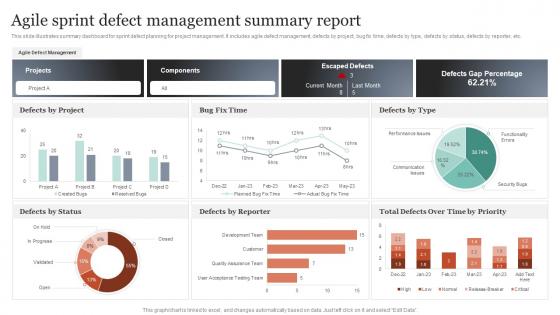
This slide illustrates summary dashboard for sprint defect planning for project management. It includes agile defect management, defects by project, bug fix time, defects by type, defects by status, defects by reporter, etc.
People who downloaded this PowerPoint presentation also viewed the following :
Agile Sprint Defect Management Summary Report with all 7 slides:
Use our Agile Sprint Defect Management Summary Report to effectively help you save your valuable time. They are readymade to fit into any presentation structure.







FAQs for Agile Sprint Defect
Honestly, start with solid acceptance criteria - saves you tons of headaches later. Test continuously during the sprint instead of cramming it all at the end (learned that one the hard way). Daily code reviews are a must, and those standups actually matter since people usually mention when something feels weird. Regular demos with stakeholders catch misaligned expectations before they blow up. Oh, and don't dump everything on QA - make defect hunting everyone's problem. The biggest thing? Run testing parallel with dev work, not as some separate phase afterward.
Hit the big stuff first - anything that's actually blocking users or breaking core features. Check your Definition of Done too; if a defect stops a story from meeting those standards, boom, that's your answer. Teams get stuck trying to squash every little bug (been there). Bundle similar ones together when you can. The effort vs impact thing is huge here. Quick 15-minute triage with your PO works wonders. Maybe grab a dev lead too. Just rank everything against your sprint goal and see what actually matters for the stories you're trying to close.
So CI is like having a safety net that catches bugs the second someone pushes code. Your automated tests run immediately instead of waiting for the official testing phase - honestly saves so much headache later. Bugs get spotted in minutes, not days, which means devs can fix them while they actually remember writing that code. Way less painful than hunting down issues weeks later. Just get your main test suite running automatically and you'll catch most problems before they even hit sprint testing. Once you see how much time it saves, you won't want to work without it.
Start by watching how they handle bugs right now - find the biggest mess first. Coach them on tightening up their definition of done and sprint planning so fewer defects slip through. Daily standups should actually surface problems, not just be boring status reports (seriously, most are a waste of time). When bugs do pop up, triage them immediately instead of letting them pile up at sprint end. Set clear severity rules so everyone knows what's urgent vs. what can wait. During retros, dig into why things went wrong rather than just slapping band-aids on everything. Focus on root causes and you'll see real improvement.
Track defect escape rate first - that's bugs found after sprint vs during. Then add defect resolution time and how many get reopened. Honestly, defect density per story point can be useful but gets messy when your estimates are all over the place. Cycle time from discovery to fix is gold though. Sort defects by severity so you know what to tackle first. Don't go crazy with metrics - pick 3-4 that'll actually change how your team works, not just make a pretty dashboard. Start basic, then add more only when you're acting on what you've got.
So basically your Definition of Done connects user stories to defects. Find a bug during sprint testing? Link it back to the original story for traceability. Way better than having random bug reports everywhere (honestly that was a nightmare). Stories can't be marked "done" until you fix all the defects tied to them - keeps everyone honest about sprint goals. Oh and definitely tag your defects with story IDs in whatever tool you're using. Makes retrospectives so much easier when you can actually see patterns instead of just guessing what went wrong.
Honestly, you'll want Jira, Azure DevOps, or Linear for tracking bugs with your user stories. Jira's super popular but can be annoying to navigate - I've spent way too much time clicking through screens just to update one ticket. Linear's actually pretty clean if you haven't tried it. The main thing is finding something that plays nice with your current setup and doesn't slow down your standups. You need quick prioritization and severity tagging without all the extra clicks. Oh, and being able to spot defect patterns easily is huge. Just grab the free versions of a few and test them with your team first.
Honestly, good communication can totally save your sprint or destroy it. Daily standups catch problems before they blow up. Set up dedicated bug channels so nothing gets lost - I've watched teams completely tank because someone found a major issue but had no clue who to ping about it. Super frustrating to see. Get your QA and devs talking directly instead of just throwing tickets back and forth. You'll want clear rules about who reports what and how fast. Makes such a difference when everyone knows the drill upfront.
Ugh, the worst thing teams do? They treat bugs like totally separate work instead of just part of the sprint. Everything piles up and then you're frantically fixing stuff the last two days - super stressful. Skip triage and you'll waste time on tiny visual tweaks while actual broken features just sit there. Oh, and don't let devs guess what's important - the whole team needs to weigh in on priorities. Honestly, just talk about defects every single standup. Your Definition of Done should already cover how you handle bugs too.
Honestly, retros are amazing for fixing your bug problems. Your team gets to actually talk about what's causing defects without anyone getting thrown under the bus. Look for patterns - maybe you're rushing testing phases, or requirements are always messy, or there's that scary legacy code nobody wants to deal with. Focus on "why did this slip through" not "who screwed up." People will start sharing the real root causes. Then you can brainstorm fixes together. Track whether your changes actually help in the next few sprints though - otherwise you're just making busy work.
So defect handling totally depends on your framework. Scrum usually means fixing blockers in the current sprint, otherwise toss them in the backlog for later - though that can get pretty chaotic without good prioritization. With Kanban, bugs just flow through your board like everything else, maybe with a fast lane for critical stuff. SAFe gets more formal about tracking defects across their program increments. Honestly though? Production-breaking bugs get fixed immediately no matter what process you're using. Just pick whatever keeps things moving and doesn't piss off your users.
Honestly, just bake quality into your process from day one. Pair programming and code reviews are game changers - plus write tests as you go, not after everything's broken. Daily standups catch problems while they're still tiny and fixable. Retrospectives might feel like a waste of time but trust me, that's where you actually figure out why the same crap keeps happening over and over. Oh, and have a solid Definition of Done so everyone's on the same page about what "finished" means. Don't try to implement everything at once though - pick one or two things and build from there.
Honestly, you really need your stakeholders weighing in on defect priority - otherwise you're just guessing what matters. They'll tell you which bugs are actually hurting users vs. the ones that just bug us developers (and yeah, those aren't always the same thing). Plus they know the business side - like if you can push that UI glitch to next sprint because there's a huge release coming. I learned this the hard way when I spent weeks fixing something nobody cared about. Keep showing them your backlog and get their input regularly. Saves you from those "wait, why didn't you fix this instead?" meetings later.
Ugh, technical debt makes bug fixing such a pain during sprints. You think you're tackling a simple defect, then suddenly you're knee-deep in three other issues that should've been fixed months ago. Your team ends up burning way more sprint capacity because nothing's actually straightforward anymore - that 2-point bug? Yeah, it's now an 8-point monster. Velocity becomes impossible to predict since you never know what mess you'll uncover. I'd start tracking how much time gets eaten by debt-related defects. Makes it easier to convince management you need dedicated cleanup sprints instead of constantly firefighting.
Make those defect talks blame-free - focus on fixing the system, not pointing fingers at people. I swear some of my best process fixes came from absolute disasters! Get everyone comfortable sharing what broke and why in regular retrospectives. When someone spots their own bug or helps debug? Celebrate that. Put your quality metrics where the whole team can see them so you're all shooting for the same target. Here's the thing though - you gotta go first. Own your screwups openly and they'll follow your lead. It's weird how that works but it does.
-
World-class PowerPoint designs that are fully customizable!
-
Time saving slide with creative ideas. Help a lot in quick presentations..